
Chef Zohra
Poulet M'hammer aux Amandes (دجاج محمر)
A celebration chicken simmered low in saffron onion sauce, browned until golden, then carried to the table with fried almonds scattered over the top.
A cooking platform built around craft, culture, and the stories behind what we eat.
Created by
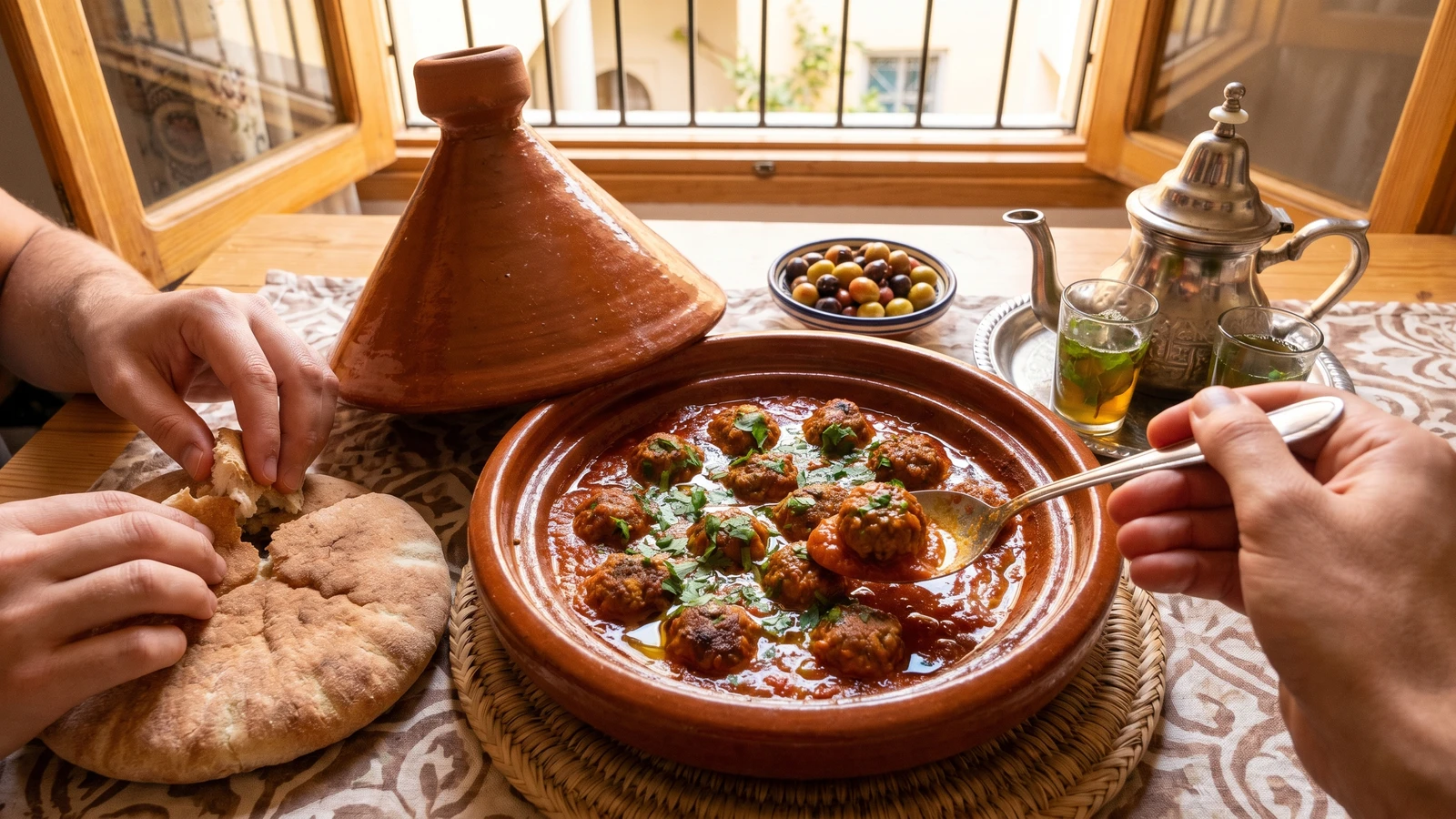
Small kefta meatballs simmered in a garlicky tomato sauce until the oil rises and the sauce turns glossy, an everyday Moroccan tagine built for bread, hands, and one more place at the table.
The meatballs must be small. That is the gesture that decides the dish. Roll the kefta no bigger than a walnut, and each one cooks gently in the tomato sauce, taking in cumin, paprika, garlic, and the good fat from the meat. Make them too large and the center stays dull while the sauce over-reduces around them.
This is weeknight tagine, not ceremony. You set the tomatoes to cook down until their sharpness softens and the oil begins to shine at the edges, then you tuck the kefta into that red sauce and let the pot finish itself. Some houses crack eggs over the top at the end. This version is the everyday eggless one, all tomato and meat, made to be scooped with round khobz.
Use ripe tomatoes when the market gives them to you, heavy and smelling of sun. In winter, use good canned tomatoes without shame. No gesture rescues a tired tomato. Cook what the market actually handed you, then bring the tagine to the center of the table. Une table, c'est une porte qu'on laisse ouverte, a table is a door you leave open.
Kefta tagines belong to the urban and market cooking of Morocco, especially in the 19th and 20th century cities where minced meat, tomato, cumin, and paprika became everyday companions in small charcoal braziers and home tagines. Tomatoes entered Moroccan kitchens after the Columbian exchange and became common later through Mediterranean trade, while cumin and paprika speak to older spice routes and Andalusi influence. The egg-topped version is famous in many homes and cafes, but the eggless pot is just as much part of the living repertoire.
Quantity
500g
ideally 15 to 20 percent fat
Quantity
1 small
grated and squeezed lightly
Quantity
3 tbsp
finely chopped
Quantity
3 tbsp
finely chopped
Quantity
2 tsp
divided
Quantity
2 tsp
divided
Quantity
1/2 tsp
Quantity
1/4 tsp
Quantity
1/4 tsp
Quantity
1 1/2 tsp
divided
Quantity
1/2 tsp
Quantity
3 tbsp
Quantity
4
finely grated or minced
Quantity
800g
fresh tomatoes grated if using
Quantity
1 tbsp
Quantity
120ml
only as needed
Quantity
1 small handful
chopped, for finishing
Quantity
for serving
| Ingredient | Quantity |
|---|---|
| ground beef or lambideally 15 to 20 percent fat | 500g |
| oniongrated and squeezed lightly | 1 small |
| fresh parsleyfinely chopped | 3 tbsp |
| fresh corianderfinely chopped | 3 tbsp |
| ground cumindivided | 2 tsp |
| sweet paprikadivided | 2 tsp |
| ground ginger | 1/2 tsp |
| ground cinnamon | 1/4 tsp |
| cayenne pepper (optional) | 1/4 tsp |
| fine sea saltdivided | 1 1/2 tsp |
| black pepper | 1/2 tsp |
| olive oil | 3 tbsp |
| garlic clovesfinely grated or minced | 4 |
| ripe tomatoes or good canned crushed tomatoesfresh tomatoes grated if using | 800g |
| tomato paste | 1 tbsp |
| wateronly as needed | 120ml |
| fresh coriander or parsleychopped, for finishing | 1 small handful |
| round khobz | for serving |
Put the meat in a bowl with the grated onion, parsley, coriander, 1 teaspoon cumin, 1 teaspoon paprika, ginger, cinnamon, cayenne if using, 1 teaspoon salt, and the black pepper. Mix with your hands until the herbs and spices are evenly worked through, but don't knead it into paste. The kefta should feel tender and a little loose, not tight like sausage.
Wet your palms lightly and roll the kefta into small balls, about walnut size. Keep them even so they cook at the same pace. Small is not decoration here: it lets the meat season the sauce while the sauce seasons the meat.
Warm the olive oil in a tagine base or wide heavy pan over medium heat. Add the garlic and stir just until it smells alive, not brown. Add the tomatoes, tomato paste, remaining 1 teaspoon cumin, remaining 1 teaspoon paprika, and remaining 1/2 teaspoon salt. Stir well and let the sauce bubble gently.
Simmer the tomato sauce uncovered for 15 to 20 minutes, stirring now and then, until it thickens and the raw sharp smell is gone. Drag a spoon through it: the path should close slowly. If it tightens too fast, add a splash of water. You're not making soup, you're making a sauce that can hold the kefta.
Nestle the meatballs into the sauce in one layer, spooning a little tomato over the top. Cover and simmer gently for 12 to 15 minutes, shaking the pan once or twice instead of stirring hard. The kefta should stay round, tender, and just cooked through.
Uncover and let the sauce reduce for 5 minutes more, until the oil shines in little red pools at the edge and the sauce clings to the meatballs. Scatter with chopped coriander or parsley. Bring the whole tagine to the table with khobz and let everyone eat from their side.
1 serving (about 390g)
Culinary guides, cultural storytelling, and the editorial depth that makes cooking meaningful.
Discover Culinary ExplorerChef Zohra
A celebration chicken simmered low in saffron onion sauce, browned until golden, then carried to the table with fried almonds scattered over the top.

Chef Zohra
An Amazigh tagine from the Atlas spirit: seasonal vegetables stood upright over onion and tomato, cooked tight under the lid until their own juices make the sauce.

Chef Zohra
An eastern Moroccan tagine where lamb or beef braises with chickpeas until tender, then eggplant cooks past soft into saffron-gold silk. Bring khobz, because the sauce asks for hands.

Chef Zohra
The spring tagine Morocco waits for: artichoke hearts and fresh peas braised just until tender, with preserved lemon, ginger, saffron, olives, and herbs keeping the sauce bright.