
Chef Zohra
Khobz bel Chaïr
The barley loaf of Amazigh and rural tables, darker than wheat khobz, faintly bitter, and built for tearing by hand beside soup, olive oil, or a small tagine.
A cooking platform built around craft, culture, and the stories behind what we eat.
Created by
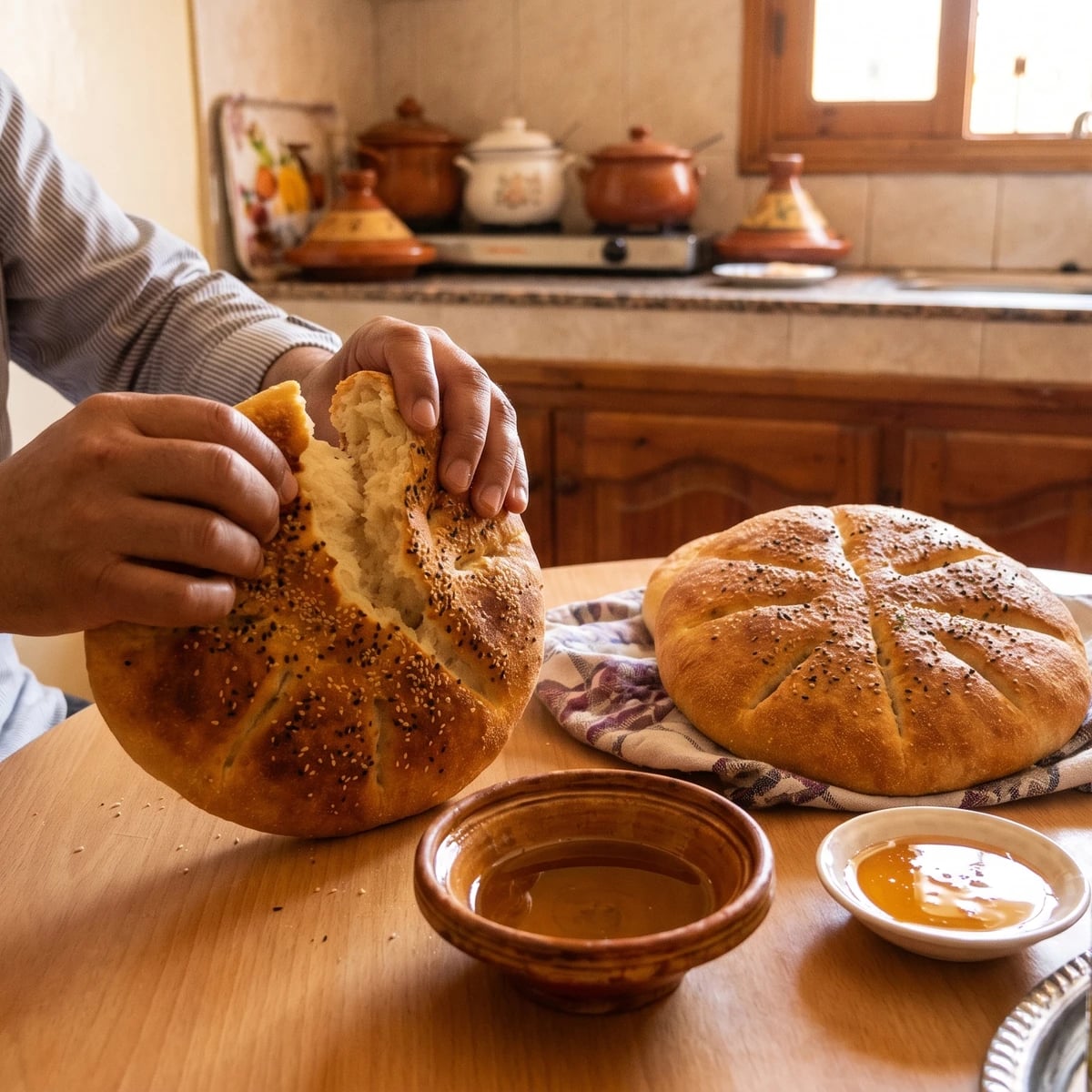
The Amazigh bread of the Souss, baked against the fierce wall of the tafarnout oven until the crust blisters dark and the inside stays tender enough to tear at the table.
Everything here turns on the oven wall. Tafarnout takes its name from the clay oven that bakes it, and the bread belongs to that fierce heat, pressed close enough to blister, darken, and come away smoky at the edges. In a home oven, we don't pretend to own the old wall. We make the nearest honest version with a stone or steel heated until it can give the dough a hard answer.
The dough needs two rests because the crumb must open before the crust sets. Rush it and the bread stays heavy. Give it time, shape it wide, score it so it expands where you invite it, and seed it before it goes in so the surface catches that nutty smell as it bakes. Sourcing comes first: good flour, alive yeast, and clean semolina under your hands. No gesture rescues tired flour.
This is not one generic Moroccan flatbread. Il n'y a pas une cuisine marocaine, mais des cuisines marocaines, not one Moroccan cuisine, but many, and tafarnout speaks in the Amazigh voice of the Souss. Tear it warm with argan oil, amlou, honey, olives, or a tagine that needs scooping clean. Une table, c'est une porte qu'on laisse ouverte, and bread is how the door stays open.
Tafarnout belongs to the Amazigh bread traditions of the Souss and Anti-Atlas, where the same word names both the bread and the clay oven heated by wood and used for wall-baking. Its exact dating is not fixed in written sources, but the technique sits within older North African communal oven practices, shaped by local wheat, barley, argan-country trade, and village household rhythms. Unlike the pan-cooked breads of other Moroccan regions, tafarnout is defined by the ferran-style oven and the cook's ability to read heat by hand and eye.
Quantity
400g
plus more for dusting
Quantity
150g
plus extra for the peel
Quantity
1 tsp
Quantity
1 tsp
Quantity
7g
Quantity
330ml
plus a little more if needed
Quantity
2 tbsp
plus more for the bowl
Quantity
1 tbsp
Quantity
1 tsp
| Ingredient | Quantity |
|---|---|
| strong white bread flourplus more for dusting | 400g |
| fine semolinaplus extra for the peel | 150g |
| fine sea salt | 1 tsp |
| sugar or honey | 1 tsp |
| active dry yeast or instant yeast | 7g |
| warm waterplus a little more if needed | 330ml |
| olive oilplus more for the bowl | 2 tbsp |
| sesame seeds | 1 tbsp |
| nigella seeds or anise seeds (optional) | 1 tsp |
Stir the yeast and sugar or honey into the warm water and leave it for 5 to 10 minutes, until the surface looks creamy and alive. If nothing happens, stop there and begin again with fresh yeast. Bread is honest about weakness.
Mix the flour, semolina, and salt in a wide bowl. Pour in the yeast water and olive oil, then gather everything by hand until no dry patches remain. Knead for 8 to 10 minutes, adding only a spoonful of water if the dough feels stiff. It should be soft and elastic, not sticky enough to cling to your fingers in ropes.
Oil the bowl lightly, turn the dough inside it, cover, and let it rise for 60 to 75 minutes, until doubled and airy. The first rise builds the crumb before the oven seals the crust. A cold kitchen will take longer. La balance est dans les yeux, the scale is in the eyes.
Turn the dough onto a lightly floured surface and divide it into 2 pieces. Shape each into a round loaf about 22cm wide and 2cm thick, keeping the surface smooth without squeezing out all the air. Set the rounds on semolina-dusted parchment or a peel, cover, and rest for 35 to 45 minutes, until slightly puffed.
Put a baking stone or steel on the middle rack and heat the oven to 250C for at least 45 minutes. The old tafarnout gives heat from clay and flame; the home stone gives you the closest firm bottom and quick crust. The oven must be fully hot before the bread goes in, or the loaves dry before they blister.
Brush the loaves very lightly with water, scatter over the sesame and nigella or anise if using, and press the seeds in with your palm. Score a shallow cross or a few short cuts across the top. The cuts give the bread a place to open, so it doesn't split wherever it pleases.
Slide one loaf at a time onto the hot stone. Bake for 8 minutes, then turn the loaf and bake 4 to 6 minutes more, until the crust is golden with darker blisters and the bottom sounds hollow when tapped. For deeper color, set it under the broiler for the final minute and watch it closely. Tafarnout should darken in places, not burn through.
Wrap the loaves in a clean towel for 5 minutes if you want a softer crust, or leave them bare if you like more bite. Tear while warm and serve with argan oil, olive oil, honey, amlou, olives, or a tagine. Bread waits for people, but not too long.
1 serving (about 405g)
Culinary guides, cultural storytelling, and the editorial depth that makes cooking meaningful.
Discover Culinary Explorer
Chef Zohra
The barley loaf of Amazigh and rural tables, darker than wheat khobz, faintly bitter, and built for tearing by hand beside soup, olive oil, or a small tagine.

Chef Zohra
The everyday whole-wheat loaf of Moroccan homes: round, bran-rich, nutty under the teeth, with a firm crust made for tearing and scooping the last sauce from the plate.

Chef Zohra
The round house loaf of Morocco, seeded and baked hot until the crust grips under your fingers and the crumb stays soft enough to welcome every sauce on the table.

Chef Zohra
The soft Moroccan bakery roll, made with fine fino flour, two patient rises, and a hot oven, pillowy enough for jam and strong enough for kefta.