
Chef Lupita
Birria Tacos with Consome
Jalisco's goat birria, born around Cocula and carried into Guadalajara's markets, slow-braised in ancho, guajillo, cascabel, and chile de arbol, then tucked into corn tortillas crisped in its own red fat.
A cooking platform built around craft, culture, and the stories behind what we eat.
Created by
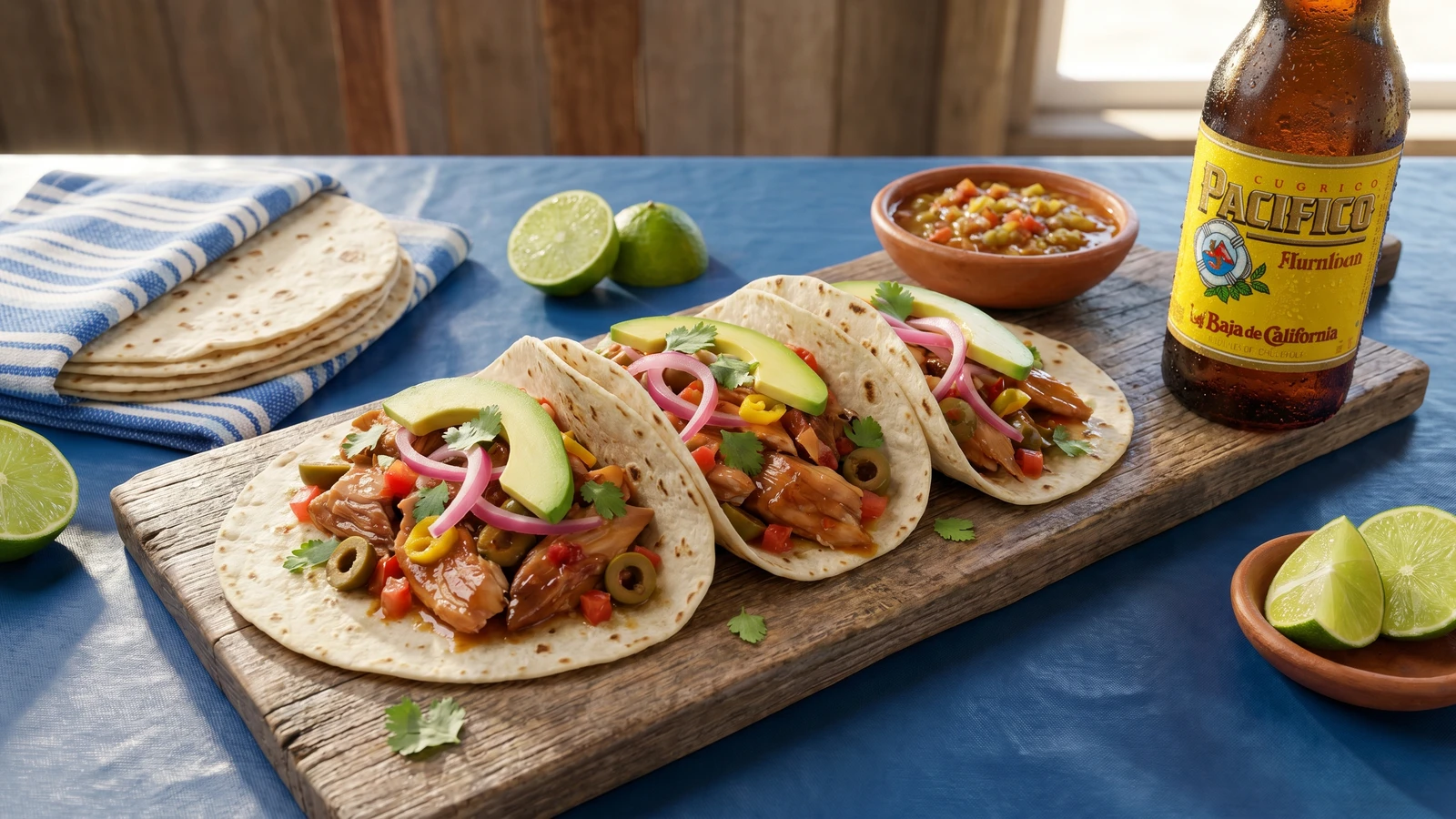
La Paz's smoked marlin taco, the fish shredded by hand and sauteed with onion, tomato, chile guero, olives, and capers, served warm in thin sudcaliforniana flour tortillas.
This is a Baja California Sur taco. Specifically from La Paz, the capital, where the marlin comes off the boats in the bay and the fishermen have been smoking the leftover catch over mesquite and palo de arco for generations. The flour tortilla here is not a Tex-Mex shortcut. It is a Noroeste birthright, and in Baja Sur it is thin, supple, and the natural wrapper for fish.
The filling is a sofrito of onion, garlic, tomato, and chile guero, with the smoked marlin folded in at the end and warmed through, never overcooked. The olives and capers tell you something about this dish that the casual eater misses: La Paz sits at the southern end of a long peninsula with a Mediterranean climate and a Spanish maritime memory, and the cooking shows it. Olives belong here. Capers belong here. This is not a pretender to peninsular Mexican cooking. It is its own thing, and the geography wrote the recipe.
The chile is the chile guero, the yellow wax chile, and that is not negotiable. It is fruity, mildly hot, and the visual signature of the dish. Replace it with jalapeno and you have a different taco. La cocina no es decoracion, es trabajo, and getting the chile right is part of the work. Cada estado, su propia cocina, and Baja Sur's kitchen does not ask permission from anyone else's.
Smoked marlin entered La Paz's culinary repertoire as a practical solution to the abundance of billfish landed in the Sea of Cortez during the 20th century, when commercial and sport fishing brought in more marlin than the fresh market could absorb. Local fishermen and their families adapted Mediterranean smoking and curing techniques carried over by Spanish and later Italian and Sicilian immigrants who settled the southern peninsula, producing a smoked fish that could be stored without refrigeration in a region where ice was historically scarce. The taco itself emerged as a beach-shack and palapa staple in the second half of the 20th century, with the sofrito-style filling, including olives and capers, reflecting the strong Mediterranean influence on Sudcaliforniana cooking that distinguishes it from the rest of northwest Mexico.
Quantity
1 pound
skin and dark bloodline removed, shredded by hand
Quantity
3 tablespoons
Quantity
1 medium
finely chopped
Quantity
3
finely minced
Quantity
3 medium
finely chopped
Quantity
3 to 4
stemmed and finely chopped
Quantity
1
finely chopped (optional, for more heat)
Quantity
1/4 cup
pitted and chopped
Quantity
2 tablespoons
rinsed and roughly chopped
Quantity
1/2 teaspoon
crumbled
Quantity
2
Quantity
1/4 cup
chopped
Quantity
to taste
Quantity
to taste
freshly cracked
Quantity
12
warmed
Quantity
for serving
Quantity
for serving
Quantity
for serving
Quantity
for serving
| Ingredient | Quantity |
|---|---|
| smoked marlinskin and dark bloodline removed, shredded by hand | 1 pound |
| manteca de cerdo (pork lard) or good olive oil | 3 tablespoons |
| white onionfinely chopped | 1 medium |
| garlic clovesfinely minced | 3 |
| ripe Roma tomatoesfinely chopped | 3 medium |
| chiles gueros (yellow wax chiles)stemmed and finely chopped | 3 to 4 |
| chile serrano (optional)finely chopped (optional, for more heat) | 1 |
| green olivespitted and chopped | 1/4 cup |
| capersrinsed and roughly chopped | 2 tablespoons |
| dried Mexican oreganocrumbled | 1/2 teaspoon |
| bay leaves | 2 |
| fresh cilantrochopped | 1/4 cup |
| kosher salt | to taste |
| black pepperfreshly cracked | to taste |
| small flour tortillas (tortillas de harina sudcalifornianas)warmed | 12 |
| salsa de chile guero (optional) | for serving |
| lime wedges (optional) | for serving |
| sliced avocado (optional) | for serving |
| pickled red onion (optional) | for serving |
Pull the smoked marlin apart with your hands into thin, irregular shreds. Pick out any bones and discard the dark bloodline along the spine. The bloodline is bitter and metallic, and a careless cook leaves it in. Set the shredded fish aside in a bowl. You should have about three loose cups.
Heat the lard in a wide skillet or cazuela over medium heat until it shimmers. Add the chopped onion and a generous pinch of salt. Cook for five to six minutes, stirring, until the onion softens and turns translucent at the edges. Do not let it brown. You want the sweetness, not the caramel.
Add the minced garlic and the chopped chile guero. Cook for one minute more, just until the garlic is fragrant and the chile softens. The chile guero is the signature of this taco. Yellow, slightly fruity, with mild heat that builds. If you replace it with jalapeno, you have changed the dish. Asi se hace y punto.
Add the chopped tomato, bay leaves, and oregano. Raise the heat to medium-high. Cook for eight to ten minutes, stirring often, until the tomato breaks down completely and the mixture thickens into a loose paste. The liquid should mostly cook off. You should be able to drag a spoon across the bottom of the pan and see a clear path for a second before it closes.
Lower the heat to medium. Add the shredded marlin, the chopped olives, and the capers. Fold gently with a wooden spoon to coat every shred in the sofrito. Cook for three to four minutes, just to warm the fish through and let it absorb the flavor of the base. Do not cook longer. The marlin is already cooked from the smoking, and overcooking it now turns the texture chalky and dry.
Pull out the bay leaves. Taste for salt. The smoked marlin and the olives are already salty, so you may not need to add much. Crack in the black pepper. Stir in the chopped cilantro off the heat. The filling should be moist but not wet, glossy from the lard, with the marlin holding its shred and the tomato clinging to it.
Heat a dry comal or heavy skillet over medium-high. Warm each flour tortilla for about 20 seconds per side, until it puffs in spots and develops a few brown freckles. Stack them in a clean cotton servilleta as you go to keep them soft and pliable. Sudcaliforniana flour tortillas are thin and supple, not the thick chewy kind from the supermarket. If you can buy fresh from a tortilleria, do.
Spoon a generous portion of the marlin filling down the center of each warm tortilla. Top with sliced avocado, a few rings of pickled red onion if you have them, and a spoonful of salsa de chile guero. Squeeze fresh lime over the top. Eat them immediately, standing at the counter or under a palapa, the way they eat them in La Paz. Recetas probadas y garantizadas.
1 serving (about 350g)
Culinary guides, cultural storytelling, and the editorial depth that makes cooking meaningful.
Discover Culinary ExplorerChef Lupita
Jalisco's goat birria, born around Cocula and carried into Guadalajara's markets, slow-braised in ancho, guajillo, cascabel, and chile de arbol, then tucked into corn tortillas crisped in its own red fat.

Chef Lupita
Sonora's working morning burrito: chicharrón de cáscara stewed in chile colorado with diced potato, rolled tight in a paper-thin tortilla sobaquera and eaten standing up at the carreta.

Chef Lupita
Mocorito's pork chilorio, shredded and confited in lard with chile ancho and pasilla, rolled into a thin handmade flour tortilla. The burrito Sinaloa sends out into the world.

Chef Lupita
Sonora's morning burrito of mashed pinto frijoles puercos and melted queso asadero, wrapped in a paper-thin sobaquera and seared on the comal until the cheese pulls in long strings.