
Chef Lupita
Burrito de Chicharrón Sonorense
Sonora's working morning burrito: chicharrón de cáscara stewed in chile colorado with diced potato, rolled tight in a paper-thin tortilla sobaquera and eaten standing up at the carreta.
A cooking platform built around craft, culture, and the stories behind what we eat.
Created by
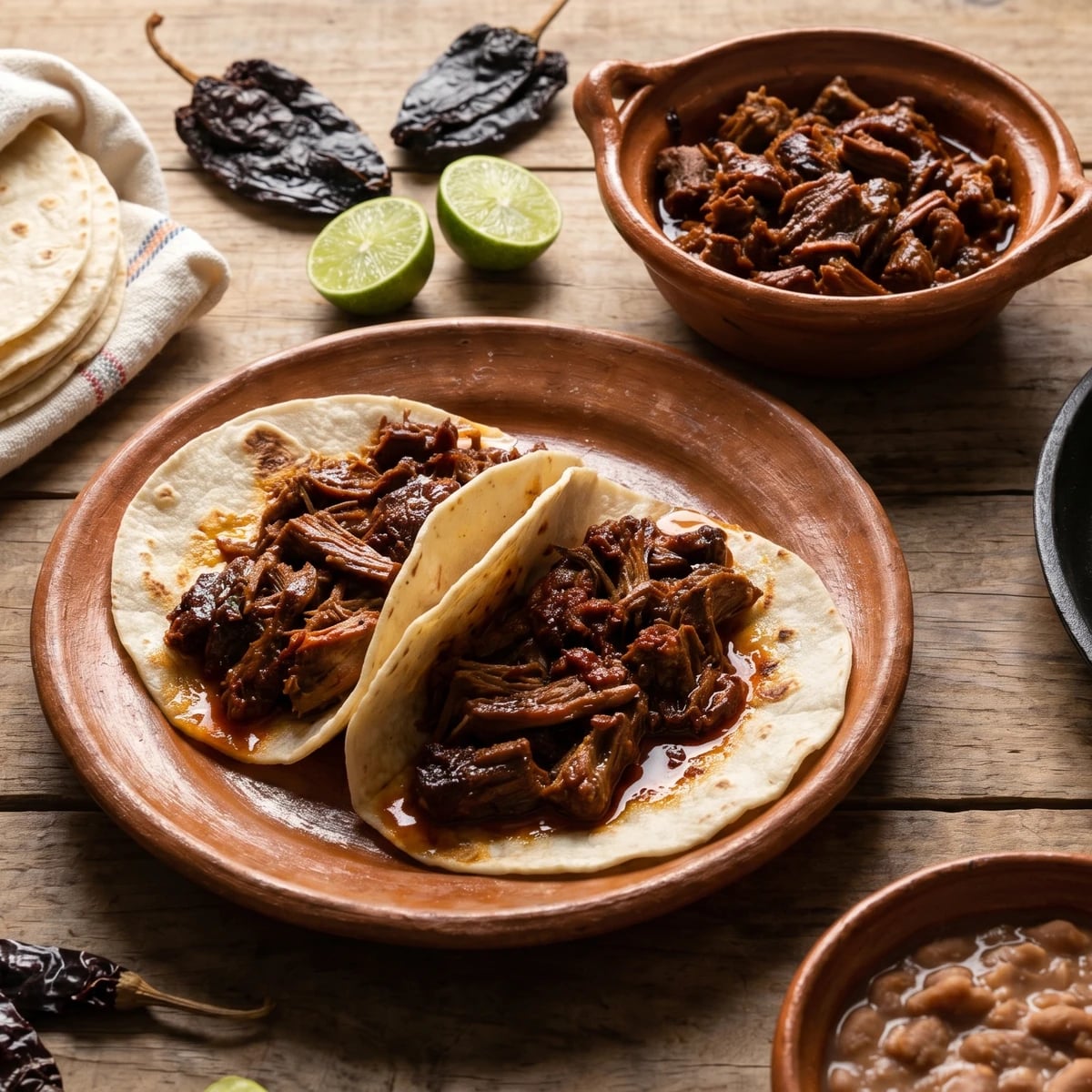
Sinaloa's chilorio, pork shoulder slow-simmered, shredded, and fried in lard with chile ancho and chile pasilla, folded into warm flour tortillas with raw white onion and a squeeze of lime.
Chilorio is from Sinaloa. More precisely, it is from Mocorito, a small Pueblo Magico in the north of the state where the women have been making this dish for generations and where the local chilorio is sold by the kilo, packed into clay jars, and carried home for the week. This is not a Sonoran dish, not a Chihuahuense dish, not a generic norteno dish. It is sinaloense, and the cooks of Mocorito will tell you so without softening it.
Chilorio was born as a preservation method. Before refrigeration, the pork shoulder was cooked, shredded, and fried in lard with chile ancho, chile pasilla, vinegar, and spices, then packed under a layer of fat in clay jars where it kept for weeks in the heat. The vinegar and the rendered lard did the work. What started as a way to keep meat through the season became one of the great taco fillings of northwestern Mexico. The technique is still the recipe. Skip the frying step, and you have shredded pork in chile. Fry it until the fat separates and the paste clings to every strand, and you have chilorio.
These go in flour tortillas. Not corn. Tortillas de harina, soft and pliable, the way they make them across the Noroeste, from Sonora down through Sinaloa. The flour tortilla is a regional birthright, not a Tex-Mex compromise. Wheat grew in the north when corn was the staple of the south, and the cooks of Sinaloa adapted accordingly. Cada estado, su propia cocina.
My mother never cooked chilorio. She was from Jalisco and her notebook ended at the Bajio. I learned this dish in Mocorito itself, from a senora named Dona Rosario who had a comal the size of a manhole cover and who let me stand in her kitchen for two afternoons watching her shred pork by hand and stir the chile paste with a wooden spoon worn smooth from years of use. She told me the only rule that mattered: do not stop stirring once the paste hits the pan, and do not pull it off the heat until you see the lard come back out. La cocina no es decoracion, es trabajo.
Chilorio originated in the town of Mocorito, Sinaloa, in the 19th century as a preservation technique that allowed pork to be stored without refrigeration through the long, hot summers of the Sinaloan lowlands. The combination of vinegar, dried chiles, and a sealing layer of rendered lard made the meat shelf-stable for weeks, a method that paralleled European confit traditions but used the indigenous chiles ancho and pasilla as the primary flavor and preservative agents. Mocorito was named a Pueblo Magico in 2015, and its identity is now formally tied to chilorio production, with several family-run obradores still making it the traditional way and selling it nationally in clay jars and vacuum-sealed pouches.
Quantity
3 pounds
cut into 2-inch chunks
Quantity
1 medium
halved
Quantity
1
halved crosswise
Quantity
4
Quantity
2
Quantity
1 tablespoon, plus more to taste
Quantity
6
stemmed and seeded
Quantity
4
stemmed and seeded
Quantity
2
stemmed and seeded
Quantity
1 teaspoon
Quantity
1 teaspoon
Quantity
1/2 teaspoon
Quantity
2
Quantity
3 tablespoons
Quantity
1/2 cup
Quantity
16
warmed
Quantity
1 medium
finely diced
Quantity
for serving
Quantity
for serving
Quantity
for serving
| Ingredient | Quantity |
|---|---|
| boneless pork shouldercut into 2-inch chunks | 3 pounds |
| white onion (for the broth)halved | 1 medium |
| head of garlichalved crosswise | 1 |
| garlic cloves (for the chile paste) | 4 |
| bay leaves | 2 |
| kosher salt | 1 tablespoon, plus more to taste |
| dried chile anchostemmed and seeded | 6 |
| dried chile pasillastemmed and seeded | 4 |
| dried chile guajillostemmed and seeded | 2 |
| cumin seeds | 1 teaspoon |
| dried Mexican oregano | 1 teaspoon |
| whole black peppercorns | 1/2 teaspoon |
| whole cloves | 2 |
| apple cider vinegar | 3 tablespoons |
| pork lard (manteca de cerdo) | 1/2 cup |
| small flour tortillas (tortillas de harina)warmed | 16 |
| white onion (for serving)finely diced | 1 medium |
| lime wedges | for serving |
| salsa de chiltepin or salsa de chile de arbol | for serving |
| refried pinto beans (optional) | for serving |
Place the pork shoulder chunks in a heavy pot and cover with cold water by an inch. Add the halved onion, the halved head of garlic, bay leaves, and the tablespoon of salt. Bring to a gentle simmer over medium heat. Skim the gray foam that rises in the first ten minutes. Cold water draws the flavor out and keeps the broth clean. A rolling boil clouds it and toughens the meat.
Lower the heat until the surface barely moves. Cover partially and cook for one and a half to two hours, until the pork pulls apart with light pressure from a fork. Reserve one cup of the cooking liquid before draining. Discard the onion, garlic, and bay leaves. Set the meat aside on a sheet pan to cool just enough to handle.
While the pork simmers, heat a dry comal or heavy skillet over medium. Toast the ancho, pasilla, and guajillo chiles separately, about 20 to 30 seconds per side. Press them flat with a spatula. They should puff and turn fragrant, never blacken. The kitchen will smell like a chile vendor's stall. That smell is the oils releasing.
In the same comal, toast the cumin seeds, peppercorns, and cloves for about 30 seconds, until fragrant. Tip them onto a plate. Place the toasted chiles in a heatproof bowl and cover with hot tap water, not boiling. Boiling water cooks the skin and turns the paste bitter. Soak for 20 minutes until soft and pliable.
Drain the chiles and transfer them to a blender with the four raw garlic cloves, the toasted spices, the oregano, the apple cider vinegar, and a half cup of the reserved pork broth. Blend on high until completely smooth, two to three minutes. The paste should be thick, dark, and glossy, the color of red clay. Strain through a fine-mesh sieve, pressing on the solids with the back of a spoon. Discard the skins. This is the soul of chilorio. Asi se hace y punto.
While the meat is still warm, shred it by hand or with two forks. You want rough strands, not fine threads and not big chunks. Chilorio has a specific texture: short, broken pieces that hold the chile paste in their fibers. The vinegar in the paste is what preserves the meat, the way the senoras of Mocorito have done it for generations to keep pork through the heat without refrigeration.
Melt the lard in a wide heavy skillet or cazuela over medium heat. When it shimmers, add the shredded pork and stir to coat. Cook for five minutes, letting the edges of the meat catch a little color in the fat. Now pour in the strained chile paste. It will sputter. Stir constantly so nothing sticks.
Lower the heat to medium-low and cook for 25 to 35 minutes, stirring often, until the paste darkens, clings to every strand of pork, and the lard begins to separate at the edges of the pan. That separation is the signal. It tells you the chile is fried, not raw, and the chilorio will keep. Taste for salt and adjust. If it looks dry, add a splash of the reserved broth. The finished chilorio is dark, almost brick-colored, and slightly oily, with no liquid pooling in the pan.
Heat a comal or dry skillet over medium-high. Warm each flour tortilla for about 20 seconds per side, until soft, pliable, and lightly speckled. Stack them in a hand-woven servilleta to keep warm. The flour tortilla is non-negotiable here. Chilorio belongs in tortillas de harina the way carnitas belongs in corn. The Noroeste is wheat country, and these tacos are the proof.
Spoon a generous line of chilorio down the center of each warm flour tortilla. Top with finely diced raw white onion and a squeeze of lime. Pass the salsa de chiltepin and the refried beans separately. Eat them the moment they are folded. Recetas probadas y garantizadas.
1 serving (about 210g)
Culinary guides, cultural storytelling, and the editorial depth that makes cooking meaningful.
Discover Culinary Explorer
Chef Lupita
Sonora's working morning burrito: chicharrón de cáscara stewed in chile colorado with diced potato, rolled tight in a paper-thin tortilla sobaquera and eaten standing up at the carreta.

Chef Lupita
Mocorito's pork chilorio, shredded and confited in lard with chile ancho and pasilla, rolled into a thin handmade flour tortilla. The burrito Sinaloa sends out into the world.

Chef Lupita
Sonora's morning burrito of mashed pinto frijoles puercos and melted queso asadero, wrapped in a paper-thin sobaquera and seared on the comal until the cheese pulls in long strings.

Chef Lupita
Baja California Sur's smoked marlin burrito, sauteed with white onion, tomato, green olives, and capers, then rolled in a paper-thin flour tortilla. The beach lunch of La Paz and Cabo, served on the sand with a cold Pacifico.