
Chef Lupita
Acambaritas de Acámbaro
Guanajuato's daily bread from Acámbaro, a small glazed roll built on pata, enriched with manteca de cerdo, and baked until the top shines lightly for merienda.
A cooking platform built around craft, culture, and the stories behind what we eat.
Created by
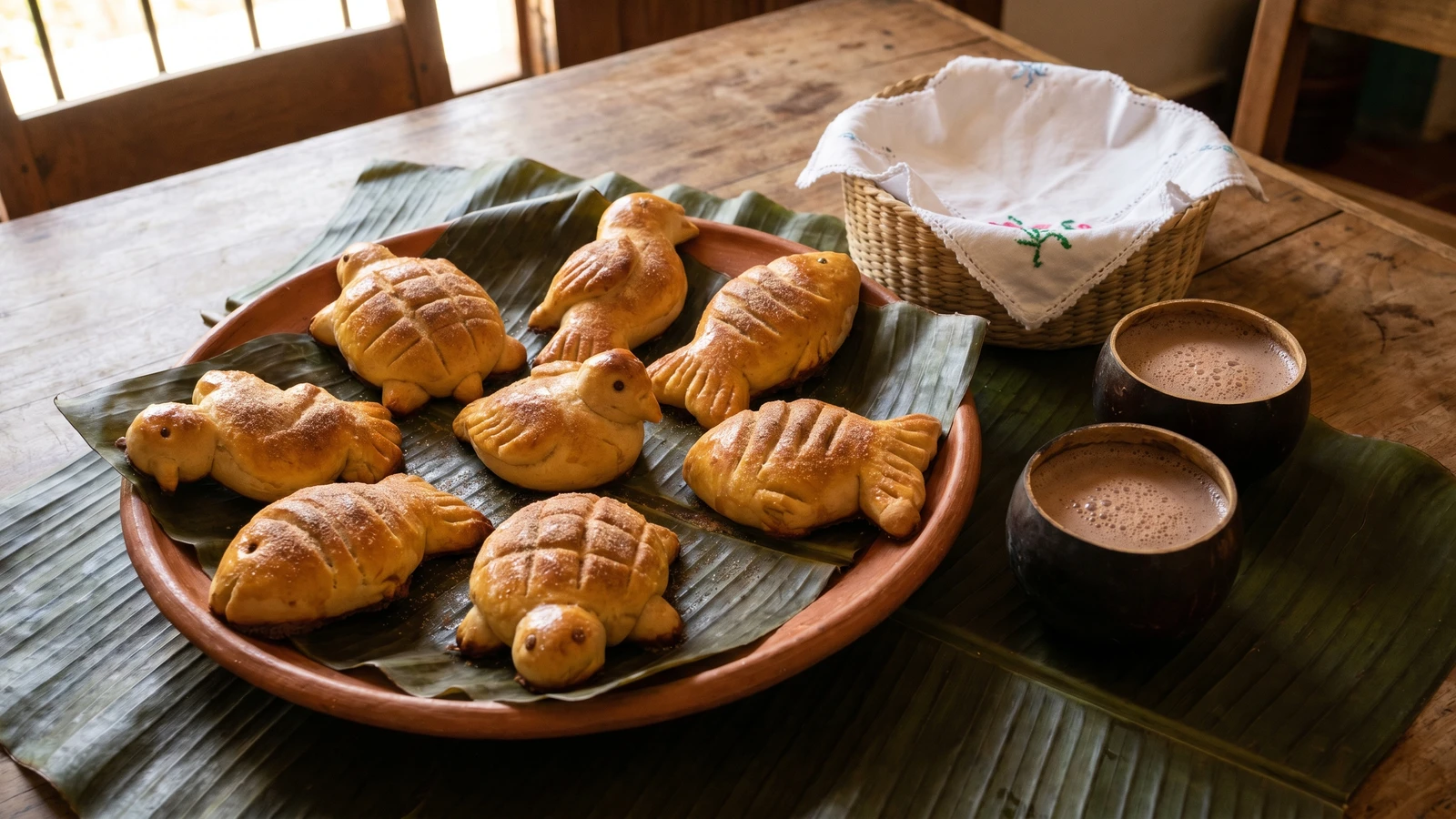
Tamulté de las Sabanas gives Tabasco a Yokot'an pan de muerto shaped by hand into birds, turtles, fish, and little animals for the altar, with lard, canela, and hoja de plátano doing the work.
Tabasco, specifically Tamulté de las Sabanas in the municipality of Centro, keeps this Yokot'an Maya pan de muerto in the hands of the people who shape it. Not the round bread with bone strips from the center of the country. This one comes out as animals: birds, turtles, fish, lizards, little figures made for the altar and for the ancestros who are expected to recognize the work of the living.
The geography is in the dough. Tabasco is humid, green, and low, with plátano, cacao, canela in the pantry, and women who learned to bake before recipe cards pretended to be authority. The banana leaf under the bread is not a garnish. It protects the dough, perfumes the bottom, and says where this bread belongs. If you bake it on bare metal, it will still be bread. It will not speak the same way.
I learned this kind of altar bread from Yokot'an cooks who shaped the dough without measuring the animals, just by knowing what the dough could hold. That is the technique: enriched bread strong enough to rise, soft enough to eat, firm enough to keep a turtle shell or a bird's beak. Cada estado, su propia cocina. This is Tabasco's.
Tamulté de las Sabanas is one of Tabasco's principal Yokot'an, often called Chontal Maya, communities, and its Día de Muertos breads are tied to household altars rather than commercial panadería display alone. The animal-shaped breads reflect a local Maya altar language in which food, cacao, corn drinks, fruit, candles, and handmade figures accompany the returning dead during Todos Santos and Día de Muertos. The custom is more than a century old in community memory, shaped by Indigenous ceremonial practice and the wheat bread introduced after Spanish colonization.
Quantity
1 cup
warmed until it feels like bath water
Quantity
2 1/4 teaspoons
Quantity
1/2 cup
divided
Quantity
4 1/2 cups, plus more for shaping
Quantity
1 teaspoon
Quantity
1 teaspoon
Quantity
1/4 teaspoon
Quantity
3
room temperature
Quantity
1/2 cup
softened
Quantity
3 tablespoons
softened
Quantity
1 teaspoon
Quantity
1 teaspoon
finely grated
Quantity
1 tablespoon
for brushing
Quantity
1
for brushing
Quantity
2
wiped clean and cut to fit baking sheets
Quantity
2 tablespoons
for finishing
Quantity
1/2 teaspoon
for finishing
| Ingredient | Quantity |
|---|---|
| whole milkwarmed until it feels like bath water | 1 cup |
| active dry yeast | 2 1/4 teaspoons |
| granulated sugardivided | 1/2 cup |
| all-purpose flour | 4 1/2 cups, plus more for shaping |
| fine sea salt | 1 teaspoon |
| ground Mexican canela | 1 teaspoon |
| ground anise seed | 1/4 teaspoon |
| large eggsroom temperature | 3 |
| manteca de cerdosoftened | 1/2 cup |
| unsalted buttersoftened | 3 tablespoons |
| vanilla extract | 1 teaspoon |
| orange zestfinely grated | 1 teaspoon |
| whole milkfor brushing | 1 tablespoon |
| egg yolkfor brushing | 1 |
| banana leaveswiped clean and cut to fit baking sheets | 2 |
| granulated sugarfor finishing | 2 tablespoons |
| ground Mexican canelafor finishing | 1/2 teaspoon |
Stir the warm milk, yeast, and 1 tablespoon of the sugar in a small bowl. Let it sit for 10 minutes, until a beige foam rises on top. If nothing happens, your yeast is dead. Start again. Bread does not forgive dead yeast.
In a large bowl, whisk the flour, remaining sugar, salt, canela, and ground anise. The canela should smell warm and clean, not dusty. Buy it in a Mexican market if you can. The hard cassia sticks from the supermarket are not the same thing.
Make a well in the flour. Add the foamy yeast mixture, eggs, manteca de cerdo, butter, vanilla, and orange zest. Mix with your hand until the dough comes together in a rough, sticky mass. The lard is not decoration. It gives the bread its tender crumb and the altar bread its old flavor. La manteca es el sabor.
Turn the dough onto a lightly floured table and knead for 12 to 15 minutes. Push, fold, turn. At first it will stick to your fingers. Do not bury it in flour. Keep kneading until it turns smooth, soft, and elastic, with a light sheen from the fat. A stand mixer with a dough hook works, 8 to 10 minutes on medium-low, but your hands will teach you more.
Place the dough in a lightly greased bowl. Cover with a clean cloth and let it rise in a warm place until doubled, about 1 1/2 hours. In Tabasco's humid heat, dough moves quickly. In a cold kitchen, it takes longer. Watch the dough, not the clock.
Pass the banana leaves quickly over a low gas flame or hot comal until they turn glossy and flexible. Do not burn them. Line two baking sheets with the softened leaves, shiny side up. The hoja de plátano perfumes the bottom of the bread and keeps it from drying against the metal.
Punch down the dough and divide it into 12 to 14 pieces. Shape each piece by hand into animals for the altar: turtles with crosshatched shells, birds with pinched beaks, fish with ridged tails, little lizards with four legs. Use small bits of dough for ears, wings, tails, and bones. Press the pieces firmly so they do not detach in the oven. This is not pastry school sculpture. It is altar work, and the hand should show.
Arrange the shaped breads on the banana leaves with two inches between them. Cover loosely and let them rise until puffy, 35 to 45 minutes. They should feel alive when you touch them, not heavy and cold. If you overproof them, the animals lose their shape. No me vengas con atajos.
Heat the oven to 350F. Beat the egg yolk with 1 tablespoon milk and brush the breads lightly. Bake for 20 to 25 minutes, until golden brown on top and browned underneath where the banana leaf touched the dough. The kitchen should smell of canela, warm fat, and toasted leaf.
Stir the finishing sugar with the canela. While the breads are still warm, sprinkle a little over the tops. Do not cover the shapes completely. The animal form matters. Place the breads on the Día de Muertos altar with jícara cups of atole, cacao, fruit, candles, and flowers, then serve the rest at the table. Saber cocinar es saber vivir.
1 serving (about 90g)
Culinary guides, cultural storytelling, and the editorial depth that makes cooking meaningful.
Discover Culinary ExplorerChef Lupita
Guanajuato's daily bread from Acámbaro, a small glazed roll built on pata, enriched with manteca de cerdo, and baked until the top shines lightly for merienda.

Chef Lupita
Michoacan's Tinguindin aguacatas are flat, leaf-scored sweet breads made with harina de trigo, piloncillo, anise, and manteca de cerdo, shaped by hand for the wood oven.

Chef Lupita
From Ajijic on Lake Chapala, Pan Tachihual is a lightly sweet wedding loaf built with harina de trigo, harina de maiz, piloncillo, manteca, anise, and the old Guadalajara pata.

Chef Lupita
Comitán's pan de yema shaped into little pigs, birds, and rabbits, a Chiapas bakery bread rich with egg yolks, manteca de cerdo, and anís, baked golden on hoja de plátano.