
Chef Lupita
Acambaritas de Acámbaro
Guanajuato's daily bread from Acámbaro, a small glazed roll built on pata, enriched with manteca de cerdo, and baked until the top shines lightly for merienda.
A cooking platform built around craft, culture, and the stories behind what we eat.
Created by
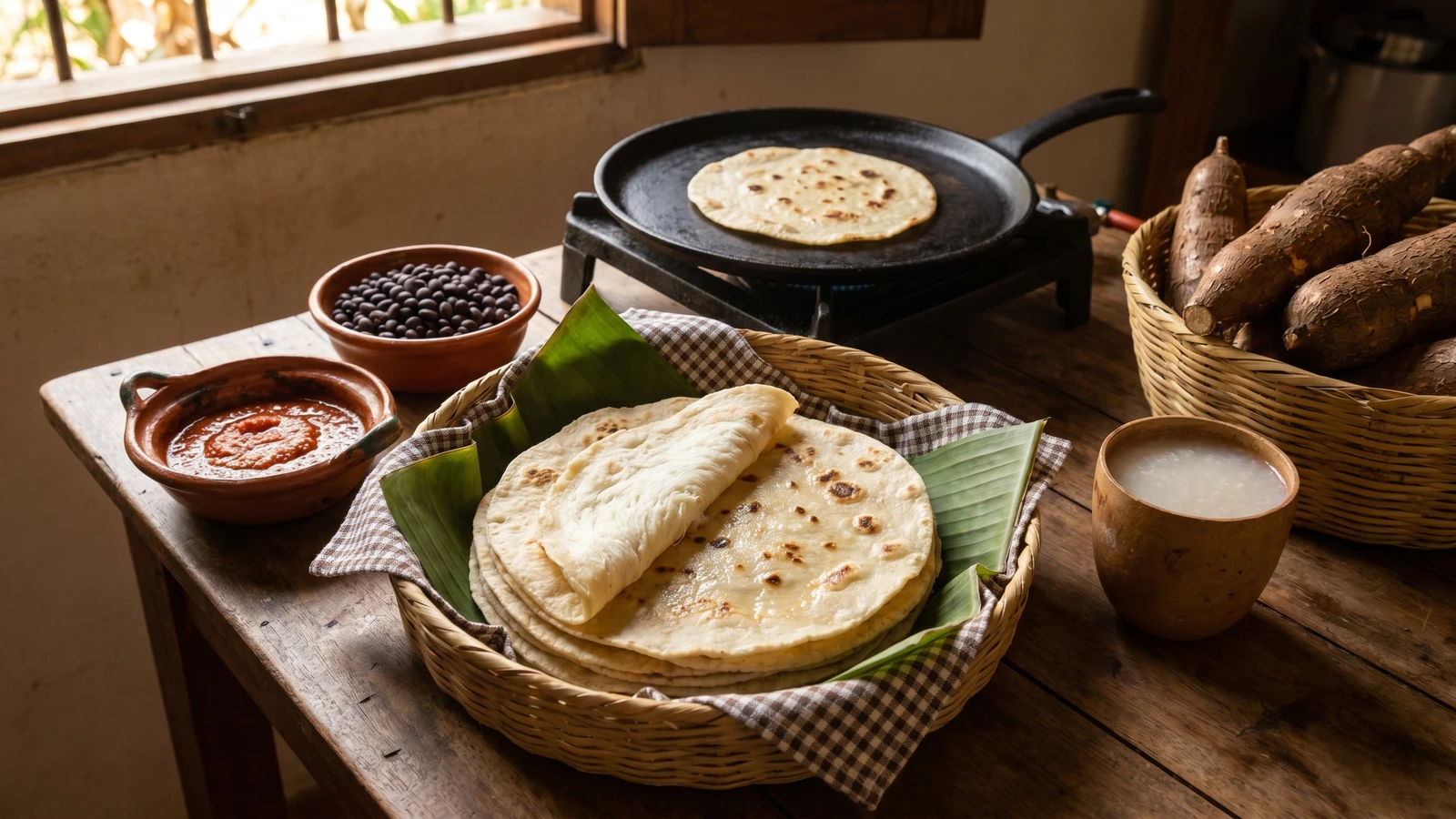
Tabasco's Chontalpa tortilla de yuca is grated cassava worked into nixtamal masa with manteca de cerdo, then cooked on a comal until soft, speckled, and faintly sweet.
Tabasco, especially the Chontalpa, is where this tortilla belongs: low, humid land, cacao country, plantain country, yuca country. This is not a northern flour tortilla and it is not a central Mexican corn tortilla pretending to be universal. Cada estado, su propia cocina.
The yuca gives the dough its softness and that quiet sweetness you taste before the salt and lard come forward. The masa gives structure. The manteca de cerdo gives tenderness. La manteca es el sabor. If you leave it out, the tortilla turns dry and stiff, and then you will blame the yuca. Don't blame the yuca.
I learned this kind of cooking from women who grated roots by hand because that was what the kitchen required. You press the grated yuca well, because too much liquid makes the tortilla gummy. You cook it on a dark comal until brown freckles appear and the edges stop looking wet. No me vengas con atajos. The work is small, but it matters.
Yuca, also called cassava or mandioca, was cultivated in the tropical lowlands of Mesoamerica and the Caribbean long before the Spanish arrived, and it remains important in Tabasco, Chiapas, Campeche, and the Yucatan Peninsula. In Tabasco's Chontalpa, yuca entered everyday breads and masa preparations because the crop thrives in humid soil where corn harvests can be uneven. Tortillas and cakes made with yuca show the Gulf lowlands' older root-crop tradition alongside the national corn tradition, a reminder that Mexican bread is not one thing.
Quantity
1 pound
peeled, woody core removed, finely grated
Quantity
2 cups
Quantity
3 tablespoons
softened
Quantity
1 teaspoon
Quantity
2 to 4 tablespoons
only if the dough feels dry
Quantity
as needed
Quantity
for serving
Quantity
for serving
| Ingredient | Quantity |
|---|---|
| fresh yucapeeled, woody core removed, finely grated | 1 pound |
| fresh nixtamal masa or prepared masa harina dough | 2 cups |
| manteca de cerdo (pork lard)softened | 3 tablespoons |
| fine sea salt | 1 teaspoon |
| warm water (optional)only if the dough feels dry | 2 to 4 tablespoons |
| manteca de cerdo for handling and comal (optional) | as needed |
| frijoles negros de olla (optional) | for serving |
| salsa de chile amashito (optional) | for serving |
Peel the yuca deeply, past the brown skin and the pinkish layer underneath. Cut it lengthwise and remove the tough woody core. Grate the white flesh on the fine holes of a box grater. Yuca is not a potato. That center core stays hard and fibrous, and it does not belong in your tortilla.
Wrap the grated yuca in a clean cotton towel and squeeze hard over a bowl until it stops dripping. You want damp grated yuca, not wet pulp. Too much liquid makes the tortilla gummy on the comal. The señoras in Tabasco know this by feel: the yuca should clump in your hand but not leak between your fingers.
Put the pressed yuca, nixtamal masa, manteca de cerdo, and salt in a wide bowl. Knead with your hand for 4 to 5 minutes, pressing the yuca evenly into the masa. The dough should feel soft, cohesive, and a little tacky, never soupy. If it cracks badly when pressed, add warm water one tablespoon at a time. If it smears like paste, you did not press the yuca enough.
Cover the bowl with a damp towel and let the dough rest for 15 minutes. This gives the masa time to drink in the moisture from the yuca and lets the lard soften the dough. A tortilla made immediately can tear at the edges. Patience fixes what force cannot.
Divide the dough into 12 balls, each about the size of a small lime. Lightly grease your hands with manteca. Press each ball between two pieces of plastic in a tortilla press, or pat it by hand, into a tortilla about 5 inches wide and a little thicker than a standard corn tortilla. Yuca dough is tender. Do not bully it.
Heat a cast iron comal over medium. Lay one tortilla down and cook for 60 to 90 seconds, until the surface looks drier and small brown freckles appear underneath. Flip and cook the second side another 60 to 90 seconds. Flip once more for 20 to 30 seconds to finish. It may puff in spots. Good. That means the dough is hydrated and the comal is doing its work.
Move the cooked tortillas to a woven tortillero lined with a clean servilleta. Keep them covered while you cook the rest. Serve warm with frijoles negros de olla and salsa de chile amashito if you have it. This is Tabasco comfort food, quiet and serious. Saber cocinar es saber vivir.
1 serving (about 115g)
Culinary guides, cultural storytelling, and the editorial depth that makes cooking meaningful.
Discover Culinary ExplorerChef Lupita
Guanajuato's daily bread from Acámbaro, a small glazed roll built on pata, enriched with manteca de cerdo, and baked until the top shines lightly for merienda.

Chef Lupita
Michoacan's Tinguindin aguacatas are flat, leaf-scored sweet breads made with harina de trigo, piloncillo, anise, and manteca de cerdo, shaped by hand for the wood oven.

Chef Lupita
From Ajijic on Lake Chapala, Pan Tachihual is a lightly sweet wedding loaf built with harina de trigo, harina de maiz, piloncillo, manteca, anise, and the old Guadalajara pata.

Chef Lupita
Comitán's pan de yema shaped into little pigs, birds, and rabbits, a Chiapas bakery bread rich with egg yolks, manteca de cerdo, and anís, baked golden on hoja de plátano.