
Chef Lupita
Arroz a la Oaxaqueña
Oaxaca's red rice, stained with tomato and fried in lard, steamed with carrots, ejotes, black beans, and epazote. The side that anchors a Oaxacan family meal and earns its place beside the main.
A cooking platform built around craft, culture, and the stories behind what we eat.
Created by
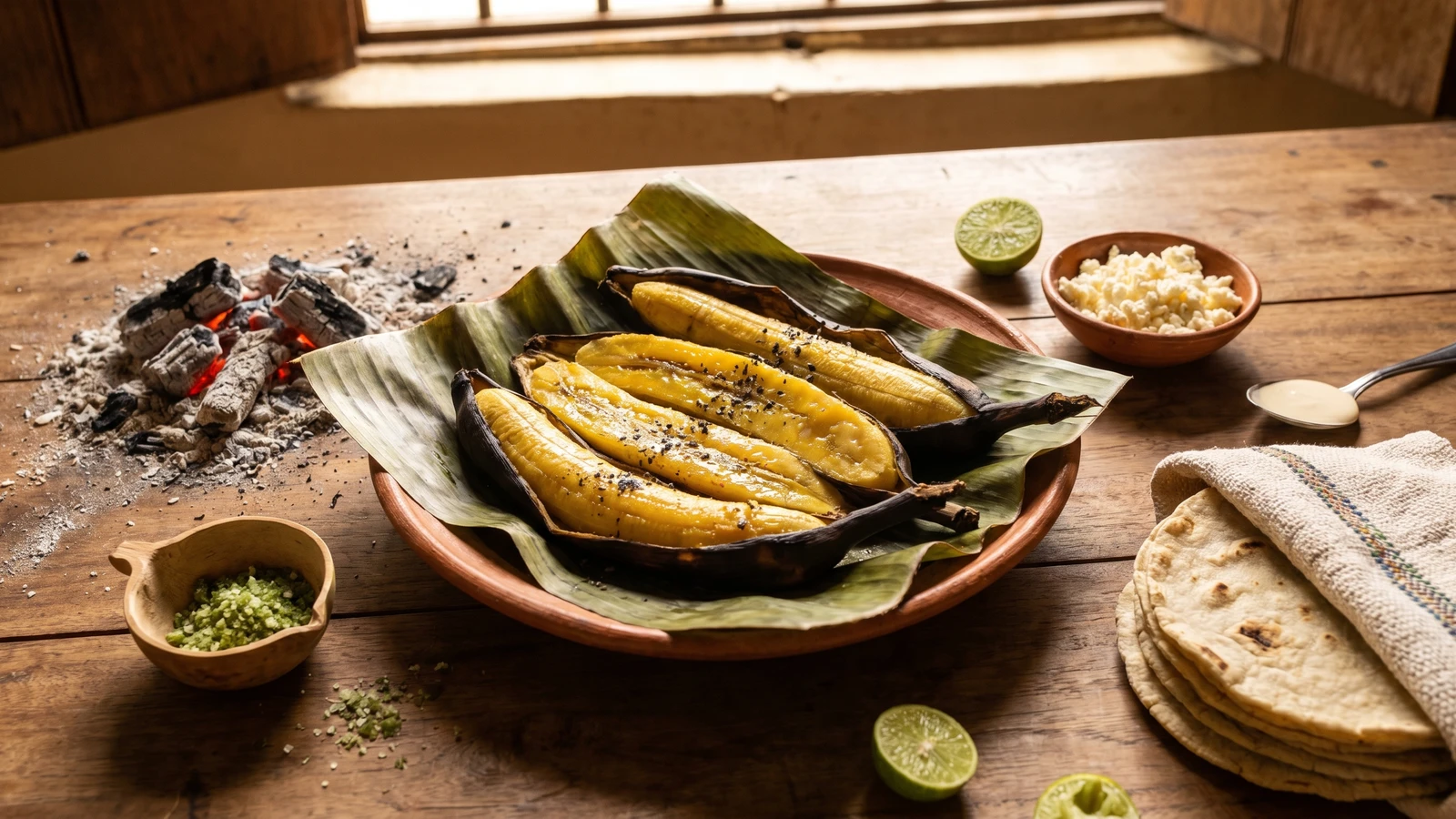
Tabasco's Chontal lowland plantains, roasted whole in embers until the peel goes black and the flesh turns sweet, dense, and spoon-soft, with chile amashito salt at the table.
Tabasco, the Chontal lowlands, the wet heat between cacao trees, banana plants, and river mud. This is where plátano macho maduro belongs, not as a garnish, not as a sweet trick on a plate, but as food cooked directly in the rescoldo, the bed of hot embers left after the fire has done its larger work.
The technique is older than any oven in the house. Women in Tabasco perfected this because it uses what the kitchen already has: the cooking fire, the ash, the banana leaf, the fruit turning black and sweet on the counter. You bury the whole plantain with its peel on. No oil. No pan. The skin protects the flesh while the heat moves slowly through it, and when you split it open the inside should look like warm custard, yellow-gold and heavy with sugar.
The Tabasco note at the table is chile amashito, small, green, sharp, and serious. Crush it with salt and a little lime, then use it with discipline. This dish is sweet, not hot for the sake of being hot. Cada estado, su propia cocina. A Veracruz cook may serve plantains another way, a Yucatecan cook another, but this lowland version belongs to the fire and the ember. Así se hace y punto.
Plantains arrived in New Spain through Spanish and Portuguese colonial trade routes in the 16th century and took quickly to the humid Gulf and Caribbean lowlands, including Tabasco. Cooking in ashes or embers, called rescoldo, has deep Indigenous roots across Mesoamerica and remained practical in rural kitchens because it needs no metal pan, only a managed fire. In Tabasco, the technique sits naturally beside Chontal Maya foodways built around cacao, river fish, banana leaves, maize, and the small chile amashito.
Quantity
6
skins yellow with many black spots but not leaking
Quantity
6 squares, about 10 inches each
wiped clean and passed briefly over heat to soften
Quantity
1 tablespoon
Quantity
4 to 6
stems removed
Quantity
2
halved
Quantity
1 tablespoon
Quantity
1/4 cup
crumbled
| Ingredient | Quantity |
|---|---|
| very ripe plátanos machosskins yellow with many black spots but not leaking | 6 |
| fresh banana leaf squareswiped clean and passed briefly over heat to soften | 6 squares, about 10 inches each |
| coarse sea salt | 1 tablespoon |
| fresh chile amashitostems removed | 4 to 6 |
| limeshalved | 2 |
| crema de rancho (optional) | 1 tablespoon |
| queso fresco (optional)crumbled | 1/4 cup |
Use plátanos machos that are mostly black with yellow showing through, soft when pressed, but not split or fermenting. Green plantains will roast, yes, but they will be starchy and tight. This dish needs ripe fruit. The sugar is the point.
Build a wood or charcoal fire and let it burn down until you have a deep bed of glowing embers with a layer of pale ash. You are not grilling over flame. Flame burns the peel before the center softens. Embers cook steadily, the way a Tabasco kitchen fire does after the main pot has already come off.
Pass each banana leaf square quickly over the edge of the fire or a hot comal until it turns glossy and flexible. Lay one whole unpeeled plantain on each square and wrap loosely, folding the ends under. The leaf keeps ash out of the split peel and gives the fruit that green lowland aroma. Do not peel the plantain. The peel is the cooking vessel.
Nestle the wrapped plantains into the embers and cover them lightly with more ash and coals. Roast for 20 to 30 minutes, turning once with tongs halfway through. The leaf will darken and char, the peel underneath will blacken, and the plantain should feel heavy and soft from end to end when pressed gently with tongs.
While the plantains roast, crush the chile amashito with the coarse sea salt in a molcajete until the chile breaks into the salt. Squeeze in a little lime juice and grind just enough to make a rough, wet salt. Do not turn it into salsa. You want small hits of chile against the sweetness, not a wet sauce drowning the fruit.
Lift the plantains out of the embers and let them sit for 5 minutes. Brush away loose ash from the banana leaf before opening. Split each plantain lengthwise through the blackened peel and open it like a canoe. The flesh should be deep yellow, glossy, and spoon-soft. If the center is still firm, wrap it again and return it to the embers for 5 to 8 minutes.
Serve the plantains warm in the opened banana leaves, with chile amashito salt, lime halves, and, if your table wants it, a small spoon of crema de rancho or a little crumbled queso fresco. Do not pile on sugar. The plantain already brought its own sweetness. Recetas probadas y garantizadas.
1 serving (about 200g)
Culinary guides, cultural storytelling, and the editorial depth that makes cooking meaningful.
Discover Culinary ExplorerChef Lupita
Oaxaca's red rice, stained with tomato and fried in lard, steamed with carrots, ejotes, black beans, and epazote. The side that anchors a Oaxacan family meal and earns its place beside the main.
Chef Lupita
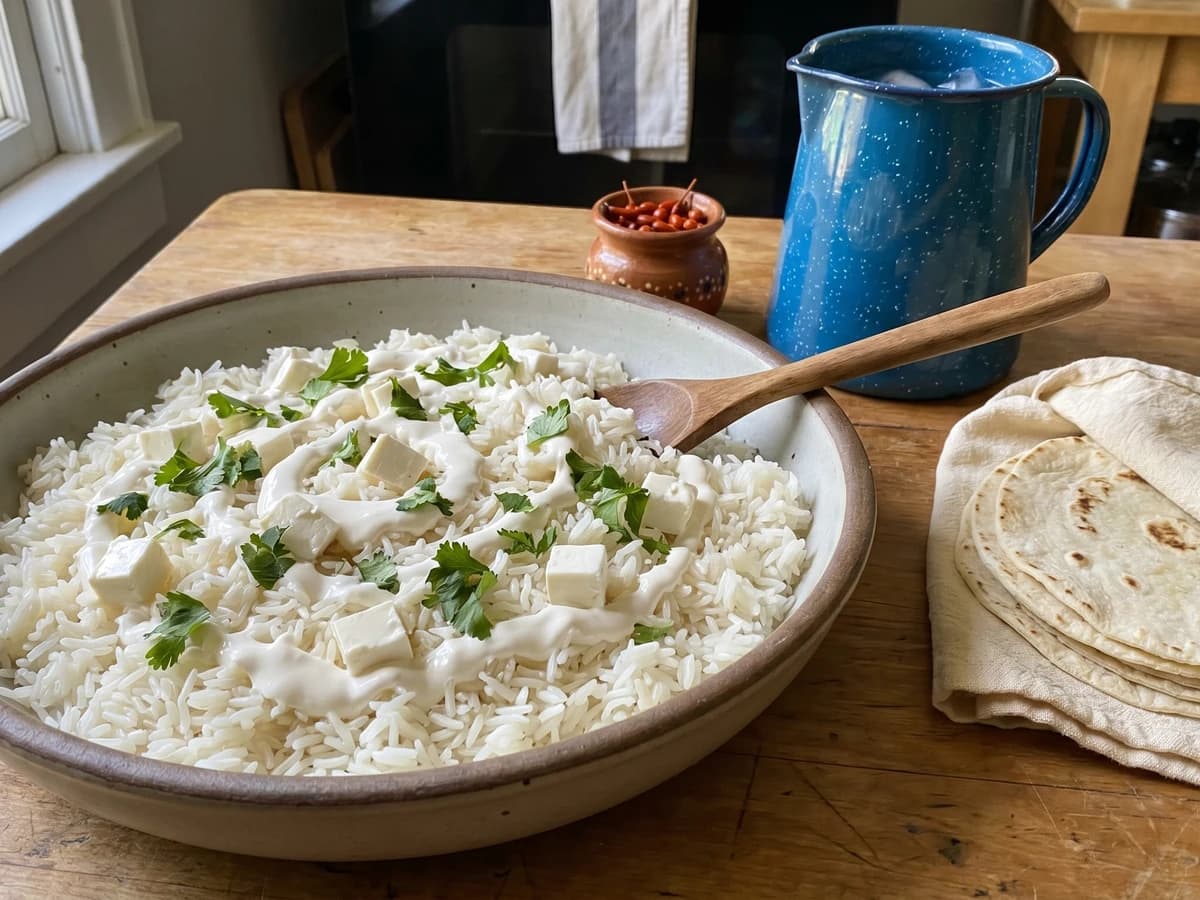
Sinaloa's home-cook white rice topped with cold cubes of cream cheese that soften into the warm grain, finished with crema and a sprinkle of chiltepin at the table. The trick that makes a side dish feel like a small luxury.
Chef Lupita
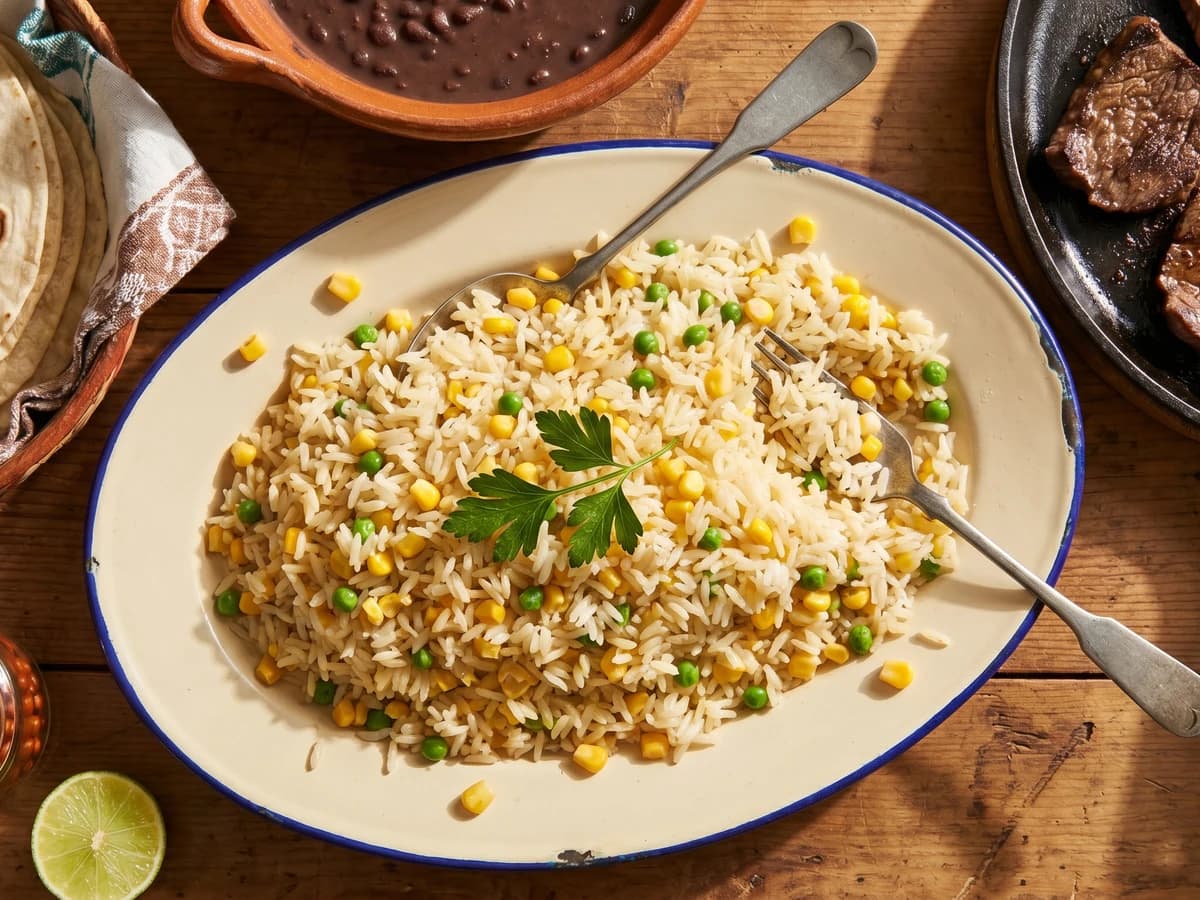
Sonora's white rice, toasted in butter and steamed with sweet corn and tender peas. The clean, quiet partner to a plate of carne asada, not the red rice of central Mexico.

Chef Lupita
Yucatán's white rice with sweet corn kernels, toasted in lard with garlic and onion. The quiet base that holds up against the peninsula's bold achiote-stained stews.