Chef Joost
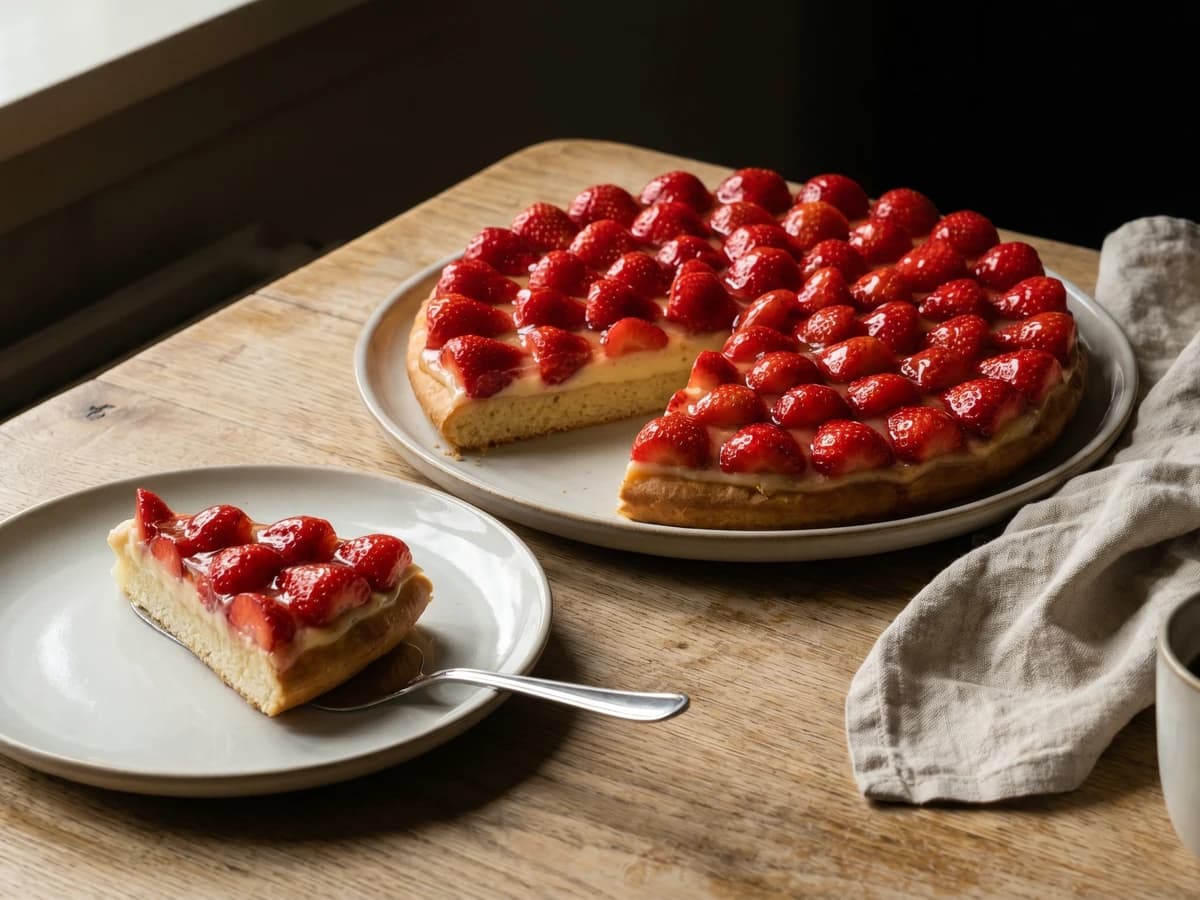
Aardbeienvlaai (Limburg Strawberry Vlaai)
The summer vlaai that politely breaks Limburg's baked-fruit rule: soft gistdeeg, cool pastry cream, and strawberries left fresh because June knows better than the oven.
A cooking platform built around craft, culture, and the stories behind what we eat.
Created by
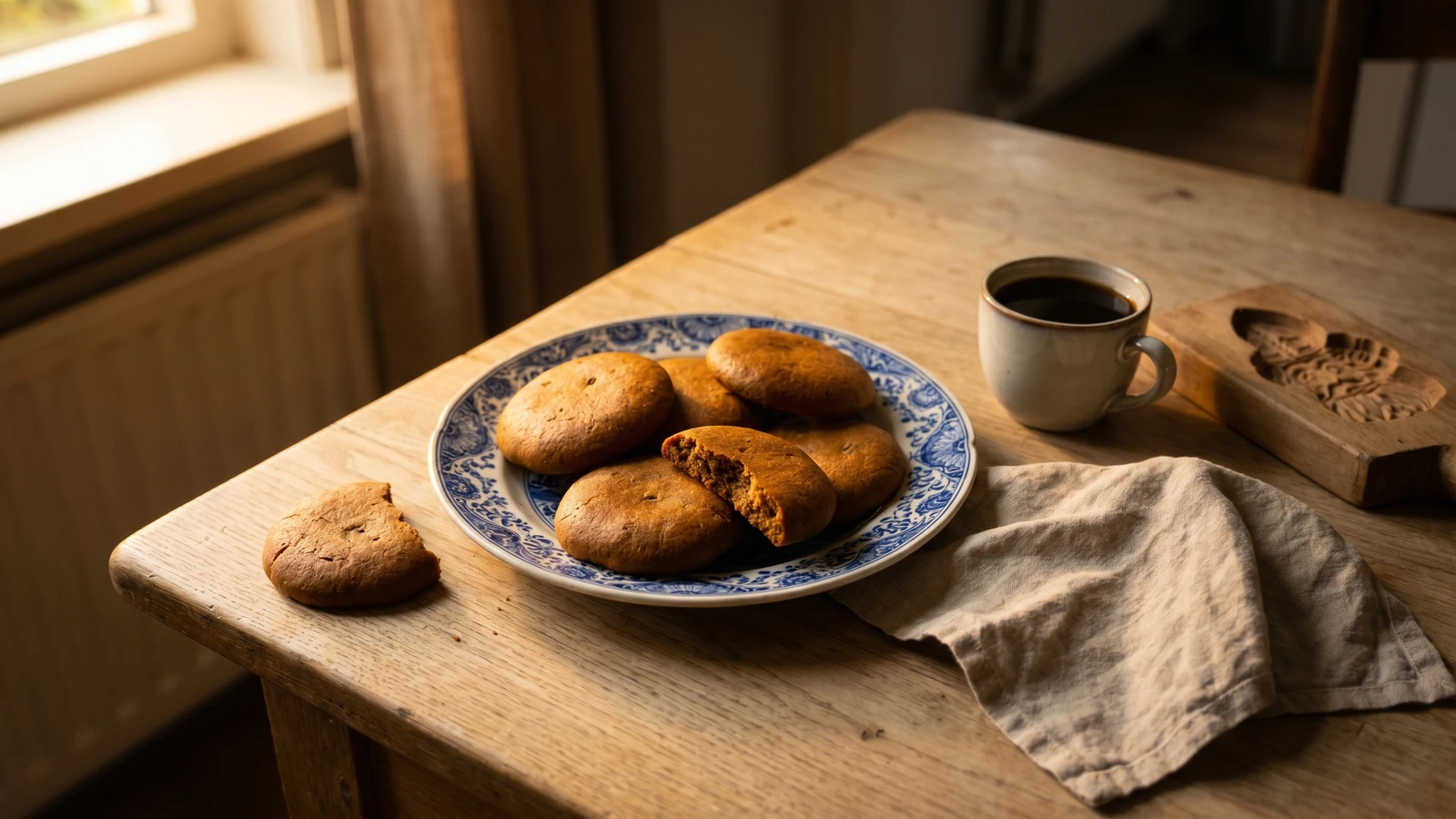
The name tells you twice: taai-taai, tough-tough, a Sinterklaas figure of rye, honey, and anise that becomes itself only after an overnight rest in its tin.
The most honest cookie in the Sinterklaas basket announces its defect before you bite. Taai-taai means tough-tough, and the name is not a riddle from Leiden but plain Dutch market speech: taai (tough, chewy), said twice because one warning was apparently not enough. Children learn this at once. Speculaas snaps, kruidnoten rattle in the paper bag, and taai-taai asks you to negotiate with it.
But let me tell you a secret: the toughness is the gift. This is older-minded December baking than speculaas, closer to the honey cakes that kept through winter fairs, with rye for depth, anise for that sweet, sharp lift Dutch bakers adore, and just enough spice cargo to remind you that our frugal country was never as plain as advertised. Sinterklaas owns the season, 5 December above all, though Christmas trays borrow the figures when nobody is looking.
What the dough wants is time, not fuss. Honey pulls moisture, rye drinks slowly, and the rest turns a stiff brown lump into something that can be rolled and shaped. After baking, the figures go into a tin and sit again, because taai-taai is one of those Dutch foods that improves by being left alone. Hou het altijd simpel: shape a saint if you have the cutter, a horse if you are ambitious, or a rectangle if the evening has already been long. The chew will tell the story either way.
Taai-taai belongs to the Sinterklaas confectionery sold by Dutch koekbakkers (cake and cookie bakers) in late November and early December, alongside speculaas, kruidnoten, and marzipan figures. By the nineteenth century Dutch dictionaries and household cookbooks described taai-taai as a tough honey-spiced cake or cookie, usually marked by anise; its older relatives are the honey cakes and gingerbreads that kept well before cheap refined sugar reached ordinary kitchens. The name is direct Dutch rather than a borrowed mystery: taai means tough or chewy, and the doubling fixes the texture so clearly that a tender taai-taai has missed the point.
Quantity
250g
Quantity
150g
plus more for rolling
Quantity
10g
Quantity
1/2 teaspoon
Quantity
1 tablespoon
finely crushed
Quantity
2 teaspoons
Quantity
1/2 teaspoon
Quantity
175g
Quantity
125g
Quantity
50ml
Quantity
1
beaten, for brushing
| Ingredient | Quantity |
|---|---|
| rye flour | 250g |
| plain flour (all-purpose flour)plus more for rolling | 150g |
| baking powder | 10g |
| baking soda | 1/2 teaspoon |
| aniseedfinely crushed | 1 tablespoon |
| speculaaskruiden (Dutch spice blend) | 2 teaspoons |
| fine sea salt | 1/2 teaspoon |
| clear honey | 175g |
| dark brown basterdsuiker or soft dark brown sugar | 125g |
| water | 50ml |
| eggbeaten, for brushing | 1 |
Put the honey, basterdsuiker, and water in a small saucepan over low heat. Stir until the sugar dissolves and the mixture is smooth, then take it off the heat. Do not boil it hard; you want a warm syrup that smells of honey, not a pot of angry caramel.
In a large bowl, stir together the rye flour, plain flour, baking powder, baking soda, crushed aniseed, speculaaskruiden, and salt. Pour in the warm honey syrup and mix with a sturdy spoon, then knead briefly by hand until you have a firm, sticky brown dough. It will look too stiff. Good. Rye is slow company.
Wrap the dough tightly or press it into a covered bowl and leave it at cool room temperature for 12 to 24 hours. This rest is not decoration. It lets the honey and rye settle into each other, and it gives the anise time to travel through the whole dough.
Heat the oven to 175C / 350F and line two baking trays with parchment. Dust the table lightly with flour and roll the dough about 8 to 10mm thick. Cut Sinterklaas figures, horses, hearts, or simple rectangles, then set them on the trays with a little space between them. Brush lightly with beaten egg, just enough to give the surface a quiet shine.
Bake for 12 to 15 minutes, until the figures have puffed slightly, the edges are set, and the tops have turned deep honey-brown. They should still yield a little when pressed in the centre. If you bake them until crisp in the oven, they will be hard later, and taai-taai is chewy, not a punishment.
Let the cookies cool on the tray for 10 minutes, then move them to a rack. Once fully cool, put them in an airtight tin and leave them at least overnight before eating. The texture settles from firm to stubbornly chewy, which is the whole argument of the dish.
1 serving (about 40g)
Culinary guides, cultural storytelling, and the editorial depth that makes cooking meaningful.
Discover Culinary ExplorerChef Joost
The summer vlaai that politely breaks Limburg's baked-fruit rule: soft gistdeeg, cool pastry cream, and strawberries left fresh because June knows better than the oven.

Chef Joost
A Limburg vlaai is not a pie trying to be grand. It is a thin yeast-dough round, fruit-bright and generous, made for birthdays, coffee, and second slices.

Chef Joost
The December bakery counter made small: cold leafed pastry wrapped around lemon-scented amandelspijs, brushed gold, and scattered with almonds so one person gets the whole holiday in both hands.
Chef Joost
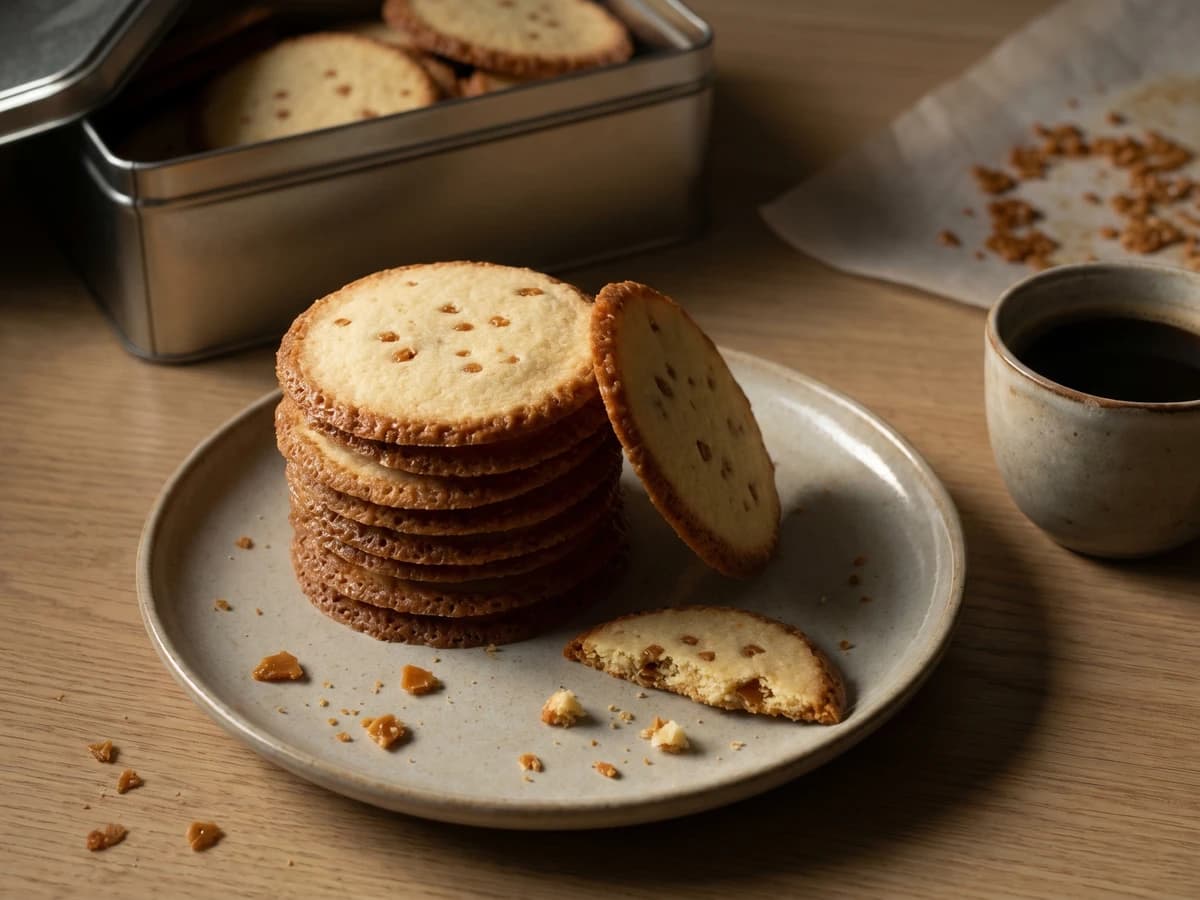
A thin Amsterdam cookie carrying a cog ship in its name: caramelized butter dough, almond nougatine, and a 1934 contest that turned municipal pride into something for coffee.