
Chef Lesia
Baklazhanna Ikra (баклажанна ікра, eggplant caviar)
Eggplants collapse into silk, tomatoes give up their summer, and the pan turns sweet and smoky enough that a spoon dragged through leaves a clean path.
A cooking platform built around craft, culture, and the stories behind what we eat.
Created by
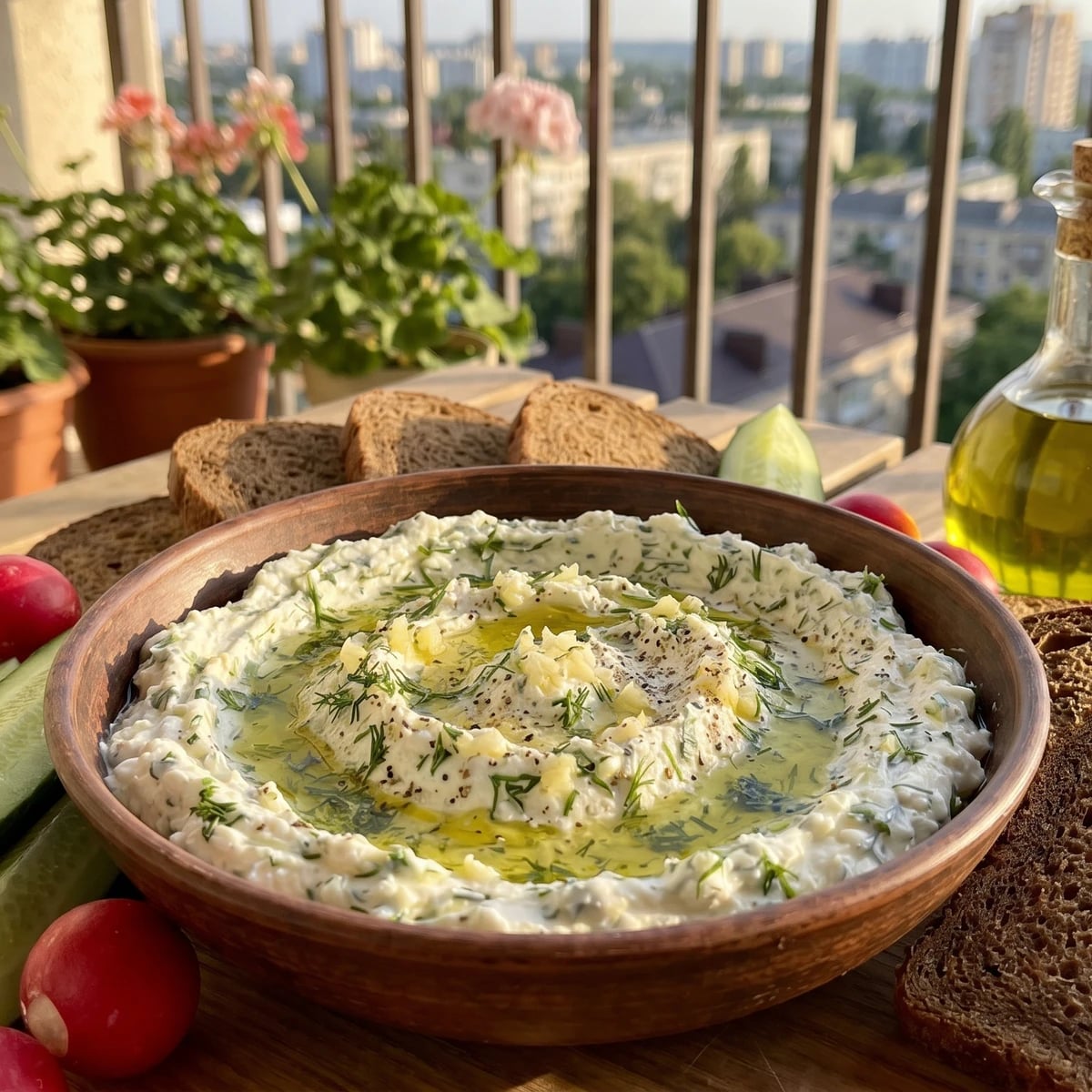
White cheese, green dill, raw garlic. Five minutes of beating turns the cheapest things in the fridge into the zakuska everyone reaches for first.
The first thing you smell is the garlic, sharp and rude in the best way, then the dill comes up green behind it and the cheese turns from chalky white to something soft enough to drag across rye bread. Syrna namazka is not grand food. Good. It is the small bowl that appears before the proper meal, the thing you make when someone knocks and you have bread, cheese, and no time to perform.
The one decision is texture. Crush the garlic with salt first so it melts into the cheese instead of biting you in one raw lump, then beat the syr (curd cheese) with smetana until it loosens and shines. Aunt Nadia would write only, "make it so it spreads," which is annoying until your spoon understands it. Thick enough to sit on bread, soft enough not to tear it. That's the whole dish.
Use what your fridge gives you. Farmer cheese, tvoroh, drained cottage cheese, a little bryndza if you want salt and sheep-milk bite, even a spoon of mayo if your family is that family. Mine usually is. The tradition lives because the bowl gets passed around.
Namazka comes from the Ukrainian verb namazuvaty, to spread, and this style of cheese spread belongs to the everyday zakuska table: quick cold bites set out with bread, pickles, vegetables, and whatever the household has ready. In central and southern Ukrainian homes it often leans on syr or tvoroh, while western versions may bring in bryndza from Carpathian sheep dairying; the Soviet fridge made processed cheese versions common, but the older habit is simply fresh dairy, garlic, herbs, and bread.
Quantity
300g
well drained if wet
Quantity
75g
crumbled
Quantity
3 tablespoons
plus more if needed
Quantity
1 tablespoon
Quantity
2 cloves
crushed
Quantity
1/2 teaspoon
plus more to taste
Quantity
1 small bunch
finely chopped
Quantity
2
finely sliced
Quantity
to taste
Quantity
to serve
| Ingredient | Quantity |
|---|---|
| farmer cheese, tvoroh, or full-fat cottage cheesewell drained if wet | 300g |
| bryndza or feta (optional)crumbled | 75g |
| smetana or sour creamplus more if needed | 3 tablespoons |
| unrefined sunflower oil | 1 tablespoon |
| garliccrushed | 2 cloves |
| fine sea saltplus more to taste | 1/2 teaspoon |
| dillfinely chopped | 1 small bunch |
| spring onions (optional)finely sliced | 2 |
| freshly ground black pepper | to taste |
| rye bread, cucumbers, radishes, or boiled potatoes (optional) | to serve |
If your cheese is wet, tip it into a sieve for a few minutes while you chop the herbs. It doesn't need to be dry as sand, just not puddling. A little whey is fine; a wet bowl makes the spread loose and sad.
Put the garlic and salt on a board or in a mortar and crush them into a paste. This is the small step that decides the dish. Salt breaks the garlic down, so its heat travels through the cheese evenly instead of arriving in one fierce little stone.
Mash the cheese with the bryndza, if using, then beat in the smetana and sunflower oil until the mixture softens and begins to shine. Use a fork for a rougher village texture, or a hand blender for something smoother and more modern. Stop when it spreads cleanly from the spoon.
Stir in the garlic paste, chopped dill, spring onions if using, and black pepper. Taste on a piece of bread, not from the spoon, because bread changes the salt. Add more smetana if it drags, more dill if it looks shy, and more garlic only if your guests have been warned.
Spoon the namazka into a shallow bowl, make a few ridges with the back of the spoon, and let a little green-gold sunflower oil sit in them. Serve with rye bread, cucumber spears, radishes, or hot boiled potatoes. Enough for eight guests or one hungry Ukrainian.
1 serving (about 70g)
Culinary guides, cultural storytelling, and the editorial depth that makes cooking meaningful.
Discover Culinary Explorer
Chef Lesia
Eggplants collapse into silk, tomatoes give up their summer, and the pan turns sweet and smoky enough that a spoon dragged through leaves a clean path.

Chef Lesia
The salt hits first, then the pasture: sheep's milk turned into a white, crumbly cheese that tastes of grass, weather, and the mountain air that made it.

Chef Lesia
The first cheese from the mountain vat is barely cheese yet: sweet milk caught into a warm springy round, unsalted, alive with whey, waiting to become brynza if you let it.

Chef Lesia
Roasted beets turn almost black at the edges, then grind with garlic and walnuts into a crimson spread so dense the spoon leaves a path through it.