
Chef Takumi
Awamori Mizuwari (泡盛水割り, awamori with water)
Awamori mizuwari is not a trick of the bar. It is three parts awamori, seven parts cold water, and enough patience to let the black-kōji aroma open.
A cooking platform built around craft, culture, and the stories behind what we eat.
Created by
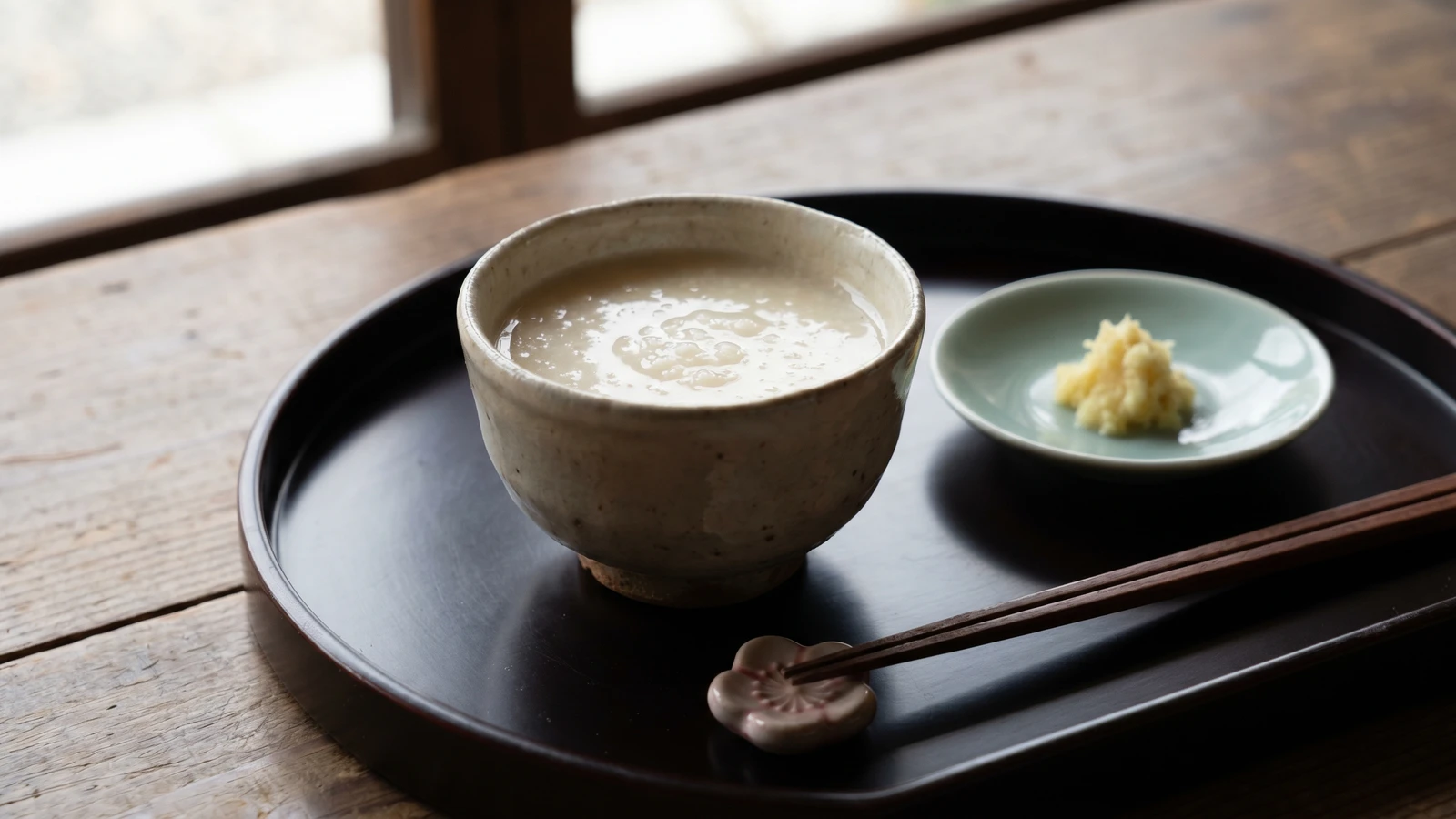
Amazake asks for patience, not skill: rice, kōji, water, and a steady warmth that lets the grain sweeten itself without added sugar.
Amazake looks like a sweet drink, but the sweetness isn't added. It is coaxed out of rice by kōji, the mold-cultured grain that does so much quiet work in the Japanese kitchen. This is the first secret: keep it warm enough for the enzymes to work, but not so hot that you kill them. A thermometer is less romantic than a poem, but here it is the better teacher.
People hear fermentation and brace themselves. Don't. This version is not alcoholic, and it doesn't ask you to bury a jar in the garden or consult the moon. Cook rice until soft, mix it with rice kōji and water, then hold it around 55 to 60 C for several hours. At that warmth, the kōji breaks the rice starch into sugars, and the mixture turns naturally sweet, creamy, and faintly fragrant.
We drink amazake hot around New Year, often at shrines when the morning is cold enough to make both hands grateful for the cup. In summer it appears chilled, sometimes with ginger, and the same drink suddenly feels clean and light. That is washoku at its plainest: the method, not the menu, carrying one thing across the seasons.
Watch the temperature. Too cool and the rice sits there politely doing very little. Too hot and the kōji's enzymes fade, leaving you with warm porridge and disappointment, which is a thin breakfast and a worse philosophy. Keep the warmth steady, stir now and then, and the rice will do the sweetening for you.
Amazake appears in the Nihon Shoki, compiled in 720, under the older name amazake or hitoyo-zake, a drink made quickly rather than aged like sake. By the Edo period it was sold in summer by street vendors as a nourishing hot-weather drink, and its association with New Year shrine visits came later alongside winter service of warm amazake. Two main forms remain in Japan: kōji amazake made from rice and rice kōji, and sake-kasu amazake made from sake lees and sugar.
Quantity
1 cup
rinsed
Quantity
3 cups
for cooking the rice
Quantity
200g
Quantity
1 1/2 to 2 cups
about 60 C
Quantity
1 pinch
Quantity
1 teaspoon
grated
| Ingredient | Quantity |
|---|---|
| Japanese short-grain ricerinsed | 1 cup |
| waterfor cooking the rice | 3 cups |
| fresh or thawed rice kōji | 200g |
| warm waterabout 60 C | 1 1/2 to 2 cups |
| fine sea salt (optional) | 1 pinch |
| fresh ginger (optional)grated | 1 teaspoon |
Rinse the rice until the water runs almost clear, then cook it with 3 cups water until very soft, closer to kayu, rice porridge, than table rice. Soft grains give the kōji more open starch to work on, so sweetness comes more easily. Let it cool until it is hot but no longer scalding, about 60 C.
Break the rice kōji apart gently with clean hands so there are no hard clumps. If it is frozen, thaw it fully first. Kōji needs contact with the warm rice, and clumps keep their sweetness to themselves, a selfish habit we don't encourage.
Stir the kōji into the warm rice, then add 1 1/2 cups warm water. The mixture should be loose enough to stir, like a thick porridge. Add the remaining water only if it feels stiff. More water makes a drinkable amazake; less water makes a spoonable one.
Transfer the mixture to a rice cooker on the keep-warm setting with the lid slightly open, a yogurt maker, or a covered pot set in a warm water bath. Hold it between 55 and 60 C for 6 to 8 hours, stirring every hour or two. This warmth lets the kōji enzymes turn rice starch into sugar. Above about 65 C, those enzymes weaken, and the sweetness stops before it has properly begun.
Begin tasting after 6 hours. The amazake is ready when it tastes clearly sweet, round, and rice-fragrant, with the grains softened but still visible. If it tastes flat, keep it warm another hour. If it tastes sharply sour, it has gone too far or sat too cool for too long.
For a rustic texture, leave it as it is. For a smoother drink, blend it briefly, then thin with hot or cold water to the thickness you like. Add a small pinch of salt if the sweetness tastes dull; salt doesn't make it salty, it gives the rice a clearer edge.
Warm the amazake gently in a small pot, but don't boil it. Boiling flattens the fragrance and can make the texture heavy. Serve in small cups with a little grated ginger if you like, especially in cold weather.
1 serving (about 240g)
Culinary guides, cultural storytelling, and the editorial depth that makes cooking meaningful.
Discover Culinary ExplorerChef Takumi
Awamori mizuwari is not a trick of the bar. It is three parts awamori, seven parts cold water, and enough patience to let the black-kōji aroma open.

Chef Takumi
Hot awamori asks for one small discipline: pour the hot water first, then the spirit. Do that, and the glass turns round, fragrant, and calmer than its strength suggests.

Chef Takumi
Bancha is the honest daily cup: late-season leaves, hot water, a short steep, and a clean amber-green liquor that asks for no ceremony to be good.

Chef Takumi
Whole black soybeans, roasted until their skins split, make a clear amber tea with a roasted sweetness and no caffeine. Drink it plain, then eat the softened beans while they still hold their warmth.