
Chef Takumi
Agar Jelly with Anko and Fruit (あんみつ, Anmitsu)
Anmitsu looks like a tray of small tasks, but the work is calm: dissolve the kanten fully, chill the pieces clean, then let fruit, anko, and kuromitsu do the speaking.
A cooking platform built around craft, culture, and the stories behind what we eat.
Created by
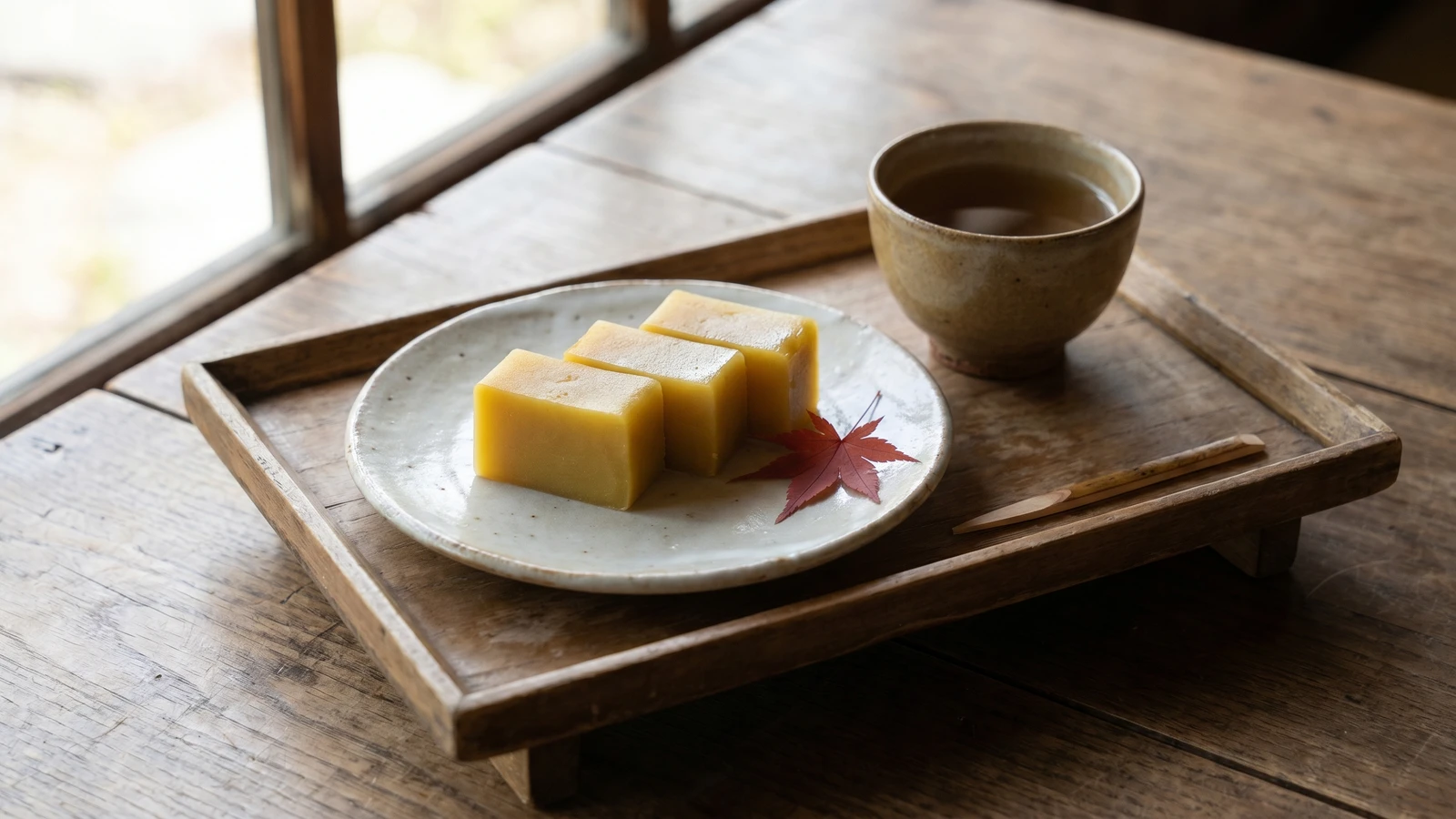
Imo yōkan is Asakusa's quiet autumn sweet: steamed satsumaimo, sugar, and a pinch of salt, pressed into a clean block and left to set by the potato's own starch.
Agood satsumaimo needs very little help. When the sweet potato is in shun, at its prime, the flesh is yellow, dense, and sweet enough to make a confection without hiding itself behind bean paste or agar. This is the plainness I like. Nothing hidden.
Yōkan sounds like a difficult sweet because most people think of the glossy bean version set with kanten, or agar. Imo yōkan is simpler. Steam the potato until it gives up completely, mash it while warm with sugar and salt, then press it firmly into a mold. The potato's starch is the setting agent. The first secret is not an ingredient, but patience: steam it until soft all the way through, then press it while warm, before the starch cools and tightens.
The texture should be smooth but not slippery, a firm slice that breaks cleanly under the tooth and tastes first of sweet potato. We serve it in small pieces, often with tea, because wagashi is not meant to shout across the table. Cut three neat bars, leave them room on the plate, and let the color do its work. Honmono is sometimes only the ingredient allowed to stand upright.
Imo yōkan is closely tied to Asakusa in Tokyo, especially the confectioner Funawa, founded in 1902 during the Meiji period. Ordinary yōkan made from red bean paste and kanten was a more costly sweet, while sweet potatoes were familiar, filling, and widely available, so the potato itself became the body of the confection. The result kept the rectangular yōkan shape but changed the substance completely: no anko, no agar, just steamed satsumaimo pressed into form.
Quantity
700g
scrubbed
Quantity
80g
Quantity
1/4 teaspoon
Quantity
1 teaspoon
Quantity
a little
for the mold
| Ingredient | Quantity |
|---|---|
| Japanese sweet potatoes (satsumaimo)scrubbed | 700g |
| granulated sugar | 80g |
| fine sea salt | 1/4 teaspoon |
| mirin (optional) | 1 teaspoon |
| neutral oilfor the mold | a little |
Set the sweet potatoes in a steamer and steam over steady heat for 30 to 35 minutes, until a skewer slides through the thickest part without resistance. Steaming keeps the flesh dense and sweet, while boiling can waterlog it and make the finished block slack. Let them cool only until you can handle them.
Peel away the skins and trim off any fibrous or dark spots. Work while the potatoes are still warm. Warm starches mash smoothly and take in sugar evenly; cold potato fights back like a clerk at closing time.
Pass the warm potato through a ricer or mash it very thoroughly, then stir in the sugar, salt, and mirin if using. Taste before you press it. It should be gently sweet, with the salt only sharpening the potato, not announcing itself.
For the cleanest texture, press the mash through a fine sieve with a spatula. This is not fuss for its own sake. The sieve catches fibers and gives the finished yōkan its calm, even face when sliced.
Lightly oil a nagashikan, the rectangular Japanese mold used for set sweets, or line a small loaf pan with parchment. Pack the sweet potato paste in firmly, pressing into the corners and smoothing the top. Firm pressure removes air pockets, and air pockets make ragged slices.
Cover the surface and refrigerate for at least 2 hours, until firm. Unmold, trim the edges if you like, and cut into small bars with a clean knife wiped between cuts. The slice should hold its shape, with a matte golden face and no crumbling.
1 serving (about 95g)
Culinary guides, cultural storytelling, and the editorial depth that makes cooking meaningful.
Discover Culinary ExplorerChef Takumi
Anmitsu looks like a tray of small tasks, but the work is calm: dissolve the kanten fully, chill the pieces clean, then let fruit, anko, and kuromitsu do the speaking.

Chef Takumi
A cool square of almond-scented milk, set softly and served with mikan in thin syrup, is dinner-party food without theater. The only stern demand is restraint with the fragrance.

Chef Takumi
Azuki bar asks for patience twice: once while the beans soften, and once while the frozen bar yields. That hardness is not a flaw. It is the character of the thing.
Chef Takumi
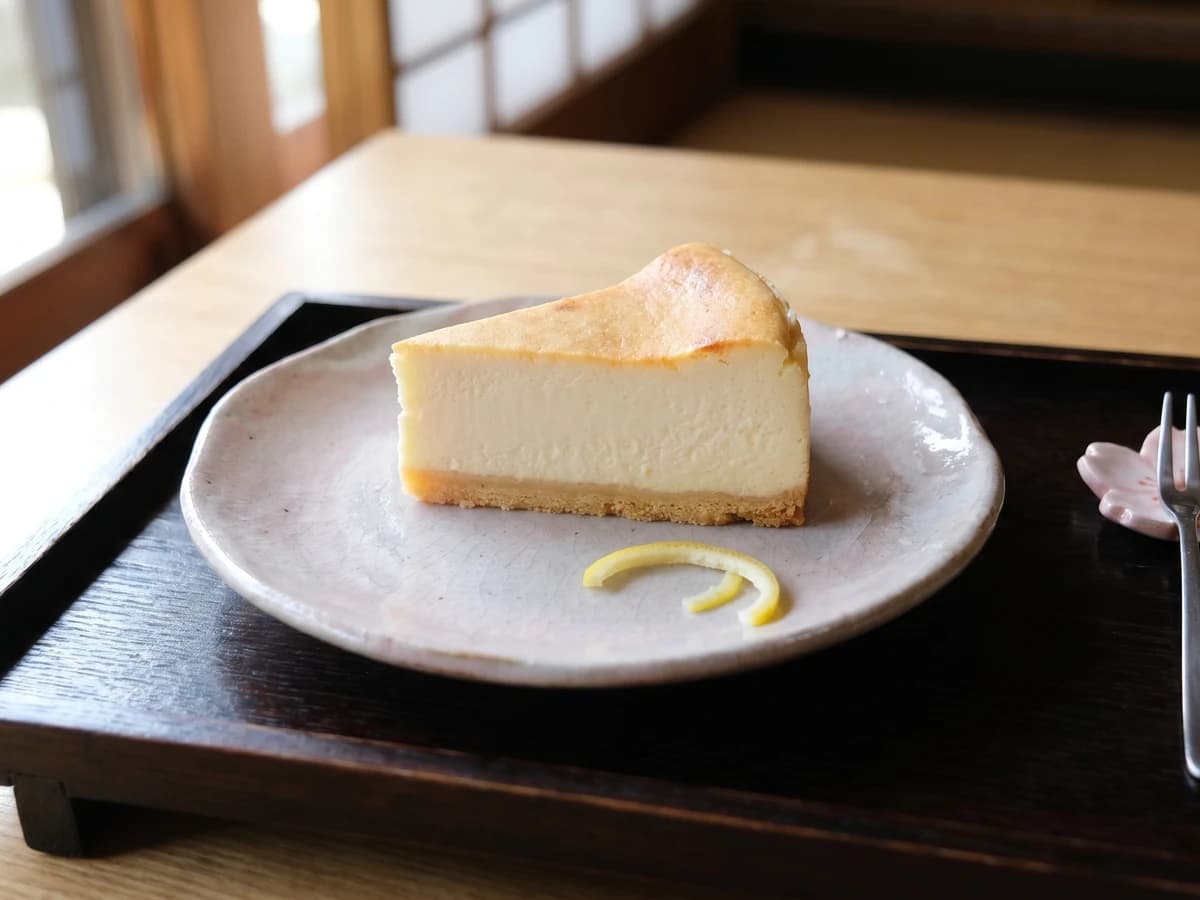
A Japanese baked cheesecake is not trying to float away. It is dense, smooth, and quietly tart, with a clean slice doing the work of decoration.