Chef Freja
Aebleflaesk
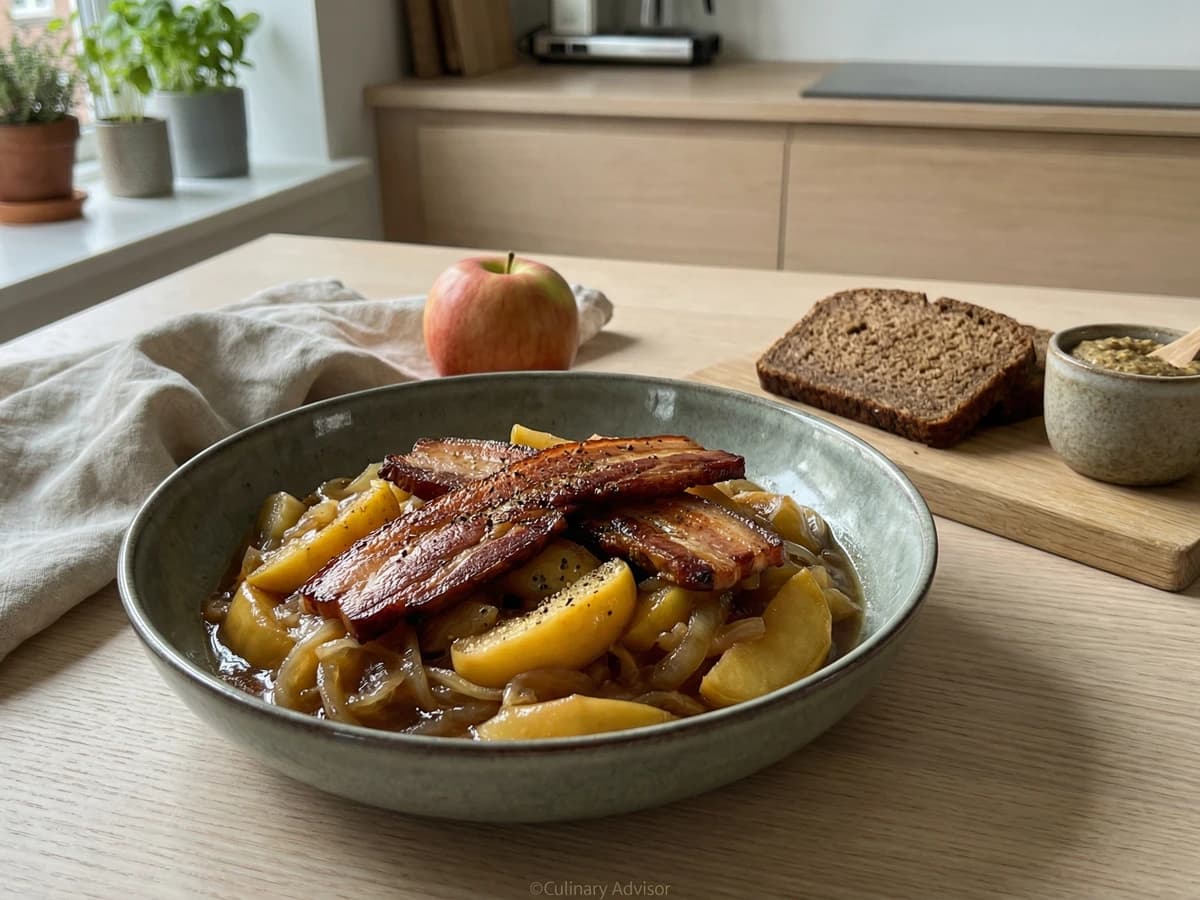
The Fyn autumn supper where thick pork belly renders slowly into its own fat, then meets apples and onions that cook down into a deep amber tangle. Sweet, salt, and the oldest pairing in the Danish larder.
A cooking platform built around craft, culture, and the stories behind what we eat.

Created by Chef Freja
Pork shoulder braised until the fork slides through, served with cabbage cooked dark and sweet-sour with sugar and vinegar. The Jutland winter dish with centuries behind it, still standing on Danish Christmas tables.
December in Denmark is the month when the kitchen gets loud. Not with people, with pots. Something is always simmering: rodkal on one burner, stock on another, and in Jutland, brunkal on the back of the stove, slowly turning from pale green to deep mahogany while the light fades outside by three in the afternoon.
Svinekod med brunkal is the dish Jutlanders defend against anyone who assumes Danish winter food begins and ends with red cabbage and crackling pork. Brunkal is the older sibling, the darker one, less dressed up for company. White cabbage is caramelized with sugar in butter until it takes on the color of polished wood, then braised slowly with vinegar and stock until it softens into something sweet, sour, and rich all at once. Beside it, a pork shoulder gives up its tension in a slow oven until a fork is all you need to serve it.
There are two moments I want you to watch for. The first is when the sugar meets the melted butter and starts to darken. Go too far and it tastes burnt. Stop too soon and the cabbage will never find its color. You're looking for deep amber, the color of maple syrup held up to the window. The second is when the vinegar hits the hot pan. Stand back, let the sharp steam clear, then stir. That's the moment brunkal becomes itself, and you'll know it because the smell changes from sweet to something older and more interesting. This is a dish that rewards time and attention, and it's one of those winter meals that tastes like it belongs exactly where it is.
Brunkal is one of the oldest Danish cabbage dishes on record, rooted in the Jutland heath country where white cabbage was the winter vegetable that kept families fed through the darkest months. The technique of caramelizing sugar with butter and darkening the cabbage with vinegar predates the arrival of rodkal, which only claimed the Christmas table in the 19th century after sugar became cheap enough for everyday cooking. In parts of western and southern Jutland, some families still serve brunkal rather than rodkal on juleaften, quietly insisting that this is the older Danish tradition and that the red version is a latecomer.
Quantity
1.2kg
tied with kitchen string
Quantity
2 tablespoons
Quantity
1 large
quartered
Quantity
3
Quantity
1 tablespoon
Quantity
500ml
Quantity
to taste
Quantity
freshly ground, to taste
Quantity
1 large, about 1.5kg
cored and finely shredded
Quantity
60g
Quantity
4 tablespoons
Quantity
4 tablespoons
Quantity
200ml
Quantity
2
Quantity
1 teaspoon
Quantity
to serve
boiled
Quantity
to serve
| Ingredient | Quantity |
|---|---|
| boneless pork shoulder or pork necktied with kitchen string | 1.2kg |
| neutral oil | 2 tablespoons |
| yellow onionquartered | 1 large |
| bay leaves (for the pork) | 3 |
| black peppercorns (for the pork) | 1 tablespoon |
| chicken or pork stock (for the pork) | 500ml |
| fine sea salt | to taste |
| black pepper | freshly ground, to taste |
| white cabbagecored and finely shredded | 1 large, about 1.5kg |
| unsalted butter | 60g |
| caster sugar | 4 tablespoons |
| apple cider vinegar | 4 tablespoons |
| chicken stock (for the cabbage) | 200ml |
| bay leaves (for the cabbage) | 2 |
| black peppercorns (for the cabbage) | 1 teaspoon |
| waxy potatoesboiled | to serve |
| strong Danish mustard | to serve |
Pat the pork completely dry with kitchen paper and season it generously on all sides with salt and pepper. Wet meat will steam instead of brown, and brown is where the flavor lives. Heat the oil in a heavy casserole over medium-high heat until it shimmers, then lower the pork in and leave it alone. Don't move it for four minutes at a time on each side. You're building a deep mahogany crust, and that crust is the foundation of the braise.
Lift the browned pork out onto a plate. Tip out any blackened fat but leave the browned bits stuck to the bottom of the pot. Add the quartered onion, cut-side down, and let it color for two minutes. Return the pork to the pot, tuck in the bay leaves and peppercorns, and pour in the stock. It should come about a third of the way up the meat, no more. This is a braise, not a boil. Bring it to the gentlest simmer, cover, and slide into a 150C oven. Set a timer for two hours.
While the pork braises, core the cabbage and slice it as finely as you can. Thin shreds cook down evenly and take on the caramel and vinegar properly. Thick shreds stay pale in the middle and the whole dish goes wrong. A sharp knife and patience will get you there. Pile the shredded cabbage into a bowl and set it beside the stove, ready to go.
Melt the butter in a wide, heavy pan over medium heat until it foams. Scatter the sugar evenly across the surface and leave it alone. Don't stir. Watch. The sugar will melt into the butter and slowly darken, going from pale gold to amber to the color of polished wood. This takes three to four minutes. The smell will shift from sweet to nutty to almost toasted. The moment it smells toasted, you need to move. Go too far and the whole pan tastes burnt. Stop too soon and the cabbage will never find its color.
Tip the shredded cabbage into the pan in one go and start tossing immediately with a wooden spoon. The caramel will seize and harden at first. That's fine. Keep tossing. The water from the cabbage will loosen it again within a minute or two, and every strand will start picking up the color. Don't panic when it looks like a mess. This is the moment brunkal begins.
Pour in the vinegar and stand back for a second. The steam comes up sharp and will clear your sinuses. Stir it through, then add the stock, bay leaves, peppercorns, and a good pinch of salt. Lower the heat to the softest simmer, cover the pan, and let the cabbage cook for forty-five minutes to an hour. Stir every ten minutes or so. The cabbage will shrink by more than half and deepen to a dark mahogany, glossy with its own liquid. Taste it. Adjust for salt and a touch more vinegar if it wants brightness. You'll know when it's right. It should taste sweet, sour, rich, and a little savage all at the same time.
When the timer goes, check the pork with a fork. It should yield completely with no resistance. If there's any tension left, give it another twenty minutes. When it's ready, lift it carefully onto a board and cover it loosely with foil. Let it rest for at least ten minutes. Cutting it too soon lets all the juice escape onto the board instead of staying in the meat. While it rests, strain the braising liquid into a small pan, skim the fat, and reduce it over high heat until it's slightly syrupy. This is your sauce.
Remove the string from the pork and slice it thickly against the grain. Spoon a generous heap of brunkal onto each warm plate, lay two or three slices of pork beside it, and pour a little of the reduced braising sauce over the meat. Serve with boiled potatoes and a small mound of strong Danish mustard on the edge of the plate. The mustard is not optional. It's the bright note that ties the sweet cabbage and the rich pork together. Tak for mad.
1 serving (about 620g)
Culinary guides, cultural storytelling, and the editorial depth that makes cooking meaningful.
Discover Culinary ExplorerChef Freja
The Fyn autumn supper where thick pork belly renders slowly into its own fat, then meets apples and onions that cook down into a deep amber tangle. Sweet, salt, and the oldest pairing in the Danish larder.

Chef Freja
Warm Danish apple soup for the first cool evenings of autumn. Tart apples simmered with cinnamon and lemon peel, thickened to a soft gloss, and served with cold cream and buttery toasted oats.

Chef Freja
Danish white asparagus velouté with tiny veal meatballs, flour dumplings, and bright green tips scattered on the surface. The Easter soup of Copenhagen, built from five small pans of spring.
Chef Freja
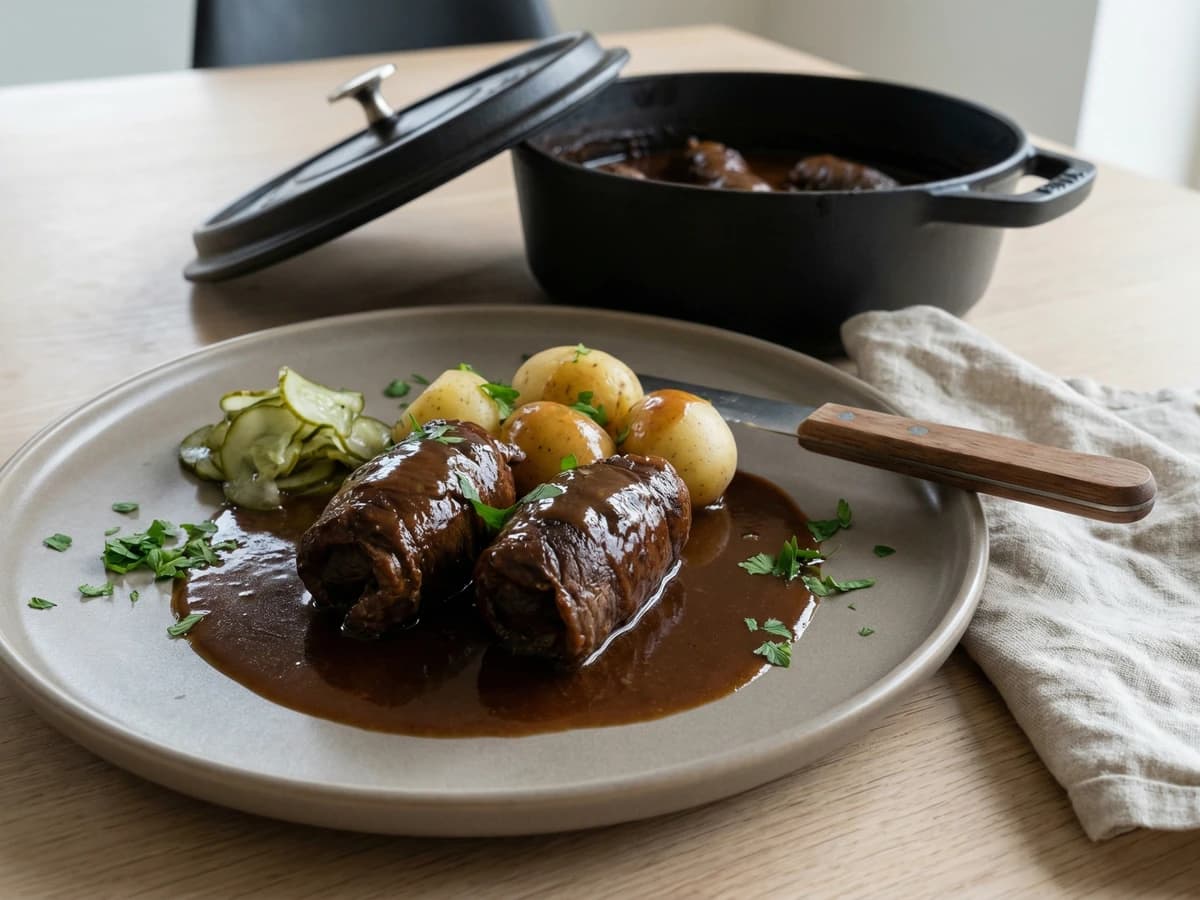
Thin beef slices rolled around bacon and onion, tied with string, and braised slowly in a dark glossy gravy finished with cream and redcurrant jelly. Danish Sunday dinner at its most comforting.