
Chef Juliana
Amalá de Xangô
You don't need mystery for this pot. You need okra, dendê, onion, dried shrimp, and the patience to stir until the quiabo gives up its own caldo.
A cooking platform built around craft, culture, and the stories behind what we eat.
Created by
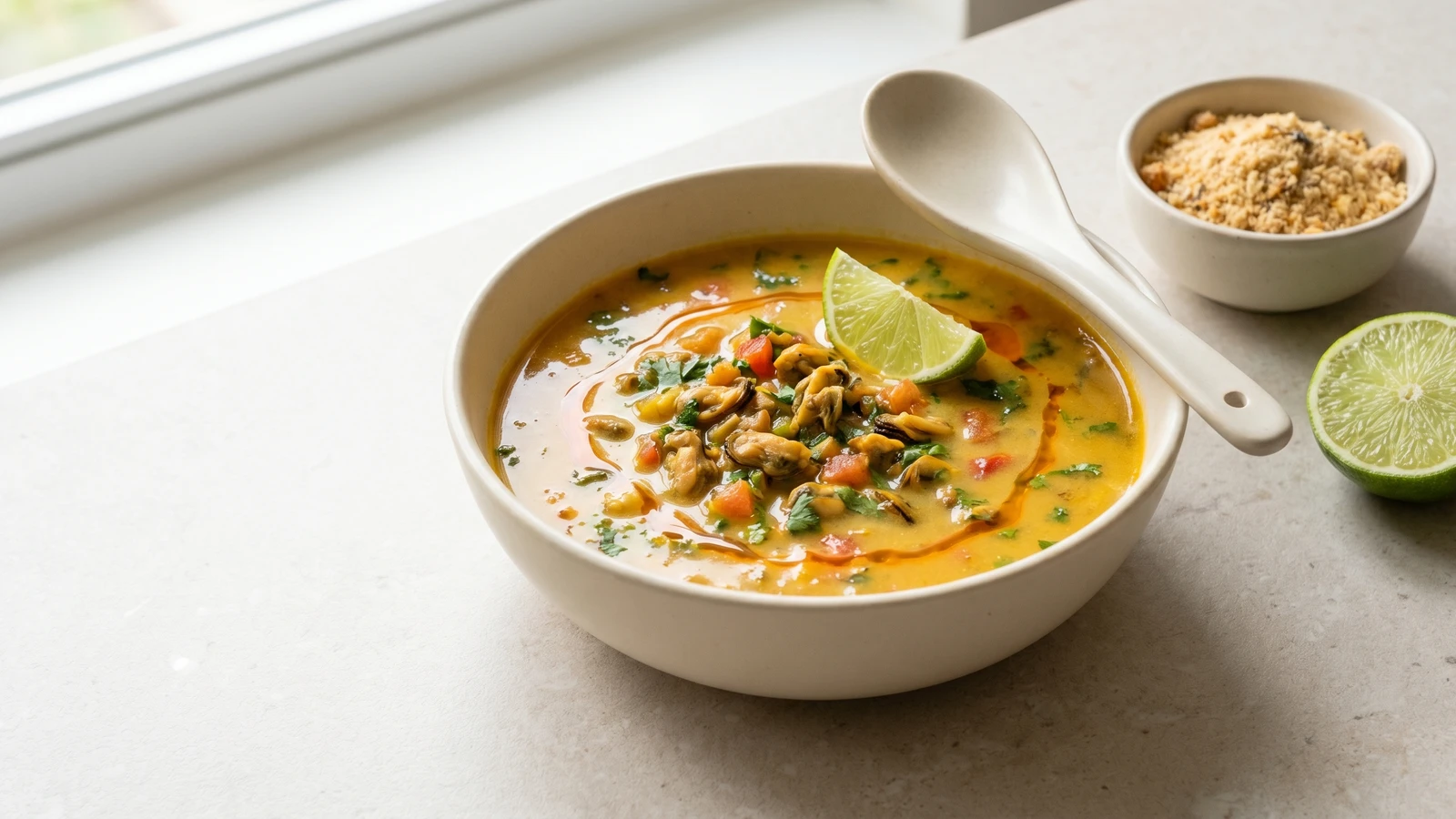
You think lagoon mussels are restaurant trouble. They're not. Clean them well, build a real refogado, keep the coconut gentle, and this Alagoas caldinho solves dinner.
You look at a little bowl of sururu and hear that quiet voice: isso não é pra mim. Too coastal, too specific, too easy to ruin. I know that voice. It also told me, a grown woman with a cheap caderno and very dramatic onion failures, that beans were beyond me. Nonsense. Cozinhar não é dom, é um aprendizado.
This is comida de verdade from the Nordeste floor of cassava, corn, coconut, coentro, and seafood pulled close to home. I don't own Alagoas, and I won't pretend to. The people around the lagoons carry this tradition. What I can do is teach a home-kitchen version with receitas que funcionam, so you can understand the method and not stand there afraid of the pot.
The method is small and exact. Purge the sururu in clean salted water so grit stays out of the caldo. Refogar onion, pimentão, tomato, alho, and coentro stems until they soften and smell sweet, because flavor starts in the pan, not in a packet. Add the sururu briefly, then finish with leite de coco gently, off the hard heat, so the mussels stay tender and the coconut stays smooth instead of oily and tired.
Serve it as caldinho in cups, or make it a plate with white rice, beans if that's your house, farofa or cuscuz, and something green. That's the everyday Brazilian lesson again: a gente builds a meal, not a performance.
Sururu is the small lagoon mussel tied closely to Maceió and the Mundaú and Manguaba lagoon region of Alagoas, where it appears in caldinhos, ensopados, fritadas, and the famous sururu de capote, cooked in the shell. In 2014, the traditional knowledge around sururu in Alagoas was recognized by Brazil's Instituto do Patrimônio Histórico e Artístico Nacional as part of the cultural landscape of the Mundaú lagoon communities. The dish sits inside a broader Northeast coastal cooking pattern: seafood, coconut milk, coentro, cassava and corn sides, and a refogado doing the serious work.
Quantity
500 g
or shelled mussel meat, rinsed
Quantity
4 cups
for purging
Quantity
1 tablespoon
for purging
Quantity
2 tablespoons
Quantity
1 tablespoon
Quantity
1 medium
finely chopped
Quantity
1/2
finely chopped
Quantity
1 medium
chopped
Quantity
3 cloves
minced
Quantity
1/4 cup
chopped
Quantity
1 teaspoon
Quantity
1 cup
Quantity
1 cup
Quantity
1/2 teaspoon, plus more to taste
Quantity
1 tablespoon, plus more to taste
Quantity
1/4 cup
chopped
Quantity
to serve
| Ingredient | Quantity |
|---|---|
| fresh cleaned sururu musselsor shelled mussel meat, rinsed | 500 g |
| cold waterfor purging | 4 cups |
| fine saltfor purging | 1 tablespoon |
| olive oil or neutral oil | 2 tablespoons |
| azeite de dendê (optional) | 1 tablespoon |
| onionfinely chopped | 1 medium |
| green bell pepperfinely chopped | 1/2 |
| ripe tomatochopped | 1 medium |
| garlicminced | 3 cloves |
| coentro stemschopped | 1/4 cup |
| colorau or ground urucum (optional) | 1 teaspoon |
| water or homemade fish stock | 1 cup |
| full-fat coconut milk | 1 cup |
| salt | 1/2 teaspoon, plus more to taste |
| lime juice | 1 tablespoon, plus more to taste |
| coentro leaveschopped | 1/4 cup |
| hot pepper sauce or fresh malagueta (optional) | to serve |
Put the sururu in a bowl with 4 cups cold water and 1 tablespoon salt. Swish gently, let it sit 20 minutes, then lift the mussels out with your hands instead of pouring the gritty water over them again. Rinse once more under clean water. This is not fussiness. Lagoon shellfish can carry sand, and sand in caldo is how dinner becomes punishment.
Chop the onion, pimentão, tomato, garlic, and coentro stems before the pan goes on. Keep the coentro leaves separate for the end. Once seafood starts cooking, it doesn't wait politely while you hunt for a knife. Anota aí: prep first, panic never.
Warm the oil in a medium pot over medium heat. Add the onion and pimentão and refogar until they soften and lose their raw smell, about 5 minutes. Add the tomato and coentro stems and cook until the tomato collapses and the mixture looks glossy, about 4 minutes more. This is where the caldo gets its body. A packet can't do this, and I don't want it trying.
Add the garlic, colorau if using, dendê if using, and 1/2 teaspoon salt. Stir for 1 minute, just until the garlic smells sweet. Stop there. Burnt garlic turns bitter, and colorau scorches fast, so this is a quick perfume, not a long cook.
Add the purged sururu and stir for 1 minute so each piece gets coated in the refogado. Pour in 1 cup water or homemade fish stock, bring it to a lively simmer, then lower the heat and cook 5 minutes. The sururu should look plump and the liquid should turn golden and briny. Cook it forever and it tightens up. Small shellfish are not a stew beef, thank goodness.
Turn the heat to low and stir in the coconut milk. Let it warm gently for 2 to 3 minutes, without a hard boil, then turn off the heat. Coconut milk can split and go oily if you bully it, and the sururu gets tough if you keep chasing bubbles. Gentle heat keeps the caldo smooth.
Stir in the lime juice and chopped coentro leaves. Taste and adjust salt or lime until the caldo tastes round, bright, and clearly of the sea. Serve in small cups as caldinho, or over white rice with farofa, cuscuz, or a quick sautéed green. That's how a bowl becomes dinner.
1 serving (about 270g)
Culinary guides, cultural storytelling, and the editorial depth that makes cooking meaningful.
Discover Culinary ExplorerChef Juliana
You don't need mystery for this pot. You need okra, dendê, onion, dried shrimp, and the patience to stir until the quiabo gives up its own caldo.

Chef Juliana
You think a Polish hunter's stew is not for your kitchen. Wrong. Brown meat properly, build a real refogado, simmer cabbage low, and tomorrow's lunch is already better.
Chef Juliana
Whole fish in a pot looks like a test. It isn't. Build the refogado, layer the filhote, let tucupi do its work, and the Círio table starts making sense.
Chef Juliana
You don't need river wisdom in your bones to cook tambaqui well. You need real tucupi, a calm simmer, and the sense to let the fish stay whole until it gives.