
Chef Graziella
Abbacchio a Scottadito
Roman lamb chops grilled over scorching heat, seasoned with nothing but salt, rosemary, and fire. You eat them with your hands, straight from the grill, burning your fingers because you cannot wait.
A cooking platform built around craft, culture, and the stories behind what we eat.
Created by
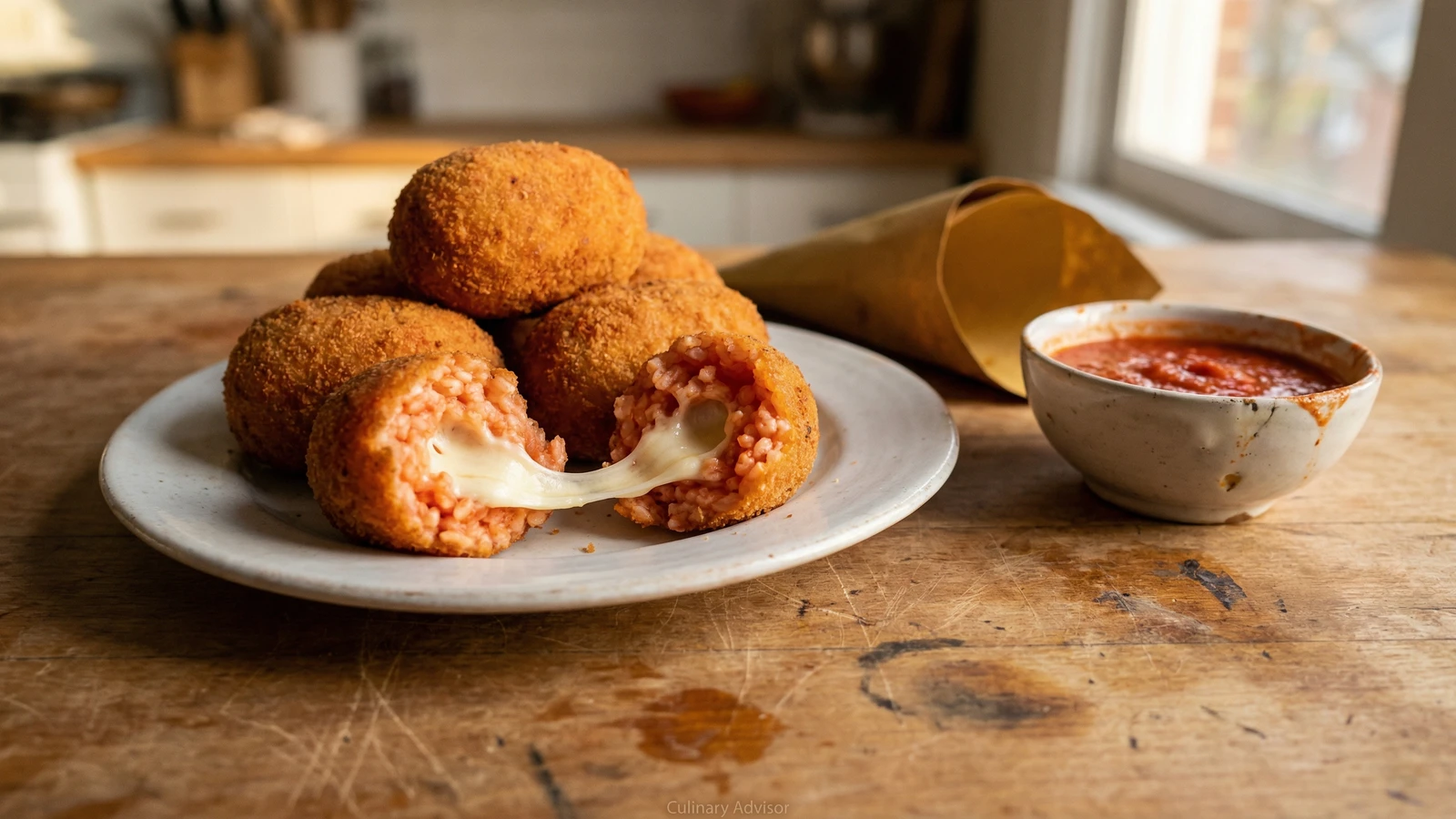
Roman street food at its finest: tomato-stained risotto wrapped around fresh mozzarella, breaded and fried until shattering crisp. The cheese pulls into strings when you break them open, hence 'telephone wires.'
Supplì are Roman. Arancini are Sicilian. They are cousins, not twins, and confusing them reveals that you have not been paying attention. The Roman version is smaller, oval, and contains a simple tomato risotto with a heart of fresh mozzarella. The Sicilian version is larger, round, and stuffed with ragù and peas. Both are fried. Both are magnificent. But they are not the same thing.
The name tells you everything. 'Supplì al telefono' means the cheese stretches into wires when you pull the hot rice ball apart. This requires mozzarella that actually melts, not the rubbery supermarket blocks that Americans mistake for cheese. You need fresh mozzarella, preferably fior di latte, cut into cubes small enough to hide inside but large enough to create that glorious pull.
These were once the province of Roman pizza shops and rosticcerie, sold from glass cases to workers who needed something hot and filling. Now they appear on restaurant menus as 'appetizers,' which misses the point entirely. Supplì are street food. They are meant to be eaten standing up, preferably while walking, burning your mouth because you could not wait for them to cool.
Supplì appeared in Rome during the 19th century, the name likely derived from the French 'surprise' for the unexpected cheese center. The 'al telefono' designation came later, after telephone lines became common sights in Italian cities, perfectly describing the stretching mozzarella that connected the two halves like wires between poles.
Quantity
2 tablespoons
Quantity
4 tablespoons
divided
Quantity
1 small
diced fine
Quantity
4 ounces
Quantity
1 cup
Quantity
2 cups
Quantity
1/2 cup
Quantity
5 cups
kept warm
Quantity
1/2 cup
freshly grated
Quantity
to taste
Quantity
to taste
freshly ground
Quantity
8 ounces
cut into 24 small cubes
Quantity
1 cup
Quantity
4
beaten
Quantity
2 cups
Quantity
for frying
| Ingredient | Quantity |
|---|---|
| extra virgin olive oil | 2 tablespoons |
| unsalted butterdivided | 4 tablespoons |
| yellow oniondiced fine | 1 small |
| ground beef or veal (optional) | 4 ounces |
| tomato passata | 1 cup |
| Arborio or Carnaroli rice | 2 cups |
| dry white wine | 1/2 cup |
| chicken or vegetable brothkept warm | 5 cups |
| Parmigiano-Reggianofreshly grated | 1/2 cup |
| kosher salt | to taste |
| black pepperfreshly ground | to taste |
| fresh mozzarellacut into 24 small cubes | 8 ounces |
| all-purpose flour | 1 cup |
| large eggsbeaten | 4 |
| fine dried breadcrumbs | 2 cups |
| vegetable oil | for frying |
In a heavy-bottomed pan or wide saucepan, heat the olive oil and 2 tablespoons butter over medium heat. Add the diced onion and cook slowly until completely soft and pale gold, about 10 minutes. If using meat, add it now and break it into fine crumbles with a wooden spoon. Cook until the meat loses its raw color and begins to brown lightly, another 8 minutes.
Add the tomato passata and stir well. Let it simmer for 5 minutes until it darkens slightly and loses its raw acidity. Add the rice and stir to coat every grain with the tomato mixture. Toast for 2 minutes, stirring constantly. The grains should become slightly translucent at the edges.
Pour in the wine and stir until it evaporates completely. Begin adding the warm broth one ladleful at a time, stirring frequently. Wait until each addition is nearly absorbed before adding the next. The rice is done when it is tender but still has the faintest resistance, about 18 minutes. It should be slightly wetter than risotto you would serve at table. The mixture will firm as it cools.
Remove from heat and stir in the remaining 2 tablespoons butter and the Parmigiano-Reggiano. Season with salt and pepper. Spread the mixture onto a rimmed baking sheet in an even layer no thicker than one inch. Press plastic wrap directly onto the surface. Refrigerate until completely cold and firm, at least 2 hours or overnight. The rice must be cold or it will not hold its shape.
Wet your hands lightly to prevent sticking. Take a generous two tablespoons of rice (about the size of a small egg) and flatten it in your palm. Place one cube of mozzarella in the center. Fold the rice around the cheese, pinching to seal completely. Roll between your palms into an oval shape, slightly pointed at both ends like a small football. The cheese must be completely enclosed. Repeat with remaining rice and mozzarella.
Set up three shallow bowls: flour in the first, beaten eggs in the second, breadcrumbs in the third. Working with one supplì at a time, dredge in flour and shake off excess. Roll in egg, letting excess drip off. Finally, coat completely in breadcrumbs, pressing gently to adhere. Place breaded supplì on a clean baking sheet. They can rest at room temperature for up to 30 minutes or be refrigerated for several hours before frying.
Pour oil into a deep, heavy pot to a depth of 3 inches. Heat to 350°F (175°C). Use a thermometer. Fry supplì in batches of 4 or 5, never crowding the pot. Turn them occasionally with a slotted spoon for even browning. They are done when deeply golden and crisp, 3 to 4 minutes. The internal temperature should reach 165°F to ensure the cheese melts properly.
Transfer fried supplì to a wire rack set over a baking sheet. Do not use paper towels, which trap steam and soften the crust. Season immediately with a light sprinkle of salt while the oil still glistens. Let rest only 2 minutes (they must be eaten hot), then serve. Break one open to show your guests the telephone wire effect of the stretching cheese. This is the whole point.
1 serving (about 90g)
Culinary guides, cultural storytelling, and the editorial depth that makes cooking meaningful.
Discover Culinary ExplorerChef Graziella
Roman lamb chops grilled over scorching heat, seasoned with nothing but salt, rosemary, and fire. You eat them with your hands, straight from the grill, burning your fingers because you cannot wait.

Chef Graziella
Roman milk-fed lamb cut like a chicken, braised with wine, rosemary, and anchovy until the meat surrenders to the fork. The anchovy disappears. The flavor does not.

Chef Graziella
The true sauce of Amatrice: guanciale rendered to gold, tomatoes barely simmered, pecorino melted into silk. Three ingredients that tolerate no substitution and no addition.

Chef Graziella
Three ingredients expose every flaw and reward every success. The silky emulsion of pecorino and pasta water, studded with cracked black pepper, is Rome's gift to cooks who understand that simple does not mean easy.