Chef Makoa
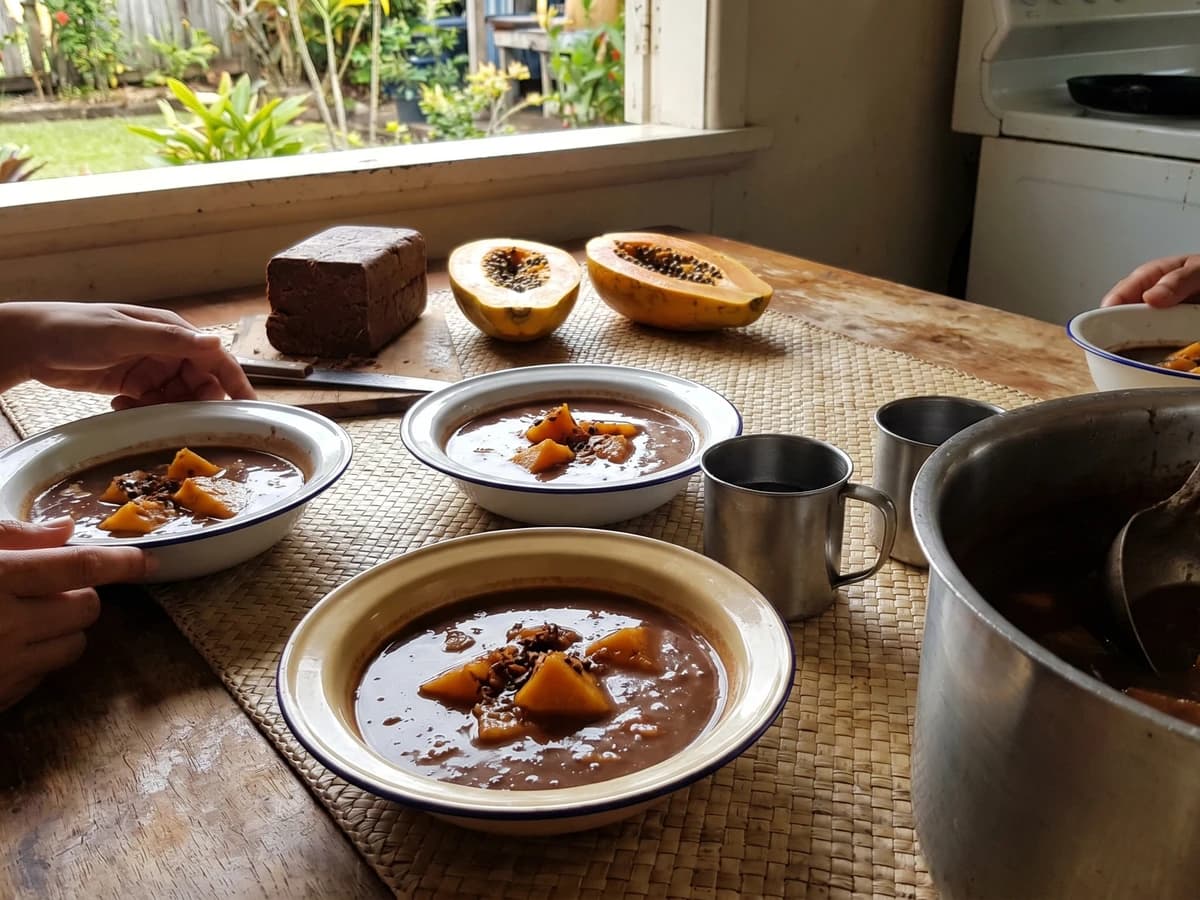
Koko Esi (Sāmoan Cacao-Papaya Soup)
A Sāmoan building-up bowl of ripe esi simmered with roasted Koko Sāmoa, softened with fresh peʻepeʻe, and served warm for elders, children, new mothers, and anybody who needs steady care.
A cooking platform built around craft, culture, and the stories behind what we eat.

Created by
Sāmoa's supoesi, ripe esi and tapioca pearls softened into fresh peʻepeʻe coconut cream, the gentle golden soup Sāmoan families feed to children, elders, new mothers, and anybody coming back to strength.
The first time a Sāmoan auntie handed me supoesi, she didn't talk it up. She just set the bowl down like medicine and breakfast were the same kindness. Supoesi, often heard as supo esi, soup of esi, belongs to Sāmoa: ripe esi, papaya in gagana Sāmoa, the Sāmoan language, cooked soft with little sago or tapioca pearls, then finished with peʻepeʻe, fresh coconut cream. It is the kind of bowl an aiga, the extended family, gives to the sick, the small, the elderly, the new mother, anybody whose body needs building back.
Papaya isn't kalo or talo, taro, not one of the old canoe crops our ancestors carried with one ocean, one canoe, one root. It came later, and Sāmoa still made it family, because the fanua, the land, teaches you to feed people with what grows at the door. Eat what you have. The niu, the coconut palm, gives the cream; the papaya gives its gold; the tapioca gives small soft beads that make the soup gentle enough for a child and steady enough for someone coming back from fever.
Its closest cousin right there in Sāmoa is suafaʻi, banana soup with coconut, and farther across the Triangle you see related comfort in Tahitian poʻe, fruit pudding, Cook Islands poke, banana or fruit pudding, and Hawaiian haupia, coconut pudding, each its own dish, each its own hand. They are not supoesi. Same comfort, different bowl. That is how the family shows without the islands getting blurred.
So cook it slow enough for the tapioca to go clear, but don't make it precious. Squeeze the peʻepeʻe fresh if you can; a thick can will carry a weeknight. Add the coconut at the end and keep the pot gentle, because hard boiling turns the cream oily and loud. You want a bowl that settles the body: golden, glossy, soft, and warm in the hand.
Papaya, esi in gagana Sāmoa, the Sāmoan language, is not one of the old canoe crops like talo, ʻulu, niu, and ʻuala; it entered the Pacific after contact from the Americas and took fast to Sāmoan village gardens. Supoesi shows how Sāmoan home cooking absorbed later plants and market starches without losing the older food grammar: ripe fruit softened, coconut cream stirred in, and a gentle bowl fed back into the aiga, the extended family. Its history lives less in old written records than in everyday pots in Sāmoa, American Sāmoa, and Auckland church-hall kitchens, beside suafaʻi, koko alaisa, and other building-up foods.
Quantity
2 large, about 2 pounds peeled weight
peeled, seeded, cut into 1-inch chunks
Quantity
1/2 cup
rinsed
Quantity
4 cups
plus more for loosening
Quantity
2 cups
squeezed from 3 cups grated mature coconut with 1 1/2 cups warm water, or 1 can thick unsweetened coconut cream
Quantity
1/4 to 1/3 cup
to taste
Quantity
1/4 teaspoon
Quantity
1 to 2 teaspoons
if the papaya tastes flat
| Ingredient | Quantity |
|---|---|
| ripe esi (papayas)peeled, seeded, cut into 1-inch chunks | 2 large, about 2 pounds peeled weight |
| small pearl tapioca or sagorinsed | 1/2 cup |
| waterplus more for loosening | 4 cups |
| fresh coconut cream (peʻepeʻe)squeezed from 3 cups grated mature coconut with 1 1/2 cups warm water, or 1 can thick unsweetened coconut cream | 2 cups |
| sugarto taste | 1/4 to 1/3 cup |
| fine sea salt | 1/4 teaspoon |
| fresh lime or lemon juice (optional)if the papaya tastes flat | 1 to 2 teaspoons |
If you're making fresh peʻepeʻe, put the grated mature coconut in a bowl, pour over the warm water, and work it with your hands until the water turns thick and white. Squeeze hard through a clean cloth or fine strainer to get about 2 cups of rich coconut cream. If you're using canned cream, stir it smooth and set it close by.
Bring 4 cups water to a lively simmer in a heavy pot. Stir with one hand while you scatter in the rinsed tapioca or sago with the other, so it doesn't clump into one stubborn lump. Lower to a gentle simmer and cook 12 to 15 minutes, stirring often, until most pearls turn clear with only a tiny white dot at the center and the liquid looks shiny.
Stir in the papaya chunks, 1/4 cup sugar, and the salt. Simmer 8 to 10 minutes, until the papaya turns deeper gold, the edges soften, and a few pieces slump into the broth. Mash some fruit against the side of the pot if you want a thicker bowl. If your papaya is very ripe and soft already, add it for only the last 5 minutes. Eat what you have.
Turn the heat low and stir in the coconut cream. Warm it 3 to 5 minutes, with only small bubbles around the edge of the pot. Don't hard boil it now; the cream can split and go greasy. Taste for sugar and salt, then add the lime or lemon only if the papaya needs a little lift.
Take the pot off the heat and let the supoesi rest 10 minutes. The tapioca keeps drinking and the soup settles into a soft, spoon-coating body. Loosen with a splash of water or coconut cream if it gets too thick. Serve warm, room temperature, or chilled, with the sweetness kept gentle. This is building-up food, not candy.
1 serving (about 390g)
Culinary guides, cultural storytelling, and the editorial depth that makes cooking meaningful.
Discover Culinary ExplorerChef Makoa
A Sāmoan building-up bowl of ripe esi simmered with roasted Koko Sāmoa, softened with fresh peʻepeʻe, and served warm for elders, children, new mothers, and anybody who needs steady care.
Chef Makoa
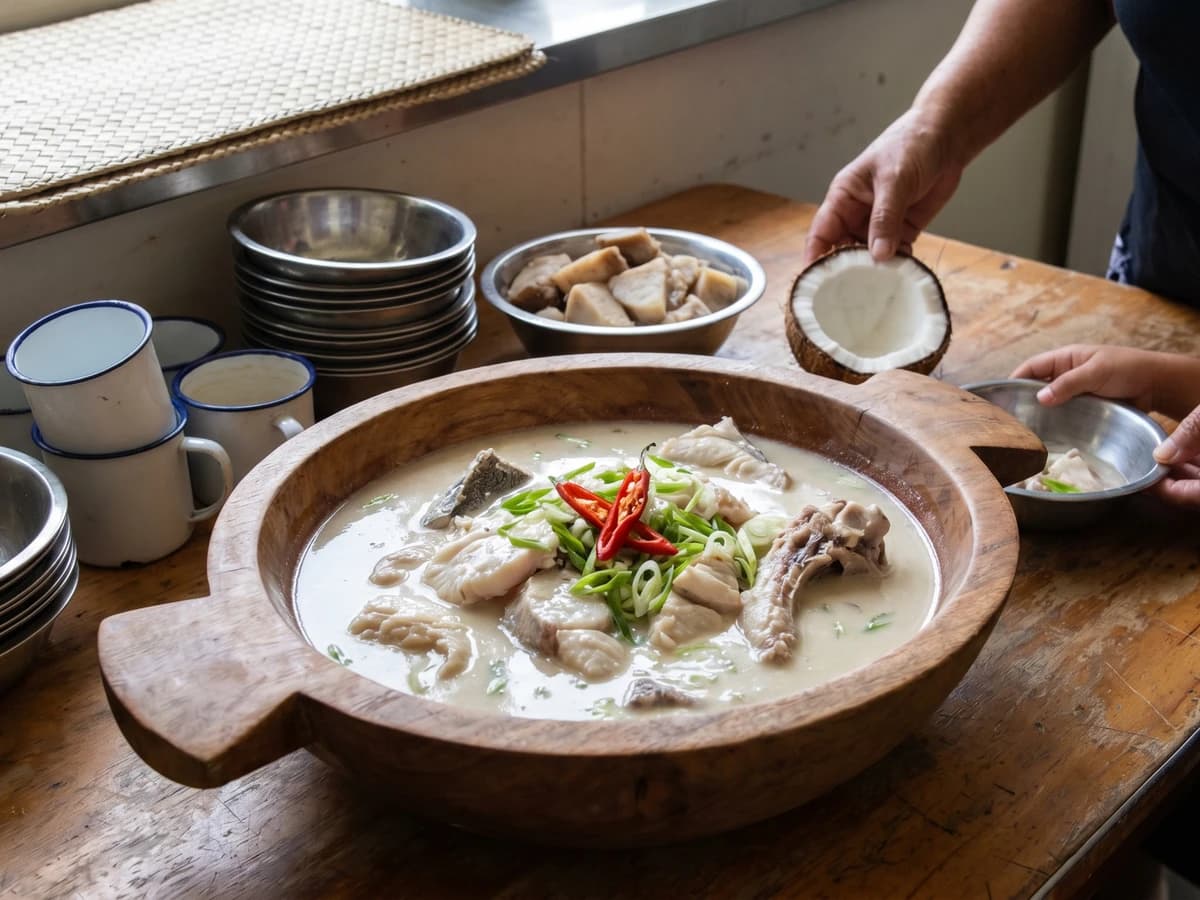
A clear Sāmoan fish soup softened with peʻepeʻe, fresh coconut cream, made for the aiga when somebody needs feeding now: clean fish, onion, chili, salt, and no showing off.
Chef Makoa
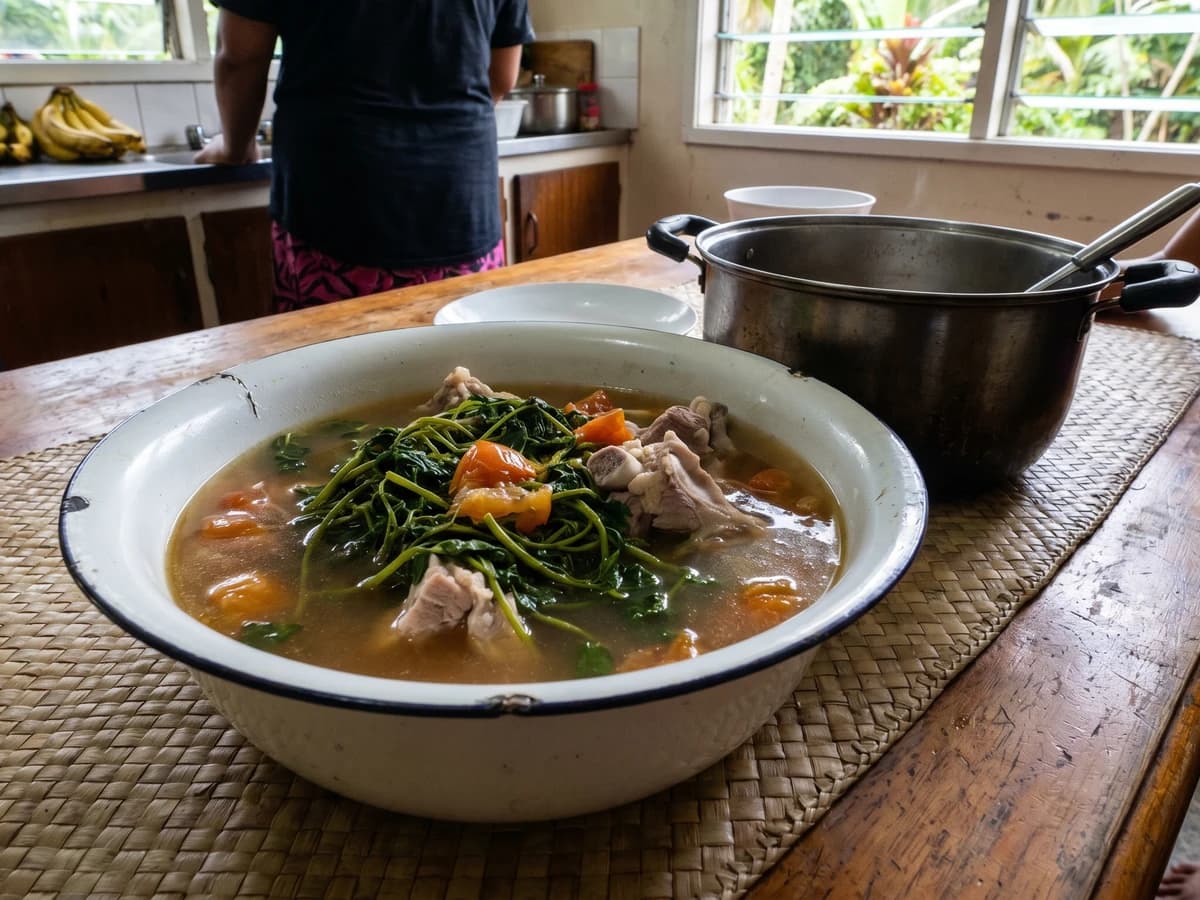
Sāmoa's supo kapisi, pork bones simmered with ginger until the broth turns rich, then peppery watercress folded in dark and tender for a bowl that builds you back up.
Chef Makoa
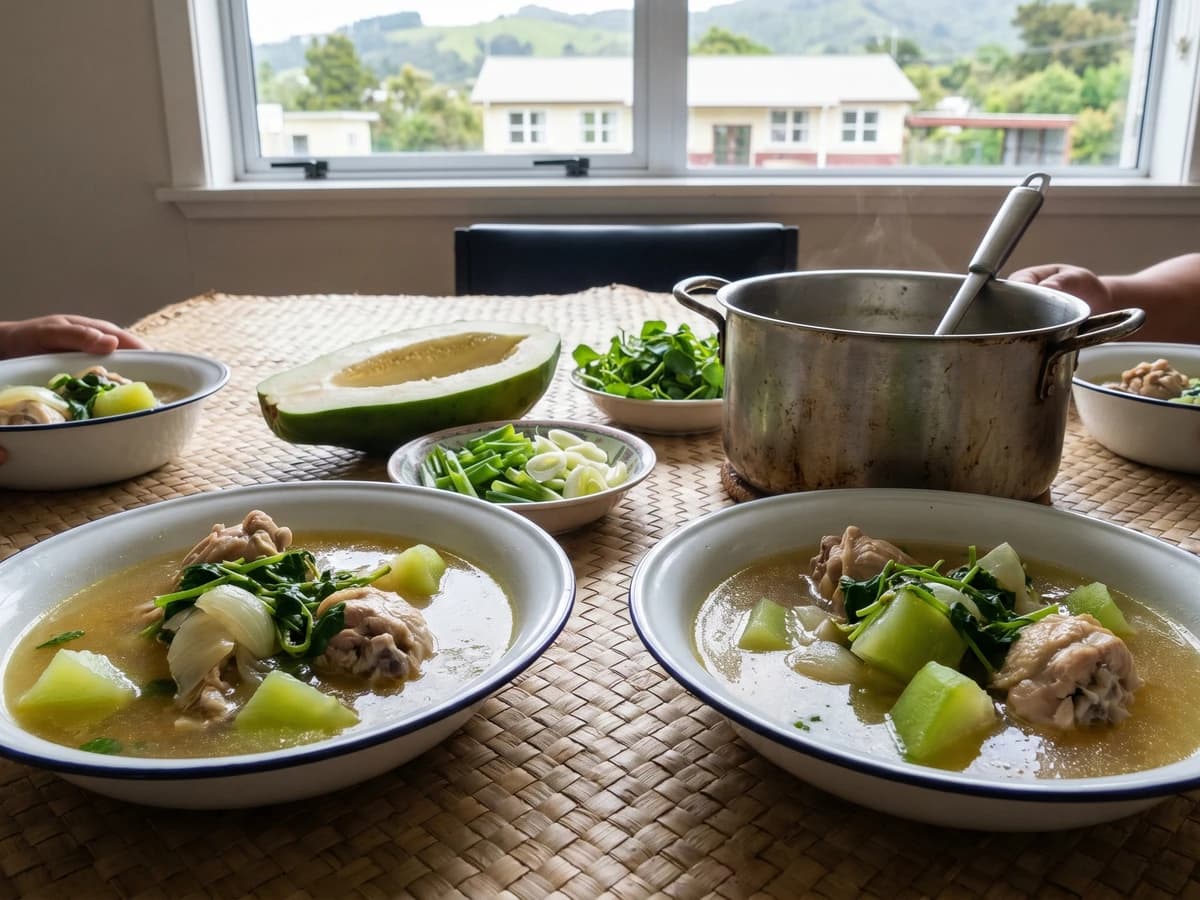
A gentle Sāmoan broth of bone-in chicken, firm green esi, onion, fish sauce, and greens, the kind of bowl an āiga sets down when somebody needs building back up.