
Chef Jeong-sun
Aehobak-guk (애호박국, Korean Zucchini Soup)
A clean summer soup of Korean zucchini and salted shrimp, built on quick anchovy-kelp broth and finished before the half-moons lose their shape on a weeknight table.
A cooking platform built around craft, culture, and the stories behind what we eat.
Created by
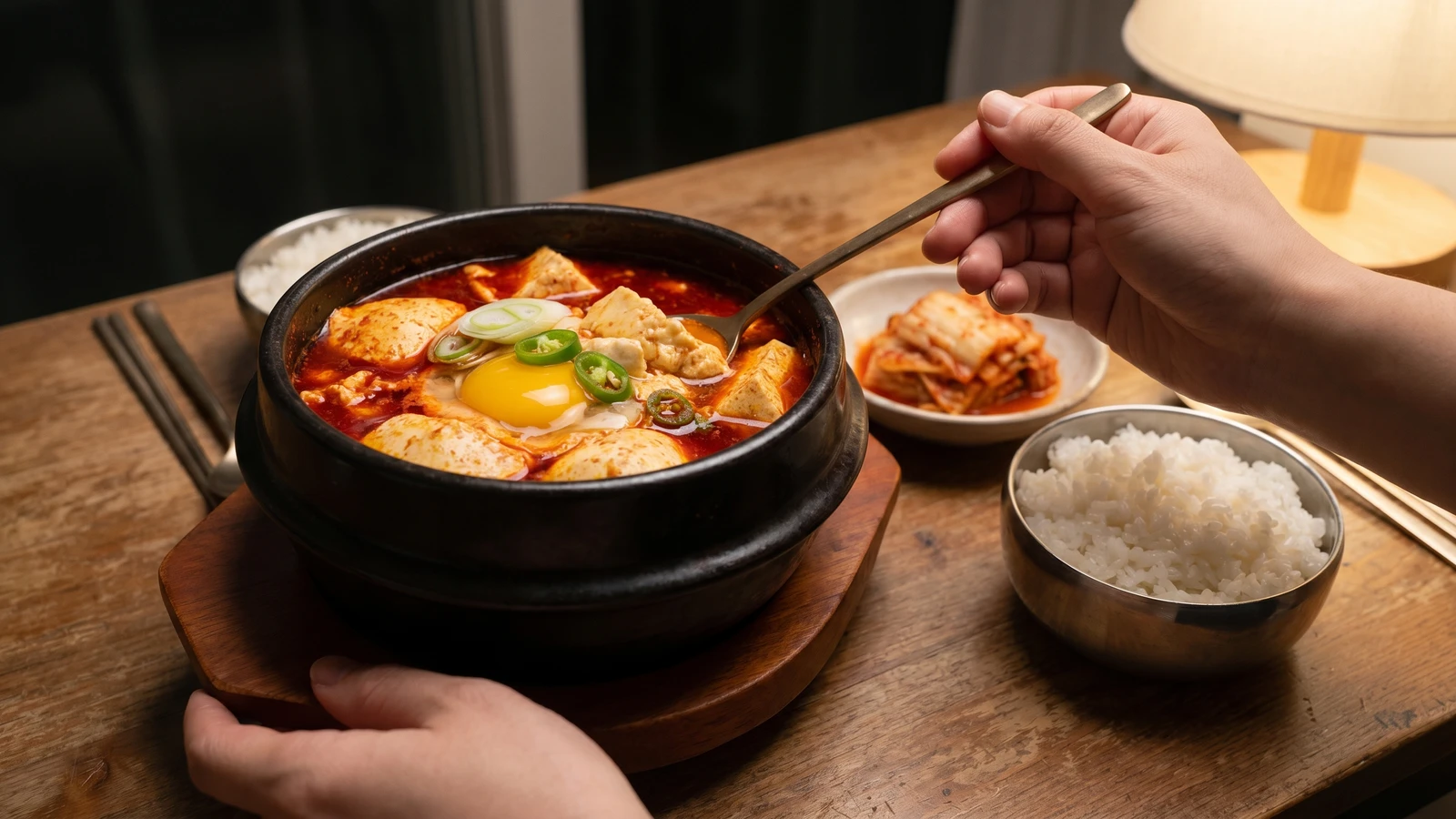
Soft tofu so tender it barely holds, spooned into a red anchovy broth with pork, kimchi, and egg; the stew is bold, but the tofu must stay itself.
Sundubu-jjigae lives or dies by what you do not do. Do not stir the tofu into crumbs. Do not boil it until it toughens. Do not make the broth so loud with chili that the soft tofu disappears. This stew asks for restraint inside heat.
My teacher, Master Seong-nyeo, used to slide the sundubu in last and move it with the side of the spoon, almost like setting a child down to sleep. The pot was red, yes, and it came to the table angry at the edges, but the center stayed gentle: curds of soft tofu, a little pork for body, kimchi for acid, an egg cracked in at the end. Rice waits beside it. A spoon goes through the egg, broth, tofu, and rice all at once. That is weeknight comfort, not because it is mild, but because it is immediate.
The safe shortcut is broth made ahead, or even good unsalted stock when the day is long. The corner you cannot cut is the chili oil base. Bloom the gochugaru gently in oil with pork, garlic, and kimchi, because raw chili flakes floating in water taste flat and dusty. 손맛 is real; I measure it anyway. Once you know your heat, your tofu, and your kimchi, write the adjustment down. Memory is a borrowed bowl.
Sundubu is unpressed soft tofu, and Korea's best-known regional lineage is Chodang sundubu from Gangneung, traditionally curdled with seawater and associated with the Joseon scholar Heo Yeop, whose pen name was Chodang. Sundubu-jjigae in its familiar red ttukbaegi form belongs to modern home and restaurant cooking rather than old court records, built from everyday tofu, chili flakes, meat or seafood, kimchi, and an egg. Korean sundubu restaurants also became a strong immigrant food tradition in Los Angeles and other Korean American communities from the late twentieth century onward.
Quantity
2 cups
Quantity
1 piece, about 3 inches square
for quick broth
Quantity
6 large
heads and guts removed, for quick broth
Quantity
2 tablespoons
Quantity
80g
finely chopped
Quantity
1/2 cup
chopped
Quantity
1 tablespoon
Quantity
1 tablespoon, plus 1 teaspoon for more heat
Quantity
2 cloves
minced
Quantity
1 teaspoon
Quantity
1 teaspoon
Quantity
1/2 small
thinly sliced
Quantity
1 small
quartered lengthwise and sliced 1/4 inch thick
Quantity
1 tube or package, about 350g
Quantity
1
thinly sliced
Quantity
1
sliced
Quantity
1 large
Quantity
1/2 teaspoon
Quantity
2 turns
| Ingredient | Quantity |
|---|---|
| anchovy-kelp broth or unsalted chicken stock | 2 cups |
| dried kelp (dasima) (optional)for quick broth | 1 piece, about 3 inches square |
| dried anchovies (myeolchi) (optional)heads and guts removed, for quick broth | 6 large |
| neutral oil | 2 tablespoons |
| pork belly or pork shoulderfinely chopped | 80g |
| well-fermented napa cabbage kimchichopped | 1/2 cup |
| kimchi brine | 1 tablespoon |
| gochugaru (Korean chili flakes) | 1 tablespoon, plus 1 teaspoon for more heat |
| garlicminced | 2 cloves |
| soup soy sauce (guk-ganjang) | 1 teaspoon |
| fish sauce or salted shrimp juice (saeujeot-guk) (optional) | 1 teaspoon |
| onionthinly sliced | 1/2 small |
| zucchini (aehobak)quartered lengthwise and sliced 1/4 inch thick | 1 small |
| soft tofu (sundubu) | 1 tube or package, about 350g |
| scallionthinly sliced | 1 |
| green chili or cheongyang chili (optional)sliced | 1 |
| egg | 1 large |
| toasted sesame oil (optional) | 1/2 teaspoon |
| freshly ground black pepper | 2 turns |
If you do not already have broth, put 2 1/4 cups water, the kelp, and the cleaned anchovies in a small pot. Bring it just to a simmer, pull the kelp out, then simmer the anchovies 8 minutes more and strain. You need 2 cups. Pulling the kelp early keeps the broth clean instead of slick and bitter.
Set a 1-quart ttukbaegi or small heavy pot over medium-low heat. Add the oil and pork and cook 3 to 4 minutes, stirring, until the pork gives up some fat and loses its raw color. Add the kimchi and cook 2 minutes more. Turn the heat low, add the gochugaru and garlic, and stir for 30 seconds only. The oil should turn red and glossy. If the chili darkens toward brown, the heat is too high and the stew will taste scorched.
Pour in the 2 cups broth, then add the kimchi brine, soup soy sauce, fish sauce if using, onion, and zucchini. Raise the heat to medium and simmer 6 to 7 minutes, until the onion softens and the zucchini is tender at the edge but not collapsing. Taste the broth now. It should be savory, lightly sour, and a little saltier than soup, because the tofu will quiet it.
Open the sundubu package and slide the tofu into the pot in large pieces. Use a spoon to break it into 4 or 5 big curds, not small bits. Simmer 3 minutes, spooning broth over the top instead of stirring through it. Soft tofu is the reason for the dish; treat it roughly and all you have is red soup with crumbs.
Scatter the scallion and sliced chili over the top. Crack the egg into the center and simmer 30 to 60 seconds, just until the white begins to set at the edges and the yolk is still loose. Add sesame oil and black pepper if you like. Carry the pot straight to the table on a trivet, with rice waiting.
1 serving (about 480g)
Culinary guides, cultural storytelling, and the editorial depth that makes cooking meaningful.
Discover Culinary ExplorerChef Jeong-sun
A clean summer soup of Korean zucchini and salted shrimp, built on quick anchovy-kelp broth and finished before the half-moons lose their shape on a weeknight table.
Chef Jeong-sun
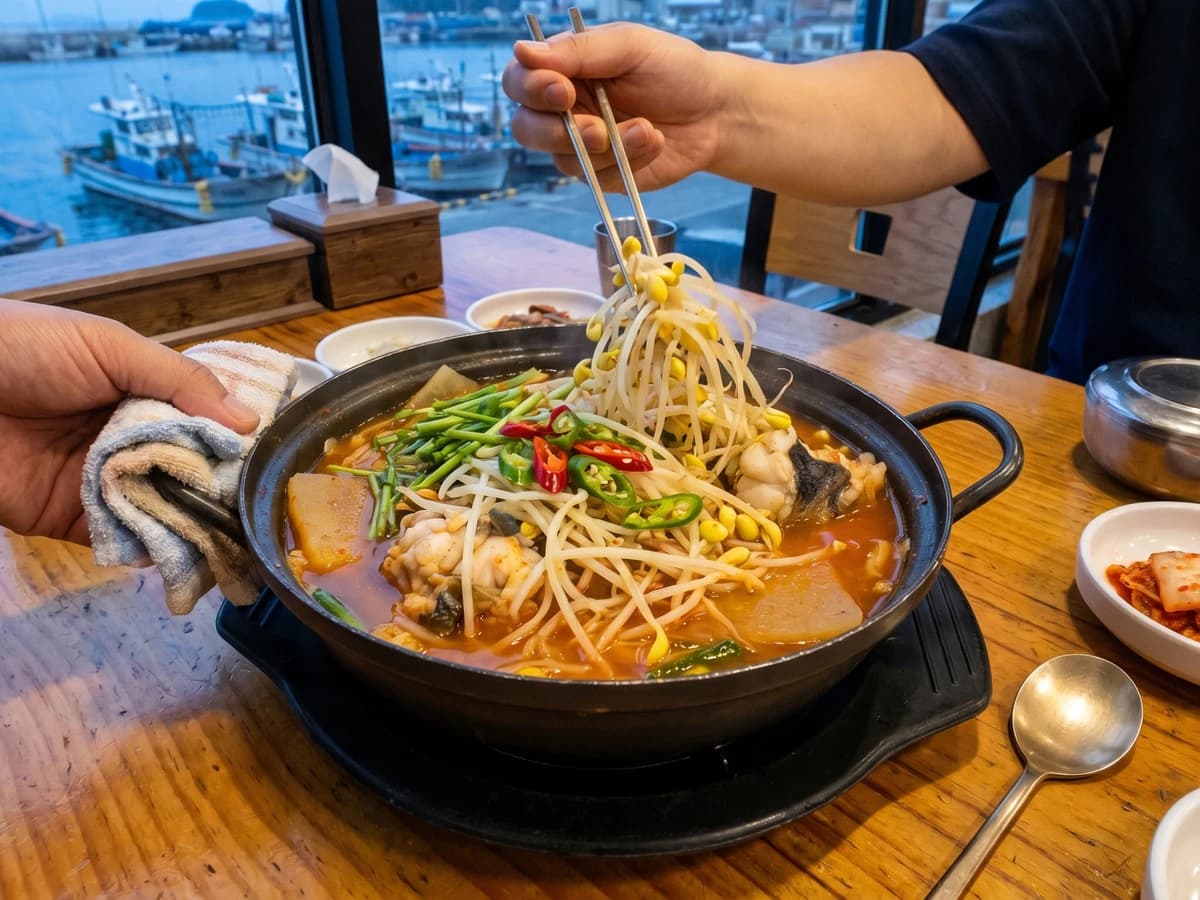
A Masan coast monkfish stew with firm white meat, gelatin at the bones, soybean sprouts for crunch, and a red broth seasoned to carry the fish, not bury it.

Chef Jeong-sun
A weeknight fish roe stew with radish and crown daisy in a clean spicy broth, where the whole success depends on adding the roe late enough that it sets tender, not chalky.

Chef Jeong-sun
Late-summer mallow leaves rubbed with salt until the bitter green water runs off, then simmered in a clean doenjang broth with dried shrimp, the quiet soup a Korean weeknight deserves.