
Chef Thomas
Apple Charlotte
Buttered bread baked to a deep mahogany around a filling of spiced Bramley apples, turned out at the table in a small moment of drama, cold cream poured from a jug alongside.
A cooking platform built around craft, culture, and the stories behind what we eat.
Created by Chef Thomas
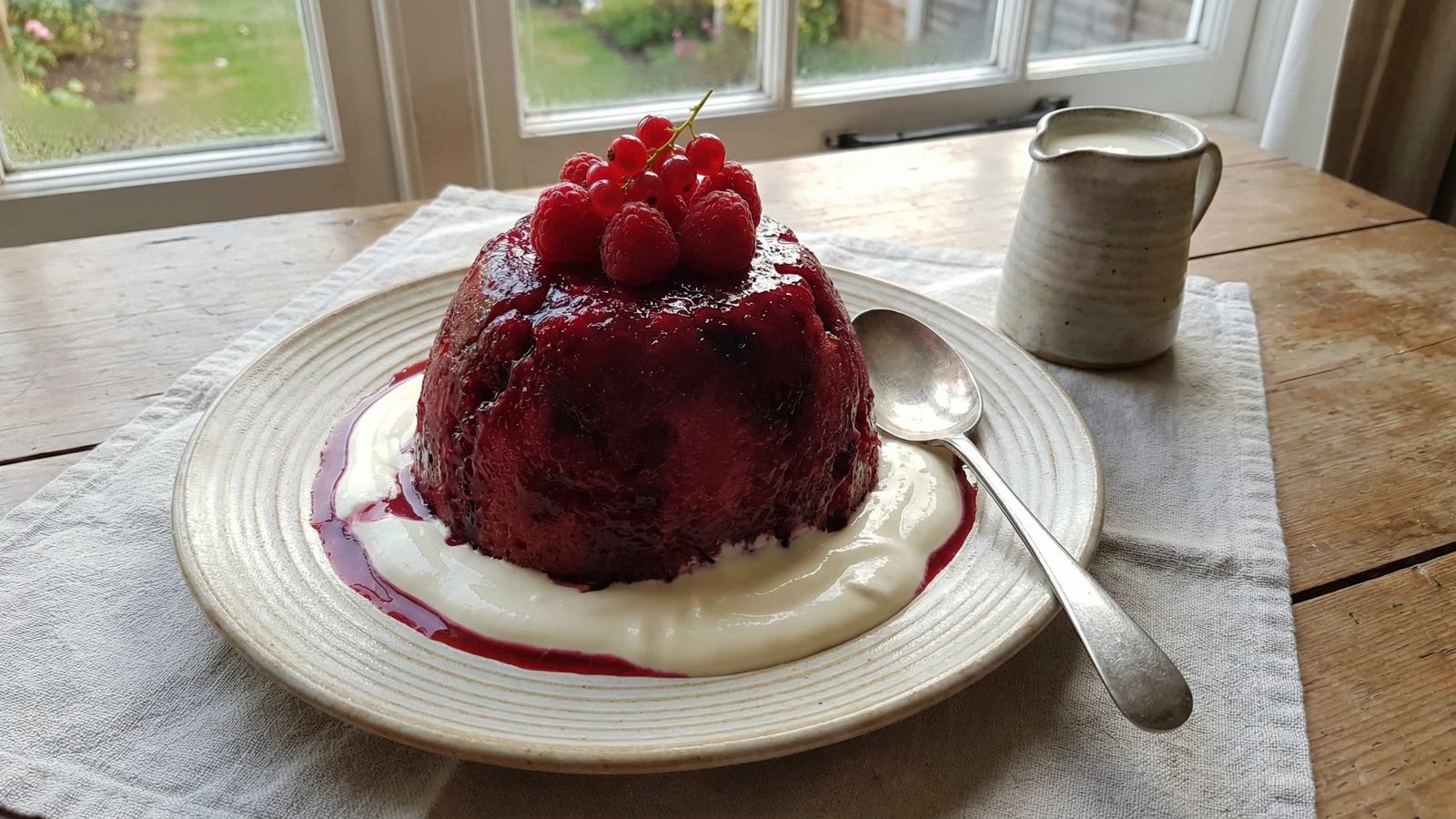
A bread-lined basin filled with stewed summer berries and pressed overnight, turned out the next day as a deep ruby dome with cold cream pooling beside it.
There's a fortnight in July when the garden and the market both lose their heads at the same time. The raspberry canes are leaning under their own weight. The blackcurrants are so dark they look nearly blue. The strawberries have gone past the polite early-season phase and into the glut, the moment when you bring home more than you meant to and eat the last handful standing at the sink.
That's when you make summer pudding. Not before. You can buy berries in February, of course, but they taste of cardboard and disappointment, and this isn't a pudding that forgives thin ingredients. It needs fruit that tastes like itself. The market decides.
The method is barely a method. You warm the berries with sugar until their juices run. You line a basin with bread. You fill it, weight it, and walk away. Overnight, the juice does the work, soaking through the bread until there isn't a pale patch left, just deep, saturated colour and the concentrated taste of high summer held in a dome you can turn out onto a plate.
I wrote it down in the notebook years ago: bread, berries, cream, Sunday. There hasn't been a July since when I haven't made one. It's the closest thing I know to bottling a season.
Quantity
250g
Quantity
250g
hulled and halved if large
Quantity
200g
stripped from their stalks
Quantity
150g
stripped from their stalks
Quantity
150g
Quantity
2 tablespoons
Quantity
8-10 slices
crusts removed
Quantity
a handful
Quantity
to serve
| Ingredient | Quantity |
|---|---|
| raspberries | 250g |
| strawberrieshulled and halved if large | 250g |
| redcurrantsstripped from their stalks | 200g |
| blackcurrantsstripped from their stalks | 150g |
| caster sugar | 150g |
| cold water | 2 tablespoons |
| good white bread, a day or two oldcrusts removed | 8-10 slices |
| extra raspberries, to finish (optional) | a handful |
| thick double cream, to serve | to serve |
Put the redcurrants and blackcurrants in a wide pan with the sugar and the cold water. Set it over a low heat and let it come slowly up to a whisper of a simmer, stirring now and then. You'll hear the currants start to pop against the side of the pan, a small sound, easy to miss if you've wandered off. When the sugar has dissolved and the juices are running dark and glossy, take it off the heat. Two, maybe three minutes. No longer.
Tip the strawberries and raspberries into the warm currants and fold them through gently with a wooden spoon. The residual heat will soften them just enough to bleed their colour into the pan without collapsing them entirely. You want the raspberries to hold their shape. Let it all sit for five minutes so the juices mingle.
Cut a round of bread to fit the bottom of a 1-litre pudding basin. Cut the remaining slices into wedges, the kind of shape you'd cut a cake into. One at a time, dip each piece briefly into the berry juice so one side is stained deep pink, then press it into the basin, juice-side out, overlapping the edges so there are no gaps. Work around the sides until the basin is completely lined. Patch any pale spots with smaller scraps. It doesn't need to be neat. It needs to be sealed.
Spoon the fruit and most of the juice into the bread-lined basin, pressing gently so it settles. Keep back a small cupful of juice in the fridge for tomorrow, you'll want it. Lay the last pieces of bread over the top, trimming to cover the fruit completely. This is the base of the pudding once it's turned out, so press it down firmly.
Cover the basin with cling film or a small plate that fits snugly inside the rim. Put something heavy on top. A tin of tomatoes, a jar of jam, whatever the cupboard offers. Into the fridge it goes. Overnight, at least. The weight drives the juices through every piece of bread until there's no white left, only deep, saturated ruby. This is the whole trick of the pudding and it happens entirely without you.
Take the pudding from the fridge. Lift off the weight, peel back the cling film, and run a palette knife around the inside of the basin. Place a deep plate upside down over the top, then invert the whole thing in one confident movement. Lift the basin away. If you see any pale patches where the juice didn't quite reach, brush them with the juice you held back. Scatter the extra raspberries over the top. Bring it to the table with a jug of cold double cream and let people help themselves.
1 serving (about 210g)
Culinary guides, cultural storytelling, and the editorial depth that makes cooking meaningful.
Discover Culinary ExplorerChef Thomas
Buttered bread baked to a deep mahogany around a filling of spiced Bramley apples, turned out at the table in a small moment of drama, cold cream poured from a jug alongside.

Chef Thomas
Whole Bramley apples cored and stuffed with butter, brown sugar and plump dried fruit, baked until they collapse and the kitchen fills with the smell of autumn getting on with itself.

Chef Thomas
A proper baked rice pudding, slow-cooked in whole milk with butter and nutmeg until the top sets into a freckled golden skin. The kind of pudding that makes January feel like less of a long haul.

Chef Thomas
Wild blackberries and Bramley apples collapsed together under a thick, sandy crumble, the pudding that makes September feel like it's worth staying in for.