
Chef Jeong-sun
Agwi-jjim (Braised Monkfish with Bean Sprouts)
Firm monkfish buried under crisp soybean sprouts, minari, and a red gochugaru sauce thickened at the end; Masan's market dish asks for heat, timing, and a steady hand.
A cooking platform built around craft, culture, and the stories behind what we eat.
Created by
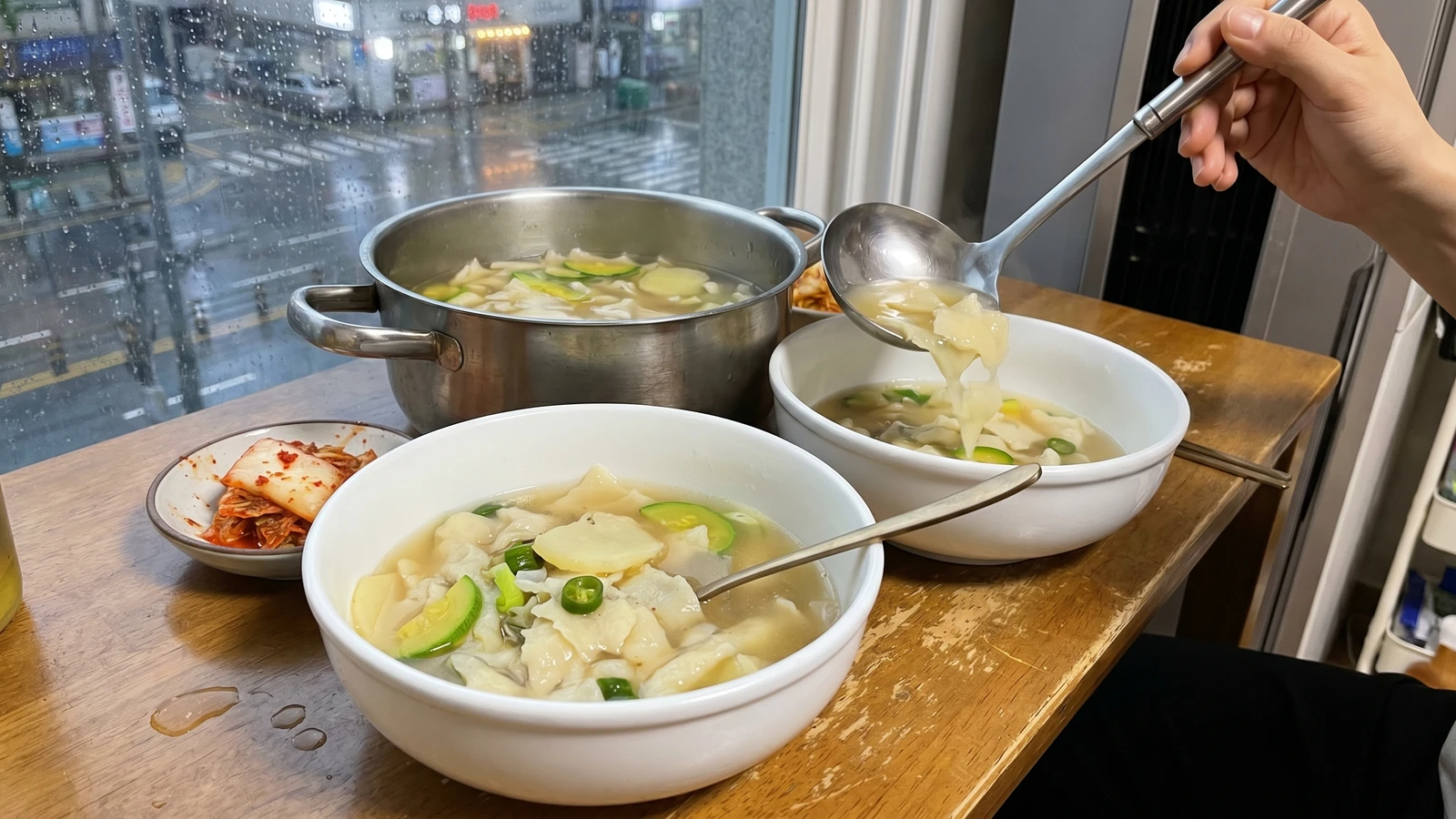
A rainy-day bowl of thin hand-torn dough flakes in clean anchovy-kelp broth, with potato, zucchini, and scallion doing the quiet work that comfort food always does.
Sujebi lives or dies in your fingers. The dough must rest, then stretch thin before it is torn into the broth. If you pinch it off in thick lumps, you will still have soup, but it won't be the bowl Korean homes wait for when rain darkens the windows and someone says there is flour in the cupboard.
Sujebi is part of Korea's old flour-dough soup family, often called tteudeo-guk (torn soup) in plain speech because the dough is pulled by hand directly into broth. Wheat flour was not always an everyday ingredient in Korea, so the dish moved from a less common flour food into a true budget staple after the Korean War, when imported and relief flour became widely used in home kitchens. Its modern place is humble and beloved: a rainy-day comfort soup, usually built on anchovy-kelp broth rather than any grand banquet lineage.
Quantity
2 cups
plus more for dusting
Quantity
1/2 teaspoon
for the dough
Quantity
3/4 cup, plus 1 to 2 tablespoons if needed
Quantity
1 teaspoon
Quantity
8 cups
for broth
Quantity
12
heads and guts removed
Quantity
1 piece, about 4 inches square
Quantity
1/2 medium
left in one piece for broth
Quantity
2 cloves
lightly crushed for broth
Quantity
1 medium
peeled and sliced 1/4 inch thick
Quantity
1/2 medium
thinly sliced
Quantity
1/2 medium
sliced into half-moons
Quantity
1 tablespoon
Quantity
1 teaspoon
Quantity
3/4 teaspoon, plus more as needed
Quantity
1/4 teaspoon
freshly ground
Quantity
2
sliced on the diagonal
Quantity
1
thinly sliced
Quantity
1 teaspoon
for finishing
Quantity
to finish
| Ingredient | Quantity |
|---|---|
| all-purpose flourplus more for dusting | 2 cups |
| fine sea saltfor the dough | 1/2 teaspoon |
| cool water | 3/4 cup, plus 1 to 2 tablespoons if needed |
| neutral oil | 1 teaspoon |
| waterfor broth | 8 cups |
| large dried anchovies (myeolchi)heads and guts removed | 12 |
| dried kelp (dasima) | 1 piece, about 4 inches square |
| onionleft in one piece for broth | 1/2 medium |
| garliclightly crushed for broth | 2 cloves |
| potatopeeled and sliced 1/4 inch thick | 1 medium |
| onionthinly sliced | 1/2 medium |
| zucchini (aehobak)sliced into half-moons | 1/2 medium |
| soup soy sauce (guk-ganjang) | 1 tablespoon |
| fish sauce or Korean tuna extract (optional) | 1 teaspoon |
| fine sea salt | 3/4 teaspoon, plus more as needed |
| black pepperfreshly ground | 1/4 teaspoon |
| scallionssliced on the diagonal | 2 |
| green chili (optional)thinly sliced | 1 |
| toasted sesame oil (optional)for finishing | 1 teaspoon |
| toasted sesame seeds (optional) | to finish |
Stir the flour and 1/2 teaspoon salt in a bowl. Add 3/4 cup cool water and mix until shaggy, then knead 5 minutes until the dough becomes smooth and firm. If dry flour remains after 2 minutes, add water 1 teaspoon at a time. Rub the dough with 1 teaspoon oil, cover it, and rest it 30 minutes. Resting is not decoration. It relaxes the gluten so the dough stretches thin instead of snapping thick.
Put 8 cups water, the anchovies, kelp, the half onion, and crushed garlic in a pot. Bring it slowly to a simmer over medium heat. Pull the kelp out as soon as the water begins to simmer, about 8 to 10 minutes, because kelp left boiling turns the broth slick and bitter. Simmer the anchovies, onion, and garlic 10 minutes more, then strain. You should have about 6 1/2 cups clean broth.
Return the broth to the pot and season with soup soy sauce, the optional fish sauce or tuna extract, 3/4 teaspoon salt, and black pepper. Taste it now. It should be savory but not sharp, because the dough will drink some salt as it cooks. 손맛 is real. I still measure it anyway, so the next bowl does not depend on your mood.
Add the sliced potato and sliced onion and simmer 5 minutes. Potato goes in before the dough because it needs time to soften and because a little starch from it rounds the broth. Do not boil hard. A steady simmer keeps the broth clear enough to taste the anchovy underneath.
Wet your fingers. Hold the rested dough over the simmering pot, pinch off a piece about the size of a walnut, stretch it thin until you can almost see light through it, and tear it into the broth. Keep the pieces irregular, but keep them thin. Thick sujebi cooks heavy in the center and makes the bowl feel tired. Stir gently every few pieces so they do not stick together.
When all the dough is in, simmer 4 minutes, then add the zucchini. Cook 3 to 4 minutes more, until the dough flakes are tender and slightly chewy and the zucchini is green and soft at the edge. Taste one dough piece, not just the broth. If the center tastes floury, give it another minute.
Stir in the scallions and optional green chili for the last 30 seconds. Taste and adjust with a pinch more salt only if the broth feels flat. Finish with sesame oil only if your broth is very clean and light; too much oil covers the anchovy. Ladle into wide bowls and scatter sesame seeds if you like. Eat it while the dough still has its pull.
1 serving (about 430g)
Culinary guides, cultural storytelling, and the editorial depth that makes cooking meaningful.
Discover Culinary ExplorerChef Jeong-sun
Firm monkfish buried under crisp soybean sprouts, minari, and a red gochugaru sauce thickened at the end; Masan's market dish asks for heat, timing, and a steady hand.

Chef Jeong-sun
A quick Korean rice bowl built on contrast: warm rice, cold popping flying-fish roe, chopped vegetables, gim, sesame oil, and the crisp rice bottom a hot stone bowl gives you.
Chef Jeong-sun
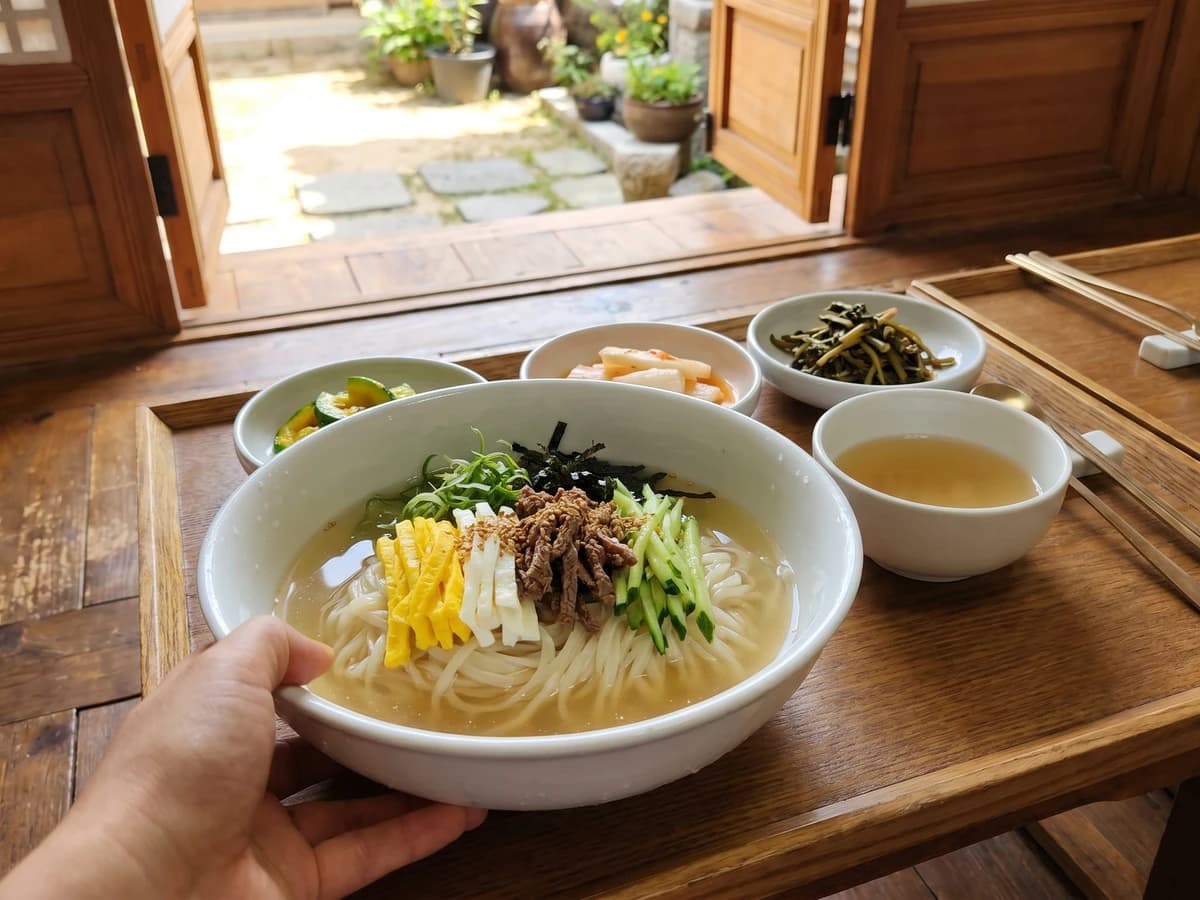
Andong's guest noodles, wheat and roasted soybean flour rolled thin, boiled and rinsed cold, then set in a clear chilled anchovy broth with careful strips of beef, egg, and cucumber.

Chef Jeong-sun
Andong's ritual-table rice served on an ordinary day: separate soy-sesame namul, warm rice, and clear radish soup, mixed without gochujang so every vegetable keeps its own voice.