
Chef Juliana
Água de Coco
You think opening a coconut belongs to the beach vendor. It doesn't. Chill the fruit, shave the cap, tap a small door, and you've solved the cold drink beside your pê-efe.
A cooking platform built around craft, culture, and the stories behind what we eat.
Created by
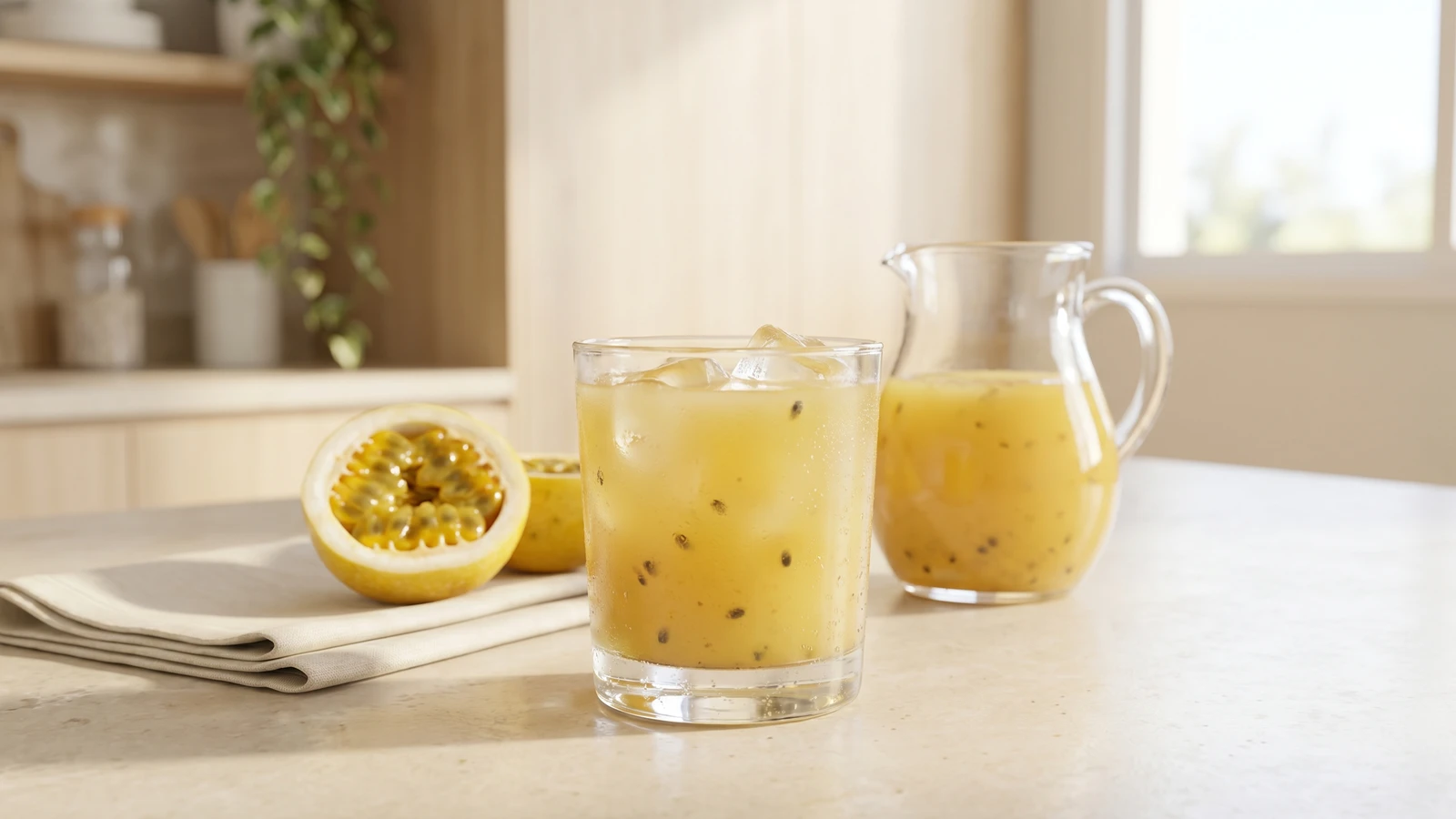
You don't need a carton to get maracujá right. Cut, scoop, pulse, strain, sweeten: five plain moves for a cold glass that tastes like fruit, not candy.
You look at a wrinkled maracujá in the feira and think, isso não é pra mim. The box was easier. The powder promised no mess. Fine. It also promised fruit and gave you perfume and sugar wearing a costume.
Anota aí: cut, scoop, pulse, strain, sweeten. That's not talent. That's a recipe. When I was learning to cook as a grown woman, my caderno had steps this small because small steps are how a gente gets brave in the kitchen. Cozinhar não é dom, é um aprendizado, and juice counts. If you can make a glass of suco natural, you have already told the imitation version to wait outside.
This belongs beside the everyday plate, too. Rice, beans, a piece of chicken or an egg, something green, and a cold glass of maracujá: that's a pê-efe that feels like Brazil on a Tuesday, not because anyone decorated it, but because the table knows what it is. Comida de verdade doesn't need a speech. It needs fruit, water, a little sugar, and someone willing to make it.
The method is restraint. Blend just enough to loosen the pulp, because crushed seeds turn bitter. Strain gently, because the juice should be bright and clean. Sweeten after, because every fruit has its own sour little personality. By the end you get a sharp, floral, cold glass that tastes like maracujá, not candy pretending it has a passport.
The word maracujá comes through Tupi-Guarani, and the fruit was part of Indigenous food knowledge in tropical America before Portuguese colonization. European missionaries in the sixteenth century gave the Passiflora flower its Passion-flower name because they read Christian symbols into its parts, but the Brazilian kitchen kept the fruit practical: pulp, water, sugar, and a cold glass. The tart yellow maracujá azedo became the everyday juicing fruit in homes and lanchonetes, while sweeter or regional varieties are used differently across the country.
Quantity
4 large
heavy, fragrant, slightly wrinkled, yielding about 1 cup pulp with seeds
Quantity
3 cups, plus up to 1/2 cup more to taste
Quantity
2 to 4 tablespoons
to taste
Quantity
1 cup
| Ingredient | Quantity |
|---|---|
| ripe yellow passion fruits (maracujá azedo)heavy, fragrant, slightly wrinkled, yielding about 1 cup pulp with seeds | 4 large |
| cold water | 3 cups, plus up to 1/2 cup more to taste |
| sugarto taste | 2 to 4 tablespoons |
| ice cubes (optional) | 1 cup |
Wash the passion fruits, cut them in half across the middle, and scoop the pulp and seeds into the blender. The pulp should be glossy yellow-orange, wet, and sharply fragrant. If one fruit is dry inside, don't pretend. Use another. Juice is simple math, and dry fruit gives you weak juice.
Add 3 cups cold water to the blender and pulse 3 or 4 times, about 1 second each, just until the yellow pulp loosens from the seeds. Stop while most seeds are still whole. Run the blender like a smoothie and you'll grind the seeds, which makes the juice bitter and gritty.
Pour the mixture through a fine-mesh sieve into a pitcher. Stir and press gently with a spoon until only seeds and a little membrane remain. Don't press like you're angry at the fruit. Forcing broken seed bits through the sieve muddies the juice and brings bitterness with it.
Stir in 2 tablespoons sugar until dissolved, then taste. Add more sugar 1 teaspoon at a time if the juice is too sharp, or add cold water 1/4 cup at a time if it's too strong. The ponto is tart first, sweet second. Sugar should round the sourness, not bury the fruit under candy.
Put ice in the glasses, not in the whole pitcher unless you're serving it all at once. Pour the juice, stir once, and drink right away while it's cold and bright. Ice left sitting in the pitcher melts, waters everything down, and then the fruit gets blamed for a lazy serving choice.
1 serving (about 255g)
Culinary guides, cultural storytelling, and the editorial depth that makes cooking meaningful.
Discover Culinary ExplorerChef Juliana
You think opening a coconut belongs to the beach vendor. It doesn't. Chill the fruit, shave the cap, tap a small door, and you've solved the cold drink beside your pê-efe.

Chef Juliana
Nobody is scared of a blender. Cachaça, coconut milk, condensed milk, and ice go in, and thirty seconds later the churrasco drink is solved.

Chef Juliana
You don't need a bar kit. Fresh maracujá, cachaça, condensed milk, and thirty honest seconds in the blender make a cold Brazilian toast that tastes bright, tart, and grown-up.

Chef Juliana
You don't need a machine to make coffee that smells like a Brazilian kitchen. Hot water, fresh grounds, a clean coador de pano, and the patience to pour like you mean it.