
Chef Juliana
Água de Coco
You think opening a coconut belongs to the beach vendor. It doesn't. Chill the fruit, shave the cap, tap a small door, and you've solved the cold drink beside your pê-efe.
A cooking platform built around craft, culture, and the stories behind what we eat.
Created by
You don't need a Belém counter to drink bacuri at home. You need real polpa, cold water, a blender, and the sense to sweeten after tasting.
You see the frozen pulp in the market and think, isso não é pra mim. Wrong. This isn't a pastry, it isn't a restaurant trick, and it isn't a fruit you need to have grown up peeling with your aunt in Pará to respect properly. A gente starts where a home cook can start: with real polpa de bacuri and a blender.
Bacuri has that creamy, perfumed thing that makes people in Belém talk about it like a personal matter. It tastes tropical without shouting. For a weeknight, it does what a good Brazilian drink should do: it sits beside the pê-efe, rice, beans, meat or egg or fish, something green, and makes the plate feel finished without turning dinner into a project.
The method is almost rude in its simplicity, which I love. Break up the frozen pulp so the blender doesn't suffer, add cold water little by little so the juice stays creamy instead of thin, then taste before you sweeten. Anota aí: sugar is not there to bury the fruit. It's there to lift the sour edge so the bacuri tastes more like itself.
And read the label. Polpa de bacuri is not polpa de cupuaçu, not a powdered imitation, not a drink mix wearing a fruit costume. Comida de verdade can be frozen. It just has to still be food.
Bacuri, the fruit of Platonia insignis, is native to the Amazon region and is especially prized in Pará, where its pulp appears in juices, creams, sweets, and ice creams during the fruiting season. In Belém, bacuri sits beside cupuaçu, açaí, taperebá, and muruci as part of the everyday language of fruit pulp counters and freezer aisles. The surprise for many cooks outside the north is that the edible pulp is only a small part of the large fruit, which helps explain why good bacuri pulp is precious and should not be wasted under too much sugar.
Quantity
1 cup
preferably unsweetened
Quantity
1 1/2 cups, plus more if needed
Quantity
1 to 2 tablespoons
to taste
Quantity
1/2 cup
| Ingredient | Quantity |
|---|---|
| frozen bacuri pulppreferably unsweetened | 1 cup |
| cold water | 1 1/2 cups, plus more if needed |
| sugarto taste | 1 to 2 tablespoons |
| ice cubes (optional) | 1/2 cup |
Look at the package before anything goes in the blender. You want polpa de bacuri, ideally with bacuri as the only ingredient, not powdered drink mix, not nectar, not polpa de cupuaçu grabbed by mistake because both live in the same freezer. This is freezer-aisle fluency, and it's what keeps a simple recipe from turning into a mystery.
Let the frozen pulp sit on the counter for 3 to 5 minutes, just until the edges soften enough to break apart. If it's in a packet, run it under cool water for a few seconds and cut it open. Smaller pieces blend smoothly without forcing the machine, and you won't be standing there smelling burnt blender motor, which is not a regional tradition.
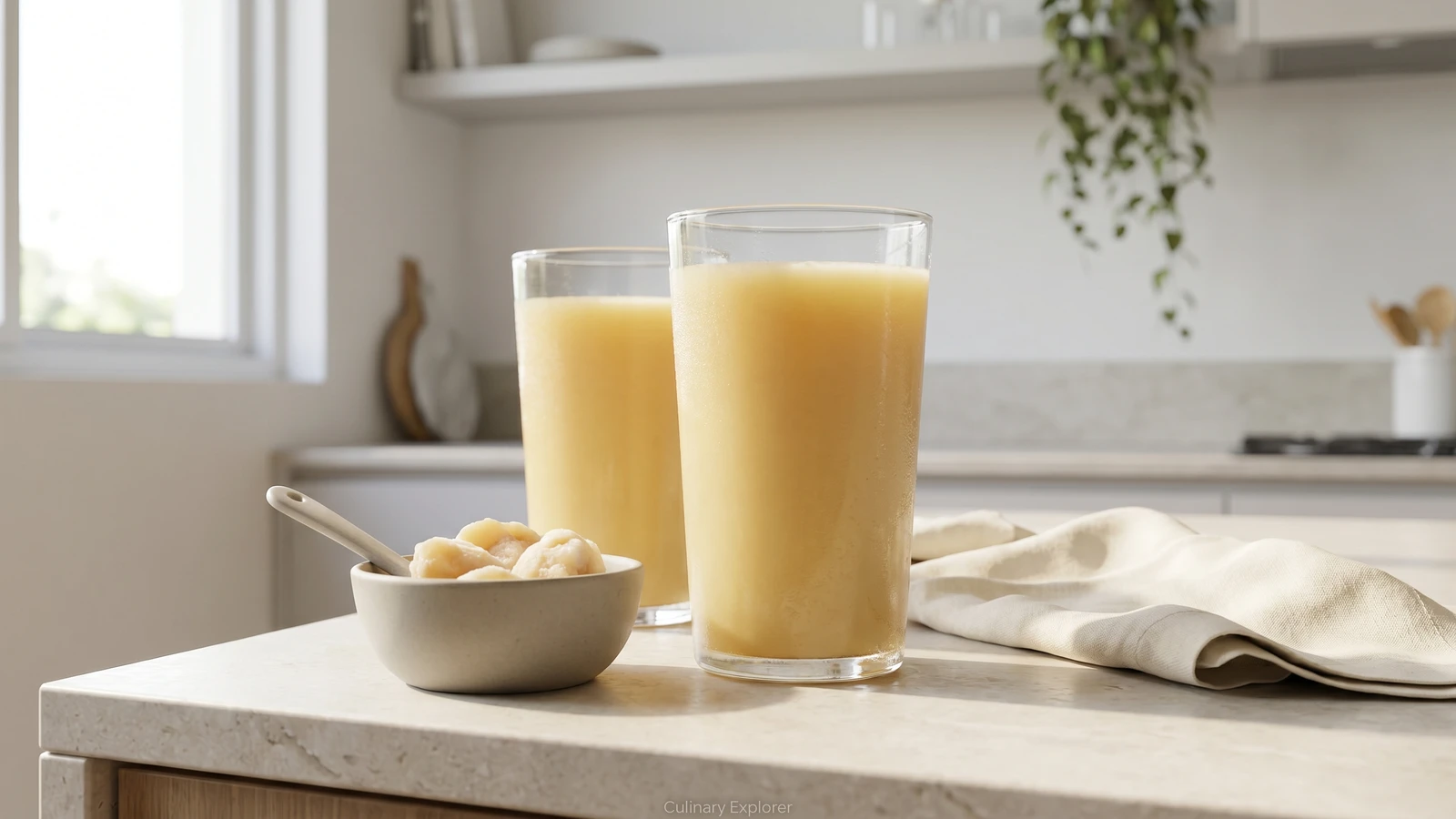
Put the bacuri pulp, 1 1/2 cups cold water, and 1 tablespoon sugar in the blender. Blend for 30 to 45 seconds, until the juice turns pale yellow, creamy, and smooth. Start with less sugar because bacuri has perfume and acidity, and too much sweetness flattens both.
Taste it. If it's too thick to sip easily, add cold water 2 tablespoons at a time and blend again. If the sour edge is too sharp, add the second tablespoon of sugar and blend for 5 seconds. The ponto is creamy but drinkable, with the fruit still leading the conversation.
Pour into cold glasses, with ice if you want it colder, and serve at once. Bacuri smells brightest right after blending, and the texture is better before the pulp settles. Stir once if it waits a few minutes. That's normal, not failure.
1 serving (about 345g)
Culinary guides, cultural storytelling, and the editorial depth that makes cooking meaningful.
Discover Culinary ExplorerChef Juliana
You think opening a coconut belongs to the beach vendor. It doesn't. Chill the fruit, shave the cap, tap a small door, and you've solved the cold drink beside your pê-efe.

Chef Juliana
Nobody is scared of a blender. Cachaça, coconut milk, condensed milk, and ice go in, and thirty seconds later the churrasco drink is solved.

Chef Juliana
You don't need a bar kit. Fresh maracujá, cachaça, condensed milk, and thirty honest seconds in the blender make a cold Brazilian toast that tastes bright, tart, and grown-up.

Chef Juliana
You don't need a machine to make coffee that smells like a Brazilian kitchen. Hot water, fresh grounds, a clean coador de pano, and the patience to pour like you mean it.