Chef Makoa
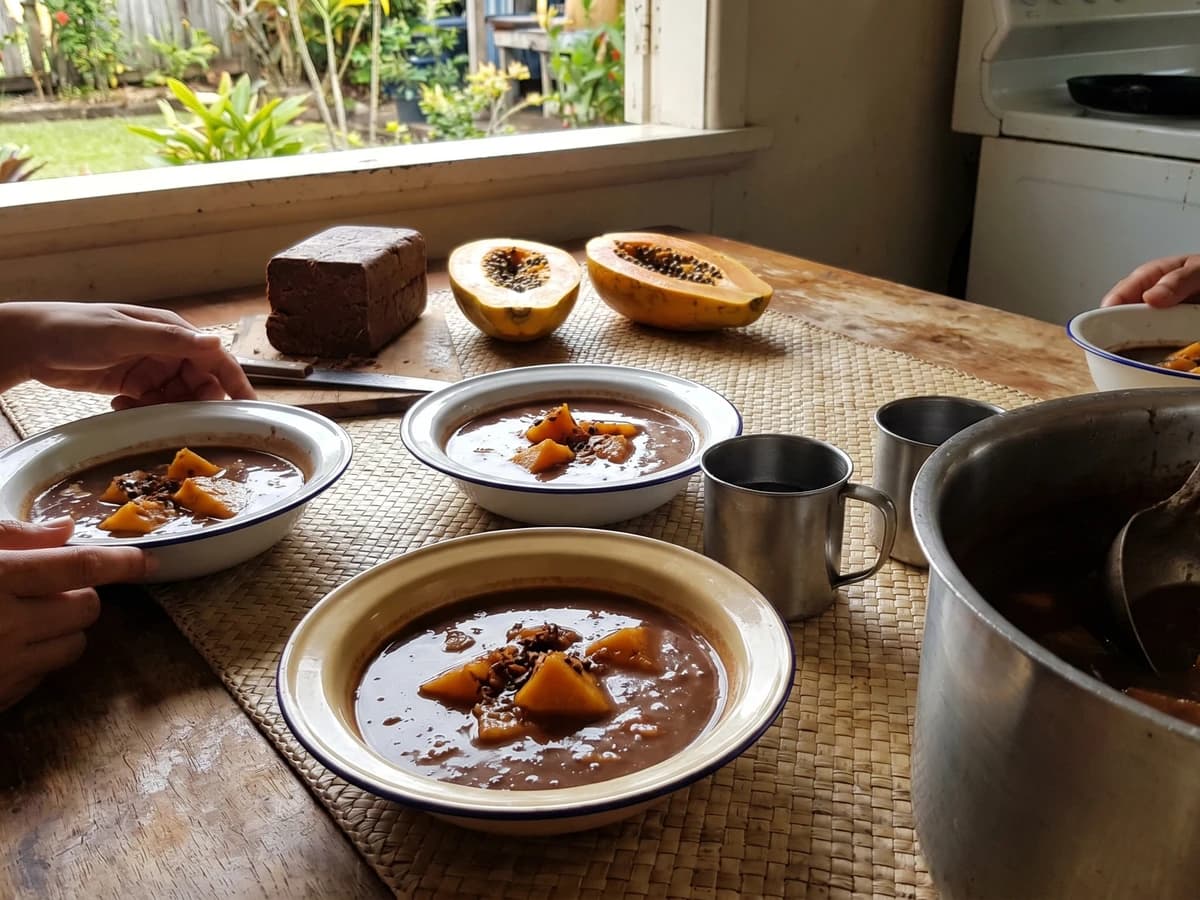
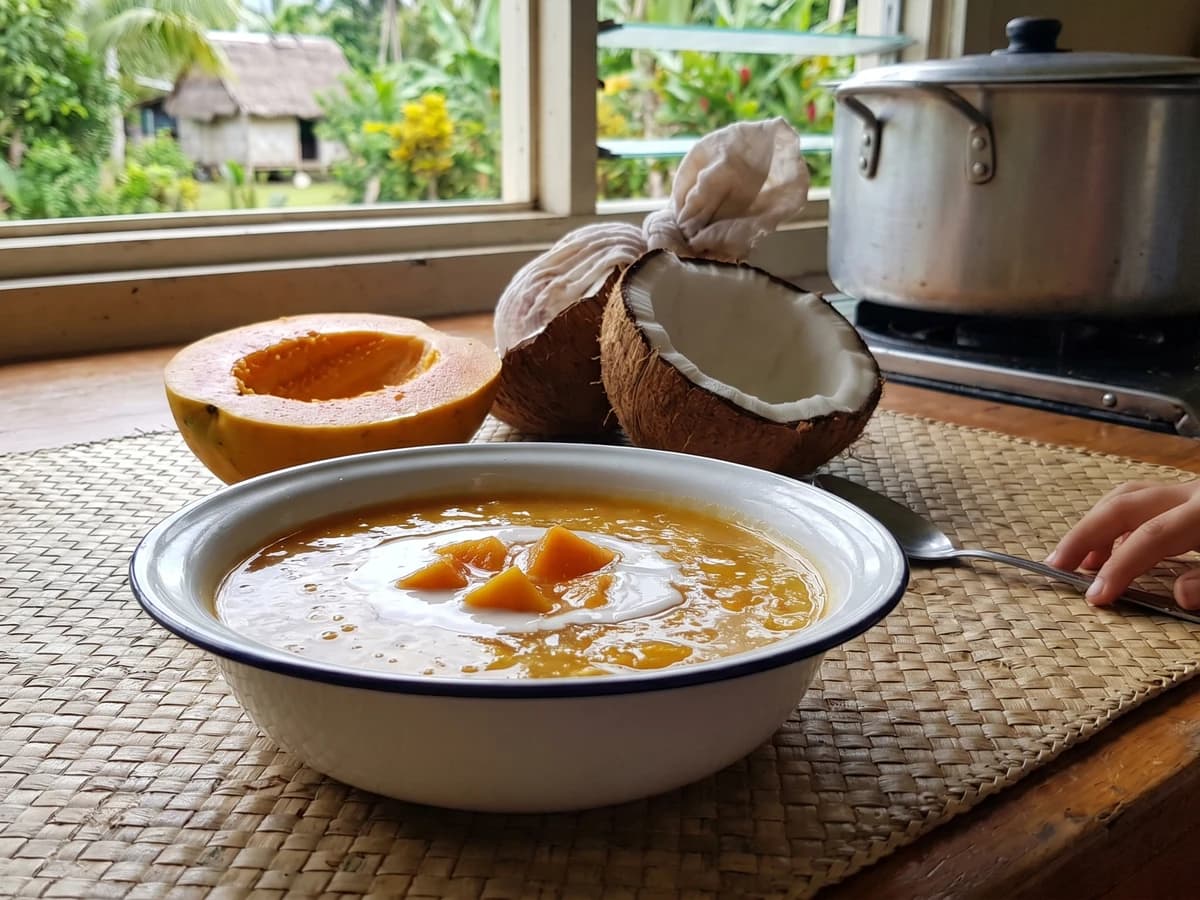
Koko Esi (Sāmoan Cacao-Papaya Soup)
A Sāmoan building-up bowl of ripe esi simmered with roasted Koko Sāmoa, softened with fresh peʻepeʻe, and served warm for elders, children, new mothers, and anybody who needs steady care.
A cooking platform built around craft, culture, and the stories behind what we eat.
Created by
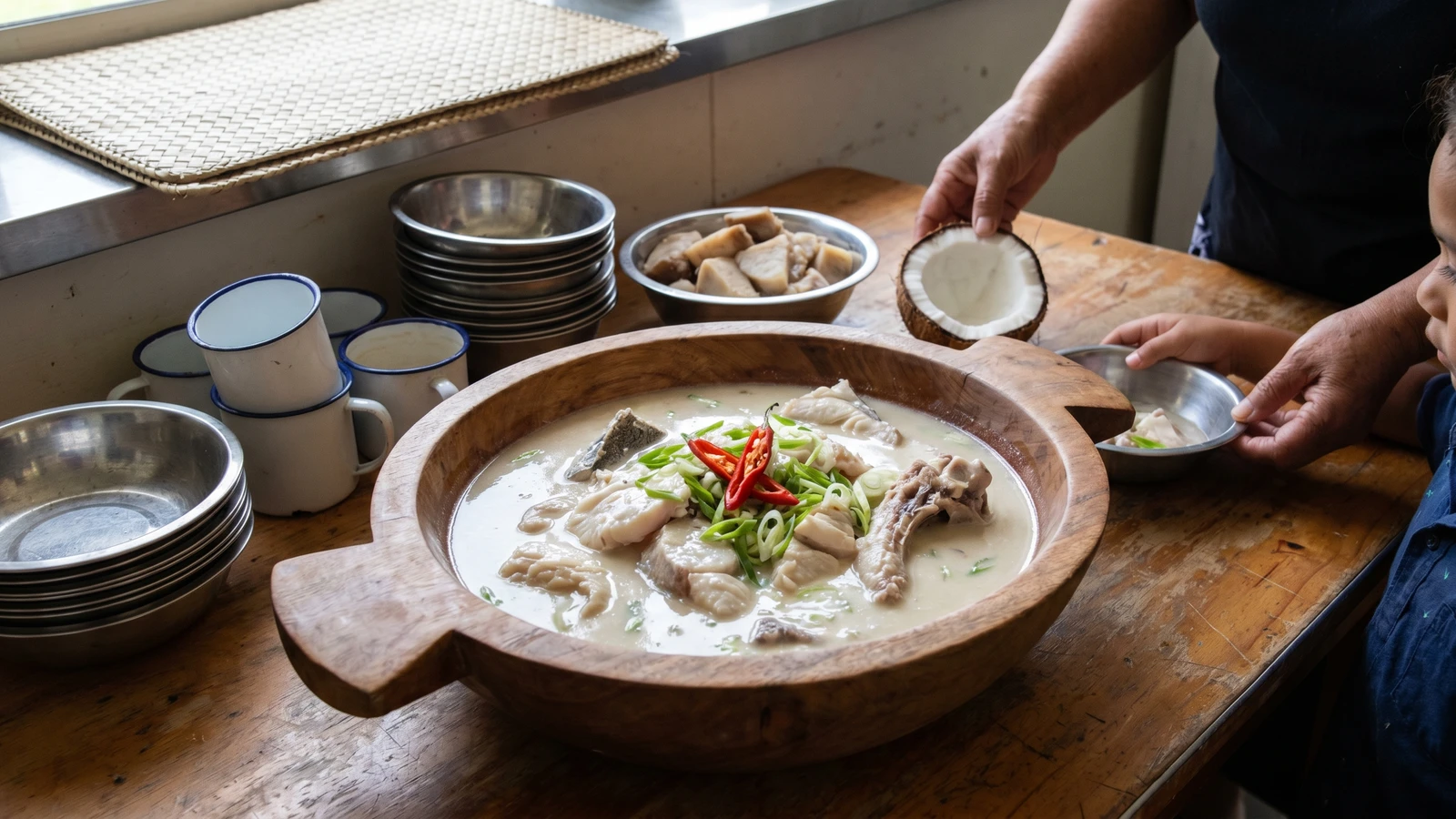
A clear Sāmoan fish soup softened with peʻepeʻe, fresh coconut cream, made for the aiga when somebody needs feeding now: clean fish, onion, chili, salt, and no showing off.
The first time a Sāmoan auntie set sua iʻa in front of me, she didn't talk big about it. She just pushed the bowl closer, like the bowl already knew what I needed. Sua means soup or liquid in gagana Sāmoa, and iʻa is fish, so the name tells you straight: fish broth. Sāmoa's hand is in the clean poach, the onion, the little bite of chili, and the peʻepeʻe, coconut cream squeezed fresh if the day allows.
This is building-up food. The kind the aiga, the family, feeds the sick, the elderly, the new mothers, the children, and the tired uncle who says he's fine when everybody knows he isn't. It doesn't try to be grand. It gives broth, fat, salt, and fish in a way the body understands.
Across the Triangle the ocean keeps feeding cousins in their own bowls. Hawaiʻi has fish stews and broths beside poke and poi, Tonga has its ʻota ʻika and simple boiled fish, Tahiti has ʻia ota, the Cooks have ika mata, and Sāmoa has this warm sua iʻa. Same fish, different bowl. One ocean, one canoe, one root.
For the deep parts of Sāmoan feasting and language, go sit with a Sāmoan matai or auntie who carries it. Me, I cook this open-handed in a home kitchen: fresh fish if you have it, a good pot, coconut cream at the end, and enough rice, talo, or ʻulu on the side so nobody leaves hungry.
Sua iʻa belongs to Sāmoa's everyday home table, especially the practical foods that build people back up after sickness, birth, age, or hard work. Before tinned meat and rice became common through mission, trade, and colonial economies, fish, coconut, talo, breadfruit, and banana formed the deep grammar of the Sāmoan table. The dish sits beside the bigger Sāmoan foodways of the umu, palusami, and toʻonaʻi, but it is quieter: a quick pot that keeps the ocean close to the family.
Quantity
2 pounds
cut into steaks or large bone-in pieces
Quantity
6 cups
Quantity
1 medium
thinly sliced
Quantity
2 cloves
lightly crushed
Quantity
1 small
split lengthwise
Quantity
1 1/2 teaspoons
plus more to taste
Quantity
1 1/2 cups
or thick canned coconut cream
Quantity
2
thinly sliced
Quantity
1 tablespoon
optional, for brightness
Quantity
for serving
| Ingredient | Quantity |
|---|---|
| very fresh firm white fishcut into steaks or large bone-in pieces | 2 pounds |
| water | 6 cups |
| onionthinly sliced | 1 medium |
| garliclightly crushed | 2 cloves |
| fresh chili (optional)split lengthwise | 1 small |
| sea saltplus more to taste | 1 1/2 teaspoons |
| fresh coconut cream (peʻepeʻe)or thick canned coconut cream | 1 1/2 cups |
| green onionsthinly sliced | 2 |
| fresh lemon or lime juice (optional)optional, for brightness | 1 tablespoon |
| cooked talo, ʻulu, green banana, or white rice | for serving |
Rinse the fish quickly under cold water and pat it dry. Look for clear eyes if it is whole, clean ocean smell, and flesh that springs back when pressed. If the fish smells tired, no make soup from it and pretend the coconut will save it. Sourcing first, always.
Put the water, onion, garlic, chili, and salt in a wide pot and bring it to a gentle simmer. Let it run 8 to 10 minutes, until the onion softens and the broth smells sweet and clean, not sharp. This is not a hard boil pot. Fish wants a quiet hand.
Slide the fish pieces into the simmering broth in one layer if you can. Keep the heat low enough that the surface only trembles, then poach 8 to 12 minutes, depending on thickness, until the flesh turns opaque and lifts from the bone in broad flakes.
Lower the heat as far as it goes and pour in the peʻepeʻe, the coconut cream. Stir by moving the pot gently instead of breaking the fish with a spoon. Warm it 2 to 3 minutes, just until the broth turns pale and glossy and the coconut rounds the salt. Do not boil hard after the cream goes in or it can split.
Taste the broth. Add salt if it feels flat, a small squeeze of lemon or lime if it needs lift, and green onion right at the end. Serve in deep bowls with talo, ʻulu, green banana, or rice. The bowl should feel plain in the best way: fish, ocean, coconut, family.
1 serving (about 340g)
Culinary guides, cultural storytelling, and the editorial depth that makes cooking meaningful.
Discover Culinary ExplorerChef Makoa
A Sāmoan building-up bowl of ripe esi simmered with roasted Koko Sāmoa, softened with fresh peʻepeʻe, and served warm for elders, children, new mothers, and anybody who needs steady care.
Chef Makoa
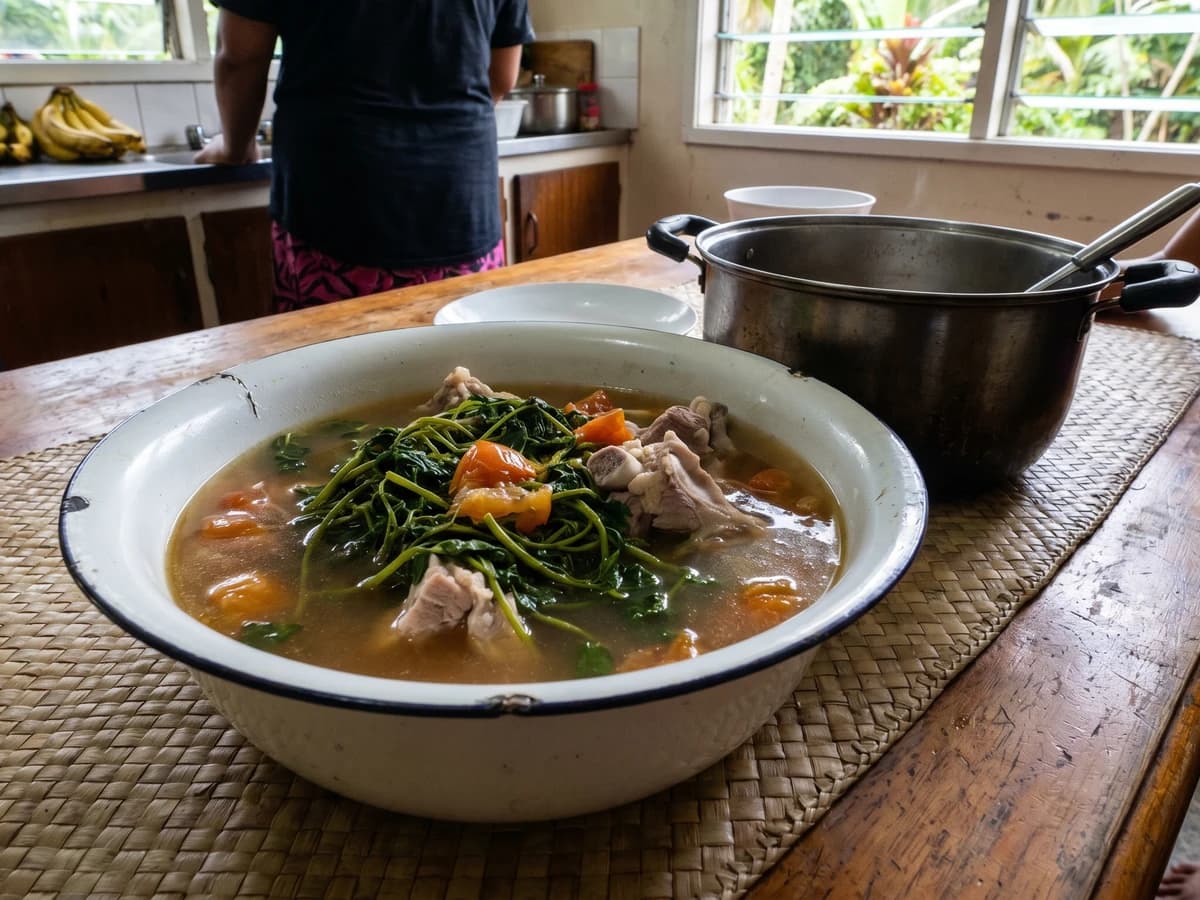
Sāmoa's supo kapisi, pork bones simmered with ginger until the broth turns rich, then peppery watercress folded in dark and tender for a bowl that builds you back up.
Chef Makoa
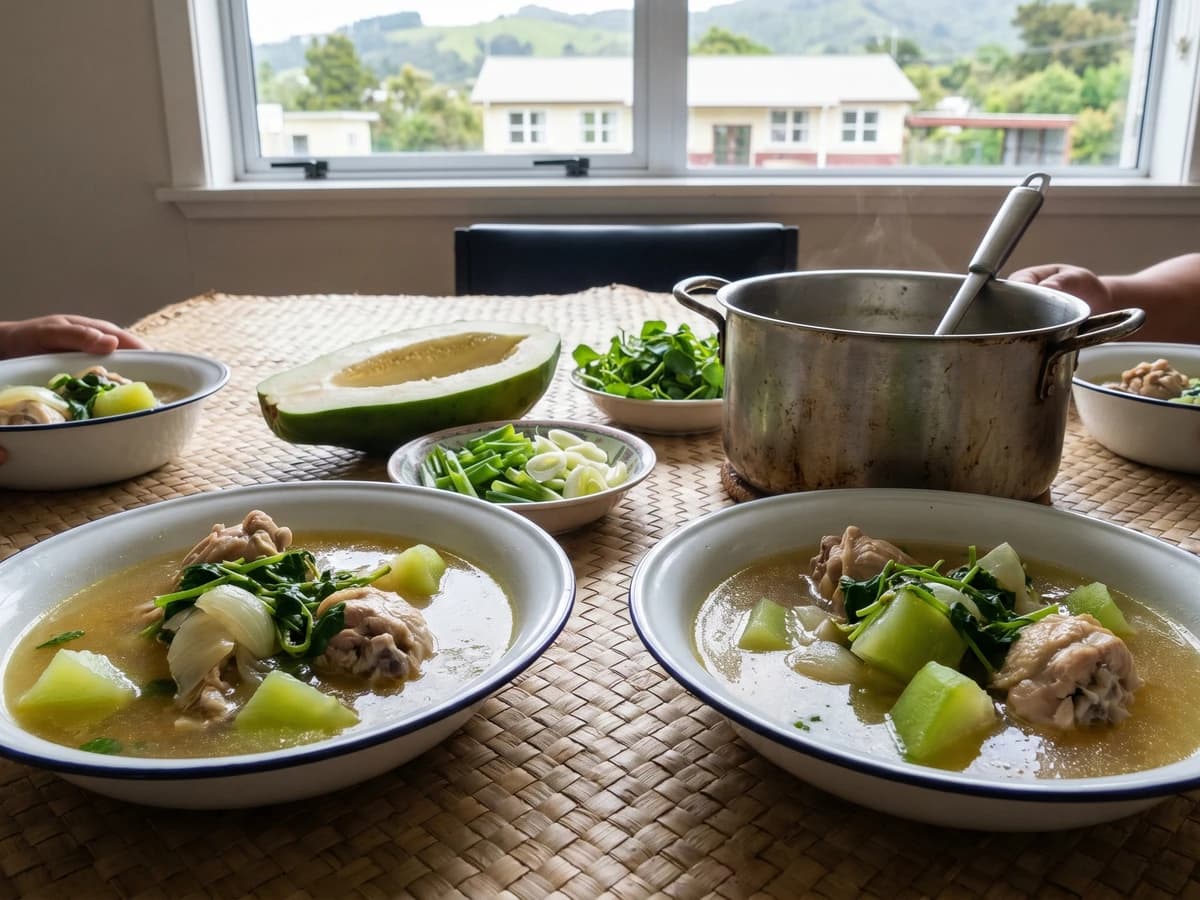
A gentle Sāmoan broth of bone-in chicken, firm green esi, onion, fish sauce, and greens, the kind of bowl an āiga sets down when somebody needs building back up.
Chef Makoa
Sāmoa's supoesi, ripe esi and tapioca pearls softened into fresh peʻepeʻe coconut cream, the gentle golden soup Sāmoan families feed to children, elders, new mothers, and anybody coming back to strength.