
Chef Dean
American Goulash
A Midwestern one-pot supper of seasoned ground beef, tender elbow macaroni, and tomatoes simmered into a thick, soul-satisfying stew. This is the dish that fed factory workers and farm families alike.
A cooking platform built around craft, culture, and the stories behind what we eat.
Created by
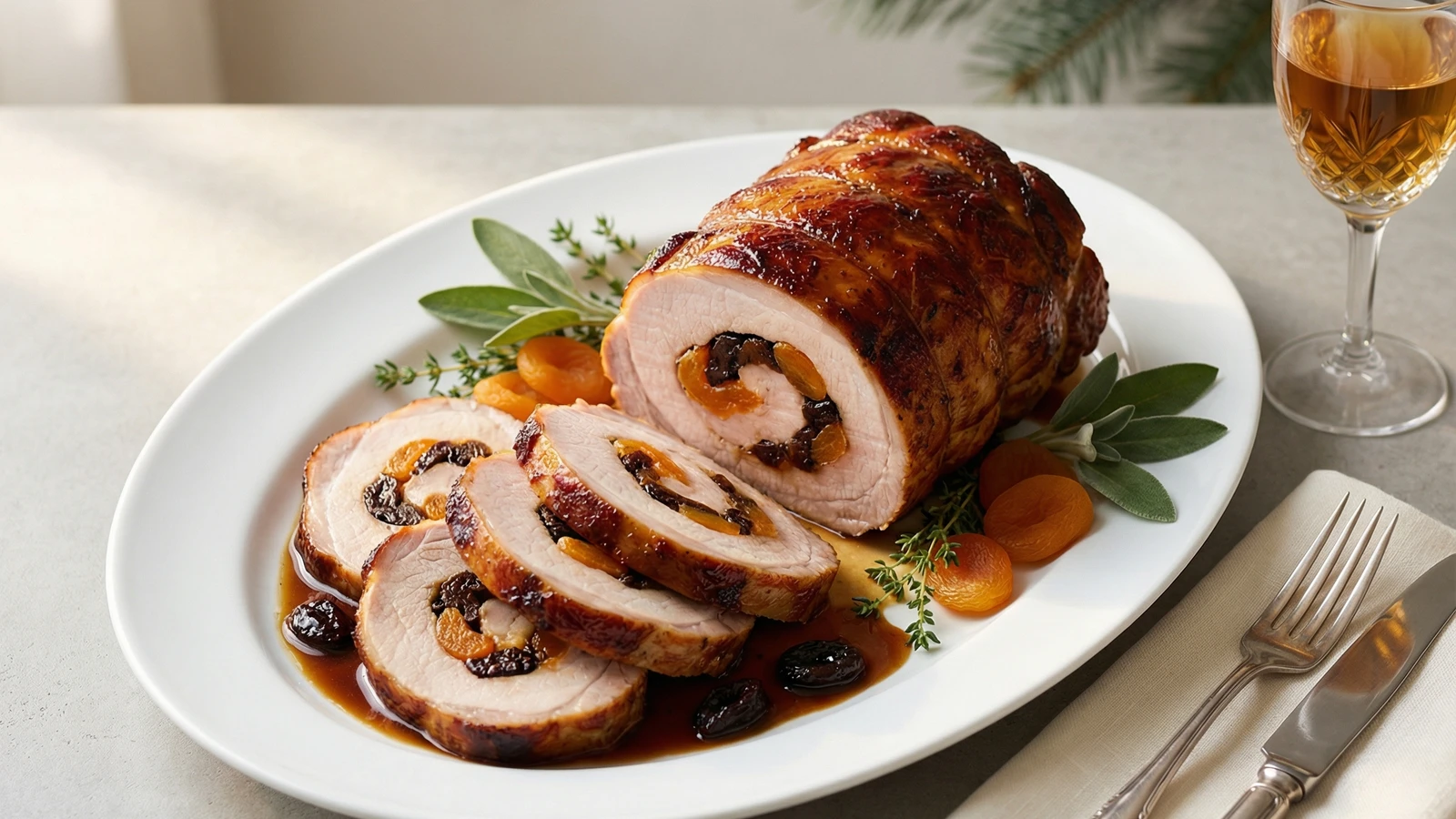
A show-stopping holiday roast where tender pork embraces a jeweled filling of dried apricots, prunes, and winter herbs, revealing a stunning spiral at every slice that tells your guests this meal was made with intention and care.
This is the roast that graced American holiday tables long before turducken became a conversation piece. The technique is French in origin, brought to our shores by German and Alsatian immigrants who understood that pork and fruit belong together. They weren't wrong. The sweetness of dried stone fruits tempers the richness of the loin while keeping it impossibly moist during roasting.
Butterflying a pork loin intimidates people. It shouldn't. You're simply creating a flat canvas from a cylindrical cut, nothing more. A sharp knife and steady hand are all you need. Once you've done it twice, you'll wonder why you ever bought pre-stuffed roasts wrapped in plastic from the supermarket case.
I've served this at Christmas dinners for decades. The spiral slice is theatrical, which matters when you're feeding a crowd that's been anticipating the meal all day. But theater means nothing without substance. The filling here does real work: the fruit releases moisture during cooking, the sage perfumes the meat from within, and the whole assembly becomes something greater than its parts.
Make this the day before if you can. The roast improves overnight in the refrigerator, the flavors deepening as they marry. Bring it to room temperature, roast it the next day, and you'll have a centerpiece worthy of any celebration.
Quantity
3 1/2 to 4 pounds
Quantity
1 cup
roughly chopped
Quantity
1 cup
roughly chopped
Quantity
4 tablespoons, divided
Quantity
2 medium
finely diced
Quantity
3 cloves
minced
Quantity
2 tablespoons
chopped
Quantity
1 tablespoon
Quantity
1 teaspoon
finely minced
Quantity
1/2 cup
Quantity
1/4 cup
Quantity
to taste
Quantity
to taste
Quantity
2 tablespoons
Quantity
1 1/2 cups
Quantity
2 tablespoons
Quantity
as needed
| Ingredient | Quantity |
|---|---|
| boneless pork loin | 3 1/2 to 4 pounds |
| dried apricotsroughly chopped | 1 cup |
| pitted prunesroughly chopped | 1 cup |
| unsalted butter | 4 tablespoons, divided |
| shallotsfinely diced | 2 medium |
| garlicminced | 3 cloves |
| fresh sagechopped | 2 tablespoons |
| fresh thyme leaves | 1 tablespoon |
| fresh rosemaryfinely minced | 1 teaspoon |
| dry white wine or apple cider | 1/2 cup |
| brandy or cognac | 1/4 cup |
| kosher salt | to taste |
| freshly ground black pepper | to taste |
| olive oil | 2 tablespoons |
| chicken stock | 1 1/2 cups |
| cold butter for sauce | 2 tablespoons |
| kitchen twine | as needed |
Melt 2 tablespoons butter in a large skillet over medium heat. When it foams, add the shallots and cook until soft and translucent, about 4 minutes. Add the garlic and cook until fragrant, another minute. Toss in the chopped apricots and prunes, stirring to coat them in the butter. Pour in the wine and brandy. Let the mixture simmer until the liquid has nearly evaporated and the fruit has plumped, about 5 minutes. Remove from heat, stir in the sage, thyme, and rosemary. Season with a generous pinch of salt and pepper. Spread the filling on a plate to cool completely. Warm filling will begin cooking the pork before you're ready.
Place the pork loin on your cutting board with the fat cap facing up. Using a long, sharp knife, make a horizontal cut along the length of the loin about one inch from the bottom, stopping about half an inch before cutting through. Open this flap like a book. Now make another horizontal cut into the thicker side, again stopping before cutting through, and open it further. You should have a relatively flat, even piece of meat. If some areas are thicker than others, cover with plastic wrap and pound gently with a meat mallet or the bottom of a heavy pan until uniformly thick, about three-quarters of an inch throughout.
Season the interior of the butterflied loin generously with salt and pepper. Spread the cooled fruit filling in an even layer, leaving about an inch border on all sides. Starting from one long edge, roll the pork tightly around the filling, keeping it as compact as possible. The fruit will try to escape. That's fine. Tuck it back in and keep rolling.
Cut six to eight lengths of kitchen twine, each about 14 inches long. Slide them under the rolled roast at even intervals, about an inch and a half apart. Tie each piece firmly but not so tight that you squeeze filling out the ends. The goal is a uniform cylinder that will cook evenly. Season the exterior generously with salt and pepper, rubbing it into all surfaces. Let the roast rest at room temperature for 30 minutes before cooking.
Preheat your oven to 375°F. Heat the olive oil and remaining 2 tablespoons butter in a large oven-safe skillet or roasting pan over medium-high heat. When the butter foam subsides and you see the first wisps of smoke, carefully place the roast in the pan. Don't touch it. Let it develop a deep golden crust, about 3 minutes per side. Turn it to sear all four sides. This builds the foundation of flavor for your pan sauce and gives the roast that honest, burnished appearance that signals proper technique.
Transfer the pan to the oven (or move the seared roast to a roasting pan fitted with a rack). Roast until an instant-read thermometer inserted into the thickest part of the meat (not the filling) reads 140°F, approximately 50 to 60 minutes. The filling will register higher, that's expected. Check at 45 minutes and every 10 minutes thereafter. Pork continues cooking after it leaves the oven, so pulling it at 140°F ensures a final temperature around 145°F after resting.
Transfer the roast to a cutting board and tent loosely with foil. Let it rest for 15 to 20 minutes. This is not optional. Cutting into the roast immediately releases all those juices onto your board instead of keeping them in the meat where they belong. The resting period also allows the filling to set slightly, making cleaner slices possible.
While the roast rests, set the roasting pan over medium heat on the stovetop. Pour in the chicken stock, scraping up every bit of fond (those caramelized bits stuck to the bottom are pure flavor). Let the liquid reduce by half, about 8 minutes, until it coats the back of a spoon. Remove from heat and whisk in the cold butter, one tablespoon at a time, to create a glossy, emulsified sauce. Taste and adjust seasoning. Strain through a fine mesh sieve if you want a refined presentation, though I rarely bother.
Remove the twine from the roast. Using a sharp carving knife, cut into slices about three-quarters of an inch thick, revealing the spiral of fruit within. Arrange on a warm platter, overlapping slightly. Spoon the pan sauce over the slices or serve it alongside in a gravy boat. Garnish with fresh herb sprigs if the occasion calls for it. Bring the platter to the table with ceremony. This roast deserves an audience.
1 serving (about 450g)
Culinary guides, cultural storytelling, and the editorial depth that makes cooking meaningful.
Discover Culinary ExplorerChef Dean
A Midwestern one-pot supper of seasoned ground beef, tender elbow macaroni, and tomatoes simmered into a thick, soul-satisfying stew. This is the dish that fed factory workers and farm families alike.

Chef Dean
A golden-crusted casserole of tender elbow macaroni swaddled in velvety cheese sauce, this is the macaroni and cheese that defines American comfort cooking. No boxed shortcuts. No apologies.

Chef Dean
Silky strips of seared beef and earthy mushrooms draped in a tangy sour cream sauce, ladled generously over buttery egg noodles. This is the dish that warmed a thousand American kitchens.

Chef Dean
A magnificent whole-roasted tenderloin crowned with a glossy red wine reduction, the kind of centerpiece that makes guests fall silent when it arrives at the table. This is holiday cooking at its honest best.