
Chef Dean
American Goulash
A Midwestern one-pot supper of seasoned ground beef, tender elbow macaroni, and tomatoes simmered into a thick, soul-satisfying stew. This is the dish that fed factory workers and farm families alike.
A cooking platform built around craft, culture, and the stories behind what we eat.
Created by
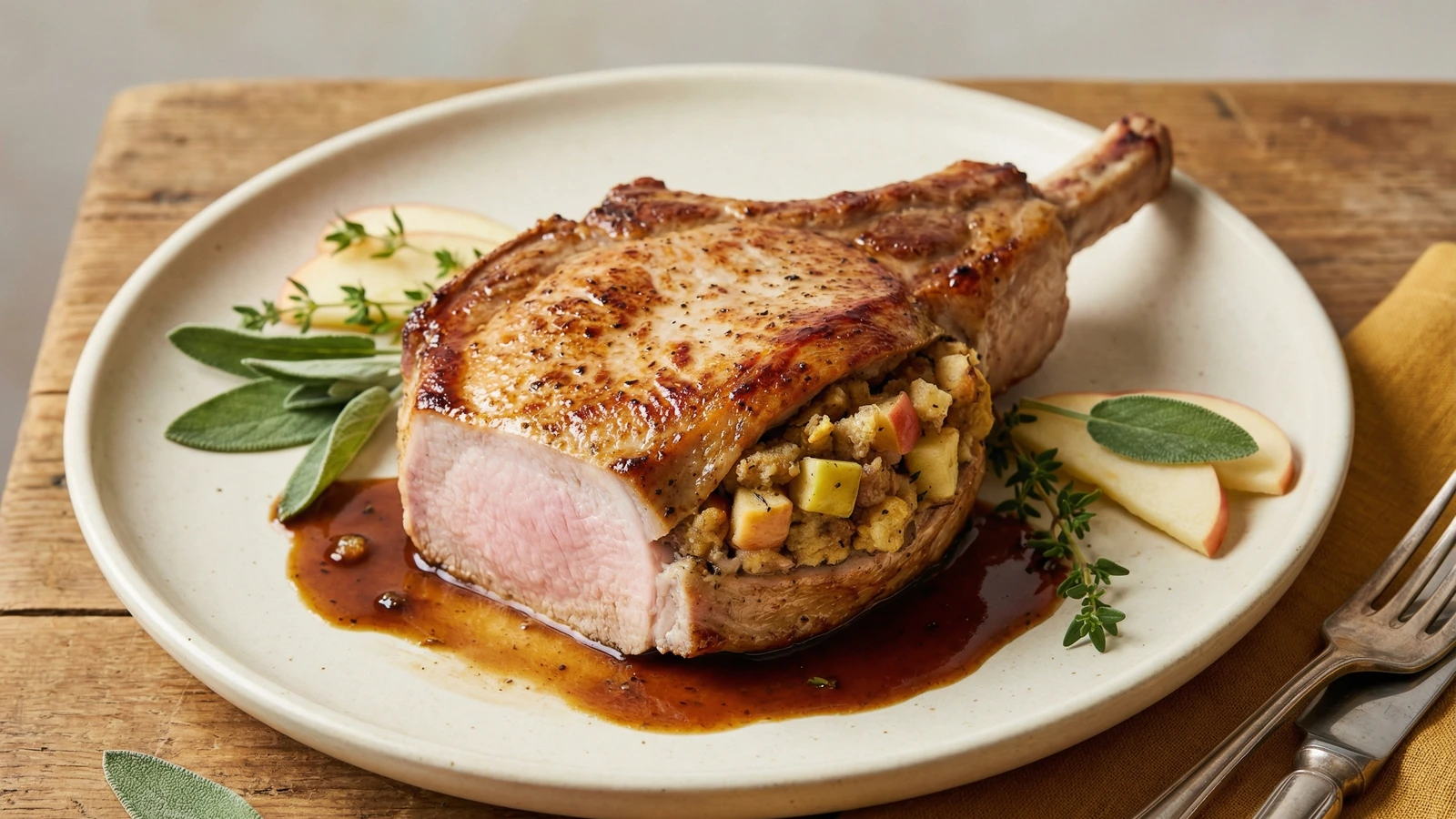
Bone-in chops cut thick and filled with a sage-scented apple stuffing, seared to a handsome crust and roasted until the meat pulls tender from the bone. This is the dish that turns an ordinary Tuesday into something worth remembering.
The stuffed pork chop belongs to that proud lineage of Midwestern cooking where thrift meets ingenuity. Farm wives understood that a pocket cut into a thick chop could hold yesterday's bread, transformed with apples from the orchard and sage from the kitchen garden. Nothing wasted. Everything gained.
I've served this dish to food writers and farmers with equal success. The technique matters more than pedigree. You need a proper thick-cut chop, bone-in, with enough real estate to carve a deep pocket without puncturing the back. Your butcher will do this if you ask, though learning the knife work yourself builds confidence you'll carry to other cuts.
The stuffing walks a careful line between savory and sweet. Tart apples hold their shape during cooking while lending brightness to the sage and thyme. Don't reach for Honeycrisp or Fuji here. You want Granny Smith or a local heirloom with backbone. The bread should be stale, genuinely dried out, so it absorbs the butter and stock without turning to paste.
This is a dish that rewards patience. Sear the chops first to build a mahogany crust, then let the oven do its gentle work. The result is pork that stays juicy, stuffing that's moist but holds together, and a kitchen that smells like every autumn should.
Quantity
4 (1½ inches thick, about 12 oz each)
Quantity
3 tablespoons
divided
Quantity
1 medium
finely diced
Quantity
2 stalks
finely diced
Quantity
2 medium
peeled, cored, and diced
Quantity
4 cups
½-inch pieces
Quantity
½ cup
plus more as needed
Quantity
2 tablespoons
chopped
Quantity
1 tablespoon
Quantity
1 teaspoon
plus more for seasoning
Quantity
½ teaspoon
plus more for seasoning
Quantity
¼ teaspoon
Quantity
2 tablespoons
Quantity
½ cup
Quantity
1 cup
for pan sauce
| Ingredient | Quantity |
|---|---|
| bone-in pork loin chops | 4 (1½ inches thick, about 12 oz each) |
| unsalted butterdivided | 3 tablespoons |
| yellow onionfinely diced | 1 medium |
| celeryfinely diced | 2 stalks |
| Granny Smith applespeeled, cored, and diced | 2 medium |
| stale bread cubes½-inch pieces | 4 cups |
| low-sodium chicken stockplus more as needed | ½ cup |
| fresh sagechopped | 2 tablespoons |
| fresh thyme leaves | 1 tablespoon |
| kosher saltplus more for seasoning | 1 teaspoon |
| freshly ground black pepperplus more for seasoning | ½ teaspoon |
| ground nutmeg | ¼ teaspoon |
| vegetable oil | 2 tablespoons |
| dry white wine or hard cider | ½ cup |
| chicken stockfor pan sauce | 1 cup |
Melt 2 tablespoons butter in a large skillet over medium heat. Add the onion and celery with a pinch of salt. Cook, stirring occasionally, until softened and translucent, about 6 minutes. The vegetables should yield to a wooden spoon without any remaining crunch. Add the diced apples and cook another 4 minutes until they begin to soften at the edges but still hold their shape.
Transfer the apple mixture to a large bowl with the bread cubes. Add the sage, thyme, salt, pepper, and nutmeg. Toss to distribute the seasonings evenly. Pour the half cup of stock over the mixture and fold gently with a spatula until the bread is moistened throughout. The stuffing should hold together when squeezed but not feel wet or pasty. Add more stock by the tablespoon if the mixture seems too dry. Let it cool to room temperature before stuffing the chops.
Working with one chop at a time, insert a sharp boning knife or paring knife into the fat-covered edge, cutting parallel to the cutting board. Sweep the knife back and forth to create a pocket that reaches almost to the bone and within half an inch of the top and bottom edges. You want maximum capacity without puncturing through. Repeat with remaining chops.
Preheat your oven to 375°F. Pack each pocket firmly with stuffing, using about three-quarters cup per chop. Don't be timid. The stuffing should mound slightly at the opening. Secure with two toothpicks inserted at angles to hold the pocket closed. Season the exterior of each chop generously with salt and pepper on all sides, including the fat cap and bone.
Heat the vegetable oil in a 12-inch oven-safe skillet over medium-high heat until it shimmers and just begins to smoke. Carefully lay the chops in the pan, leaving space between them. Sear without moving for 3 minutes until a deep golden-brown crust forms. Flip and sear the second side for another 3 minutes. The crust should release easily when ready. If it sticks, give it another minute.
Transfer the skillet to the preheated oven. Roast for 25 to 30 minutes until an instant-read thermometer inserted into the thickest part of the meat (avoiding the stuffing) reads 140°F. The internal temperature will rise another 5 degrees as the chops rest. Remove from the oven and transfer the chops to a cutting board or warm platter. Tent loosely with foil and rest for 10 minutes.
While the chops rest, place the skillet over medium-high heat. Pour in the wine or cider and scrape up any browned bits from the bottom with a wooden spoon. Let it bubble and reduce by half, about 2 minutes. Add the remaining cup of stock and continue to reduce until the sauce coats the back of a spoon, another 4 to 5 minutes. Remove from heat and swirl in the remaining tablespoon of butter. Season with salt and pepper to taste.
Remove the toothpicks from the chops. Place each chop on a warmed plate and spoon the pan sauce around (not over, which would soften the crust). Serve immediately with roasted root vegetables, mashed potatoes, or braised greens. This is food that wants company at the table.
1 serving (about 275g)
Culinary guides, cultural storytelling, and the editorial depth that makes cooking meaningful.
Discover Culinary ExplorerChef Dean
A Midwestern one-pot supper of seasoned ground beef, tender elbow macaroni, and tomatoes simmered into a thick, soul-satisfying stew. This is the dish that fed factory workers and farm families alike.

Chef Dean
A golden-crusted casserole of tender elbow macaroni swaddled in velvety cheese sauce, this is the macaroni and cheese that defines American comfort cooking. No boxed shortcuts. No apologies.

Chef Dean
Silky strips of seared beef and earthy mushrooms draped in a tangy sour cream sauce, ladled generously over buttery egg noodles. This is the dish that warmed a thousand American kitchens.

Chef Dean
A magnificent whole-roasted tenderloin crowned with a glossy red wine reduction, the kind of centerpiece that makes guests fall silent when it arrives at the table. This is holiday cooking at its honest best.