
Chef Joost
Acar Ketimun (Indo-Dutch Cucumber Pickle)
Acar means pickle, ketimun means cucumber, and this little bowl of sweet vinegar, chilli, and crunch is the cool note that lets an Indo-Dutch rijsttafel keep its balance.
A cooking platform built around craft, culture, and the stories behind what we eat.
Created by
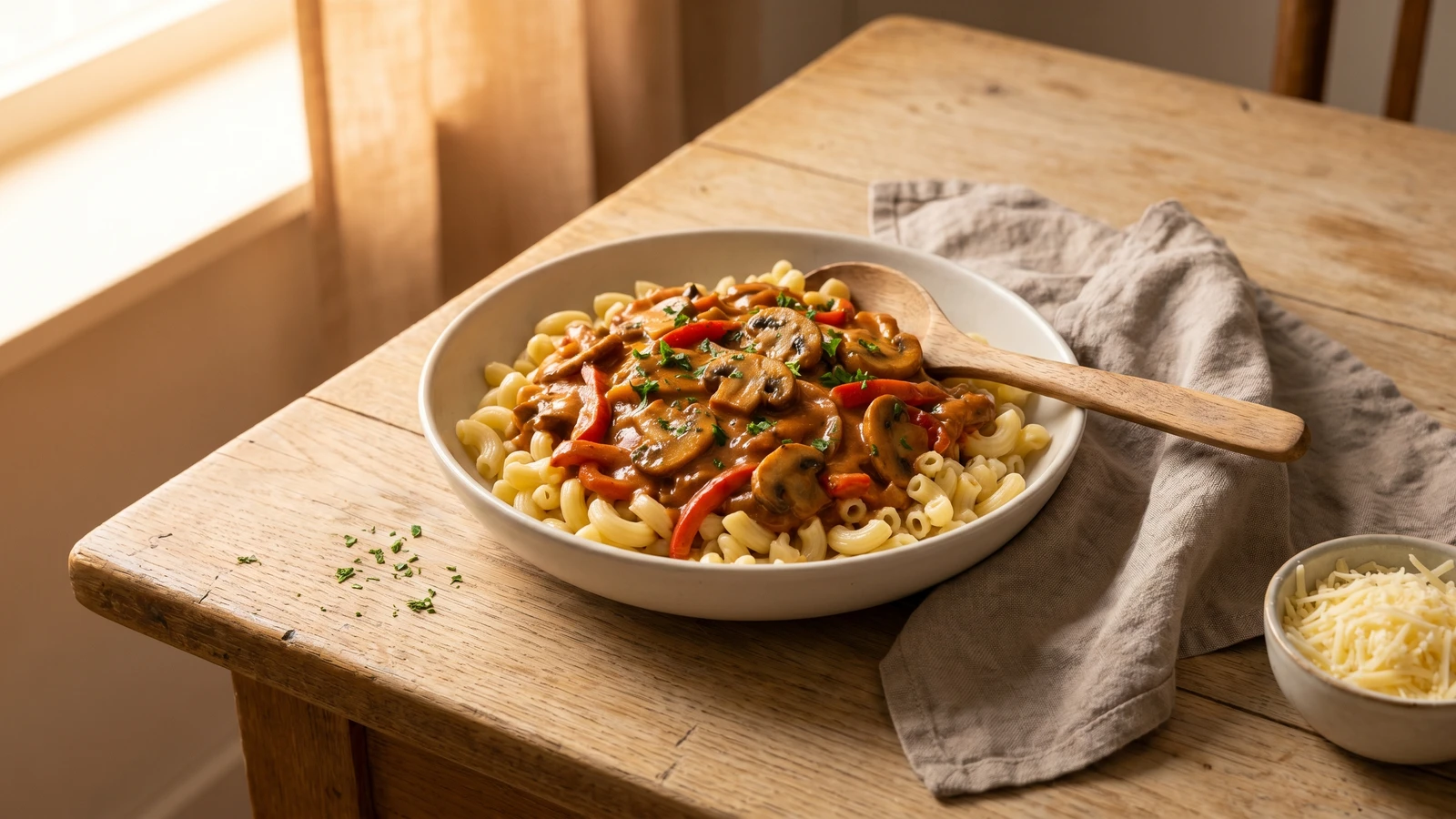
A Russian aristocratic name came down to the Dutch weeknight table and became something practical: mushrooms, paprika, tomato, and cream, ready for macaroni night.
Some recipes travel in a carriage and arrive in a frying pan. Stroganoff began with a grand Russian name, the Stroganov family, wealthy patrons whose table gave Europe one of its most copied beef dishes. But let me tell you a secret: in the Dutch home kitchen, the beef became optional and the sauce became the point. Very Dutch. We admire grandeur, then ask whether it will go with macaroni on Tuesday.
The name already tells you the story belongs to travel, not to the polder. Nineteenth-century Russia gave the dish its title, France lent it a restaurant vocabulary, paprika and tomato pushed it westward through household cookery, and Dutch cooks did what Dutch cooks do best: they made it economical, quick, and repeatable. A spoonful over rice, a ladle through elleboogmacaroni, the little curved macaroni elbows, or a pan of gehaktballetjes, meatballs, and dinner is settled.
The method is simple because the sauce is honest. Brown the mushrooms properly so they taste like themselves, let the tomato puree fry until its sharpness softens, and add the cream only at the end so it turns glossy instead of flat. Hou het altijd simpel, always keep it simple. The whole trick is not to drown the pan before it has had a chance to brown.
Beef Stroganoff is commonly linked to the Russian Stroganov family, and a published version appears in Elena Molokhovets' 1871 cookbook as beef in a mustard and sour cream sauce. In the twentieth century the dish travelled through European and American household cookery, picking up mushrooms, paprika, tomato, and cream in many domestic versions. In the Netherlands, stroganoffsaus became a practical pantry sauce, often served with macaroni, rice, schnitzel, meatballs, or budget beef strips rather than as a strict Russian beef dish.
Quantity
2 tablespoons
Quantity
1 tablespoon
Quantity
250g
sliced
Quantity
1 medium
finely chopped
Quantity
1
diced
Quantity
2 cloves
minced
Quantity
2 tablespoons
Quantity
2 teaspoons
Quantity
1/2 teaspoon
Quantity
1 tablespoon
Quantity
250ml
Quantity
150ml
Quantity
1 teaspoon
Quantity
1 teaspoon
Quantity
to taste
Quantity
1 tablespoon
chopped
| Ingredient | Quantity |
|---|---|
| butter | 2 tablespoons |
| neutral oil | 1 tablespoon |
| mushroomssliced | 250g |
| onionfinely chopped | 1 medium |
| red bell pepperdiced | 1 |
| garlicminced | 2 cloves |
| tomato puree | 2 tablespoons |
| sweet paprika | 2 teaspoons |
| smoked paprika (optional) | 1/2 teaspoon |
| flour | 1 tablespoon |
| beef or vegetable stock | 250ml |
| cooking cream or sour cream | 150ml |
| Dijon mustard | 1 teaspoon |
| Worcestershire sauce (optional) | 1 teaspoon |
| salt and black pepper | to taste |
| parsley (optional)chopped | 1 tablespoon |
Heat the butter and oil in a wide frying pan over medium-high heat. Add the sliced mushrooms with a pinch of salt and cook until their liquid has boiled away and the edges turn brown. This is where the sauce gets its depth; pale mushrooms make a polite sauce, and polite is not the same as good.
Add the onion and red bell pepper and cook for five to six minutes, stirring often, until the onion is soft and the pepper has lost its raw edge. Add the garlic for the last minute, just until it smells warm and sharp.
Stir in the tomato puree, sweet paprika, smoked paprika if using, and flour. Cook for two minutes, scraping the bottom of the pan. Tomato puree needs this little frying or it stays tinny; paprika needs fat to bloom, or it sits there like red dust.
Pour in the stock a little at a time, stirring as you go so the flour dissolves smoothly. Simmer for six to eight minutes until the sauce thickens enough to coat the back of a spoon. It should look glossy and reddish brown, with the mushrooms held in the sauce rather than floating through it.
Lower the heat and stir in the cream, mustard, and Worcestershire sauce if using. Warm gently for two minutes without boiling. Taste, then add salt and black pepper. If the sauce is too thick, loosen it with a splash of stock; if too thin, let it murmur a minute longer.
Spoon the stroganoffsaus over cooked macaroni, rice, schnitzel, meatballs, or quick-seared beef strips. Scatter parsley over the top only if you have it. This is weeknight food, not a floral arrangement.
1 serving (about 210g)
Culinary guides, cultural storytelling, and the editorial depth that makes cooking meaningful.
Discover Culinary ExplorerChef Joost
Acar means pickle, ketimun means cucumber, and this little bowl of sweet vinegar, chilli, and crunch is the cool note that lets an Indo-Dutch rijsttafel keep its balance.

Chef Joost
Appelcompote is the apple left with its dignity: soft enough to spoon beside pork or potatoes, still chunky enough to remind you autumn did the real work.

Chef Joost
The little bowl beside the plate is never decoration: appelmoes is the Dutch treaty between sweet and savoury, spooned beside sausage, potatoes, pancakes, and childhood itself.

Chef Joost
Appelstroop is the orchard made patient: apples, pears, and beet syrup boiled down until morning bread, farmhouse cheese, and zuurvlees taste of Limburg in autumn.