
Chef Takumi
Daitokuji Nattō (大徳寺納豆, Kyoto salt-fermented soybeans)
This is nattō without the strings: soybeans turned by kōji, salt, and time into black glossy beads, so strong that three beans can season a bowl of rice.
A cooking platform built around craft, culture, and the stories behind what we eat.
Created by
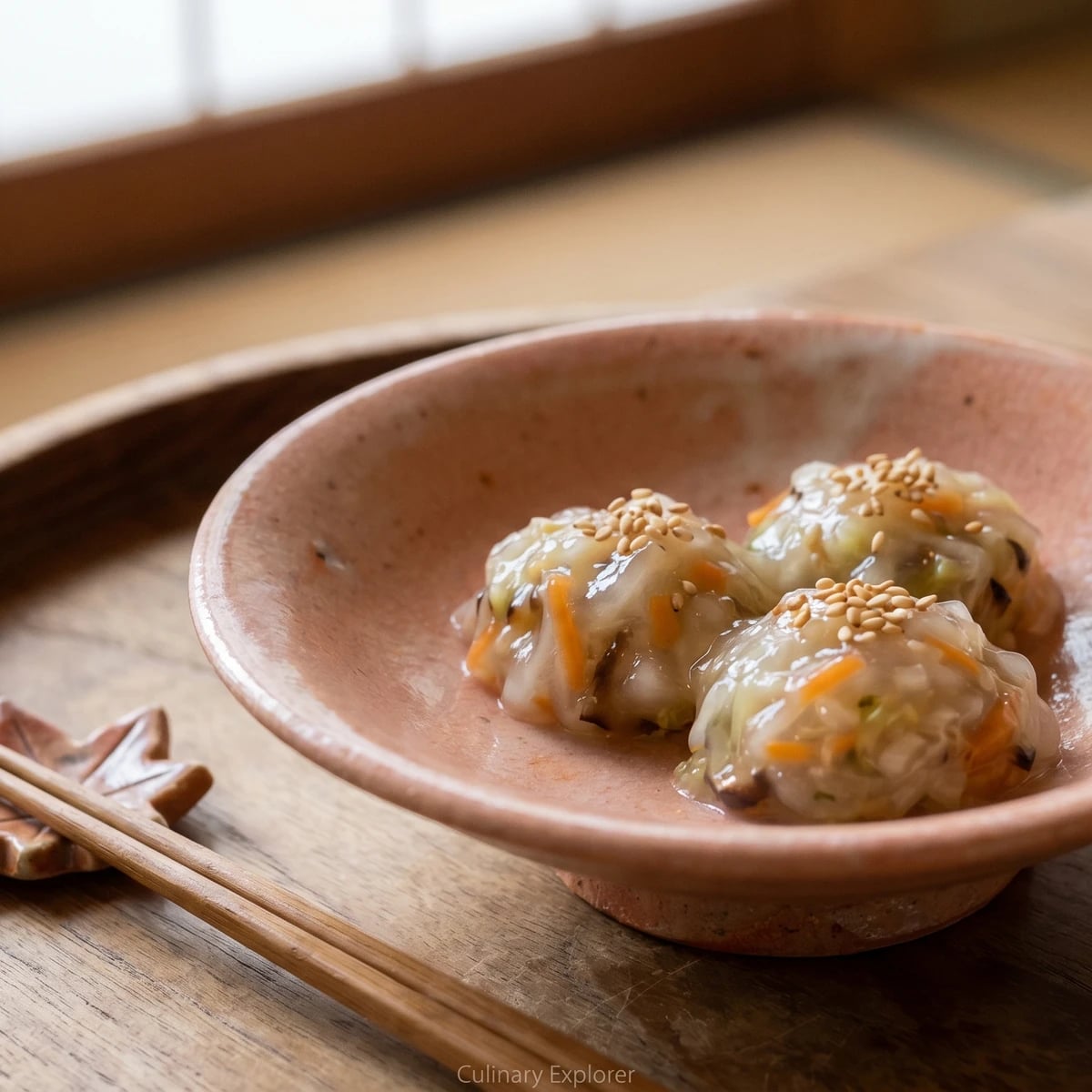
Unpen turns peels, stems, and small vegetable ends into a quiet temple dish: finely cut, lightly sautéed, then bound with kuzu until the scraps gather like clouds.
Scraps are not leftovers when the knife has treated them properly. Unpen begins with the pieces most kitchens throw away: daikon peel, carrot ends, shiitake stems, a stub of burdock. Cut them fine, and they stop looking like afterthoughts. They become the dish.
This is fucha ryōri, the Chinese-influenced Zen temple cooking kept at Manpuku-ji, and its heart is mottainai, the shame of waste. The method is simple. Sauté the firm pieces first so their raw edge softens, season them with a little soy, sake, and shiitake-konbu dashi, then bind the pan with kuzu. The starch catches the vegetables lightly, not as a sauce to hide them, but as a soft cloud that gathers them together.
The one detail that decides it is the cut. Too large, and the trimmings stay stubborn and separate. Too small, and they turn muddy. Aim for small, even pieces, each with its own color and bite. Nothing hidden, nothing grand. Honmono often looks like this: plain food, made exact.
Unpen is associated with fucha ryōri, the vegetarian banquet cuisine of the Ōbaku Zen school brought from China to Japan in the seventeenth century. Manpuku-ji, founded in Uji in 1661 by the Chinese monk Yinyuan Longqi, preserved many Ming-style temple practices, including oil-sautéed dishes unusual in older Japanese Buddhist cooking. The name unpen means "cloud pieces," a reference to the small vegetable fragments gathered in a pale kuzu binding.
Quantity
2
Quantity
1 piece (about 5g)
Quantity
1 cup
Quantity
1 cup
finely chopped
Quantity
1 tablespoon
Quantity
1 teaspoon
Quantity
1 tablespoon
Quantity
1 tablespoon
Quantity
1 teaspoon
Quantity
1/4 teaspoon
Quantity
2 teaspoons
Quantity
2 tablespoons
for dissolving the kuzu
Quantity
1 teaspoon
| Ingredient | Quantity |
|---|---|
| dried shiitake mushrooms | 2 |
| konbu (dried kelp) | 1 piece (about 5g) |
| cold water | 1 cup |
| mixed vegetable trimmingsfinely chopped | 1 cup |
| neutral oil | 1 tablespoon |
| toasted sesame oil | 1 teaspoon |
| sake | 1 tablespoon |
| soy sauce | 1 tablespoon |
| mirin | 1 teaspoon |
| sea salt | 1/4 teaspoon |
| kuzu starch | 2 teaspoons |
| cold waterfor dissolving the kuzu | 2 tablespoons |
| toasted white sesame seeds (optional) | 1 teaspoon |
Wipe the konbu with a damp cloth, but don't wash it. Put the konbu, dried shiitake, and 1 cup cold water in a small bowl and soak for at least 30 minutes, or overnight in the refrigerator. This is the temple stock for the dish: quiet, meatless, and full enough for the vegetables. Lift out the konbu before heating later if you warm the dashi, because boiled kelp can turn bitter and slick.
Remove the soaked shiitake stems if they are tough, then finely chop the caps. Cut all vegetable trimmings into small, even pieces, about 1/8 inch across. The even cut is not fussiness. It lets burdock, carrot, daikon peel, and stems cook at the same pace, so the pan tastes gathered instead of confused.
Set a small skillet over medium heat and add the neutral oil and sesame oil. Add the firmer pieces first, such as burdock, lotus root, carrot, and cabbage core, and cook for 2 minutes. Add softer pieces, such as daikon peel and shiitake, and cook 2 to 3 minutes more, stirring gently. You want the raw smell gone and the colors still alive, not a browned hash.
Add the sake and let it hiss once, then add 1/3 cup of the shiitake-konbu dashi, the soy sauce, mirin, and salt. Simmer for 3 to 4 minutes, until the liquid tastes rounded and the vegetables are tender but still distinct. The seasoning should support the scraps, not bury them. Nothing hidden.
Crush the kuzu between your fingers or with the back of a spoon, then dissolve it completely in 2 tablespoons cold water. Stir the slurry into the pan while the liquid is barely simmering. In less than a minute it will turn glossy and softly cloudy, gathering the vegetables together. Add a splash more dashi if it tightens too much; unpen should mound softly, not sit like paste.
Taste once more, then take the pan off the heat. Scatter with toasted sesame if using. Serve warm or at room temperature in a small mound, leaving space around it. This is a side dish, not a mountain, and the empty space helps the cloud shape read.
1 serving (about 95g)
Culinary guides, cultural storytelling, and the editorial depth that makes cooking meaningful.
Discover Culinary Explorer
Chef Takumi
This is nattō without the strings: soybeans turned by kōji, salt, and time into black glossy beads, so strong that three beans can season a bowl of rice.

Chef Takumi
Soy milk, heat, and patience. Lift the skin the moment it gathers strength, and fresh yuba becomes a quiet dish with nothing hidden.

Chef Takumi
Nama-fu dengaku is softer than it looks: fresh wheat gluten browned gently, brushed with sweet aka-miso, and served in small skewers that taste of Kyoto restraint.

Chef Takumi
Shunkan looks formal because it arrives as one generous mound, but the method is plain: good spring bamboo, temple dashi, patient simmering, and a light kuzu gloss that lets every piece keep its own face.