Chef Thomas
Anchovy Sauce
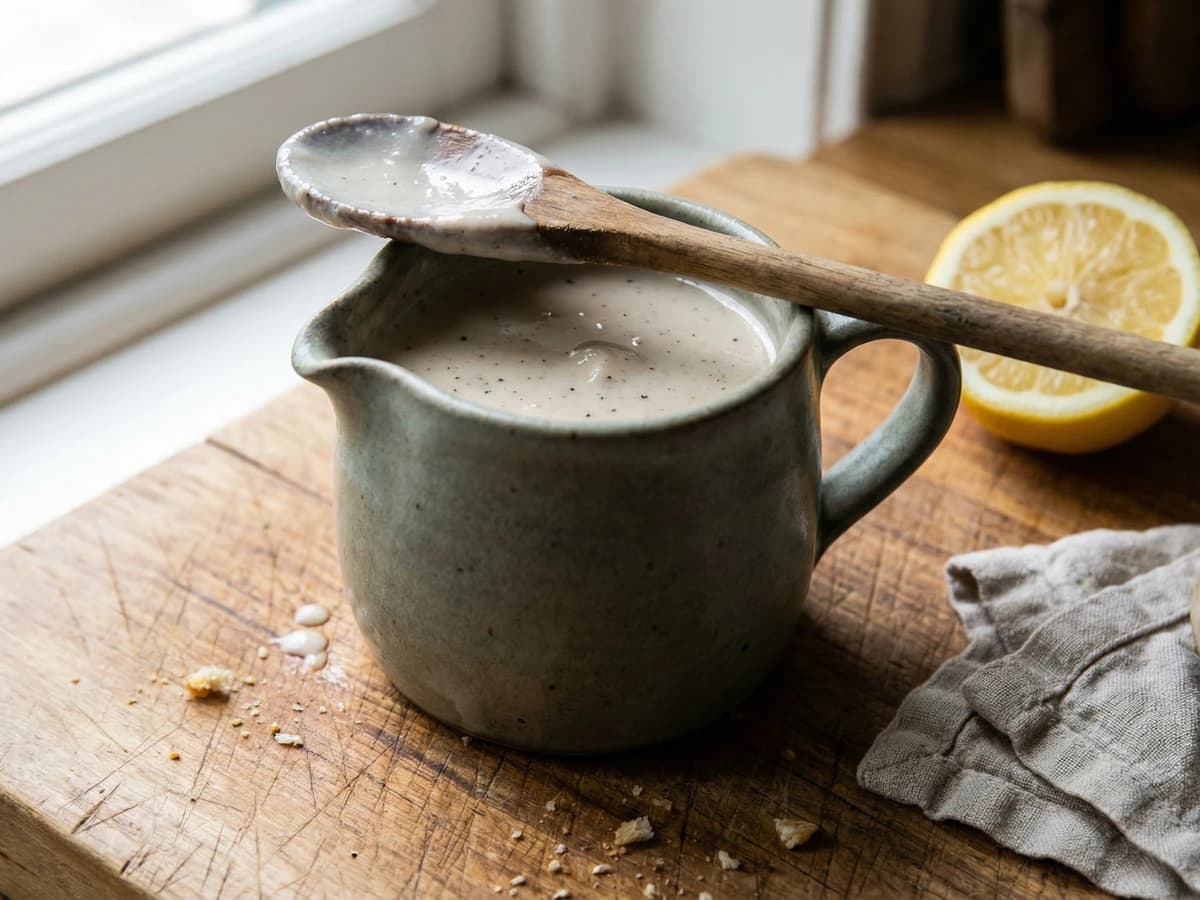
A proper white sauce sharpened with pounded anchovy, the old Georgian trick for waking up a piece of poached fish or a slice of roast lamb on a Sunday in spring.
A cooking platform built around craft, culture, and the stories behind what we eat.

Created by Chef Thomas
A pourable, glossy toffee sauce of muscovado, butter, and cream, the dark, treacly engine of sticky toffee pudding and a quiet revelation poured over vanilla ice cream.
This is a January sauce. The kind of thing that belongs to long evenings, the curtains drawn early, something hot and sweet on the spoon while the rain does whatever rain does outside. It takes ten minutes and three ingredients that probably already live in your kitchen.
There's no real technique here, just attention. Muscovado, butter, and cream, coaxed together over a low heat until they turn into a dark, glossy pour that tastes like the inside of a toffee tin. The treacle is the thing that lifts it from a sweet caramel into something properly grown-up, with that bitter, smoky edge that makes you slow down between mouthfuls. A pinch of salt at the end, no more than that. We're only making dinner.
Without this sauce, a sticky toffee pudding is just a date sponge, decent enough but not the thing it's meant to be. With it, you've got one of the better puddings this country has produced. I wrote it down in the notebook years ago: muscovado, butter, cream, treacle, salt. Five lines. Hasn't changed since.
Quantity
150g
Quantity
100g
cubed
Quantity
200ml
Quantity
1 tablespoon
Quantity
pinch
Quantity
1 teaspoon
| Ingredient | Quantity |
|---|---|
| dark muscovado sugar | 150g |
| unsalted buttercubed | 100g |
| double cream | 200ml |
| black treacle | 1 tablespoon |
| flaky sea salt | pinch |
| vanilla extract (optional) | 1 teaspoon |
Put the muscovado, butter, and treacle into a heavy-bottomed saucepan over a low heat. Don't rush this. Stir gently with a wooden spoon as the butter melts into the sugar and the whole thing turns into a dark, glossy slick that smells faintly of toffee apples. If the heat is too high, the sugar will catch and turn bitter. Low and patient.
Once the sugar has dissolved completely and the mixture is smooth, pour in the cream in a steady stream, stirring as you go. It will hiss and seize for a moment, then loosen into a pale caramel-coloured pool. Keep stirring. Don't worry if it looks split or grainy at first. It will come together.
Bring the sauce to a gentle simmer and let it bubble away for three or four minutes, stirring now and then. You're looking for a glossy, slightly thickened sauce that coats the back of the spoon and leaves a clean trail when you draw a finger through it. Trust your eyes here. The colour will deepen from milky beige to a proper rich amber, and the smell will shift from sweet to something deeper and more buttery.
Take the pan off the heat. Stir in the vanilla if you're using it and a small pinch of flaky salt. Taste it, carefully, it's hot. The salt should be barely there, just enough to stop the sauce being one-note sweet. Pour it warm over sponge, ice cream, or straight into the mouth of someone you like.
1 serving (about 80g)
Culinary guides, cultural storytelling, and the editorial depth that makes cooking meaningful.
Discover Culinary ExplorerChef Thomas
A proper white sauce sharpened with pounded anchovy, the old Georgian trick for waking up a piece of poached fish or a slice of roast lamb on a Sunday in spring.

Chef Thomas
A spiced autumn chutney made from a glut of apples and a quiet afternoon, simmered down until the kitchen smells of October and the jars line up on the counter like a small, useful insurance policy.
Chef Thomas
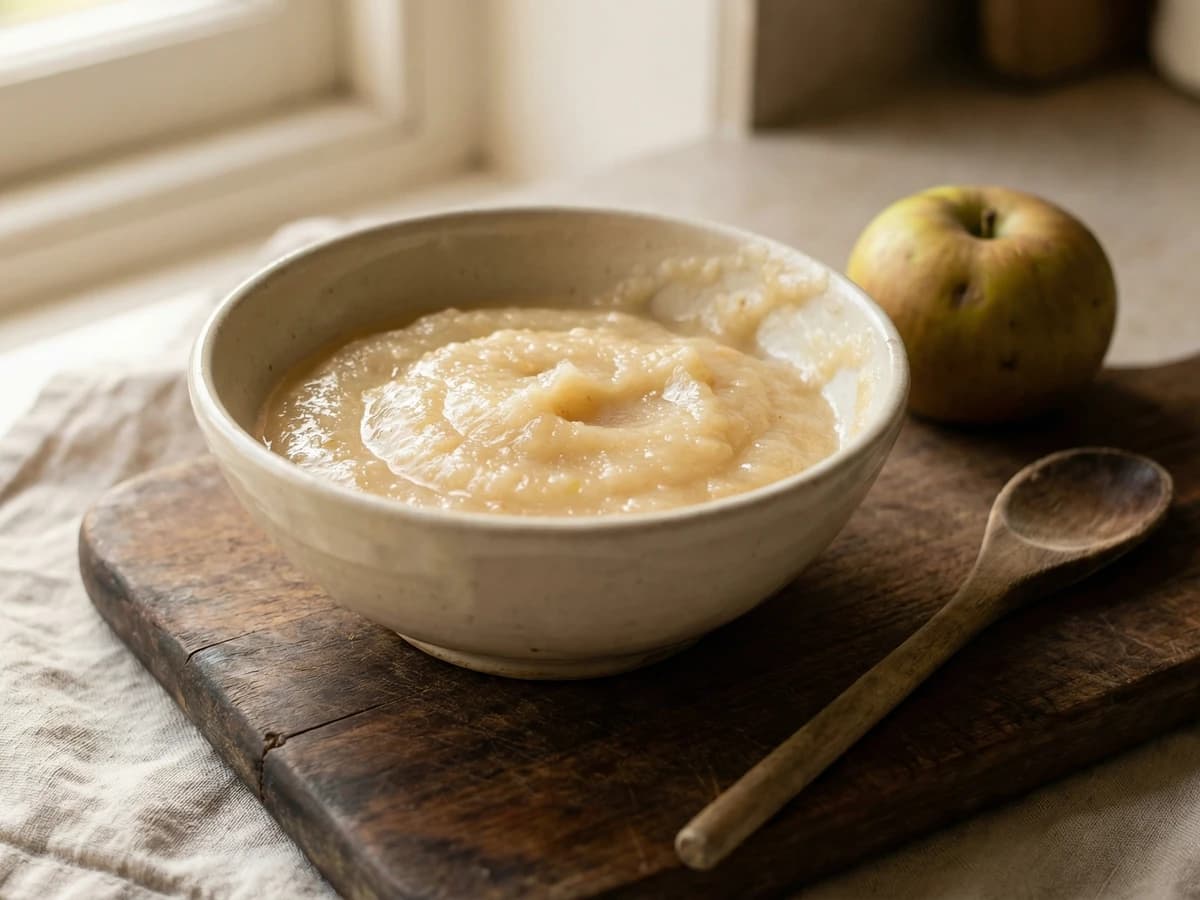
A bowl of sharp, fluffy Bramley apple sauce, made in the time it takes to carve the pork, the kind of small condiment that quietly makes the whole meal make sense.
Chef Thomas
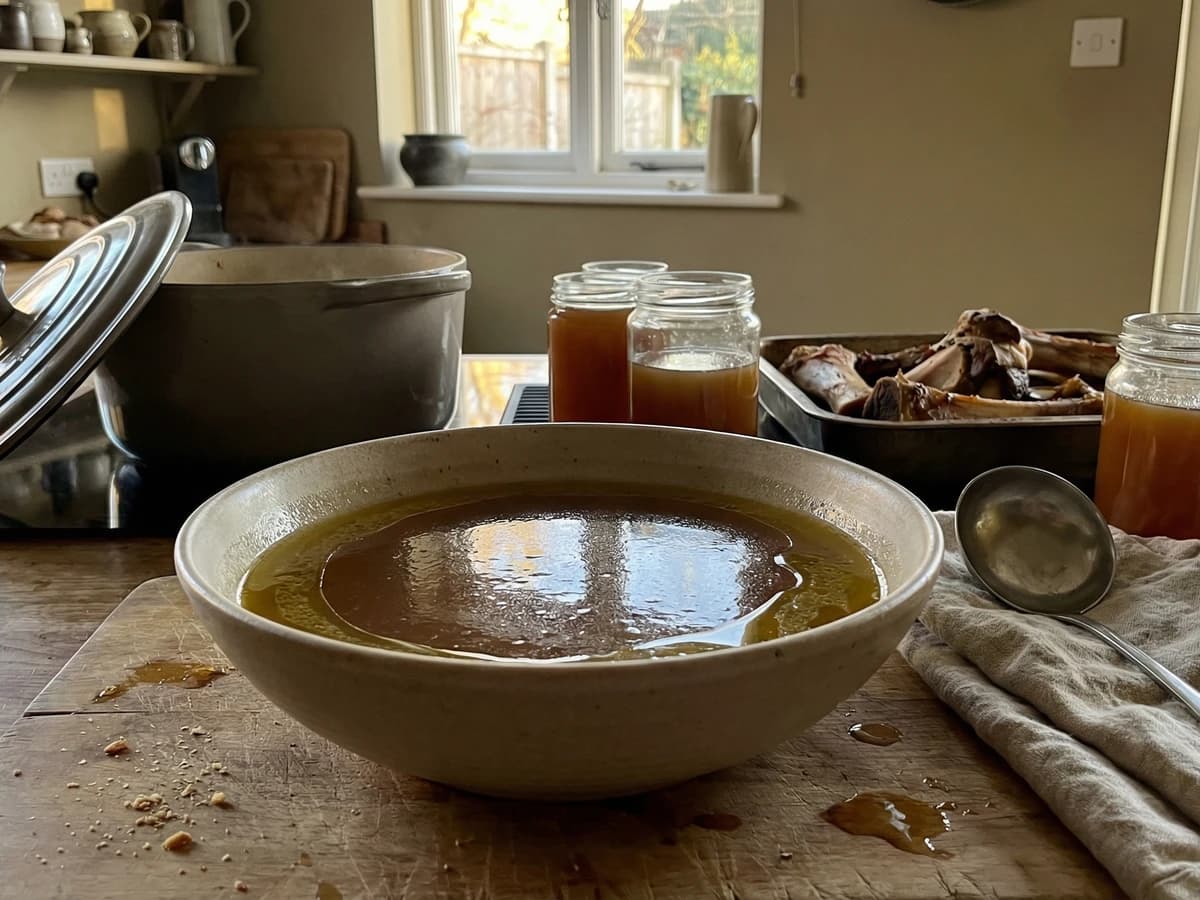
Beef bones roasted until dark, then coaxed for a long afternoon into a deep amber stock, the foundation of every good gravy, every braise, every bowl of winter soup worth the trouble.