
Chef Elsa
Allerheiligenstriezel
A rich, buttery braided bread that Austrian godfathers bring their godchildren on All Saints' Day. The golden six-strand braid is as much ritual as recipe, and the kitchen smells like love while it bakes.
A cooking platform built around craft, culture, and the stories behind what we eat.
Created by
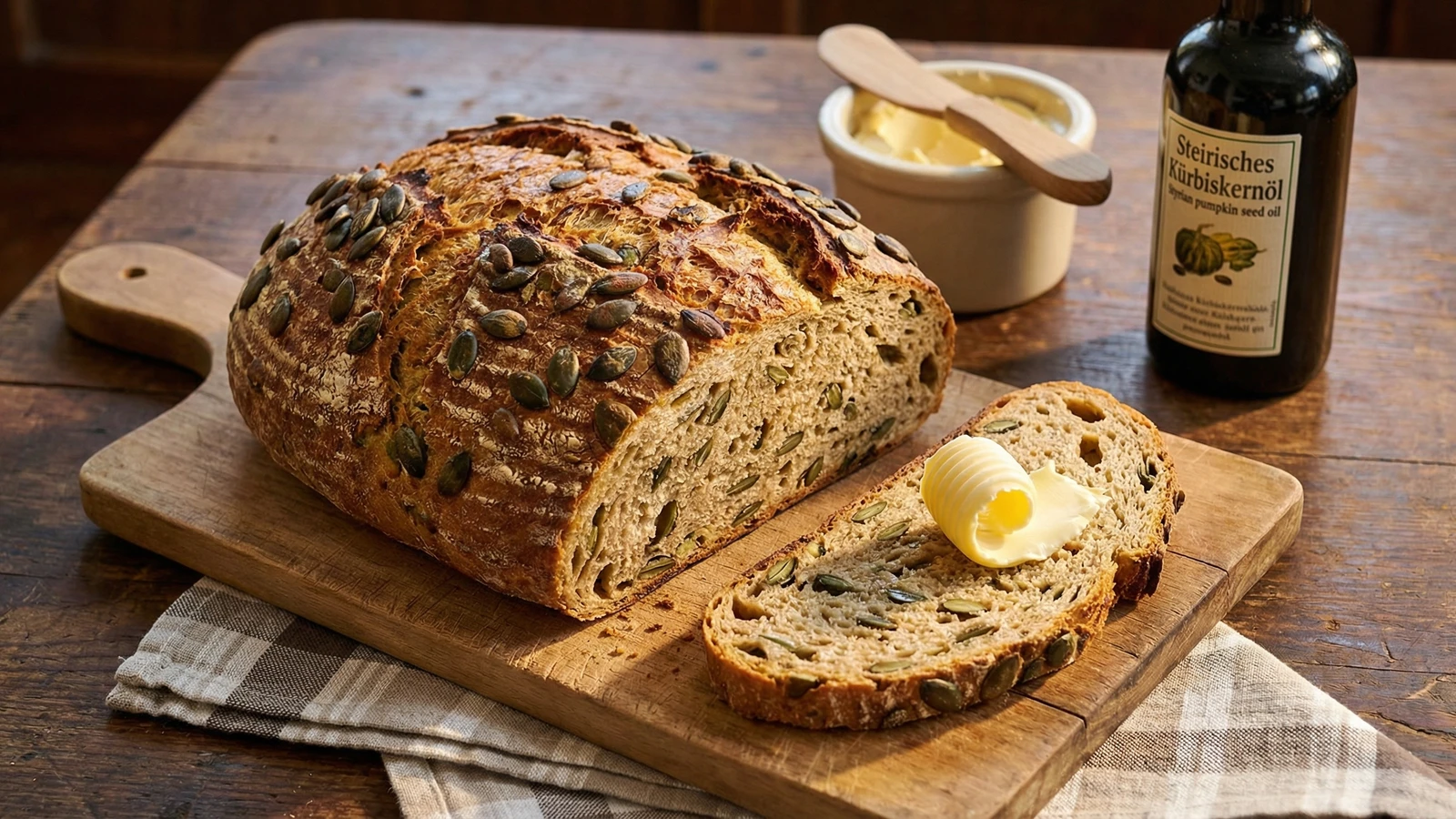
A sturdy Styrian loaf packed with dark green hull-less pumpkin seeds, the same ones that give Styria its famous Kernöl. Toast a thick slice, spread it with butter, and you've got the best Jause in the house.
On our trips to Austria, Gretel and my grandmother Eva would always insist on stopping somewhere in Styria. Not for the castles or the wine routes, though those are lovely. For the bread. Specifically, for a loaf of Kürbiskernbrot so dense with dark green pumpkin seeds that you could see them pressing against the crust from across the table. Gretel would break a piece off, hold it up to the light, and count the seeds like she was judging a competition. Too few and she'd shake her head. A proper Kürbiskernbrot should look like someone was almost reckless with the seeds.
Styrian pumpkin seeds are not what you find in plastic bags at the supermarket. They're hull-less, dark green, almost black, with a rich, nutty flavor that deepens when they hit heat. The same seeds pressed into Kürbiskernöl, Styria's famous pumpkin seed oil. In bread, they do something wonderful: they toast into the crust, they soften slightly inside the crumb, and they give every slice a savory depth that plain wheat bread can't touch. You taste the seed before you taste the flour, and that's exactly right.
This is not a complicated bread. It's a mixed-flour dough with rye for earthiness, wheat for structure, and a generous hand with pumpkin seeds stirred through and pressed on top. The technique is patient but forgiving. If you can stir, knead for ten minutes, and wait for dough to rise, you can make this loaf. It's good Austrian home cooking at its most honest: simple ingredients, proper technique, no tricks.
Styria's hull-less pumpkin seeds come from a natural mutation of Cucurbita pepo first documented in the region in the late 19th century. The thin-skinned seeds were easier to press for oil, and Styrian farmers cultivated them until they became the region's signature crop. Kürbiskernbrot became a staple of Styrian Bäckereien as a way to use the seeds beyond oil production, and today the bread carries a protected geographical indication. The rivalry between Styrian bakers over who makes the best Kürbiskernbrot is quieter than the Sachertorte Wars, but no less heartfelt.
Quantity
300g
Quantity
200g
Quantity
10g
Quantity
7g
Quantity
1 tablespoon
Quantity
2 tablespoons
Quantity
320ml
Quantity
200g, plus 40g for topping
Quantity
1 tablespoon
Quantity
for serving
| Ingredient | Quantity |
|---|---|
| strong bread flour (Type 700 or strong white) | 300g |
| dark rye flour | 200g |
| fine sea salt | 10g |
| dried yeast | 7g |
| dark honey | 1 tablespoon |
| Kürbiskernöl (Styrian pumpkin seed oil) | 2 tablespoons |
| lukewarm water | 320ml |
| Styrian hull-less pumpkin seeds (Kürbiskerne) | 200g, plus 40g for topping |
| cider vinegar | 1 tablespoon |
| butter (optional) | for serving |
Spread 200g of the pumpkin seeds in a dry pan over medium heat. Stir them constantly for three to four minutes until they start to pop and crackle and the kitchen smells like roasted nuts. Some will puff up and turn slightly lighter. Pull them off the heat the moment you smell toasting, not burning. There's a narrow window. Let them cool while you build the dough. This step is not optional. Raw seeds in bread taste flat. Toasted seeds taste like Styria.
In a large bowl, combine the bread flour, rye flour, salt, and dried yeast. Stir them together with your hand so the salt and yeast aren't sitting directly on top of each other. Make a well in the center. Add the honey, Kürbiskernöl, cider vinegar, and lukewarm water. The vinegar does two things: it helps the rye ferment properly and it keeps the crumb tender. Mix with a wooden spoon until the dough comes together into a shaggy, sticky mass. It won't look pretty yet. That's fine.
Turn the dough out onto a lightly floured surface and knead for eight to ten minutes. This dough has rye in it, so it will feel different from a pure wheat dough. It will be tackier, denser, less elastic. Don't fight it by adding too much flour. A damp hand works better than a floury one. You're looking for a dough that holds together smoothly and springs back slowly when you press it with your finger. When you're nearly done kneading, work in the toasted pumpkin seeds. Fold and press until they're distributed evenly throughout.
Shape the dough into a rough ball and place it in a lightly oiled bowl. Cover with a clean tea towel and leave it in a warm spot for one and a half to two hours. The dough should roughly double in size, though rye breads rise less dramatically than white loaves. Don't rush this. The long rise develops the flavor. If your kitchen is cold, place the bowl on top of the oven with the light on, or near a warm window.
Turn the risen dough out onto your work surface. Press it down gently to release the large gas bubbles, then shape it into a tight oval or round. Work the surface taut by tucking the dough under itself with cupped hands, turning it as you go. The seeds will poke through the surface. That's what you want. Place the loaf on a baking sheet lined with parchment paper.
Brush the top of the loaf lightly with water. Take the remaining 40g of raw pumpkin seeds and press them firmly into the top and sides of the loaf. Be generous and press hard enough that they stick. These seeds will toast in the oven and become the first thing anyone sees and smells when the bread comes out. Score the top with a sharp knife or a razor blade, two or three slashes about a centimeter deep. The slashes let the loaf expand without cracking in random places.
Cover the shaped loaf loosely with a tea towel and let it rise for another thirty to forty minutes. It won't double again. You're looking for the dough to relax and puff slightly, and for the scores to open just a bit. While it rises, preheat your oven to 220°C (430°F) with a small roasting tin on the bottom rack. You'll need that tin in a moment.
When the oven is fully hot, pour a cup of water into the roasting tin on the bottom rack. The burst of moisture in the first minutes of baking is what gives the crust its crackle and shine. Slide the loaf in on the middle rack. Bake at 220°C for fifteen minutes, then reduce to 190°C (375°F) and bake for another twenty-five to thirty minutes. The bread is done when the crust is deep brown, the seeds on top are toasted golden-green, and the loaf sounds hollow when you tap the bottom. If it sounds dull and thuddy, give it five more minutes.
Transfer the bread to a wire rack and let it cool completely before slicing. This is the hardest part. The bread is still cooking inside from residual heat, and if you cut into it now the crumb will be gummy and the texture won't set properly. Give it at least an hour. Then cut a thick slice, spread it with good butter, and eat it standing at the kitchen counter the way every Austrian does with the first piece of fresh bread. Mahlzeit!
1 serving (about 85g)
Culinary guides, cultural storytelling, and the editorial depth that makes cooking meaningful.
Discover Culinary ExplorerChef Elsa
A rich, buttery braided bread that Austrian godfathers bring their godchildren on All Saints' Day. The golden six-strand braid is as much ritual as recipe, and the kitchen smells like love while it bakes.

Chef Elsa
Austria's rye sourdough farmhouse loaf, dark-crusted and tangy, laced with hand-crushed Brotgewürz, the kind of bread that fills a kitchen with the smell of caraway and makes everything else on the table taste better.
Chef Elsa
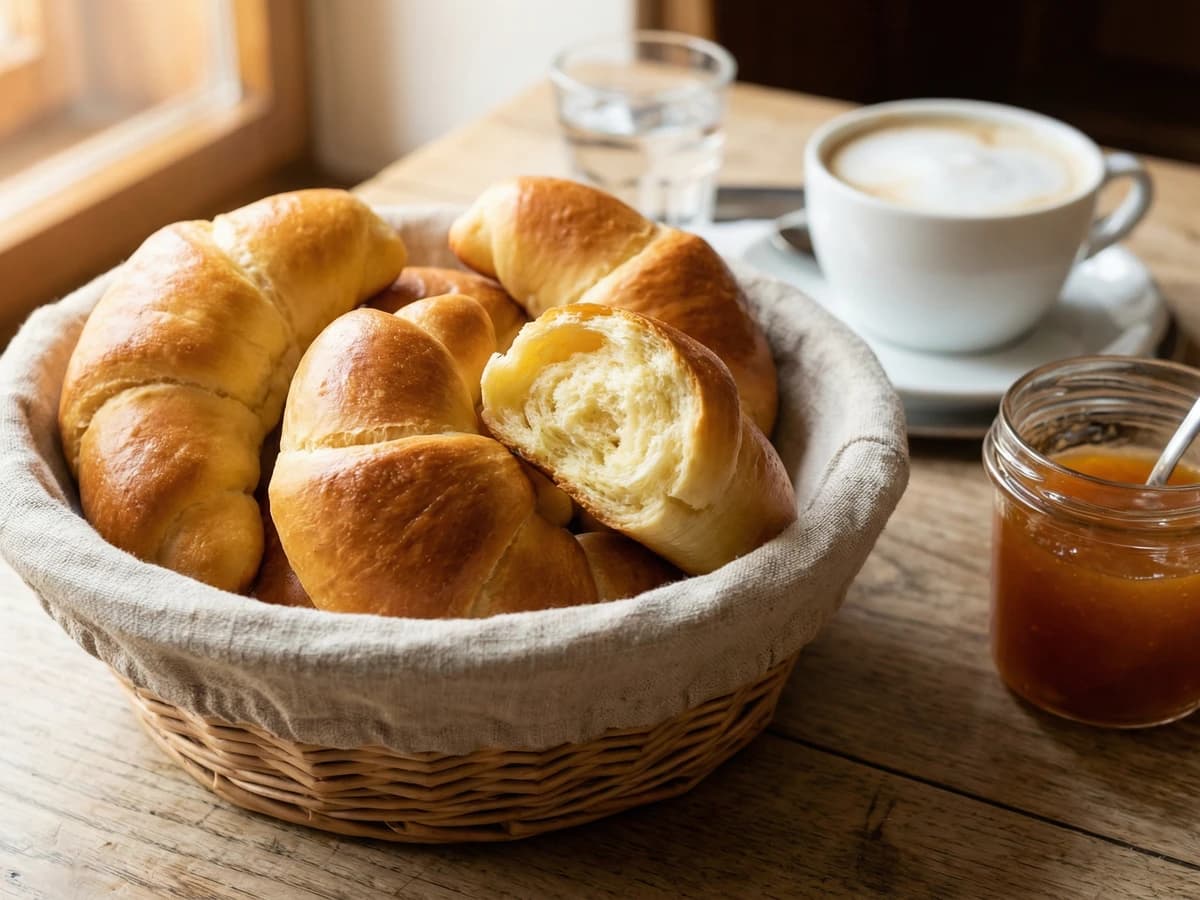
Buttery Viennese crescents, golden with egg wash and soft as a Sunday morning, shaped the way Viennese bakers have shaped them for eight hundred years.

Chef Elsa
Vienna's five-petaled imperial roll, hand-folded into a star and baked until the crust shatters at first touch, with a crumb so soft and airy it barely weighs a thing.