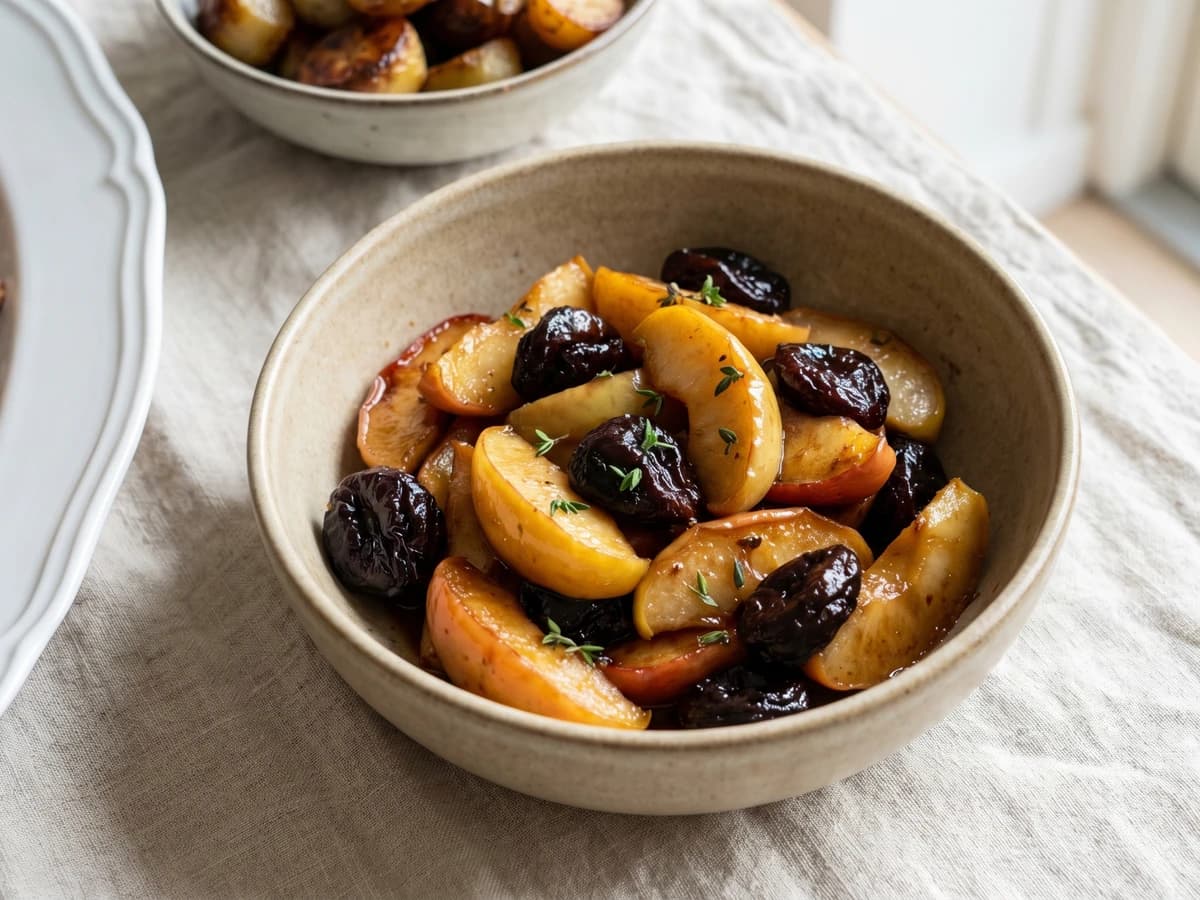
Button mushrooms fried hard in butter until deeply golden and concentrated, finished with garlic, parsley, and flaky salt. The side dish that belongs next to a good steak and has belonged there for generations.
Side Dishes
Danish
Dinner Party
Weeknight
Comfort Food
10 min
Active Time
12 min cook•22 min total
Yield4 servings
October brings the game. Venison, duck, pheasant, the dark meats that suit the shorter days. And beside every piece of game on every Danish table, there are mushrooms fried in butter. Stegte champignoner are the side dish that nobody writes down because everybody already knows how to make them. Except that most people don't, not quite. They stir too soon, crowd the pan, and end up with something pale and soft where there should be something golden and concentrated.
The technique is simple but it asks for nerve. You get the pan very hot, lay the mushrooms in a single layer, and then you leave them alone. Three or four minutes of doing nothing. That patience is the whole recipe. The mushrooms release their water, the water cooks off, and only then does the browning begin. Once that colour comes, it happens fast, and you'll smell it before you see it: butter going nutty, mushroom edges turning sweet and almost caramelised.
I want you to pay attention to two things. First, the size of your pan. If the mushrooms are touching and overlapping, they steam. You need space between them, and if that means cooking in two batches, do it. Second, the butter at the end. When you tip the mushrooms onto the serving dish, pour every drop of browned butter from the pan over them. That butter carried the heat that did the work. It tastes of everything that happened. Don't leave it behind.
Mushroom foraging has deep roots in the Danish countryside, particularly on Bornholm and in the beech forests of northern Sjælland, where families have gathered kantareller and Karl Johan svampe every autumn for centuries. The simpler tradition of frying cultivated button mushrooms in butter became a standard of the Danish dinner table in the early twentieth century, when commercial mushroom farming made them available year-round. Stegte champignoner settled into their permanent role as the companion to bøf med løg (steak with fried onions) and alongside game dishes during the hunting season, a partnership so established that ordering one without the other still feels like something is missing.
The technique, the tradition, and the story behind every dish.
wiped clean, halved or quartered depending on size
unsalted butter
Quantity
50g
neutral oil
Quantity
1 tablespoon
garlic
Quantity
2 cloves
finely sliced
flaky sea salt
Quantity
to taste
black pepper
Quantity
freshly ground, to taste
flat-leaf parsley
Quantity
small handful
roughly chopped
white wine vinegar or lemon juice (optional)
Quantity
1 teaspoon
Ingredient
Quantity
button mushroomswiped clean, halved or quartered depending on size
500g
unsalted butter
50g
neutral oil
1 tablespoon
garlicfinely sliced
2 cloves
flaky sea salt
to taste
black pepper
freshly ground, to taste
flat-leaf parsleyroughly chopped
small handful
white wine vinegar or lemon juice (optional)
1 teaspoon
Equipment Needed
•Large heavy frying pan, at least 28cm
•Wide spatula or fish slice
Instructions
1
Prepare the mushrooms
Wipe each mushroom clean with a damp cloth or kitchen paper. Don't wash them under running water. Mushrooms are sponges. They absorb water and then release it back in the pan, and wet mushrooms steam instead of frying. That's the difference between golden and grey. Cut them in halves or quarters depending on size. You want pieces large enough to sit flat against the hot pan with a broad cut surface. Tiny pieces curl and shrink to nothing.
If the mushrooms are very small, leave them whole and just trim the stem. A flat cut face pressed against the pan is what gives you the browning.
2
Heat the pan hard
Set a large, heavy frying pan over high heat. Add the oil first, then the butter. The oil raises the smoke point and lets the butter get properly hot without burning. Wait until the butter has melted, foamed, and the foam has started to subside. That quiet moment between foaming and browning is your window. The pan needs to be genuinely hot. If you're uncertain, hold your hand a few centimetres above the surface. You should feel real, immediate heat.
A wide pan is not optional here. If your pan is too small for the quantity, cook in two batches. Crowding is the enemy. Mushrooms packed together create moisture and you end up with a stew, not a sear.
3
Fry without touching
Lay the mushrooms cut-side down in a single layer across the pan. Now leave them. Don't stir. Don't shake the pan. Don't nudge them with a spoon. For three to four minutes, do nothing but listen. You'll hear a hard, steady sizzle. That's water leaving the mushroom and hitting hot fat, and it's exactly what you want. After three or four minutes, check one. Lift it with a spatula and look at the underside. You want deep golden brown, almost caramelised. That colour is flavour. If it's still pale, give it another minute.
If liquid pools in the pan, your heat is too low or the pan is too crowded. Turn the heat up and let the liquid cook off before the browning can begin.
4
Turn and season
Once the first side is deeply browned, toss or flip the mushrooms and cook for another two to three minutes. Now add the sliced garlic. The garlic goes in late because it burns fast and bitter garlic ruins everything it touches. Stir the garlic through the mushrooms and let it cook for just sixty seconds, until it's fragrant and barely golden. Season generously with flaky salt and black pepper.
5
Finish and serve
Take the pan off the heat. Add a small splash of white wine vinegar or a squeeze of lemon juice. The acid cuts through the richness and wakes the whole dish up. It's not enough to taste sour, just enough to make the butter and mushroom flavour feel brighter and more alive. Scatter the chopped parsley over the top and toss once. Tip the mushrooms onto a warm dish, making sure to pour the browned butter from the pan over them. That butter, dark gold and fragrant, is not waste. It's the sauce. Serve immediately.
Chef Tips
•The single most common mistake is crowding the pan. Mushrooms release a surprising amount of water, and if they're packed together, that water has nowhere to go. The mushrooms boil in their own liquid and turn grey and soft. A wide pan, high heat, and a single layer. That's the formula.
•Don't salt the mushrooms at the start. Salt draws out moisture, and you're already fighting moisture. Season at the end, once the browning is done and the surfaces are crisp. Flaky salt is better than fine here because it sits on the surface and you taste it with each bite.
•If you want to take these further, add a splash of cream after the garlic and let it reduce for thirty seconds. That's the version you get at old Copenhagen restaurants alongside their steak. It's rich and good, but the plain butter version is the honest one.
•These mushrooms are best the moment they leave the pan. They don't hold and they don't reheat. Cook them last, just before you sit down. Everything else can wait.
Advance Preparation
•The mushrooms can be cleaned and cut up to a day ahead. Keep them in a single layer on a tray lined with kitchen paper in the fridge. The paper absorbs surface moisture, which means better browning when they hit the pan.
•The garlic can be sliced and the parsley chopped an hour before cooking. Cover both and keep at room temperature.
Frequently Asked Questions
Nutrition Information
1 serving (about 140g)
Calories
150 calories
Total Fat
14 g
Saturated Fat
7 g
Trans Fat
0 g
Unsaturated Fat
6 g
Cholesterol
27 mg
Sodium
350 mg
Total Carbohydrates
5 g
Dietary Fiber
1 g
Sugars
2 g
Protein
4 g
Where cooking meets culture.
Culinary guides, cultural storytelling, and the editorial depth that makes cooking meaningful.