
Chef Freja
Andelår med Rødkål
Slow-roasted duck legs with crisp, deeply golden skin, served with braised red cabbage and caramelized potatoes. The weeknight Danish duck that proves the best part of the bird is the one that takes its time.
A cooking platform built around craft, culture, and the stories behind what we eat.
Created by Chef Freja
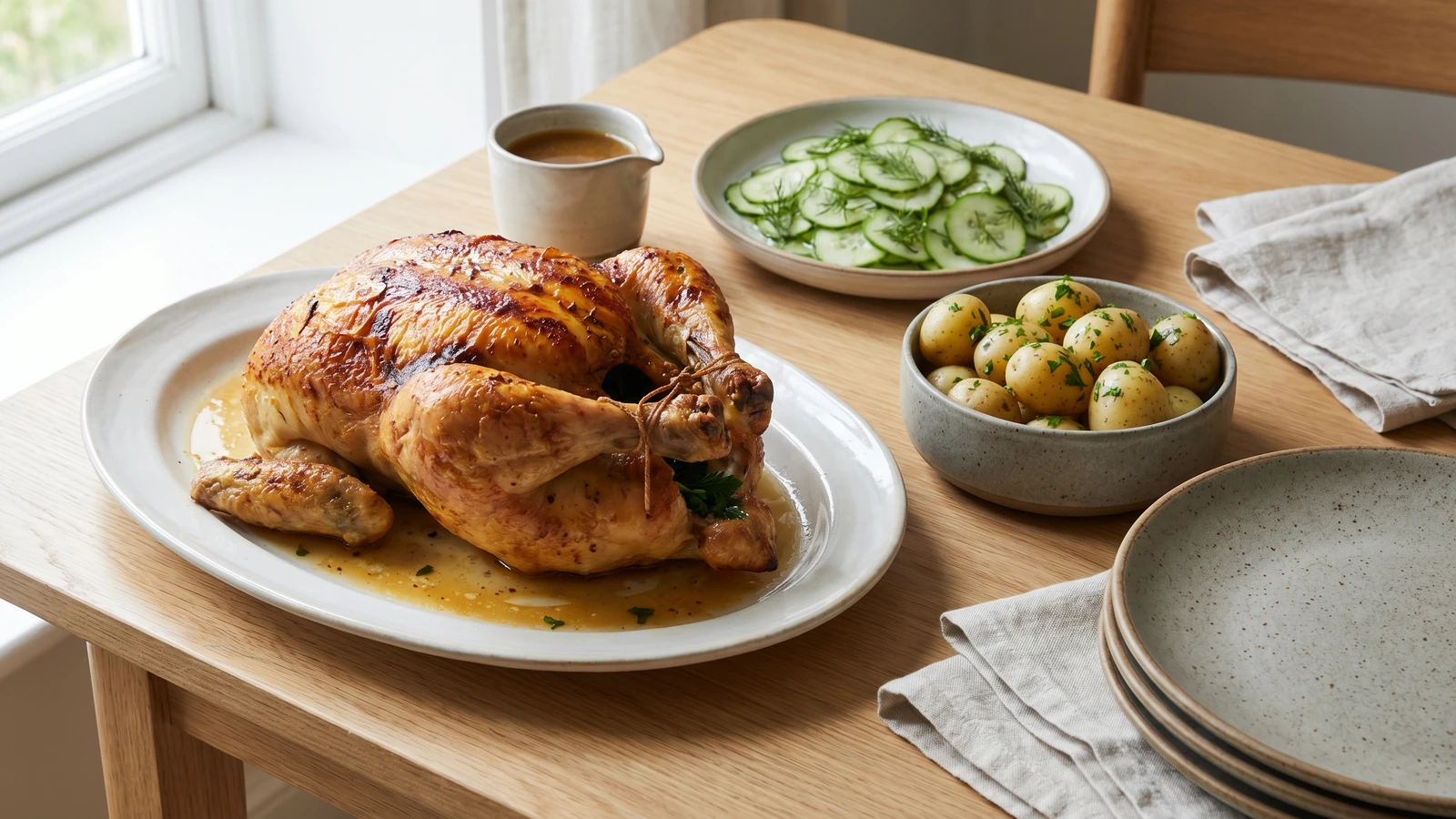
The Danish Sunday roast: a whole chicken stuffed with nothing but a great bunch of parsley and good butter, served with new potatoes and cool cucumber salad. The meal that brings everyone to the table.
There's a Sunday in early June when everything aligns. The new potatoes are at the market, small and thin-skinned, almost translucent. The parsley in the garden has come in thick and dark. The light through the kitchen window stays long into the evening. This is when stegt kylling med persillefyld is at its most natural, its most right.
The dish is almost absurdly simple. You take a whole chicken, stuff it with a generous bunch of flat-leaf parsley coated in butter, and roast it until the skin turns deep gold and the kitchen smells like something you want to walk into. The parsley and butter melt together inside the cavity, basting the meat from within, and when you tilt the bird at the end, the juices that run out are green-flecked and rich. That's your sauce. You didn't have to make it. It made itself.
This is the Sunday dinner that every Dane knows. Not from restaurants, from their own kitchen or someone else's. It's the meal that says the week is done and the table is set and the people who matter are here. I want you to pay attention to two things: dry the chicken thoroughly before it goes in the oven, because dry skin is what gives you that bronze, crackled finish; and don't skip the resting at the end, because those fifteen minutes are what keep the juices in the meat instead of on the cutting board. Everything else is just patience and good butter. You'll know when it's right.
Stegt kylling med persillefyld has been the defining Danish Sunday dinner since at least the mid-twentieth century, though roast chicken itself appears in Danish household cookbooks from the 1800s. The parsley-and-butter stuffing is a specifically Danish tradition, distinct from the sage-and-onion stuffing of British roasts or the lemon-and-herb approach common in Southern Europe. Before the 1950s, chicken was expensive enough to be reserved for celebrations; its democratization in the postwar years made this dish the weekly ritual it remains today, anchored to Sunday and to the particular Danish belief that a shared meal at home is worth more than a meal eaten out.
Quantity
1, about 1.6kg
Quantity
100g
washed and dried, left on the stem
Quantity
75g
softened
Quantity
to taste
Quantity
freshly ground, to taste
Quantity
1 tablespoon
Quantity
1 large
Quantity
100ml
Quantity
2 tablespoons
Quantity
to taste
Quantity
small bunch
fronds picked
Quantity
800g
scrubbed, skin on
Quantity
30g
Quantity
handful
chopped
| Ingredient | Quantity |
|---|---|
| whole free-range chicken | 1, about 1.6kg |
| fresh flat-leaf parsley (for the stuffing)washed and dried, left on the stem | 100g |
| unsalted butter (for the stuffing)softened | 75g |
| fine sea salt | to taste |
| black pepper | freshly ground, to taste |
| neutral oil | 1 tablespoon |
| cucumber | 1 large |
| white wine vinegar | 100ml |
| sugar | 2 tablespoons |
| white pepper | to taste |
| fresh dillfronds picked | small bunch |
| small new potatoesscrubbed, skin on | 800g |
| unsalted butter (for the potatoes) | 30g |
| fresh parsley (for the potatoes)chopped | handful |
Take the softened butter and work it together with a generous pinch of salt and several grinds of black pepper. Don't chop the parsley. Leave the bunch whole, stems and all. The stems carry more flavor than the leaves, a green, peppery intensity that releases slowly inside the hot cavity as the chicken roasts. Spread the seasoned butter over the whole bunch with your hands, working it into the leaves and along the stems until the parsley is coated. This is your stuffing. Nothing more.
Pat the chicken completely dry inside and out with kitchen paper. This is the single most important step for crisp skin.Moisture is the enemy of browning. Season the cavity with salt, then push the buttered parsley bunch inside. It should fill the space without being forced. Tie the legs together with kitchen string to close the cavity and keep the parsley in place. The string also helps the bird hold its shape, so the thighs cook at the same rate as the breast.
Heat the oven to 200°C. Rub the outside of the chicken with the neutral oil and season generously with salt and pepper, all over, including the legs and the underside. Place it breast-side up in a roasting tin or heavy ovenproof pan. The pan should be just large enough to hold the bird. Too large and the juices spread thin and burn. Too small and the air can't circulate. Put it in the oven and leave it alone for forty minutes.
After forty minutes, open the oven and tilt the bird gently with a wooden spoon so the juices from the cavity run into the pan. Spoon those pan juices over the breast and legs. This is the basting that matters, not for moisture, but for color. The butter and parsley juices from inside the bird carry flavor and fat that help the skin turndeep gold. Return to the oven for another thirty to forty minutes. The chicken is done when the juices run clear from the thickest part of the thigh and the skin is taut and deeply bronzed. A thermometer should read 74°C at the thigh.
While the chicken roasts, slice the cucumber as thinly as you can manage, paper-thin if possible. A mandoline does this best. Lay the slices in a shallow bowl. Whisk together the white wine vinegar, sugar, a pinch of salt, and a grind of white pepper until the sugar dissolves. Pour this over the cucumber and press the slices down so they're submerged. Leave them for at least thirty minutes. The vinegar firms and sweetens the cucumber, turning it from something watery into something bright and clean. Scatter the dill fronds over the top before serving. This is agurkesalat, and it belongs next to this chicken the way a shadow belongs to a tree.
Put the scrubbed potatoes in a pot of well-salted cold water. Bring to a boil, then lower the heat and simmer until they're tender all the way through, about fifteen to twenty minutes depending on size. A knife should slide in and out without catching. Drain them and return to the warm pot. Add the butter and the chopped parsley, put the lid on, and shake the pot gently so the butter melts and coats each potato. Nye kartofler, new potatoes, are a June ritual in Denmark. When they arrive at the market with their thin, translucent skins, you know the season has turned.
When the chicken is done, lift it onto a warm serving platter and rest it for fifteen minutes. Resting is not optional. During those fifteen minutes, the juices, which have been driven to the center by the heat, redistribute through the meat. Cut too early and they run out onto the board instead of staying where they belong. While the chicken rests, pour the pan juices through a small sieve into a warm jug. Those juices are concentrated chicken, butter, and parsley flavor. Don't waste them. They're the best sauce you'll make today, and you didn't have to make them at all.
Carve the chicken and arrange it on the platter. Spoon the pan juices over the meat. Bring the potatoes in their pot and the agurkesalat in its bowl to the table. Serve everything together, family style, because this is a meal that belongs in the middle of the table where people can help themselves. That's how it's done. Tak for mad.
1 serving (about 520g)
Culinary guides, cultural storytelling, and the editorial depth that makes cooking meaningful.
Discover Culinary ExplorerChef Freja
Slow-roasted duck legs with crisp, deeply golden skin, served with braised red cabbage and caramelized potatoes. The weeknight Danish duck that proves the best part of the bird is the one that takes its time.

Chef Freja
The whole roasted duck of juleaften, stuffed with tart apples and dark prunes, slow-roasted for four patient hours until the skin crackles like something earned and the meat underneath gives way without resistance.
Chef Freja
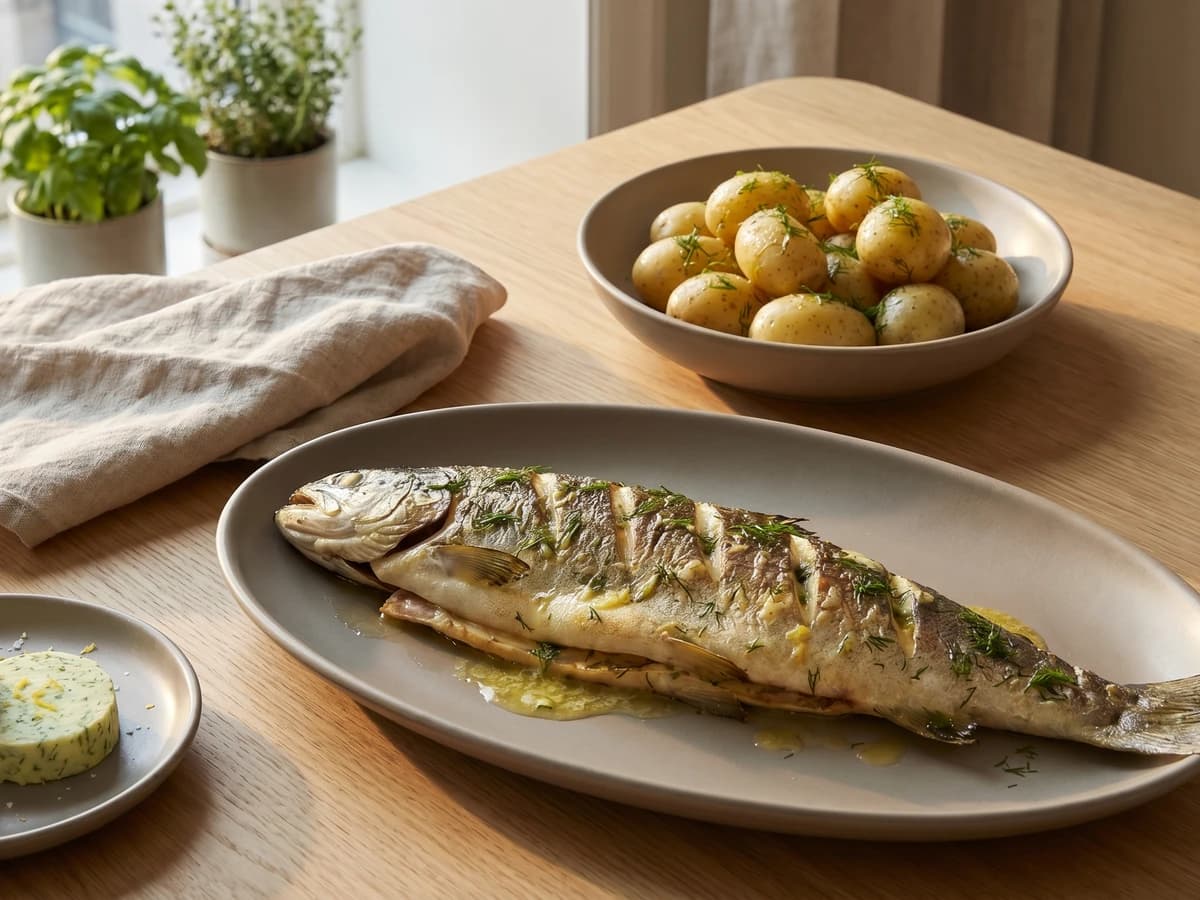
Whole sea trout baked with butter, lemon, and armfuls of dill, served beside the first nye kartofler of the season and a melting slab of dildsmor. The Danish summer table at its most generous.
Chef Freja
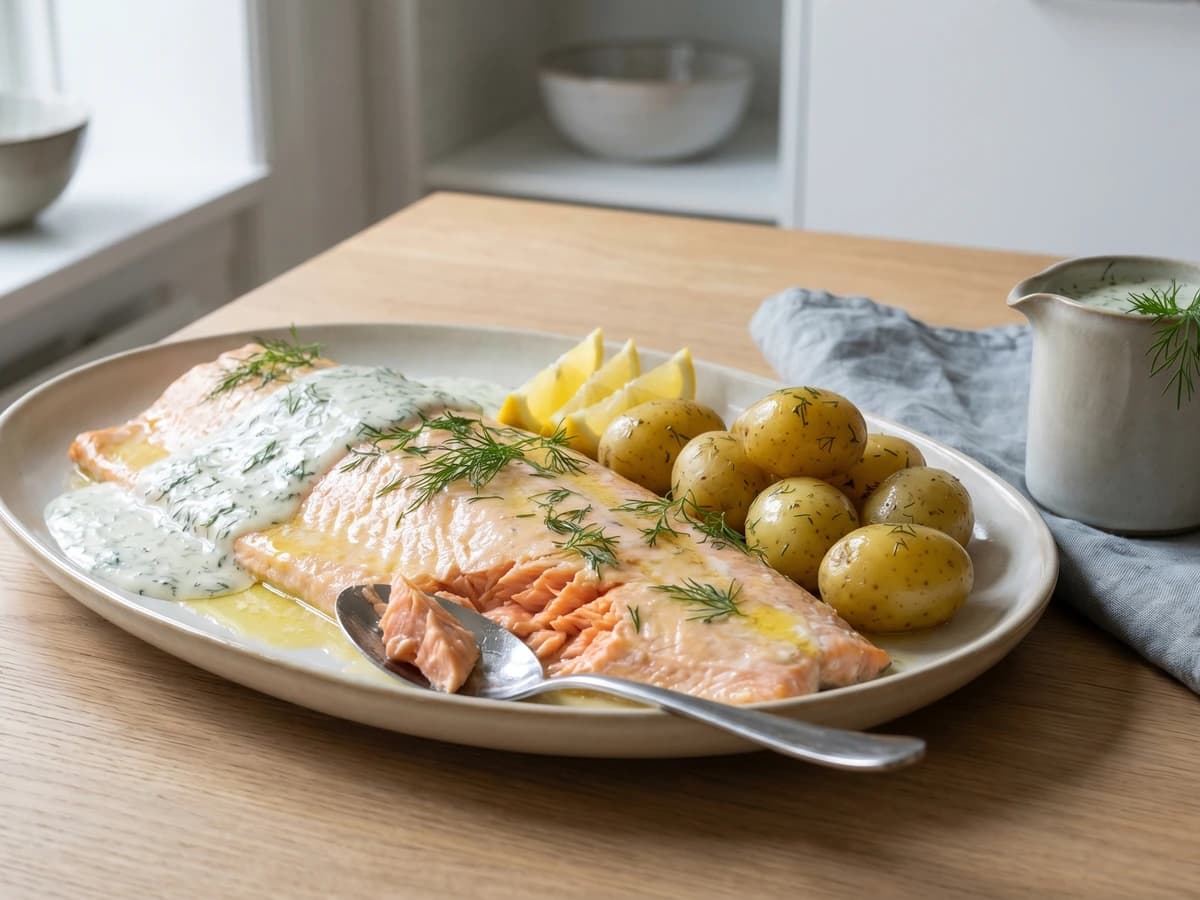
A side of salmon baked gently in butter and white wine, served warm with a bright dill cream sauce and the season's first nye kartofler. Late spring on a Danish table, cooked with love.