
Chef Freja
Andelår med Rødkål
Slow-roasted duck legs with crisp, deeply golden skin, served with braised red cabbage and caramelized potatoes. The weeknight Danish duck that proves the best part of the bird is the one that takes its time.
A cooking platform built around craft, culture, and the stories behind what we eat.
Created by Chef Freja
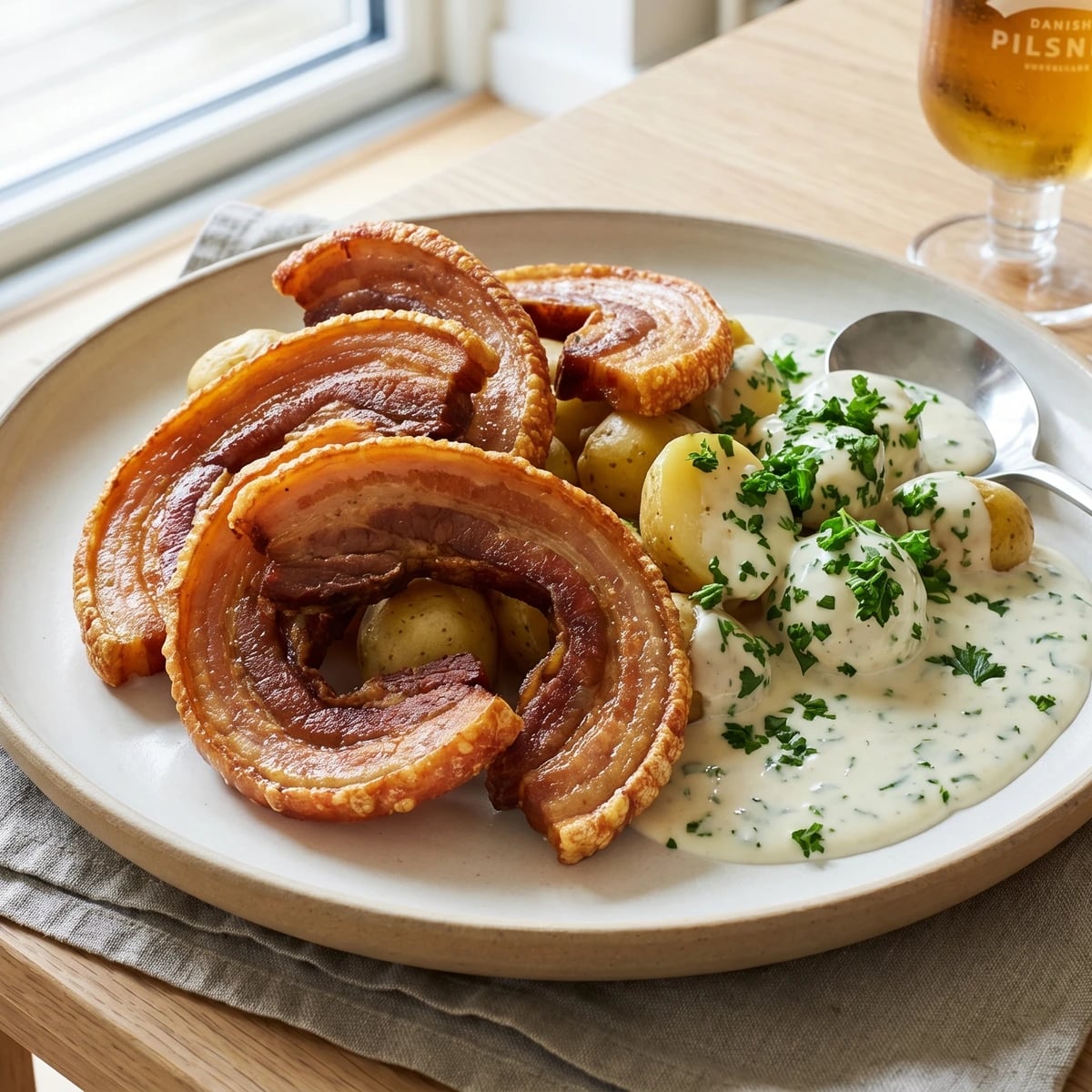
Denmark's national dish, crispy-fried pork belly with potatoes drowned in parsley cream sauce. The kind of cooking that needs no introduction to any Dane and deserves one for everyone else.
Every country has a dish that settles arguments. In Denmark, it's this one. When the Ministry of Food held a national vote in 2014 to choose Denmark's official national dish, stegt flæsk med persillesovs won by a distance. Nobody was surprised. It had been the national dish in everything but name for as long as anyone could remember.
What you're making is simple and extraordinary at the same time. Slices of pork belly, fried slowly in their own rendered fat until the edges curl and the surface turns to something between gold and glass. Boiled potatoes, warm and floury. And persillesovs, a parsley sauce so generous with fresh green herbs that the white sauce beneath them almost disappears. That's it. Three components, none of them difficult, all of them dependent on doing a few things right.
Here's what matters most: the pork goes into a cold pan. Not a hot pan with oil. A cold, dry pan. The heat builds slowly, the fat renders out of the belly, and the pork fries in its own fat. This is the difference between pork belly that shatters between your teeth and pork belly that chews like cardboard. The other thing to watch is the parsley. It goes into the sauce off the heat, right at the end, so it stays vivid green and tastes of the garden, not of the stove. Get those two things right and the rest takes care of itself. This is a dish cooked with love, and you'll taste it.
Stegt flæsk has been a cornerstone of Danish home cooking since at least the 19th century, when Denmark's pig farming industry expanded dramatically and pork belly became the most affordable cut available to ordinary households. The pairing with persillesovs, a flour-thickened milk sauce loaded with chopped parsley, reflects a tradition shared across Northern European farmhouse kitchens where white sauces stretched simple proteins into full meals. In 2014, the Danish Ministry of Food, Agriculture and Fisheries held a public vote that made stegt flæsk med persillesovs the country's official national dish, beating frikadeller and rugbrod. The result confirmed what every Danish family already knew: this was the plate that meant home.
Quantity
800g
skin on, sliced 5-7mm thick
Quantity
1kg
scrubbed
Quantity
to taste
Quantity
40g
Quantity
40g
Quantity
600ml
warmed
Quantity
1 large bunch (about 40g picked leaves)
finely chopped
Quantity
to taste
Quantity
a pinch
freshly grated
| Ingredient | Quantity |
|---|---|
| pork bellyskin on, sliced 5-7mm thick | 800g |
| new potatoesscrubbed | 1kg |
| fine sea salt | to taste |
| unsalted butter | 40g |
| plain flour | 40g |
| whole milkwarmed | 600ml |
| fresh curly parsleyfinely chopped | 1 large bunch (about 40g picked leaves) |
| white pepper | to taste |
| nutmeg (optional)freshly grated | a pinch |
Lay the pork belly slices on a board and pat them thoroughly dry with kitchen paper. Both sides. Salt them generously with fine sea salt and leave them uncovered for ten minutes while you start the potatoes. Drying the surface is everything here. Moisture is the enemy of crispness. Wet pork steams in the pan; dry pork fries. The salt draws out the last bit of surface moisture and begins to season the meat from the outside in.
Put the potatoes in a large pot, cover with cold water, and add a good tablespoon of salt. Bring to a boil, then reduce to a steady simmer. New potatoes take fifteen to eighteen minutes. A knife should slide in with no resistance. Drain them and put the lid back on, slightly ajar, to keep them warm while you fry the pork. Starting potatoes in cold water matters: it lets them heat evenly from the outside in. Hot water shocks the surface and you get potatoes that crumble at the edges before the center is cooked through.
Place the pork belly slices in a large, heavy frying pan in a single layer. Start with a cold pan. No oil, no butter, nothing. Turn the heat to medium. This is the step most people get wrong, and it's the most important one. A cold start lets the fat render slowly out of the belly, and the pork fries in its own fat. If you start hot, the outside burns before the fat has a chance to melt, and you get charred leather instead of golden glass.
Let the slices cook undisturbed for five to six minutes on the first side. You'll hear a gentle sizzle building as the fat renders. When the edges are golden and the surface has started to curl, flip them. Cook for another four to five minutes on the second side. The finished slices should be deep golden, curled at the edges, and crisp enough that they crack when you press them with a spatula. Transfer to a plate lined with kitchen paper. You'll know when it's right. The sound changes from a wet sizzle to a dry crackle, and the kitchen smells like something between a Saturday morning and a celebration.
Melt the butter in a saucepan over medium heat. When it foams, add the flour all at once and stir with a whisk for two minutes. You're cooking out the raw flour taste. The mixture should bubble gently and smell biscuity, not floury. Now add the warm milk in a slow, steady stream, whisking constantly. If you add it all at once, the sauce lumps. If you add it too slowly, the roux seizes. A steady pour with continuous whisking is the rhythm you want. Keep whisking until the sauce thickens enough to coat the back of a spoon, about four to five minutes.
Remove the sauce from the heat. Stir in the finely chopped parsley, a generous amount of white pepper, the nutmeg if using, and salt to taste. The parsley goes in off the heat because boiling turns it grey and bitter. You want it bright green and grassy, flecks of it visible throughout the white sauce. Be generous. This is persillesovs, not white sauce with a suggestion of parsley. The herb is the point. Taste it. The sauce should be creamy, peppery, and unmistakably green.
Pile the warm potatoes on a serving dish or onto individual plates. Lay the crispy pork belly slices on top or alongside, however your table prefers it. Pour the parsley sauce over everything with a generous hand. The sauce pools around the potatoes and meets the crisp edges of the pork, and that contrast, crisp and creamy, salty and green, is the whole soul of this dish. Serve immediately. Tak for mad.
1 serving (about 500g)
Culinary guides, cultural storytelling, and the editorial depth that makes cooking meaningful.
Discover Culinary Explorer
Chef Freja
Slow-roasted duck legs with crisp, deeply golden skin, served with braised red cabbage and caramelized potatoes. The weeknight Danish duck that proves the best part of the bird is the one that takes its time.

Chef Freja
Pan-seared beef steaks rested and served in a glossy red wine sauce built from the fond of the same pan. The Danish dinner party dish that turns a Saturday evening into an occasion worth remembering.

Chef Freja
Strips of seared beef in a paprika cream sauce, the weeknight dish that arrived from Russia in the 1950s and never left the Danish kitchen. Served over rice with the quiet confidence of something that has been Tuesday dinner for three generations.

Chef Freja
A good piece of beef seared hard, buried under golden onions fried in butter, served with boiled potatoes and the kind of brown gravy you make from what the pan remembers.