
Chef Elsa
Bröselnudeln
Broad egg noodles tossed in golden butter-toasted breadcrumbs until every strand is coated and crackling. Four ingredients, fifteen minutes, and a dish that has kept Austrian families fed and happy for centuries.
A cooking platform built around craft, culture, and the stories behind what we eat.
Created by
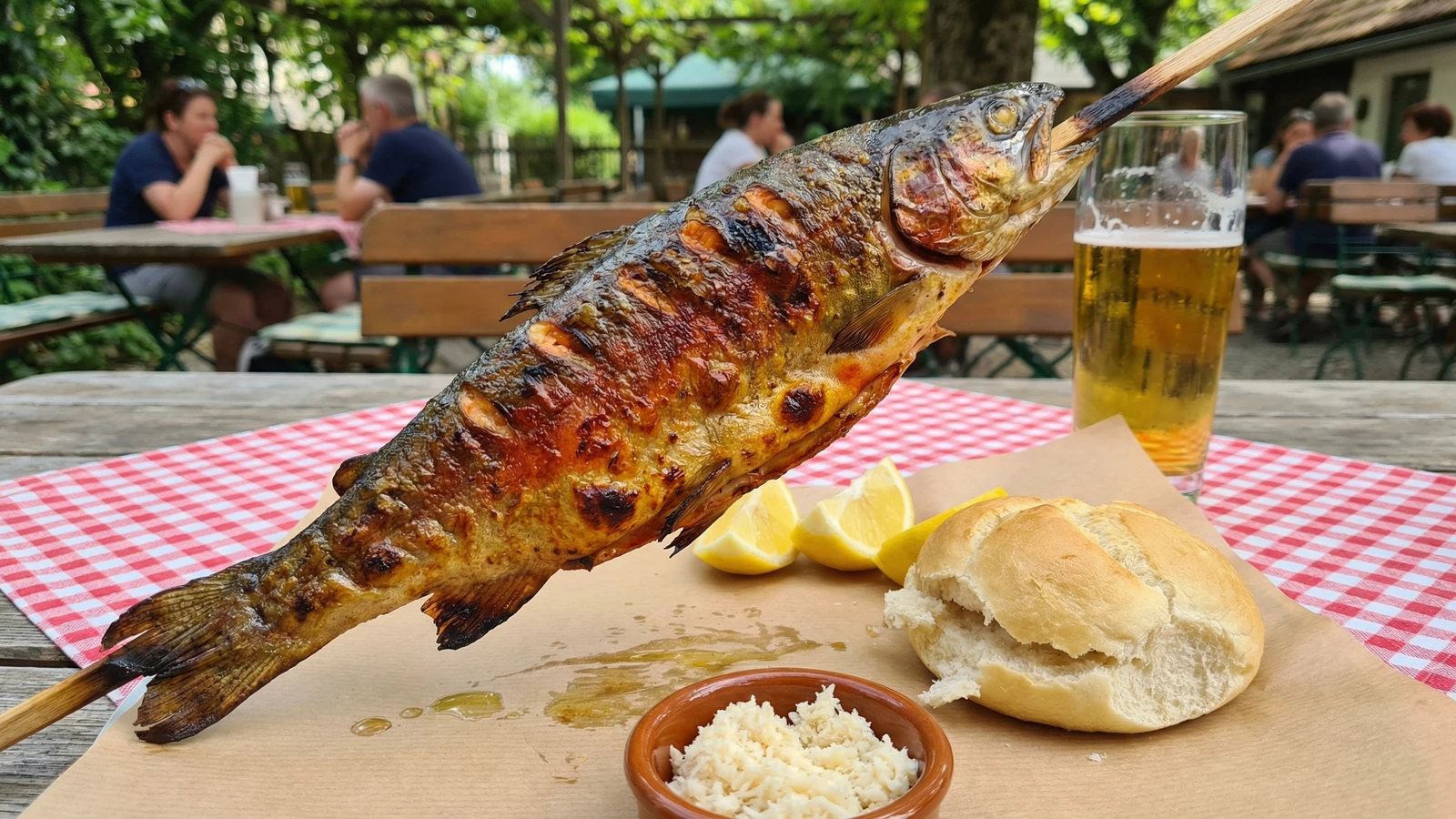
Whole fish speared on a stick, rubbed with garlic and sweet paprika, and grilled low over glowing embers until the skin splits and crackles. This is what Austrians eat standing up at a Volksfest, one hand on the stick, the other tearing a Semmel.
The first time I ate Steckerlfisch I was eight years old, standing in the middle of a Volksfest somewhere outside Salzburg with Gretel and my grandmother Eva. Gretel bought three fish from a man tending a long row of sticks angled over a charcoal pit. The fish were bronzed and splitting at the skin, and the smoke smelled like garlic and summer. She handed me one on its stick and said, "Hold it like an ice cream. Eat it with bread." I stood there pulling flakes of smoky fish off the bone with my fingers and eating them tucked into a torn Semmel, and I thought it was the greatest thing I'd ever tasted.
Steckerlfisch is Austrian outdoor food at its most honest. A whole fish, usually mackerel, gets butterflied and skewered lengthwise on a long wooden stick. You rub it with a paste of garlic, sweet paprika, oil, and a little salt, then plant the stick at an angle next to glowing embers and let the heat do everything. No grill grate. No flipping. The fish cooks slowly in the radiant heat, the skin tightens and crisps, the fat renders into the flesh, and the garlic and paprika form a thin, savory crust.
You don't need a Volksfest to make this. A regular charcoal grill works beautifully if you understand the principle: indirect heat, patience, and a fish that was swimming recently. The stick is not a gimmick. It holds the fish open so the heat reaches the flesh evenly, and it gives you something to hold while you eat. Steckerlfisch is meant to be eaten standing, outdoors, with bread and beer and good company. That's the whole recipe for a perfect evening.
Steckerlfisch has been a fixture of Austrian and Upper Austrian Volksfeste since at least the 19th century, when traveling fish vendors set up charcoal pits at markets and festivals along the Danube and its tributaries. The word Steckerl is Austrian dialect for a small stick, and the technique of angling skewered fish beside open fire predates any formal grilling tradition. Today it remains one of the most iconic foods at events like the Salzburg Dult and the Linzer Urfahraner Markt, where rows of mackerel on sticks lean over long charcoal troughs, tended by specialists who do nothing else all season.
Quantity
4 (about 350g each)
gutted and cleaned
Quantity
4 (about 50cm)
Quantity
4 cloves
finely minced
Quantity
2 tablespoons
Quantity
1 teaspoon
Quantity
4 tablespoons
Quantity
1 tablespoon
Quantity
1 teaspoon
Quantity
1/2 teaspoon
Quantity
1 teaspoon
Quantity
4
for serving
Quantity
for serving
Quantity
to taste
grated
| Ingredient | Quantity |
|---|---|
| whole mackerelgutted and cleaned | 4 (about 350g each) |
| long wooden sticks or thick skewers | 4 (about 50cm) |
| garlicfinely minced | 4 cloves |
| sweet Hungarian paprika | 2 tablespoons |
| smoked paprika (optional) | 1 teaspoon |
| sunflower oil or mild vegetable oil | 4 tablespoons |
| fresh lemon juice | 1 tablespoon |
| fine sea salt | 1 teaspoon |
| freshly ground black pepper | 1/2 teaspoon |
| dried marjoram | 1 teaspoon |
| Semmeln (Austrian bread rolls)for serving | 4 |
| lemon wedges | for serving |
| fresh horseradish (optional)grated | to taste |
If you're using raw wooden sticks, soak them in water for at least an hour before you start. This keeps them from catching fire over the coals. Thick dowels from a hardware store work well, or sturdy branches you've stripped and cleaned. The stick needs to be long enough that your hand stays well away from the heat, about 50 centimeters. Sharpen one end to a point.
Lay each mackerel on its belly. With a sharp knife, cut along both sides of the backbone from inside the cavity, working carefully so you don't pierce the skin on the back. Remove the backbone entirely, along with the rib bones. Open the fish flat like a book, skin side down. It should lie in one connected piece, hinged at the back skin. Run your fingers over the flesh and pull out any pin bones with tweezers or pliers. This takes two minutes per fish and makes the difference between a pleasant meal and one spent picking bones out of your teeth.
In a small bowl, mix together the minced garlic, sweet paprika, smoked paprika if using, oil, lemon juice, salt, pepper, and marjoram. Stir it into a loose paste. It should be wet enough to spread easily over the fish. Taste it. It should be savory and warm from the paprika, sharp with garlic, and just bright enough from the lemon. Adjust the salt now, because you can't adjust it later once the fish is on the fire.
Lay each butterflied fish skin-side down. Thread the pointed end of the stick through the tail, running it lengthwise up through the body so the fish is held flat and open against the stick. Some people use a second smaller skewer crosswise near the head to keep the fish from flapping. Rub the paprika paste generously over the flesh side of each fish, getting it into every crevice. Don't be shy. The paste should coat the entire surface in a visible red-orange layer. Let the fish sit with the rub for fifteen minutes while you tend the fire.
You want glowing embers, not flames. If you're using a charcoal grill, light the coals and let them burn down until they're covered in white ash and radiating steady heat. Push the coals to one side to create a hot zone and a cooler zone. If you're working on open ground the traditional way, build your fire and let it burn to coals, then plant the sticks in the ground at a 45-degree angle, fish leaning toward the embers at a distance of about 20 to 25 centimeters. On a grill, you'll prop the sticks at an angle with the fish over the cooler side.
Position the sticks with the flesh side facing the heat first. Let them cook slowly for about fifteen minutes. You'll see the flesh turn opaque from the edges inward and the paprika rub will darken slightly. Don't rush this. The low, steady heat renders the fat gently and gives you that silky, smoky texture inside. After fifteen minutes, rotate the sticks so the skin side faces the heat. Cook for another ten to fifteen minutes until the skin tightens, blisters, and turns deeply golden and crisp in places. The fish is done when the flesh flakes easily at the thickest point and the skin pulls away from the meat when you press it.
Bring the fish to the table still on their sticks. Set out Semmeln, lemon wedges, and a small dish of freshly grated horseradish if you like. The proper way to eat Steckerlfisch is to hold the stick in one hand, pull flakes of fish off the bone with your other hand or a fork, and tuck them into a torn piece of Semmel. Squeeze lemon over the fish as you go. A cold beer alongside is not optional, it's structural. Mahlzeit!
1 serving (about 300g)
Culinary guides, cultural storytelling, and the editorial depth that makes cooking meaningful.
Discover Culinary ExplorerChef Elsa
Broad egg noodles tossed in golden butter-toasted breadcrumbs until every strand is coated and crackling. Four ingredients, fifteen minutes, and a dish that has kept Austrian families fed and happy for centuries.

Chef Elsa
Vienna's weeknight answer to everything: soft flour Nockerl fried golden in butter, scrambled through with eggs and buried under fresh chives. A sharp green salad on the side because the Viennese know that richness needs a counterpoint.

Chef Elsa
Soft Austrian potato dumplings in browned butter with warm, caraway-scented sauerkraut. A meatless Gasthaus meal that's been filling up Alpine kitchens for centuries.

Chef Elsa
Braised beef steaks in a velvety sauce of julienned root vegetables, capers, mustard, and sour cream, the kind of dish that made the Esterházy name famous in kitchens long after it faded from politics.