
Chef Thomas
Apple Charlotte
Buttered bread baked to a deep mahogany around a filling of spiced Bramley apples, turned out at the table in a small moment of drama, cold cream poured from a jug alongside.
A cooking platform built around craft, culture, and the stories behind what we eat.
Created by Chef Thomas
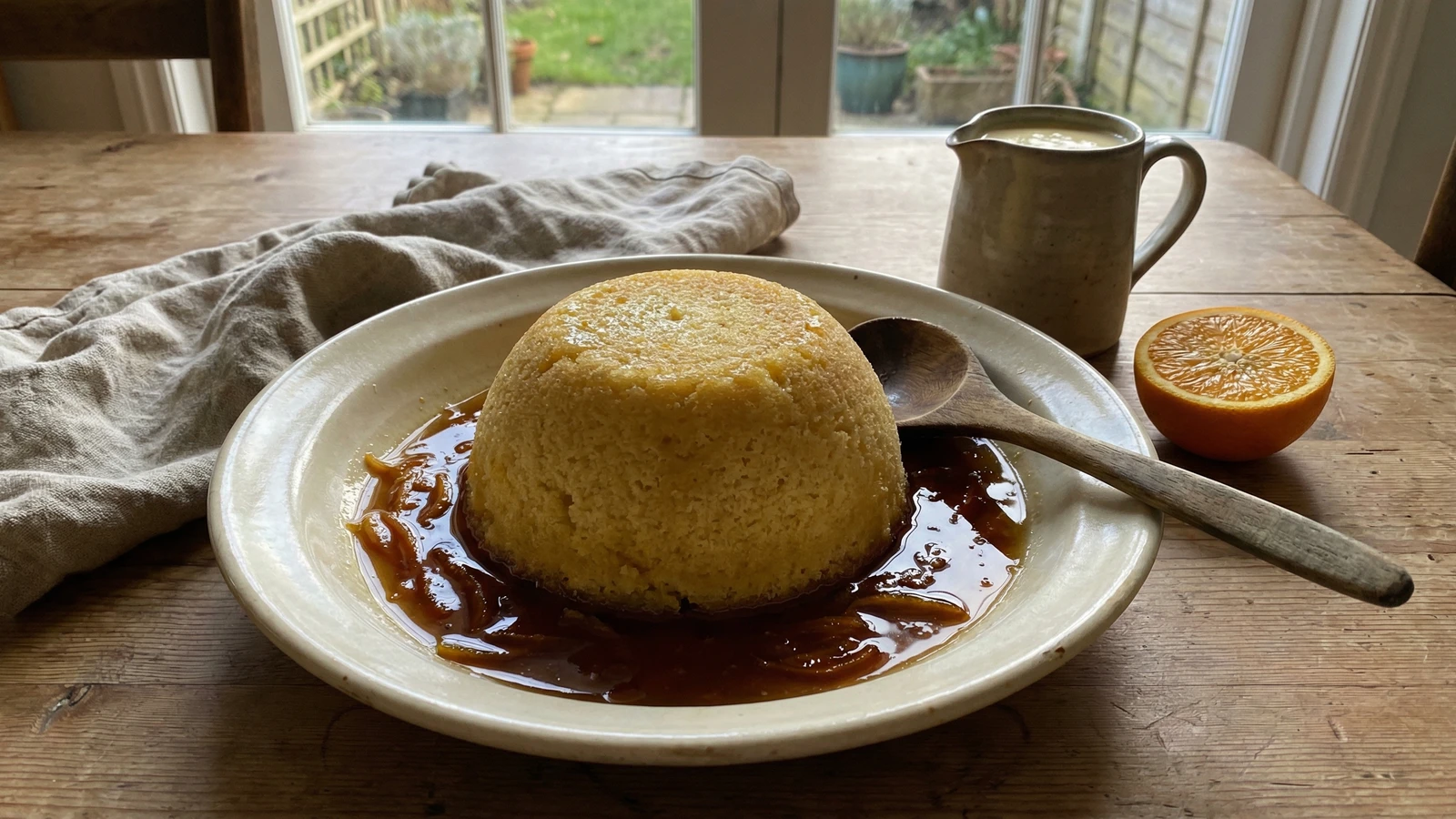
A steamed sponge turned out warm onto a deep plate, marmalade running down the sides in sticky amber rivers, the whole thing smelling of bitter oranges and a January afternoon.
January is the month the Seville oranges arrive. They turn up at the market for a few weeks, knobbly and unlovely, and then they're gone again until next year. Most of them become marmalade. A few of them should become this pudding.
A steamed sponge is an old-fashioned thing, and I know that word makes people nervous, as though it means difficult or fussy or requiring equipment you don't own. It doesn't. You need a pudding basin, some string, a saucepan with a lid, and two hours when you're going to be in the house anyway. That's all. The kitchen does most of the work. You just have to keep the water topped up and not forget it's there.
What you get at the end is worth the small trouble. A light, buttery sponge perfumed with orange zest, sitting on a pool of dark, bittersweet marmalade that has turned almost to syrup in the steam. When you turn it out, the marmalade runs down the sides and soaks into the sponge, and the whole pudding smells of January, of cold windows and hot kitchens, of the short brightness of winter citrus.
I wrote it down in the notebook the first year I made it: Seville oranges. Pudding basin. Rain. That was enough to remember it by.
Quantity
175g
softened, plus extra for the basin
Quantity
175g
Quantity
3
at room temperature
Quantity
175g
Quantity
1 tablespoon
Quantity
1
finely grated zest only
Quantity
6 tablespoons
Quantity
pinch
Quantity
to serve
| Ingredient | Quantity |
|---|---|
| unsalted buttersoftened, plus extra for the basin | 175g |
| golden caster sugar | 175g |
| large eggsat room temperature | 3 |
| self-raising flour | 175g |
| whole milk | 1 tablespoon |
| unwaxed orangefinely grated zest only | 1 |
| thick-cut Seville orange marmalade | 6 tablespoons |
| fine sea salt | pinch |
| double cream or cold custard (optional) | to serve |
Butter a 1-litre pudding basin generously, getting right into the rim and the base. Spoon the marmalade into the bottom of the basin and spread it out roughly with the back of the spoon. It doesn't need to be neat. It'll find its own level when the pudding steams.
In a mixing bowl, beat the soft butter and sugar together until pale and fluffy. This takes longer than you think, four or five minutes with an electric whisk, closer to eight by hand. You're looking for a colour change, from yellow to almost ivory, and a texture that holds the mark of the whisk for a second before settling.
Beat in the eggs one at a time, giving each one a good minute to incorporate before adding the next. If the mixture looks like it's about to curdle, add a spoonful of the flour. Don't panic. A slightly split batter still makes a good pudding; it just won't be quite as light.
Sift the flour and salt over the batter and fold it in gently with a large metal spoon. Add the orange zest and the tablespoon of milk. The finished batter should drop reluctantly from the spoon, what the old books call a soft dropping consistency. If it's stiff, another splash of milk. Trust your eye.
Spoon the batter carefully on top of the marmalade, trying not to disturb it too much. Smooth the top. The basin should be about three-quarters full, no more. The sponge needs room to rise.
Take a sheet of baking parchment and a sheet of foil, layer them together, and make a pleat down the middle. The pleat gives the pudding room to rise without bursting its lid. Lay the paper-and-foil over the basin, paper side down, and tie it tightly around the rim with kitchen string. Trim any excess. A second loop of string across the top makes a handle for lifting it out later, which you'll thank yourself for.
Set the basin in a deep saucepan on an upturned saucer or a folded tea towel. Pour in boiling water from the kettle until it comes two-thirds of the way up the sides of the basin. Cover the pan with a tight-fitting lid and bring to a gentle, steady simmer. Steam for one and three-quarter hours. Check the water level every half hour and top up with more boiling water if it's dropped. The pan should never run dry.
Lift the basin out carefully and set it on a board. Remove the string and the paper. The top of the sponge should be risen, pale gold, and springy when you press it. Run a small knife around the edge. Place a deep plate on top, invert, and give it a firm shake. The pudding should slide out with the marmalade running down the sides in sticky amber rivers. Serve at once, with double cream or cold custard.
1 serving (about 140g)
Culinary guides, cultural storytelling, and the editorial depth that makes cooking meaningful.
Discover Culinary ExplorerChef Thomas
Buttered bread baked to a deep mahogany around a filling of spiced Bramley apples, turned out at the table in a small moment of drama, cold cream poured from a jug alongside.

Chef Thomas
Whole Bramley apples cored and stuffed with butter, brown sugar and plump dried fruit, baked until they collapse and the kitchen fills with the smell of autumn getting on with itself.

Chef Thomas
A proper baked rice pudding, slow-cooked in whole milk with butter and nutmeg until the top sets into a freckled golden skin. The kind of pudding that makes January feel like less of a long haul.

Chef Thomas
Wild blackberries and Bramley apples collapsed together under a thick, sandy crumble, the pudding that makes September feel like it's worth staying in for.