
Chef Takumi
Aji Fry (アジフライ, panko-fried horse mackerel)
Aji fry is weeknight fish with no mystery: fresh horse mackerel opened cleanly, breaded lightly, and fried until the panko crackles while the flesh stays sweet.
A cooking platform built around craft, culture, and the stories behind what we eat.
Created by
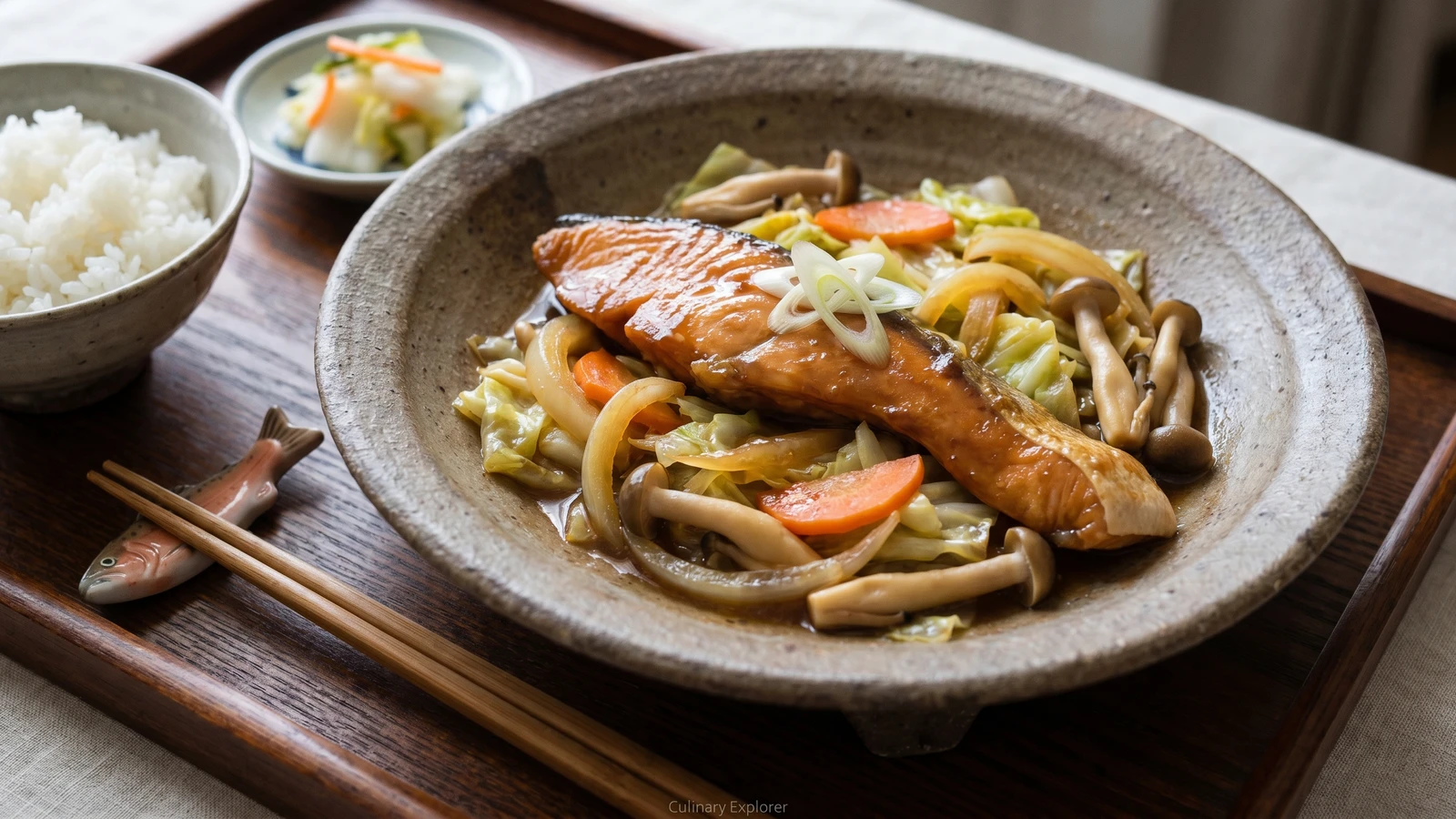
Hokkaido salmon, cabbage, mushrooms, sweet miso, and a small knob of butter cook together under a lid until the fish flakes and the vegetables drink the sauce.
Chan-chan-yaki begins with autumn salmon. Not a delicate little fillet fussed over with tweezers, but a sturdy piece of fish laid over cabbage and onions, then covered and cooked until everything gives itself to the miso. This is Hokkaido comfort food, fisherman food, and it has the good manners to be ready on a weeknight.
The method is simple, though people make it sound larger because an iron plate is involved. We brown the salmon first so the skin and surface take on flavor, then we set the vegetables beneath it and cover the pan. The lid matters. It traps the moisture from the cabbage and onion, so the fish steam-grills rather than dries, and the miso sauce loosens into every fold without needing a heavy hand.
The one detail that decides it is the miso. It should be sweet-salty and loose enough to spread, not so thick that it sits on top like paste. Red or blended miso gives the dish backbone, sake wakes it up, mirin and a little sugar round it, and butter at the end belongs here, especially in Hokkaido. Nothing hidden. If the salmon is glistening fresh and in its 旬 (shun), at its prime, the sauce is there to carry it, not bury it.
Chan-chan-yaki is a local dish of Hokkaido fishing communities, especially tied to the autumn salmon catch along the island's coasts. Its name has several folk explanations, including that it can be made quickly, chanchan, or that the spatulas ring against the iron griddle as the fish and vegetables are mixed. In 2007 it was selected for Japan's national list of representative rural, mountain, and fishing-village dishes, which helped fix it in print as a Hokkaido standard.
Quantity
4 fillets (about 150g each)
skin-on if possible
Quantity
1/2 teaspoon
Quantity
1/2 small head (about 500g)
cut into broad bite-size pieces
Quantity
1
thinly sliced
Quantity
1
cut into thin half-moons
Quantity
150g
trimmed and separated
Quantity
4 tablespoons
red or blended miso preferred
Quantity
2 tablespoons
Quantity
2 tablespoons
Quantity
1 tablespoon
Quantity
1 tablespoon
Quantity
1 tablespoon
Quantity
30g
Quantity
2
thinly sliced
| Ingredient | Quantity |
|---|---|
| salmon filletsskin-on if possible | 4 fillets (about 150g each) |
| sea salt | 1/2 teaspoon |
| cabbagecut into broad bite-size pieces | 1/2 small head (about 500g) |
| onionthinly sliced | 1 |
| carrotcut into thin half-moons | 1 |
| shimeji mushroomstrimmed and separated | 150g |
| misored or blended miso preferred | 4 tablespoons |
| sake | 2 tablespoons |
| mirin | 2 tablespoons |
| sugar | 1 tablespoon |
| soy sauce | 1 tablespoon |
| neutral oil | 1 tablespoon |
| unsalted butter | 30g |
| scallions (optional)thinly sliced | 2 |
Sprinkle the salmon lightly with the sea salt and let it stand for ten minutes while you cut the vegetables. The salt draws out a little surface moisture and firms the flesh, so the fish browns cleanly instead of steaming the moment it touches the pan. Pat it dry before cooking.
Stir together the miso, sake, mirin, sugar, and soy sauce until smooth and spreadable. It should fall slowly from a spoon. If it is stiff, add another teaspoon of sake, because thick miso stays in lumps while loose miso melts into the cabbage and mushrooms.
Heat a large iron griddle, cast-iron skillet, or wide heavy frying pan over medium heat and add the oil. Lay the salmon skin-side down if it has skin, and cook for two to three minutes until the underside takes color. This first browning gives the fish a roasted edge before the covered cooking begins.
Lift the salmon briefly to a plate. Spread the cabbage, onion, carrot, and shimeji in the pan, keeping the mound higher in the center rather than flattened out. Put the salmon back on top. The vegetables are not only a side here, they are the cooking cushion, releasing enough moisture to protect the fish.
Spoon the miso mixture over the salmon and vegetables, then cover the pan tightly. Cook over medium-low heat for ten to twelve minutes, until the salmon flakes at the thickest part and the cabbage has softened but still has a little bite. Keep the heat modest. Too hot, and the miso scorches before the vegetables have time to give up their moisture.
Dot the butter over the hot salmon and vegetables, cover for one more minute, then open the pan and gently fold the edges of the miso sauce into the vegetables. Do not beat the fish to pieces. Serve from the pan or lift each portion onto warm plates with the salmon sitting over its cabbage and mushrooms.
1 serving (about 365g)
Culinary guides, cultural storytelling, and the editorial depth that makes cooking meaningful.
Discover Culinary ExplorerChef Takumi
Aji fry is weeknight fish with no mystery: fresh horse mackerel opened cleanly, breaded lightly, and fried until the panko crackles while the flesh stays sweet.
Chef Takumi
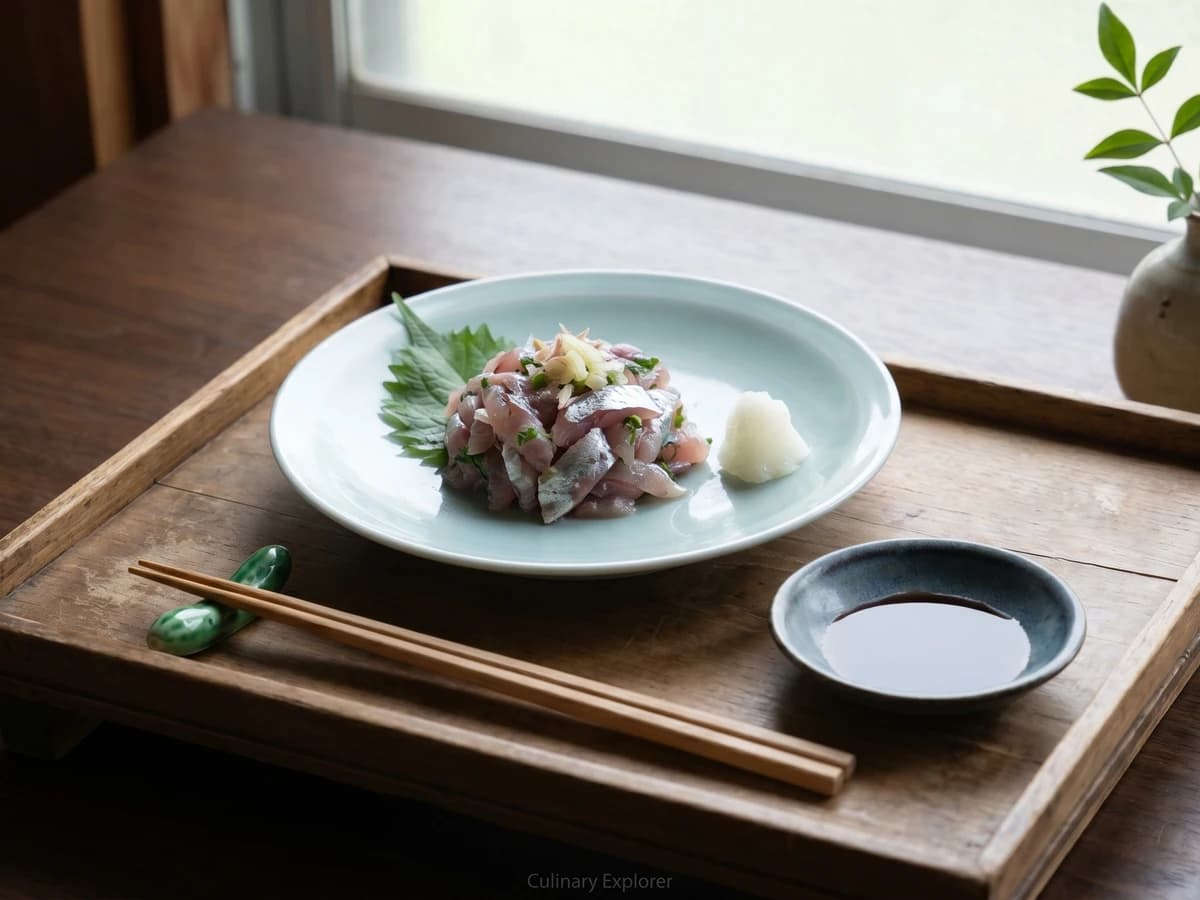
Summer horse mackerel, chopped just enough to catch ginger and scallion, becomes a cool, clean main dish with rice. The secret is fresh fish and a knife that does not bruise it.
Chef Takumi
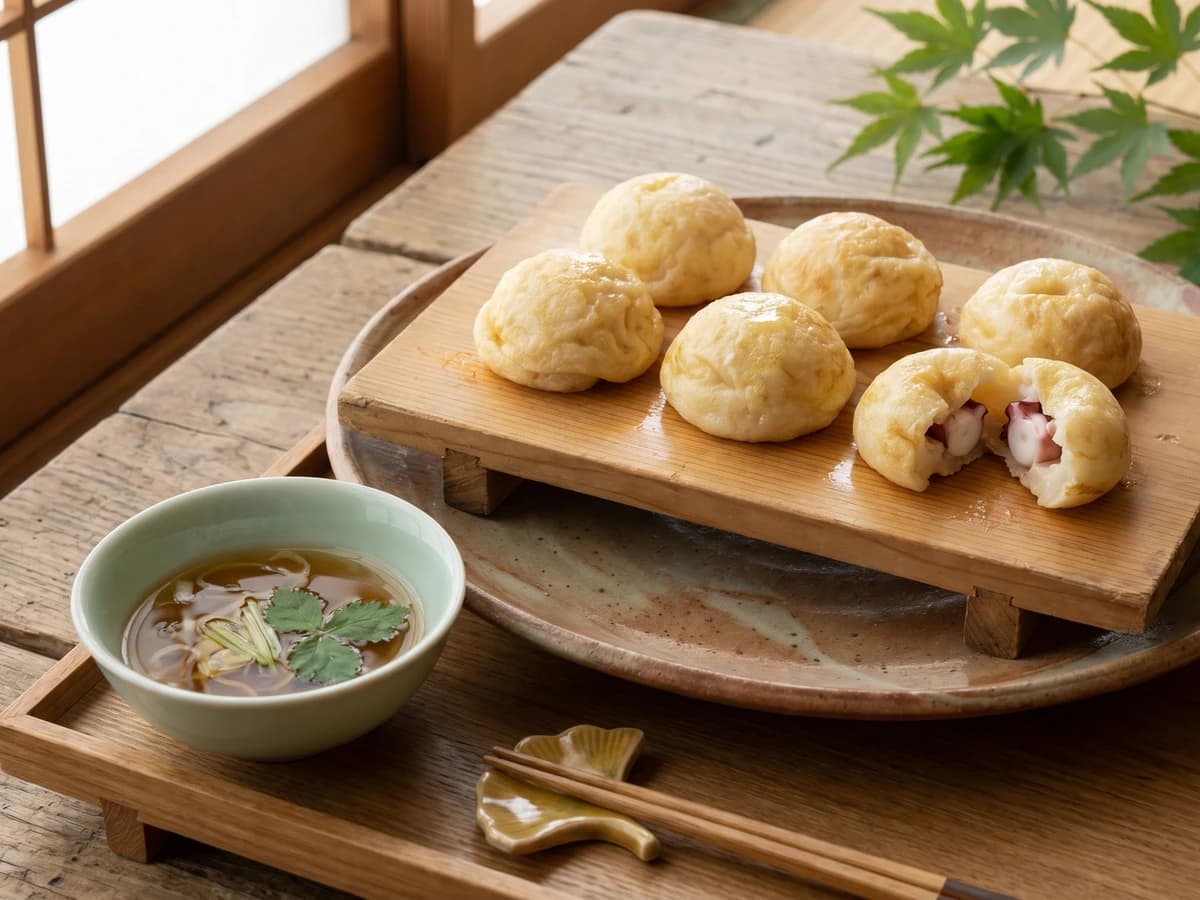
Akashi-yaki is not sauced takoyaki. It is egg-rich batter, tender octopus, and clear dashi, cooked pale and soft so each ball can be dipped like a small custard dumpling.

Chef Takumi
A whole anago looks like a test of nerve. It is mostly good sourcing, a dry skin, cold batter, and oil hot enough to leave the eel sweet under its lace.