
Chef Makoa
Ahimaʻa Puaʻa (Tahitian Earth-Oven Pork)
Tahitian puaʻa cooked in the spirit of the ahimaʻa, the earth oven of maʻa Tahiti, wrapped in banana leaf and held low and slow until the meat gives in two fingers.
A cooking platform built around craft, culture, and the stories behind what we eat.

Created by
A Papeʻete roulotte plate for the home stove: seared New Zealand steak, a mountain of crisp fries, and the French sauce Tahiti made its own.
The canoe brought the deep foods first, the taro and ʻuru, the fish and the fire, one ocean, one canoe, one root. But the table kept living after that. In Tahiti, the fenua, the land, still holds the old maʻa, the food, and Papeʻete at night also feeds people from roulottes, those little food trucks and trailers where the whole city sits down under lights and eats something hot, salty, and honest.
This one belongs to Tahiti as it eats now: steak frites tahitien, beef often coming down from Aotearoa, seared hard on the grill or pan, with fries piled high and a French roquefort or pepper sauce poured over like nobody is counting. It's not the ahimaʻa, the Tahitian earth oven, and it's not trying to be. Deep food is deep food. Weeknight food is weeknight food. Both can carry people.
The cousins know this kind of plate too. Hawaiʻi has the plate lunch, Sāmoa has sapasui and corned beef on the table, Tonga has its modern feast food beside the lū, and Aotearoa sends beef and lamb back across the ocean. Keeper, not gatekeeper, yeah? Eat what you have, cook it well, and name whose island taught you the plate.
The roulotte culture of Papeʻete grew from French colonial and urban Tahitian life, with mobile trailers serving Chinese-Tahitian, French, and local plates around the waterfront and public squares at night. Steak frites points straight to France, but the beef supply often ties Tahiti to Aotearoa and the wider Pacific trade routes that now feed the islands. It sits on the post-contact side of the table, not deep food like ʻuru, taro, raw fish, or the ahimaʻa, but it is still part of how Tahiti eats today.
Quantity
2 (10 to 12 ounces each)
Quantity
1 1/2 teaspoons
divided
Quantity
1 teaspoon
plus more for sauce
Quantity
1 tablespoon
for searing steaks
Quantity
1 tablespoon
Quantity
2
lightly crushed
Quantity
2 pounds
cut into 1/2-inch fries
Quantity
2 to 3 quarts
Quantity
1 tablespoon
Quantity
1 small
finely minced
Quantity
1 tablespoon
cracked
Quantity
1/4 cup
Quantity
3/4 cup
Quantity
1 teaspoon
Quantity
3/4 cup
Quantity
2 ounces
crumbled
Quantity
1 teaspoon
Quantity
small handful
chopped
| Ingredient | Quantity |
|---|---|
| New Zealand grass-fed ribeye, sirloin, or strip steaks | 2 (10 to 12 ounces each) |
| coarse sea saltdivided | 1 1/2 teaspoons |
| freshly cracked black pepperplus more for sauce | 1 teaspoon |
| neutral oilfor searing steaks | 1 tablespoon |
| unsalted butter | 1 tablespoon |
| garlic cloveslightly crushed | 2 |
| russet or agria potatoescut into 1/2-inch fries | 2 pounds |
| frying oil | 2 to 3 quarts |
| butter for pepper sauce | 1 tablespoon |
| shallotfinely minced | 1 small |
| green or black peppercornscracked | 1 tablespoon |
| beef stock | 1/4 cup |
| heavy cream for pepper sauce | 3/4 cup |
| Dijon mustard | 1 teaspoon |
| heavy cream for roquefort sauce | 3/4 cup |
| roquefort or other blue cheesecrumbled | 2 ounces |
| lemon juice | 1 teaspoon |
| parsley or chives (optional)chopped | small handful |
Pat the steaks dry and salt them on both sides with about 1 teaspoon of the sea salt. Let them sit at room temperature while you cut and soak the potatoes, 30 minutes if you have it. The surface should look a little wet at first, then tacky and ready for the pan.
Cut the potatoes into half-inch fries and soak them in cold water for at least 20 minutes, swishing once or twice until the water clouds up. Drain and dry them hard with towels. Wet potatoes make tired fries, and nobody waited at a Papeʻete roulotte for that.
Heat the frying oil in a heavy pot to 325F. Fry the potatoes in batches for 4 to 5 minutes, just until pale and flexible, not browned. Lift them to a rack and let them rest while you make the sauce and cook the steaks.
For pepper sauce, melt 1 tablespoon butter in a small pan, soften the shallot, then add the cracked peppercorns. Pour in the beef stock and reduce by half, then add the cream and Dijon and simmer until glossy enough to coat a spoon. For roquefort sauce, warm the cream gently, whisk in the cheese until melted and smooth, then sharpen it with lemon juice. Pick one sauce for the plate, the way the roulotte asks you at the window.
Heat a cast-iron pan or grill pan until very hot. Rub the steaks with neutral oil, season with black pepper, and sear 3 to 4 minutes per side for medium-rare, depending on thickness. Add the butter and crushed garlic for the last minute and spoon the glossy butter over the meat. Rest the steaks 5 to 8 minutes so the juices settle back where they belong.
Raise the oil to 375F and fry the potatoes again in batches until golden, crisp at the edges, and fluffy inside, 2 to 3 minutes. Drain on a rack, salt right away, and keep them loose so they don't soften under their own heat.
Set each steak on a plain plate or wooden board, pour the pepper or roquefort sauce over the top, and pile the fries high beside it. Finish with parsley or chives if you're using them. This is Tahiti's night plate: French sauce, Pacific beef, fries enough for two hands, and no need make it precious.
1 serving (about 820g)
Culinary guides, cultural storytelling, and the editorial depth that makes cooking meaningful.
Discover Culinary ExplorerChef Makoa
Tahitian puaʻa cooked in the spirit of the ahimaʻa, the earth oven of maʻa Tahiti, wrapped in banana leaf and held low and slow until the meat gives in two fingers.
Chef Makoa
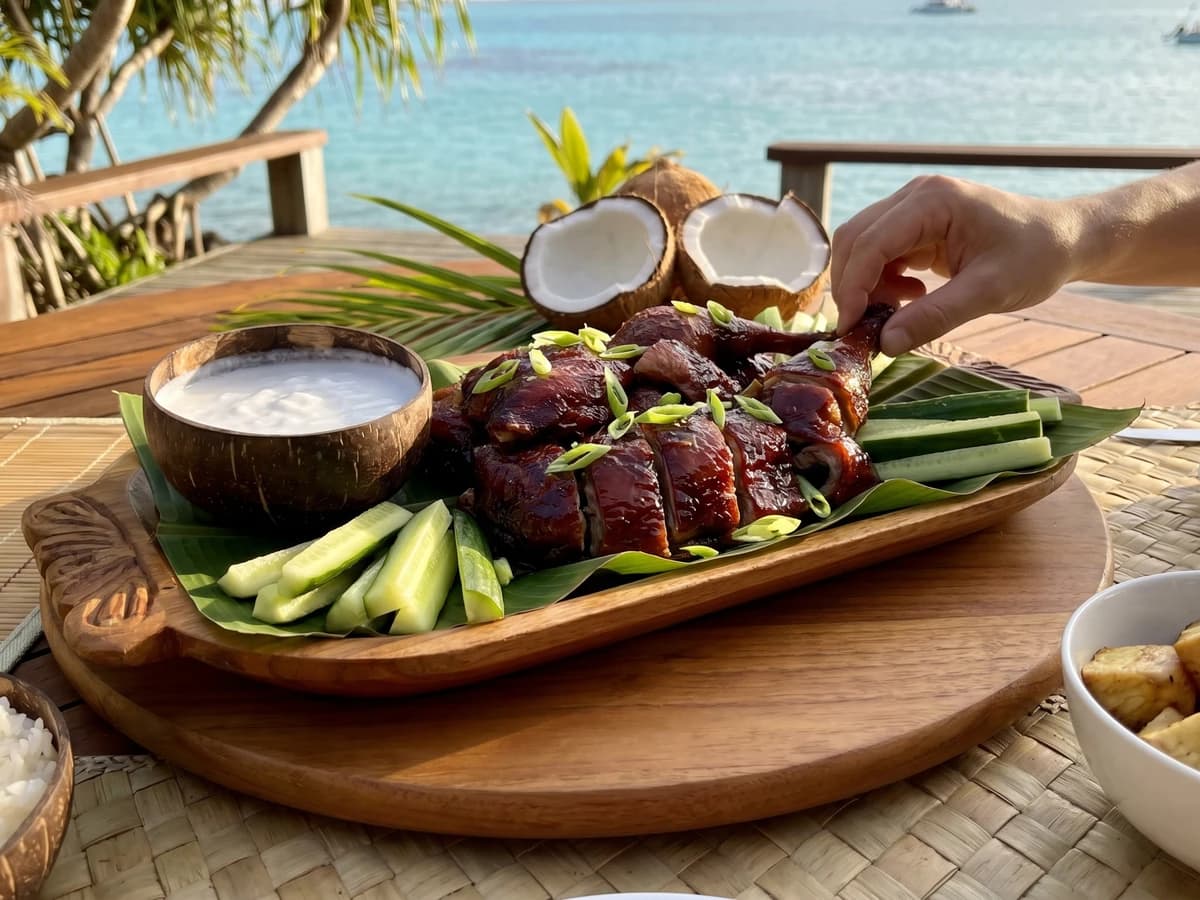
Glossy Chinese-Tahitian roast duck from Papeʻete, lacquered with soy, honey, and five-spice, carved for the lazy Susan, then dipped into thick fresh coconut milk beside rice, ʻuru, and a crowded table.
Chef Makoa
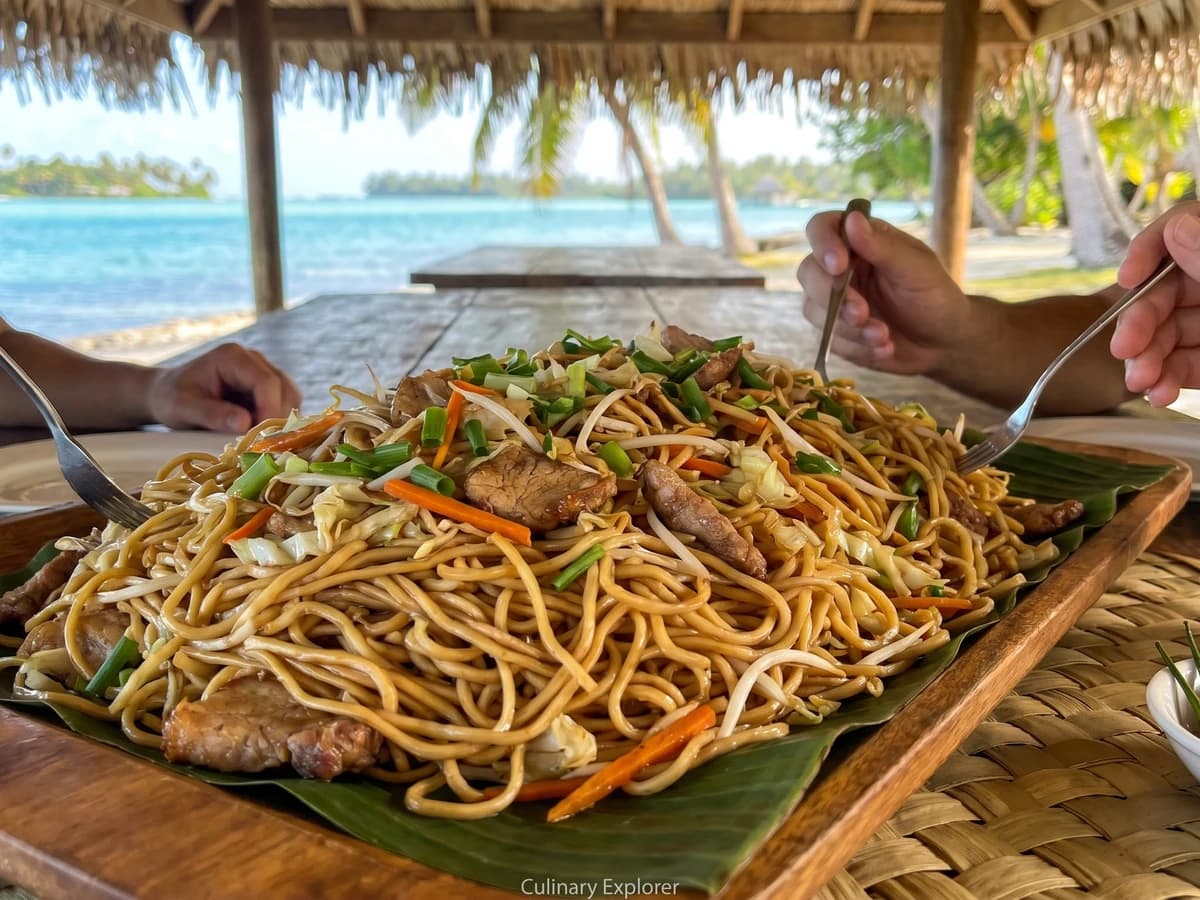
Tahiti's chao men is Hakka chow mein made fully local: glossy egg noodles, pork, cabbage, carrot, and green onion, fast from the wok and generous enough for the table.

Chef Makoa
Tahiti's fāfaru takes raw ʻahi into miti fāfaru, a pungent fermented seawater brine, then brings it back to the table with mitihue, breadfruit, and the lesson that good funk is food kept alive.