
Chef Thomas
A Proper Roast Chicken
A whole bird rubbed with butter, stuffed with lemon and thyme, roasted until the skin crackles and the kitchen smells like the kind of evening you want to sit down and stay in.
A cooking platform built around craft, culture, and the stories behind what we eat.
Created by Chef Thomas
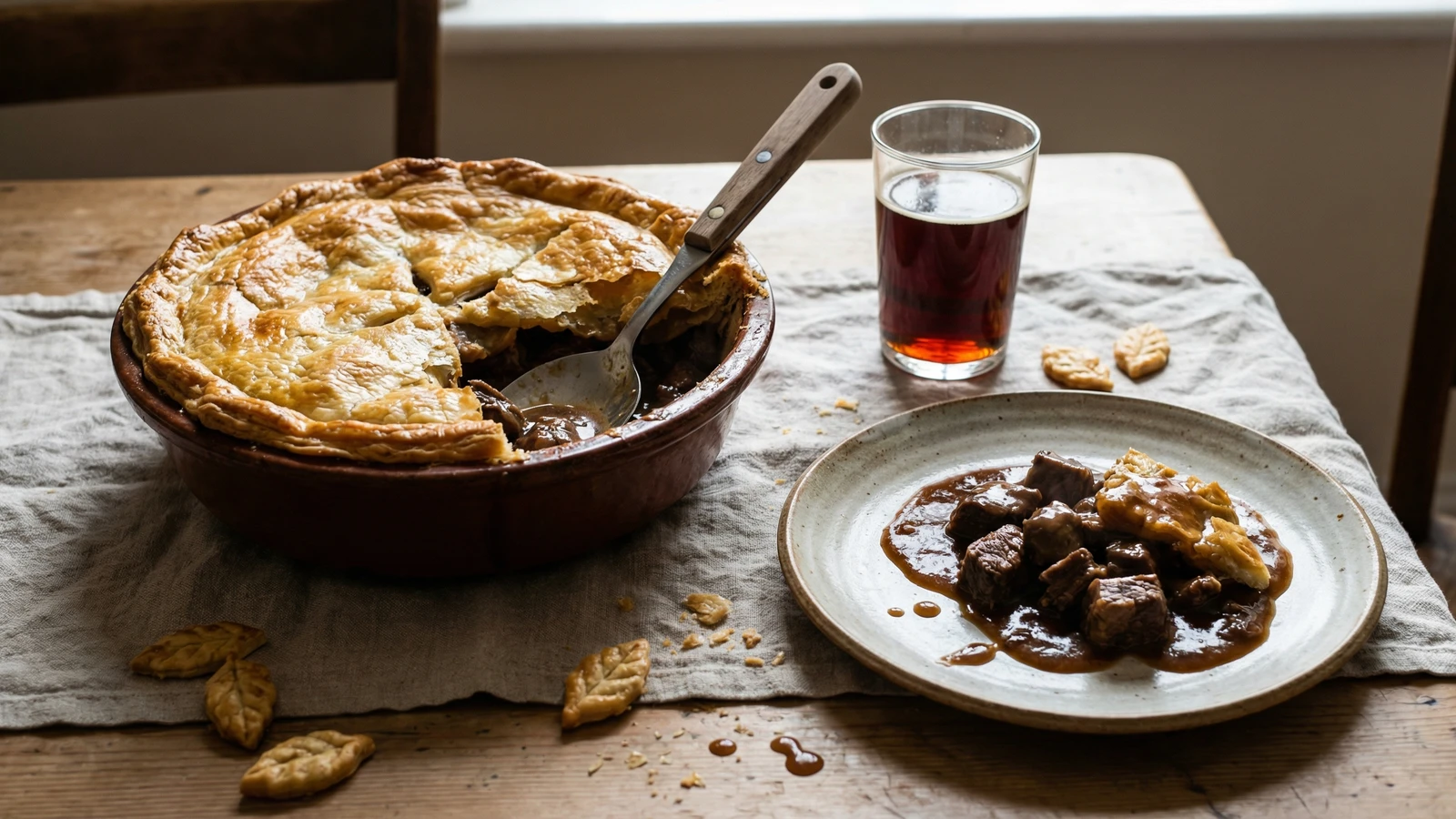
Beef braised long and slow in dark ale until the gravy turns thick and glossy, then sealed under a puff pastry lid and baked until the kitchen smells like a cold evening made good.
January. The sort of evening where the light goes at four o'clock and the wind finds every gap in the window frame. This is when a pie earns its place. Not as a project, not as a performance, but as the quiet, solid thing you put in the middle of the table that makes the whole week feel a bit more manageable.
The filling is the thing. Beef, cut into honest chunks and browned until the pan looks like it means business. Onions, carrots, mushrooms, all softened in the sticky residue the meat leaves behind. Then the ale goes in, and the kitchen changes. That deep, malty smell, almost sweet, filling every corner of the room. Two hours of doing nothing while the oven does everything. The gravy thickens. The meat gives way. You taste it, and you know.
I use puff pastry from the shop. I'm not ashamed of this. Life is short, and a good all-butter puff pastry does the job as well as anything I could make in twice the time. The lid goes on, the oven goes up, and thirty minutes later the pastry has puffed golden and the filling is bubbling through the little vent in the top. I wrote it down in the notebook once: pie, dark ale, Tuesday, rain. Right food, right evening.
A recipe is a conversation, not a contract. If you want to add a parsnip, add a parsnip. If you've only got a pale ale, use it. The principle is simple: brown the meat well, choose an ale you'd happily drink, give it time, and trust the oven. We're only making dinner.
Quantity
800g
cut into generous chunks
Quantity
2 tablespoons
seasoned with salt and pepper
Quantity
30g
Quantity
1 tablespoon
Quantity
2 large
halved and thickly sliced
Quantity
2
peeled and cut into thick coins
Quantity
2 sticks
sliced
Quantity
200g
quartered
Quantity
3 cloves
crushed
Quantity
500ml
Quantity
250ml
Quantity
2 tablespoons
Quantity
2
Quantity
4 sprigs
Quantity
1 sheet
Quantity
1
beaten
Quantity
to taste
Quantity
to taste
| Ingredient | Quantity |
|---|---|
| beef chuck or shincut into generous chunks | 800g |
| plain flourseasoned with salt and pepper | 2 tablespoons |
| unsalted butter | 30g |
| olive oil | 1 tablespoon |
| onionshalved and thickly sliced | 2 large |
| carrotspeeled and cut into thick coins | 2 |
| celerysliced | 2 sticks |
| chestnut mushroomsquartered | 200g |
| garliccrushed | 3 cloves |
| good dark ale | 500ml |
| beef stock | 250ml |
| Worcestershire sauce | 2 tablespoons |
| bay leaves | 2 |
| fresh thyme | 4 sprigs |
| all-butter puff pastry | 1 sheet |
| eggbeaten | 1 |
| fine sea salt | to taste |
| black pepper | to taste |
Toss the beef chunks in the seasoned flour, shaking off any excess. Get a heavy casserole pan properly hot with the butter and oil. Brown the meat in batches, giving each piece enough room to colour rather than steam. You're looking for a deep, dark crust on all sides, the kind that smells of something serious happening. Don't crowd the pan. Two or three batches is fine. Set the browned beef aside on a plate.
Turn the heat down. Add the onions to the same pan with the sticky, dark residue left by the meat. That's flavour. Don't wash it away. Stir the onions through and let them soften for eight to ten minutes until they're translucent and sweet. Add the carrots, celery, mushrooms, and garlic. Cook for another five minutes until everything has relaxed and the mushrooms have given up their moisture.
Return the beef to the pan. Pour in the ale and let it bubble for a minute, scraping up anything stuck to the bottom. That's where the gravy starts. Add the stock, Worcestershire sauce, bay leaves, and thyme. The liquid should come almost to the top of the meat but not cover it entirely. Bring to a gentle simmer, put the lid on, and forget about it for two hours. Check once, halfway through, to make sure it's barely ticking over, not rolling. You want the surface to tremble, nothing more.
After two hours, the meat should yield to a spoon without resistance. Take the lid off, remove the bay leaves and thyme stalks, and let the gravy simmer uncovered for fifteen to twenty minutes until it thickens into something dark and glossy that coats the back of a spoon. Season with salt and pepper. Taste it. This is the heart of the pie, so get it right. Let the filling cool completely before assembling.
Set the oven to 200C/180C fan. Spoon the cooled filling into a deep pie dish, mounding it slightly in the centre to support the pastry. Roll the puff pastry out just enough to cover the dish with an overhang. Brush the rim of the dish with beaten egg, drape the pastry over, and press the edges down firmly with a fork. Trim any excess. Cut a small cross in the centre to let steam escape. Brush the whole top with beaten egg.
Bake for thirty to thirty-five minutes, until the pastry has puffed up proud and golden and the filling is bubbling through the steam vent in the centre. The kitchen will smell of ale and butter and something you'll want to write down. Let it sit for five minutes before bringing it to the table. Serve it straight from the dish with a big spoon, onto warm plates, alongside whatever greens you have.
1 serving (about 370g)
Culinary guides, cultural storytelling, and the editorial depth that makes cooking meaningful.
Discover Culinary ExplorerChef Thomas
A whole bird rubbed with butter, stuffed with lemon and thyme, roasted until the skin crackles and the kitchen smells like the kind of evening you want to sit down and stay in.

Chef Thomas
Eggs bedded into leek-flecked mash under a blanket of sharp cheese sauce, baked until golden and bubbling. A Welsh supper dish that proves the simplest things are usually the best.

Chef Thomas
A cold evening carbonara made with good smoked back bacon, eggs, Parmesan, and more black pepper than seems reasonable, tossed together in the time it takes to boil the pasta.

Chef Thomas
Thick bacon chops, bronzed in butter and slicked with a mustard and honey glaze that catches and caramelises under a hot grill. Twenty minutes, two plates, a very good Tuesday.