
Chef Thomas
A Proper Roast Chicken
A whole bird rubbed with butter, stuffed with lemon and thyme, roasted until the skin crackles and the kitchen smells like the kind of evening you want to sit down and stay in.
A cooking platform built around craft, culture, and the stories behind what we eat.
Created by Chef Thomas
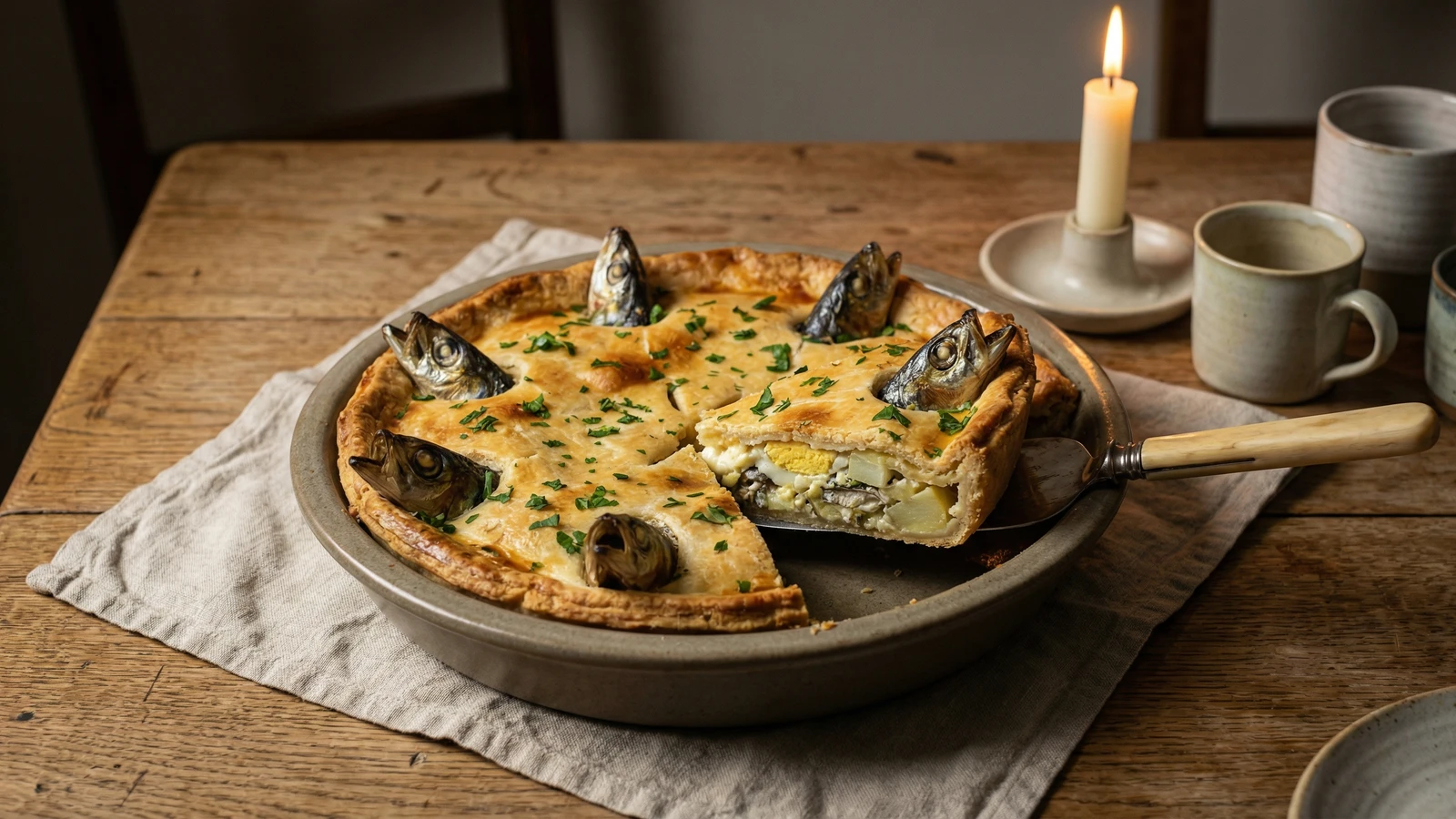
A Cornish pie with sardine heads gazing through golden pastry, strange and storied and full of mustard cream. The kind of dish that starts a conversation before anyone picks up a fork.
December. The shortest days. A fishing village on the Cornish coast, Mousehole, where the harbour is small and the weather is not kind. The story goes that one winter the storms were so bad nobody could fish, and the village was starving. Tom Bawcock went out alone, came back with a catch, and someone baked it into a pie with the fish heads poking through the crust so everyone could see there was food enough. That was centuries ago. They still make the pie every year on the 23rd of December, Tom Bawcock's Eve, and carry it through the village with the lanterns lit.
I'm not Cornish. This isn't my tradition to claim. But I've made this pie a few times when the winter has set in properly, and there's something about it that gets under the skin. The fish heads, yes. They look peculiar, poking up through the pastry like they're watching the stars. That's the point. The pie is meant to look like abundance, like proof that the sea provided. It's a pie that tells a story before anyone cuts into it.
Inside, it's gentler than you'd expect. Soft onions, sliced potatoes, chopped hard-boiled eggs, a mustard cream that sharpens everything just enough. The sardines bake into the filling and go tender and rich. It's a proper winter pie, the kind that belongs on a dark evening with the curtains drawn and candles on the table. Right food, right evening.
A recipe is a conversation, not a contract. If you can't get pilchards, use the freshest sardines your fishmonger has. If mustard feels too strong, use less. The fish heads are non-negotiable, though. Without them, it's just a fish pie. With them, it's something worth writing down.
Quantity
6-8
gutted, heads and tails left on
Quantity
about 400g
Quantity
3
hard-boiled and roughly chopped
Quantity
2 medium
peeled and thinly sliced
Quantity
1 medium
finely sliced
Quantity
small bunch
chopped
Quantity
150ml
Quantity
1 tablespoon
Quantity
half
juiced
Quantity
30g
Quantity
to taste
Quantity
to taste
Quantity
1
beaten, for glazing
| Ingredient | Quantity |
|---|---|
| whole fresh sardines or pilchardsgutted, heads and tails left on | 6-8 |
| shortcrust pastry | about 400g |
| eggshard-boiled and roughly chopped | 3 |
| waxy potatoespeeled and thinly sliced | 2 medium |
| onionfinely sliced | 1 medium |
| flat-leaf parsleychopped | small bunch |
| double cream | 150ml |
| English mustard | 1 tablespoon |
| lemonjuiced | half |
| unsalted butter | 30g |
| fine sea salt | to taste |
| black pepper | to taste |
| eggbeaten, for glazing | 1 |
Lay the sardines on a board. They should be gutted but whole, heads and tails still attached. Run a finger along the backbone from the inside and ease it out, working from head to tail. It comes away more willingly than you'd expect. Leave the head and tail connected to the flesh. You want the bones out but the fish intact, a little pouch ready for filling. Rinse them gently and pat dry. Season inside with salt, pepper, and a squeeze of lemon.
Melt the butter in a wide pan over a gentle heat. Add the sliced onion and let it soften for eight to ten minutes, stirring now and then, until it's translucent and sweet with no colour. Add the potato slices, season with salt, and cook for another five minutes until they're just starting to give when pressed with a spoon. They don't need to be cooked through. The oven will finish them. Take the pan off the heat and stir in the chopped eggs and most of the parsley, keeping a little back for later.
Whisk the cream with the mustard and the rest of the lemon juice. Season well. It should taste sharp and warm, a little more punchy than you think it needs. The fish and pastry will absorb and mellow it. This is the sauce that holds everything together inside the pie, so don't be timid with the mustard.
Set the oven to 200C/180C fan. Roll out just over half the pastry on a floured surface and use it to line a shallow pie dish, about 24cm across, leaving the edges overhanging. Don't stretch it. Pastry has a memory and it will shrink back if you force it. Spoon the onion, potato, and egg filling into the dish and spread it evenly. Pour the mustard cream over the top.
Lay the boned sardines on top of the filling like the spokes of a wheel, tails pointing toward the centre, heads at the rim. The heads need to sit right at the edge of the dish, poking outward. This is the whole point. When the lid goes on, those heads will push through and gaze up at whoever is sitting at the table. It looks odd. It's supposed to.
Roll out the remaining pastry for the lid. Drape it over the filling, carefully cutting small slits around each fish head so they poke through the crust. Press the pastry down around each head gently, sealing it against the fish's neck. Trim the edges and crimp them together with a fork or your fingers, whatever feels natural. Brush the whole lid with beaten egg. It should look golden and burnished when it comes out, so be generous with the glaze.
Bake for thirty-five to forty minutes until the pastry is deep gold and the kitchen smells of butter and fish and mustard, a smell that is better than it sounds. The cream inside will be bubbling gently. You might see it seeping at the edges. That's fine. Let the pie rest for ten minutes before bringing it to the table. It needs that time, and so does the pastry.
1 serving (about 230g)
Culinary guides, cultural storytelling, and the editorial depth that makes cooking meaningful.
Discover Culinary ExplorerChef Thomas
A whole bird rubbed with butter, stuffed with lemon and thyme, roasted until the skin crackles and the kitchen smells like the kind of evening you want to sit down and stay in.

Chef Thomas
Eggs bedded into leek-flecked mash under a blanket of sharp cheese sauce, baked until golden and bubbling. A Welsh supper dish that proves the simplest things are usually the best.

Chef Thomas
A cold evening carbonara made with good smoked back bacon, eggs, Parmesan, and more black pepper than seems reasonable, tossed together in the time it takes to boil the pasta.

Chef Thomas
Thick bacon chops, bronzed in butter and slicked with a mustard and honey glaze that catches and caramelises under a hot grill. Twenty minutes, two plates, a very good Tuesday.