
Chef Thomas
A Proper Bacon Sandwich
Back bacon in a hot pan, good white bread, soft salted butter. Ten minutes between waking up and the first bite of something that makes the morning make sense.
A cooking platform built around craft, culture, and the stories behind what we eat.
Created by Chef Thomas
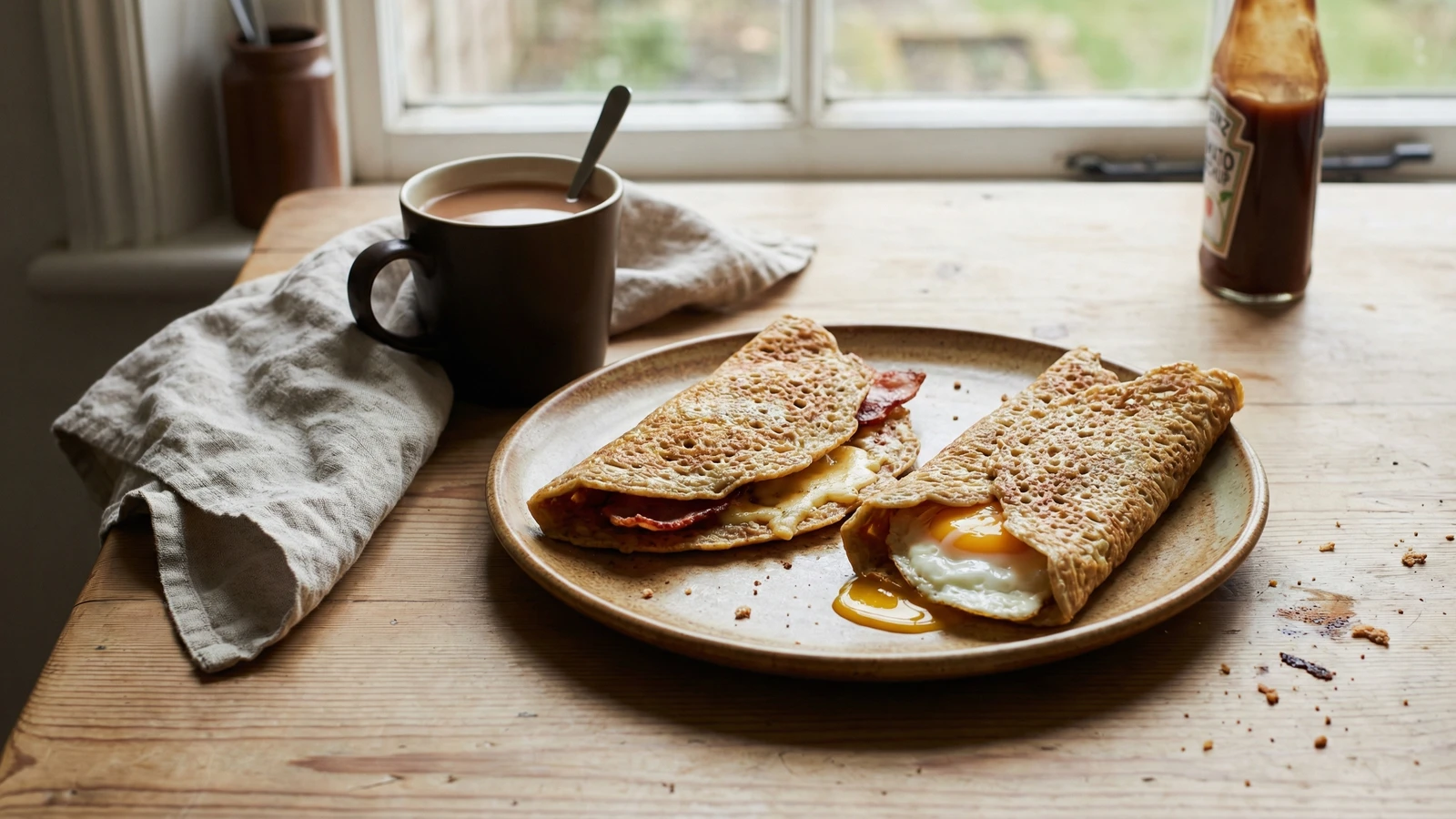
Soft, savoury oat pancakes from the Potteries, filled with melting cheese and good bacon, the kind of Saturday morning cooking that turns a kitchen into the warmest room in the house.
Saturday morning. The kitchen is cold because you haven't been in it long enough yet. The kettle goes on first. Then the batter, which you mixed an hour ago and left under a tea towel, gets a stir. It's frothy and alive, smelling of yeast and oats, ready to become something.
Staffordshire oatcakes are a quiet piece of regional genius. If you didn't grow up in the Potteries, you might never have heard of them, which is a shame, because they're one of the best things you can make for a weekend breakfast with almost no effort. Soft, savoury pancakes made from oatmeal, flour, and yeast, cooked thin on a griddle and filled with whatever you like. Cheese and bacon is the classic. Cheese alone is enough. An egg if you're feeling generous.
They aren't the same as Scottish oatcakes, which are firm, dry, biscuit-like things. These are soft and pliable, closer to a crêpe, with a lacy edge and a gentle tang from the yeast. In Stoke-on-Trent, you can still buy them from oatcake shops, handed through a hatch, stacked in half-dozens. Outside of North Staffordshire, you have to make your own. It's not difficult. The batter takes five minutes. The resting does itself.
I wrote it down in the notebook years ago after a weekend in the Potteries: oatmeal, yeast, cheese, bacon, Saturday. The recipe hasn't changed because it doesn't need to. Some things arrive already right.
Quantity
125g
Quantity
125g
Quantity
7g sachet
Quantity
1/2 teaspoon
Quantity
300ml
Quantity
150ml
Quantity
a little
for the pan
Quantity
8 rashers
Quantity
150g
grated
Quantity
4
for filling
| Ingredient | Quantity |
|---|---|
| fine oatmeal | 125g |
| plain flour | 125g |
| fast-action dried yeast | 7g sachet |
| fine sea salt | 1/2 teaspoon |
| warm milk | 300ml |
| warm water | 150ml |
| butter or oilfor the pan | a little |
| smoked back bacon | 8 rashers |
| mature Cheddargrated | 150g |
| eggs (optional)for filling | 4 |
Put the oatmeal, flour, yeast, and salt in a large bowl and stir them together. Make a well in the centre and pour in the warm milk and water. The liquid should be blood-warm, comfortable on the inside of your wrist, not hot. Whisk it all together until you have a smooth, thin batter, like single cream. It will feel too runny. That's right. Cover the bowl with a tea towel and leave it somewhere warm for an hour. The yeast needs time to work. When you come back, the surface should be frothy and alive, smelling faintly of bread.
After an hour, give the batter a good stir. It should pour like thin cream. If it has thickened (oatmeal can absorb liquid as it sits), add a splash more warm water until the consistency is right. The batter should coat a spoon but run off it freely. Too thick and the oatcakes will be stodgy. Too thin and they'll tear when you flip them. You'll know after the first one.
Heat a large non-stick frying pan or flat griddle over a medium heat. Rub it with a little butter or oil, just a thin film. Pour in a ladleful of batter and tilt the pan to spread it out thinly, the way you would a crêpe. It should cover the base of the pan in a thin, even layer. Cook for two to three minutes until the underside is golden and lightly speckled, and the surface has lost its shine and set. Flip it with a fish slice and cook the other side for another minute or so. The first oatcake is almost always imperfect. Eat it while you cook the rest. Stack the finished oatcakes on a warm plate under a tea towel.
While you're cooking the oatcakes, get the bacon on in a separate pan. No oil needed, just lay the rashers in a cold pan and let the heat come up gradually. They'll render their own fat and crisp without curling. If you're doing eggs, fry them in the bacon fat once the rashers are done. There's no better fat for a fried egg. Have the grated cheese ready in a bowl.
Take a warm oatcake and lay it flat. Scatter a generous handful of cheese across one half, let the warmth of the oatcake start to soften it. Add a rasher or two of bacon, an egg if you're having one. Fold it in half, or roll it loosely. The cheese should be melting into the warm oatcake, going soft and stringy where it meets the hot bacon. Put it on a plate. Put the plate in front of someone. That's the whole point.
1 serving (about 150g)
Culinary guides, cultural storytelling, and the editorial depth that makes cooking meaningful.
Discover Culinary ExplorerChef Thomas
Back bacon in a hot pan, good white bread, soft salted butter. Ten minutes between waking up and the first bite of something that makes the morning make sense.

Chef Thomas
Tinned beans warmed with butter and Worcestershire, spooned over thick toast and topped with a fried egg. The meal that half the country falls back on when the day asks nothing more of them.

Chef Thomas
Oats soaked overnight in milk and cream with grated apple and lemon, then spooned into bowls and buried under whatever the orchard and the hedgerow are offering this week.

Chef Thomas
Thick slices of black pudding fried crisp in butter, served alongside sharp apple wedges softened in the same pan. A cold-morning breakfast that smells like someone is paying attention.