
Chef Klaus
Ahle Wurst
North Hesse's old sausage is cured, not cooked: coarse pork, pepper, garlic, and cold weeks in a chamber until the slice turns firm enough for rye and cider.
A cooking platform built around craft, culture, and the stories behind what we eat.

Created by
The Franconian cold sausage plate that works because the onion vinegar cuts the fat, not because anyone fussed with it. Slice thin, dress sharp, wait ten minutes.
Stadtwurst mit Musik is Franconian Brotzeit, the cold board you put down after work, at a picnic table, or with a beer when nobody is cooking a roast. The sausage is already cooked, firm, lightly smoked if your butcher does it that way, and sliced thin so the sharp onion dressing can reach every piece. This is not a salad pretending to be fancy. Das ist kein Bierzelt.
Franconia keeps it plain: ring Stadtwurst, onion, vinegar, oil, pepper, bread. In Bavaria you see Wurstsalat with Regensburger or Lyoner and often pickles; in Swabia and Switzerland cheese may walk into the bowl. Im Norden anders, im Süden anders. Here the Musik is the onion in the vinegar-oil dressing, sharp enough to cut the fat and loud enough to earn the name.
The technique is waiting after dressing. Not hours, not overnight. Ten to fifteen minutes lets the vinegar pull the raw bite from the onion and season the cut sausage, but longer makes the slices slack and wet. Würzen, Fett, Salz zum Schluss: taste after it sits, because the sausage gives salt back into the bowl. Then bread, mustard, done.
Stadtwurst is especially tied to Franconian and Nuremberg butcher traditions, where boiled sausages made from finely chopped pork and beef became everyday Brotzeit food rather than feast food. The phrase mit Musik, used in southern German taverns for onion-heavy vinegar dressing, is old inn humor: the onions are expected to announce themselves later. Regional sausage salads split clearly along local butcher counters, with Franconia using Stadtwurst, Bavaria often using Regensburger or Lyoner, and Swiss versions adding cheese.
Quantity
500g
peeled if needed and sliced thin
Quantity
2 medium
sliced into fine rings
Quantity
3 tablespoons
Quantity
1 tablespoon
Quantity
4 tablespoons
Quantity
1 teaspoon
Quantity
1/2 teaspoon
Quantity
to taste
Quantity
only if needed
Quantity
2 tablespoons
snipped
Quantity
to serve
Quantity
to serve
| Ingredient | Quantity |
|---|---|
| ring Stadtwurstpeeled if needed and sliced thin | 500g |
| white onionssliced into fine rings | 2 medium |
| mild white wine vinegar | 3 tablespoons |
| pickle brine or water | 1 tablespoon |
| neutral oil or mild rapeseed oil | 4 tablespoons |
| medium German mustard | 1 teaspoon |
| sugar | 1/2 teaspoon |
| freshly ground black pepper | to taste |
| salt | only if needed |
| chivessnipped | 2 tablespoons |
| dark rye bread | to serve |
| German mustard | to serve |
Peel the Stadtwurst if the casing is tough, then slice it thin, about 3mm. Thin slices take the dressing quickly and stay pleasant to eat; thick coins sit there like cold meat and never taste seasoned through.
Slice the onions into fine rings and loosen them with your fingers. Fine rings soften in the vinegar without losing their bite, which is the point of the Musik. Big chunks bully the sausage and make the bowl taste raw.
Whisk the vinegar, pickle brine or water, mustard, sugar, and plenty of black pepper, then whisk in the oil. The mustard helps the vinegar and oil cling long enough to coat the sausage, and the little bit of sugar rounds the acid without making the dressing sweet.
Fold the sausage and onions through the dressing with a spoon, not your hands, so the slices stay neat. Let it stand 10 to 15 minutes at cool room temperature. That short wait pulls the raw edge from the onion and lets the vinegar cut the fat; leave it for hours and the sausage turns wet and tired.
Taste again, then add salt only if it needs it and scatter over the chives. Serve with dark rye bread and mustard. Nicht aus dem Glas does not mean making life hard; here it means mixing the sharp dressing yourself instead of drowning good sausage in bottled salad sauce.
1 serving (about 235g)
Culinary guides, cultural storytelling, and the editorial depth that makes cooking meaningful.
Discover Culinary ExplorerChef Klaus
North Hesse's old sausage is cured, not cooked: coarse pork, pepper, garlic, and cold weeks in a chamber until the slice turns firm enough for rye and cider.

Chef Klaus
Baden's Vesper spread is nothing more than quark, cream, onion, and chives, but the whole dish depends on controlling the whey so the bowl stays spoonable beside hot potatoes.
Chef Klaus
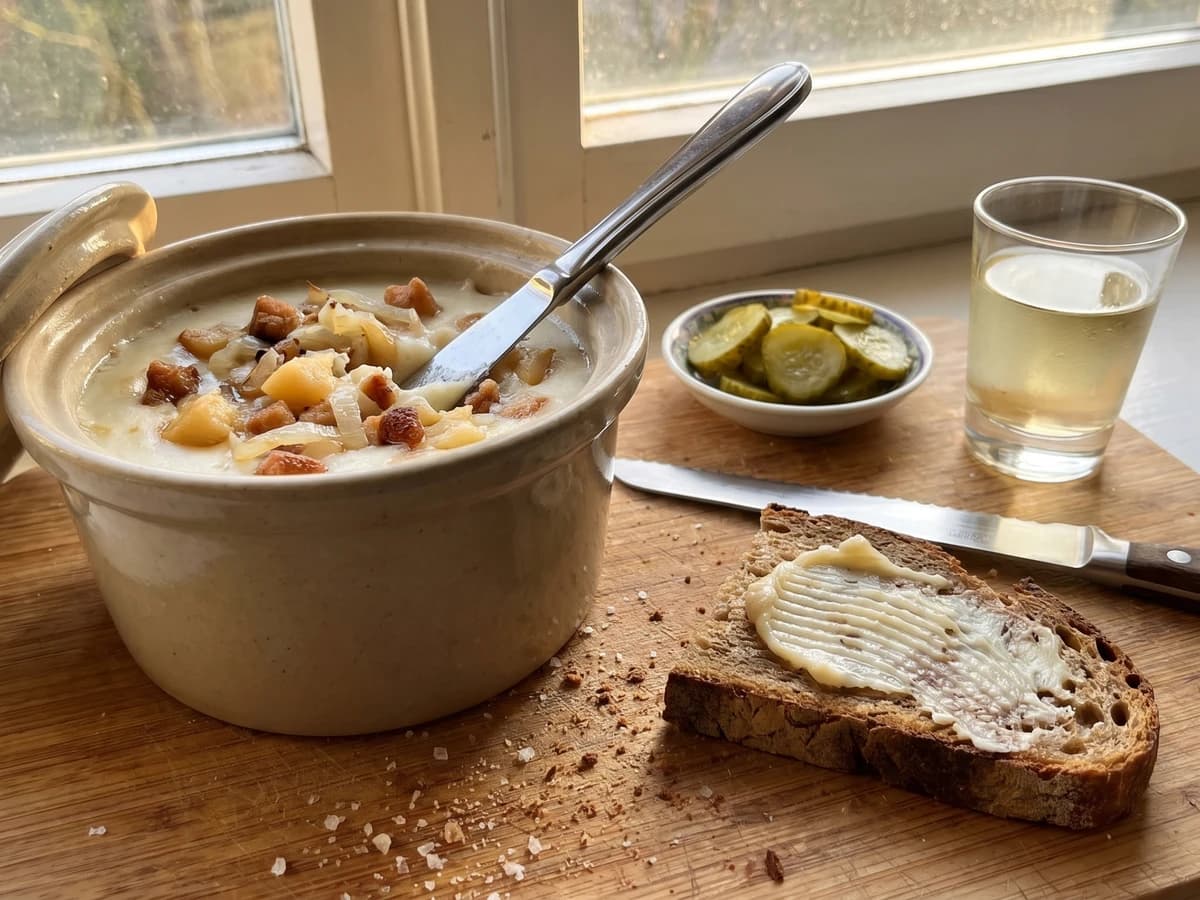
Baden's lard spread is thrift in a crock: pork fat rendered slowly, onion and apple added when the water is gone, and the crisp Grieben stirred back before it sets.

Chef Klaus
The Bavarian beer-garden salad that lives by the cut: thin sausage strips, raw onion, vinegar and oil, no cheese, rested long enough to taste like supper.