
Chef Jeong-sun
Aehobak-guk (애호박국, Korean Zucchini Soup)
A clean summer soup of Korean zucchini and salted shrimp, built on quick anchovy-kelp broth and finished before the half-moons lose their shape on a weeknight table.
A cooking platform built around craft, culture, and the stories behind what we eat.
Created by
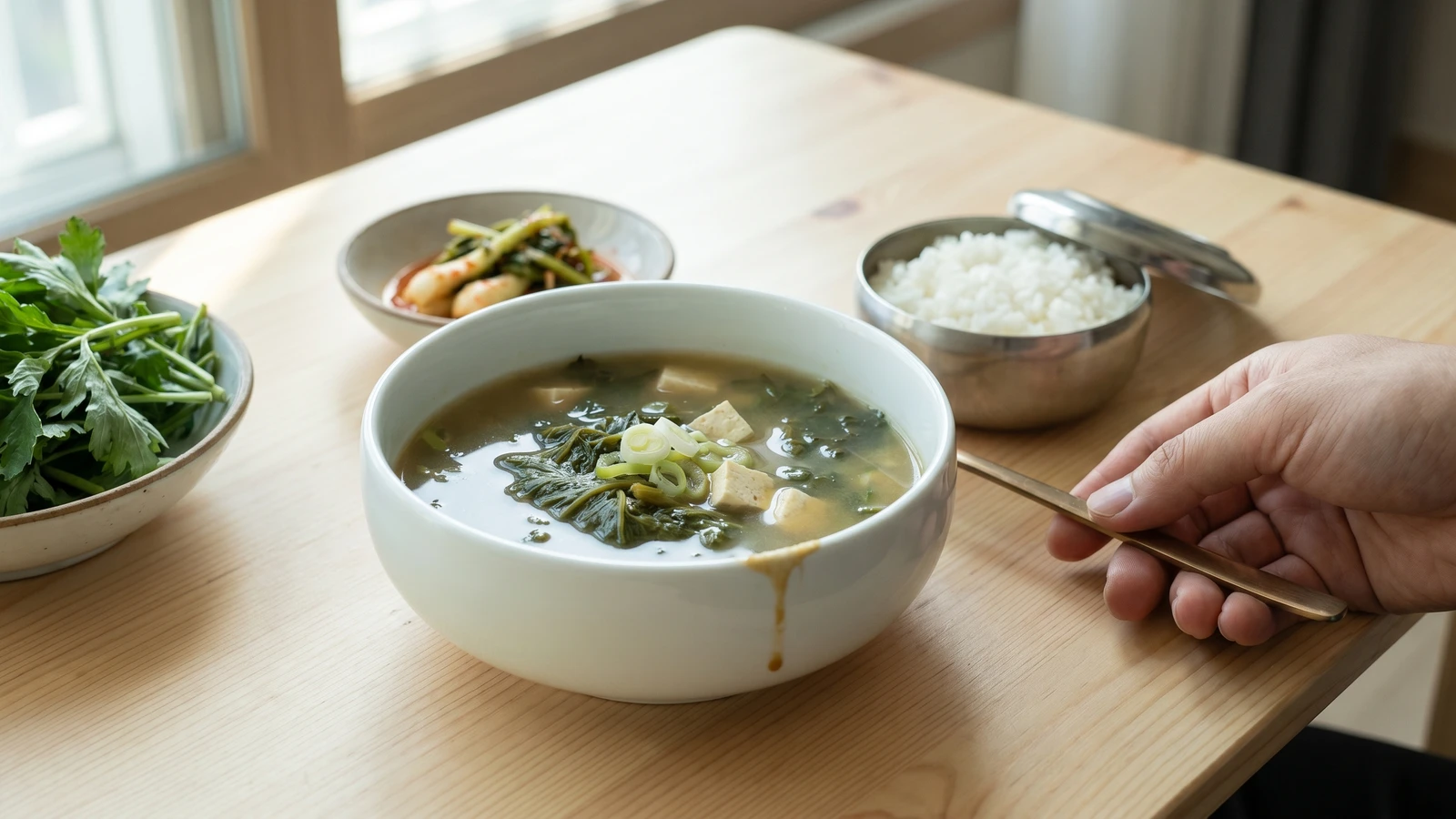
The first soup of Korean spring: tender young mugwort stirred into a light doenjang broth, with rice water softening the edges so the green still tastes like itself.
Ssuk-guk belongs to the narrow part of spring. Not the warm, generous part, but the first weeks when the market women sell small bundles of young mugwort, still tender enough to bruise between your fingers. Cook the month you're standing in. If the ssuk is already tall, woolly, and bitter, don't force this soup out of season. Make another guk and wait for next year.
My mother rinsed ssuk three times, not because she enjoyed extra work, but because grit hides where the leaves curl. Master Seong-nyeo made me smell the bundle before it touched the pot. Good ssuk smells green and faintly medicinal, never dusty, never sharp. The soup asks for restraint: a clean anchovy-kelp broth, a spoon of doenjang (fermented soybean paste), rice water to round it, and only a few minutes of cooking. Boil it hard and long, and the spring leaves punish you with bitterness.
The old instruction says a handful of ssuk. Notebook 18 says 90 grams cleaned leaves for four bowls. 손맛 is real; I measure it anyway. That amount gives the broth enough green flavor without turning the pot harsh, and it lets the doenjang sit underneath where it belongs.
Ssuk (mugwort) has long been gathered as one of Korea's early spring greens, used in soups, rice cakes such as ssuk-tteok, and household remedies, with records of edible wild greens appearing throughout Joseon-era seasonal food writing. Ssuk-guk is home cooking rather than court cooking, most closely tied to the spring market and rural foraging, where young leaves were simmered briefly in doenjang broth or rice-washing water. The rule has not changed much: tender early mugwort makes soup, older mugwort belongs to other uses or should be left alone.
Quantity
90g
tough stems removed, rinsed well
Quantity
5 cups
Quantity
1 cup
or use water
Quantity
1 piece, about 4 inches square
Quantity
10
heads and guts removed
Quantity
2 tablespoons, plus 1 teaspoon if needed
Quantity
1 teaspoon
Quantity
1 clove
finely minced
Quantity
100g
cut into small cubes
Quantity
1
thinly sliced
Quantity
1/2 teaspoon
Quantity
1/4 teaspoon
| Ingredient | Quantity |
|---|---|
| young ssuk (Korean mugwort)tough stems removed, rinsed well | 90g |
| water | 5 cups |
| second rice-washing water (ssalddeumul)or use water | 1 cup |
| dried kelp (dasima) | 1 piece, about 4 inches square |
| large dried anchovies (myeolchi)heads and guts removed | 10 |
| doenjang (Korean fermented soybean paste) | 2 tablespoons, plus 1 teaspoon if needed |
| guk-ganjang (Korean soup soy sauce) | 1 teaspoon |
| garlicfinely minced | 1 clove |
| firm tofu (optional)cut into small cubes | 100g |
| scallionthinly sliced | 1 |
| toasted sesame oil (optional) | 1/2 teaspoon |
| fine sea salt (optional) | 1/4 teaspoon |
Pick through the ssuk and remove woody stems, yellow leaves, and anything coarse. Rinse in a large bowl of cold water, lift the leaves out, dump the grit, and repeat two more times. Do not pour the water off over the leaves, or the sand goes right back where it started. Drain well and lightly squeeze, then weigh 90g cleaned leaves.
Put 5 cups water, the kelp, and the cleaned anchovies in a medium pot. Bring to a bare simmer over medium heat. Pull the kelp out as soon as small bubbles gather at the edge, about 6 to 7 minutes, because kelp left too long turns the broth slick and bitter. Simmer the anchovies 8 minutes more, then remove them.
Stir in 1 cup second rice-washing water. Use the cloudy second rinse, not the first gritty rinse. Rice water gives the soup a soft body and keeps the doenjang from tasting harsh, which matters because ssuk already has its own medicinal edge.
Set a small strainer over the pot and rub 2 tablespoons doenjang through it into the broth, leaving behind coarse soybean skins if your paste is rough. Add the guk-ganjang and garlic. Simmer 3 minutes, then taste. It should be savory but light, a little under-salted, because the mugwort will tighten the flavor when it goes in.
Add the ssuk and press it gently under the broth with chopsticks. Simmer 2 to 3 minutes, just until the leaves darken and soften but still look alive. Do not boil hard. This is the step the soup lives or dies by: too short and the leaves taste raw, too long and the whole pot turns bitter.
Add the tofu if using and simmer 1 minute more, only to warm it through. Taste once, then adjust with up to 1 teaspoon more doenjang or a pinch of salt. Turn off the heat, scatter in the scallion, and add the sesame oil only if your ssuk is very mild. If the mugwort is fragrant, leave the sesame oil out and let it taste like itself.
Ladle into bowls while the leaves are still tender and the broth is clear green-brown. Serve with rice and two or three plain banchan, not a crowded table of strong flavors. Ssuk-guk is quiet food. Give it room.
1 serving (about 370g)
Culinary guides, cultural storytelling, and the editorial depth that makes cooking meaningful.
Discover Culinary ExplorerChef Jeong-sun
A clean summer soup of Korean zucchini and salted shrimp, built on quick anchovy-kelp broth and finished before the half-moons lose their shape on a weeknight table.
Chef Jeong-sun
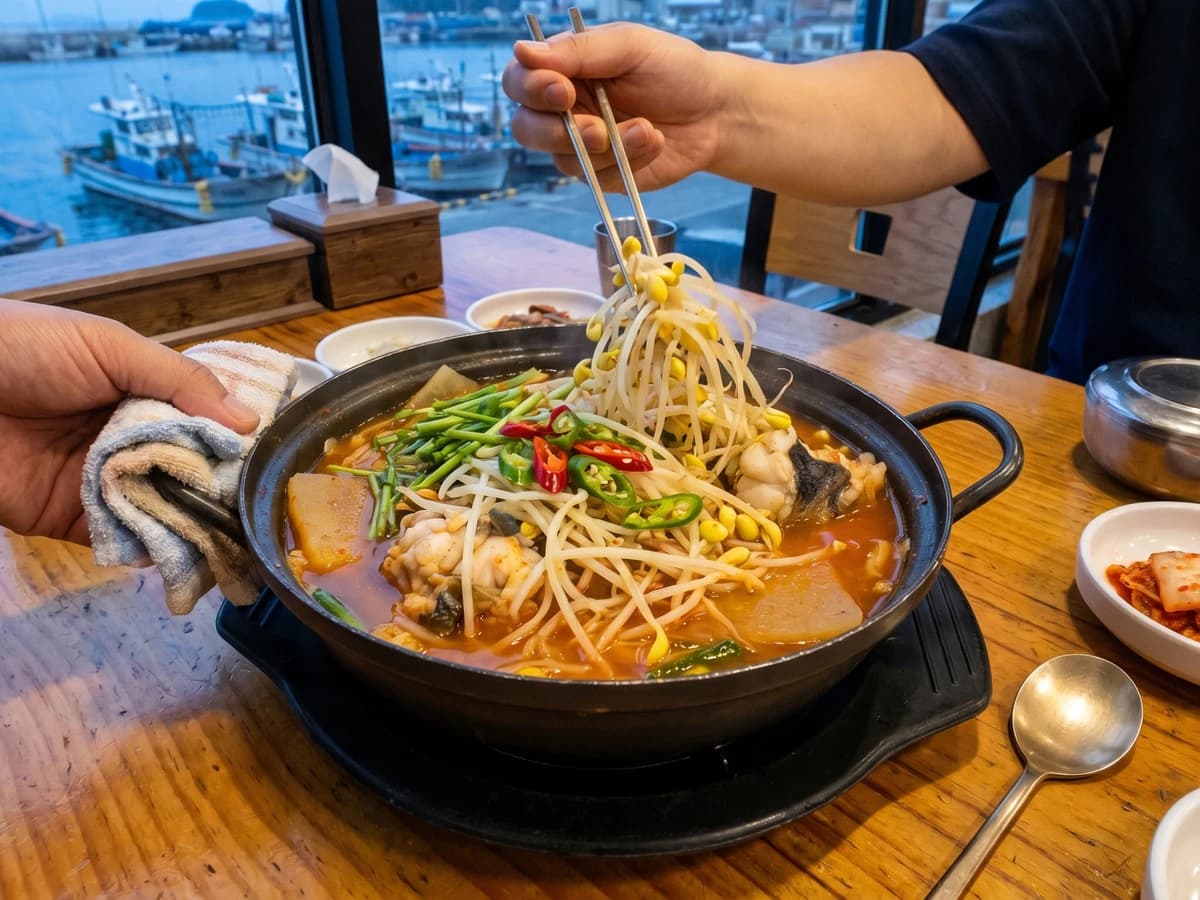
A Masan coast monkfish stew with firm white meat, gelatin at the bones, soybean sprouts for crunch, and a red broth seasoned to carry the fish, not bury it.

Chef Jeong-sun
A weeknight fish roe stew with radish and crown daisy in a clean spicy broth, where the whole success depends on adding the roe late enough that it sets tender, not chalky.

Chef Jeong-sun
Late-summer mallow leaves rubbed with salt until the bitter green water runs off, then simmered in a clean doenjang broth with dried shrimp, the quiet soup a Korean weeknight deserves.