
Chef Jeong-sun
Albaechu-mul-kimchi (Baby Cabbage Water Kimchi)
Tender baby napa cabbage in a clear pear-garlic brine, lightly fermented until the broth turns clean and bright, the summer kimchi a beginner can make without a kimjang floor.
A cooking platform built around craft, culture, and the stories behind what we eat.
Created by
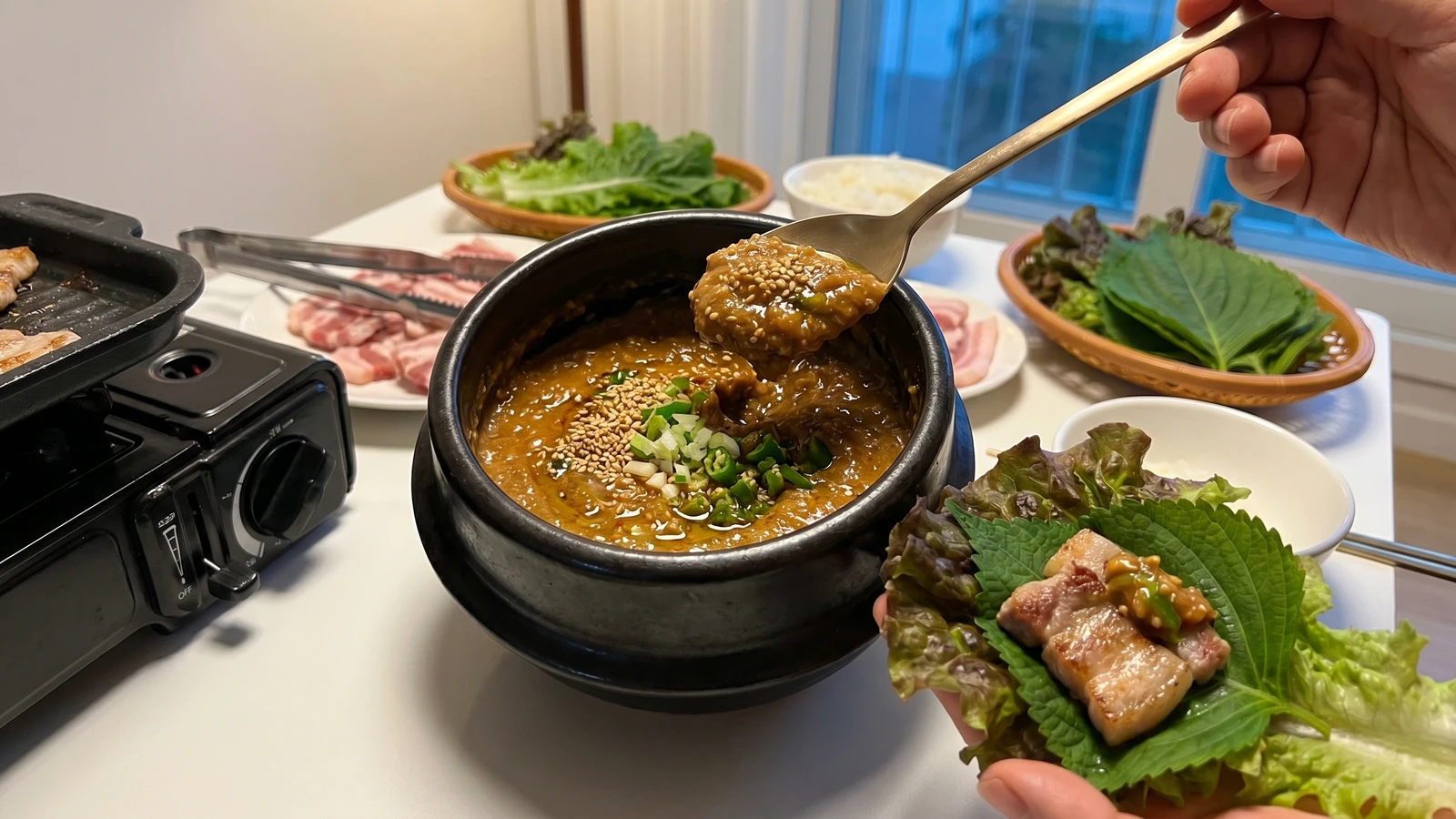
A salty, earthy paste of doenjang and gochujang, sharpened with garlic and scallion, softened by sesame oil, and measured so every lettuce wrap gets one clean, balanced dab.
Ssamjang is not gochujang with manners. If you make it red and sweet, it will bully the lettuce, the perilla, and the meat inside the wrap. The paste begins with doenjang (fermented soybean paste), salty and earthy, and gochujang (red chili paste) comes behind it for warmth, color, and a little sweetness.
At my mother's table, ssamjang sat in the middle before the pork was finished, a small brown bowl beside lettuce, perilla, sliced garlic, green chilies, and rice. Everyone built a wrap differently, but the measure was the same: one level teaspoon for one lettuce leaf. We say wrapping ssam wraps fortune, but the paste is what keeps that fortune from tasting flat.
Tonight it asks for no flame, only clean measuring and small knife work. Mince the scallion and garlic finely enough that they perfume the paste without tearing the leaf; crush the sesame so its oil wakes; loosen the jang with one tablespoon of water, not a flood. Notebook 32 says six tablespoons doenjang to two tablespoons gochujang. 손맛 is real; I measure it anyway, so the next cook can make the same good wrap.
Ssam, the practice of wrapping rice and fillings in leaves or seaweed, appears in Joseon-era seasonal records such as Hong Seok-mo's Dongguksesigi (1849), which describes bokssam, lucky wraps eaten at Jeongwol Daeboreum, the first full moon of the lunar year. Ssamjang is the household jang (fermented paste) made for those wraps; its brown base comes from older doenjang condiments, while the red modern balance depends on gochujang, a chili paste that became established after peppers from the Americas entered the late Joseon pantry.
Quantity
6 tablespoons
Quantity
2 tablespoons
Quantity
1 tablespoon
Quantity
2 teaspoons
Quantity
1 tablespoon, plus 1 teaspoon if needed
Quantity
1 large clove
minced to 1 1/2 teaspoons
Quantity
1 large
finely minced, about 3 tablespoons
Quantity
1 tablespoon
lightly crushed
Quantity
1 small
finely minced
Quantity
2 tablespoons
finely minced
Quantity
to serve
| Ingredient | Quantity |
|---|---|
| doenjang (Korean fermented soybean paste) | 6 tablespoons |
| gochujang (Korean red chili paste) | 2 tablespoons |
| toasted sesame oil | 1 tablespoon |
| maesil-cheong (Korean green plum syrup) or rice syrup | 2 teaspoons |
| warm water or anchovy-kelp broth | 1 tablespoon, plus 1 teaspoon if needed |
| garlicminced to 1 1/2 teaspoons | 1 large clove |
| scallionfinely minced, about 3 tablespoons | 1 large |
| toasted sesame seedslightly crushed | 1 tablespoon |
| Korean green chili (optional)finely minced | 1 small |
| onion (optional)finely minced | 2 tablespoons |
| lettuce leaves, perilla leaves, grilled meat, mushrooms, or rice (optional) | to serve |
Put the doenjang and gochujang in a small bowl. Taste each one from the spoon before you mix. Doenjang should lead, gochujang should follow; if the paste turns too red and sweet, it will bury the lettuce, perilla, meat, and rice instead of tying them together.
Mince the garlic, scallion, and optional chili very fine, with pieces small enough to spread through one teaspoon of paste. If using onion, mince it even finer and only add it when the ssamjang will be eaten the same day. Big pieces tear the lettuce leaf and make one bite taste like raw garlic while the next tastes like nothing.
Add the sesame oil, maesil-cheong or rice syrup, water or broth, and crushed sesame seeds to the bowl. Stir from the center outward until the paste is glossy and thick enough to hold the mark of a spoon. One tablespoon of liquid matters: ssamjang should spread, not pour.
Fold in the garlic, scallion, chili, and onion if using. Let the ssamjang rest 10 minutes so the raw garlic settles into the jang. Taste again. If it is too stiff, add 1 teaspoon water. If it is too salty, add 1/2 teaspoon syrup and 1 teaspoon water. If it is too sweet, add 1 teaspoon doenjang. Write that adjustment down. 손맛 is real; I measure it anyway.
Spoon the ssamjang into a small bowl and set it beside lettuce, perilla leaves, rice, grilled pork belly, beef, mushrooms, or grilled vegetables. Use about 1 level teaspoon for each wrap. More is not generosity; it is noise. Put only a small serving bowl on the table and keep the rest cold, using a clean spoon so grill tongs and chopsticks do not touch the stored paste.
1 serving (about 45g)
Culinary guides, cultural storytelling, and the editorial depth that makes cooking meaningful.
Discover Culinary ExplorerChef Jeong-sun
Tender baby napa cabbage in a clear pear-garlic brine, lightly fermented until the broth turns clean and bright, the summer kimchi a beginner can make without a kimjang floor.

Chef Jeong-sun
The kimchi from before chili, salted napa cabbage packed with radish, pear, jujube, and pine nuts in a clear brine that turns quietly tart in the jar.

Chef Jeong-sun
A pale summer cucumber kimchi, split and stuffed with radish and chives, then held in a cool pear brine so the cucumber stays clean, crunchy, and plainly itself.

Chef Jeong-sun
Flat spring bomdong cabbage, lightly brined and tucked into a clear pear-radish kimchi broth, made without chili and eaten young while the leaves still taste like spring.