Chef Joost
Aardbeienvlaai (Limburg Strawberry Vlaai)
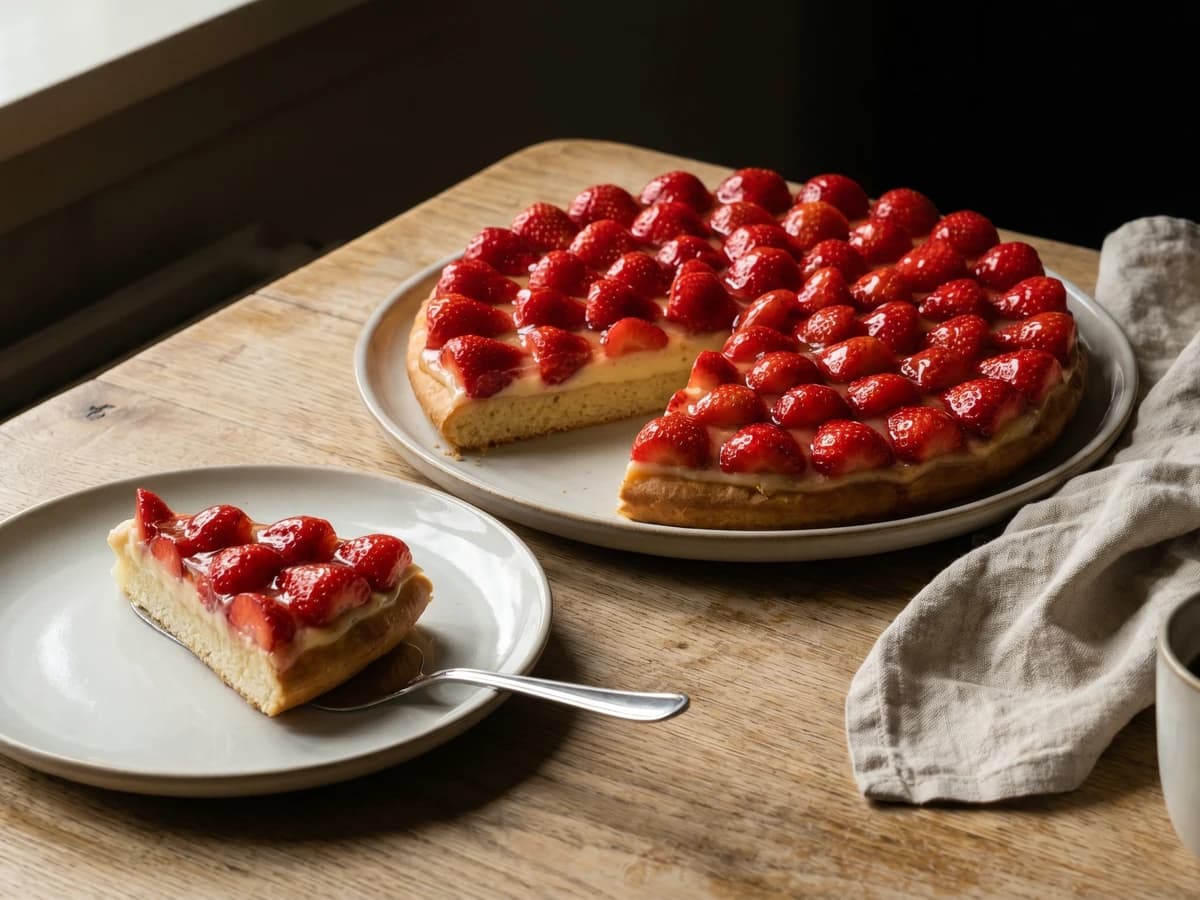
The summer vlaai that politely breaks Limburg's baked-fruit rule: soft gistdeeg, cool pastry cream, and strawberries left fresh because June knows better than the oven.
A cooking platform built around craft, culture, and the stories behind what we eat.
Created by
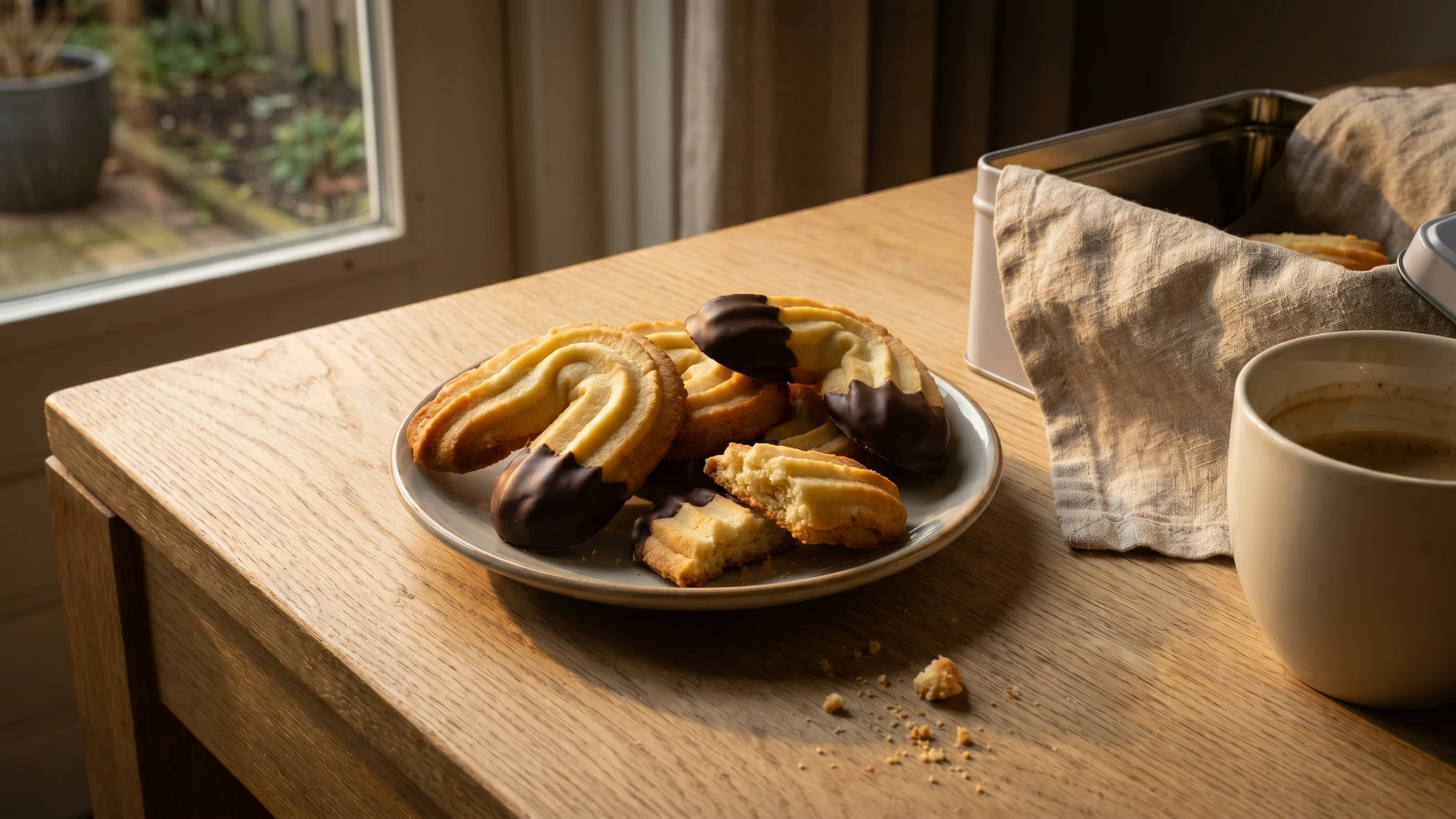
The Dutch butter cookie whose name gives away the method: pressed through a spuitzak, ridged like a small canal bank, and made for coffee, tins, and second helpings.
In my grandmother's second notebook, the spritsen recipe is written in the practical handwriting of a woman who had no patience for decorative fuss. Butter. Sugar. Flour. A little egg. Press through the spuitzak, the piping bag, and stop talking. This is how Dutch baking often works: the grandeur hides in restraint.
The name already tells you what to do. Spritsen belongs to the same family as German Spritzgeback, from spritzen, to squirt or pipe. No mystery, no romance invented after the fact. The dough is not rolled, not stamped, not cut into clever shapes. It is pressed out in ridged strips or commas, and those ridges matter because they give the butter somewhere to crisp.
But let me tell you a secret. A good sprits is not a hard biscuit. It should break cleanly at the edge, then soften into butter and sugar almost before you've finished deciding whether to take another. The trick is not ambition, it is temperature: soft butter for piping, rested dough if the kitchen is warm, and an oven hot enough to set the ridges before the cookie slumps into a puddle of good intentions.
Hou het altijd simpel, always keep it simple. Use real butter, pipe generously, bake to pale gold with darker ridges, and let the tin do its old Dutch work. Spritsen keep beautifully, which is why they belong to coffee tables, visiting afternoons, and the quiet confidence of a house that always has something to offer.
Spritsen are the Dutch branch of a wider northern European family of piped butter biscuits related to German Spritzgeback, with the name tied to spritzen, to pipe or squirt. In the Netherlands, Utrecht became especially associated with the cookie, and Utrechtse spritsen remain a bakery standard: long ridged butter cookies, sometimes left plain and sometimes dipped at one end in chocolate. Their popularity reflects a twentieth-century Dutch home-baking ideal: few ingredients, a repeatable method, and a biscuit sturdy enough for the coffee tin but rich enough to mark a visit.
Quantity
250g
very soft but not melted
Quantity
125g
Quantity
1 teaspoon
Quantity
1/4 teaspoon
Quantity
1
at room temperature
Quantity
300g
Quantity
50g
Quantity
75g
melted
| Ingredient | Quantity |
|---|---|
| unsalted buttervery soft but not melted | 250g |
| fine caster sugar | 125g |
| vanilla sugar or vanilla extract | 1 teaspoon |
| fine salt | 1/4 teaspoon |
| egg whiteat room temperature | 1 |
| plain flour | 300g |
| cornstarch or potato starch | 50g |
| dark chocolate (optional)melted | 75g |
Heat the oven to 180C and line two baking trays with parchment. Beat the very soft butter, sugar, vanilla, and salt for three to four minutes until pale and lighter in texture. This is the air that makes a sprits tender; melted butter will not do the same work.
Beat in the egg white until the mixture looks smooth and glossy. Add the flour and starch, then mix only until a soft pipeable dough forms. It should hold its shape on a spoon but still move through a piping bag without a wrestling match.
Fit a sturdy spuitzak, a piping bag, with a large open star nozzle. Pipe the dough into commas, S-shapes, or straight ridged strips about 8cm long, leaving space between them. Keep the pressure even and let the ridges stand proud. They are not decoration only; they crisp first and give the cookie its bite.
Bake for 12 to 14 minutes, one tray at a time if your oven is uneven, until the spritsen are pale golden with slightly deeper colour along the ridges and edges. Let them sit on the tray for five minutes before moving them. Fresh from the oven they are fragile, like all proud butter things.
Cool completely on a rack. If using chocolate, dip one end of each sprits into the melted chocolate, scrape the underside lightly against the bowl, and set on parchment until firm. Plain is traditional enough; chocolate is the visitor who was invited and behaved well.
1 serving (about 31g)
Culinary guides, cultural storytelling, and the editorial depth that makes cooking meaningful.
Discover Culinary ExplorerChef Joost
The summer vlaai that politely breaks Limburg's baked-fruit rule: soft gistdeeg, cool pastry cream, and strawberries left fresh because June knows better than the oven.

Chef Joost
A Limburg vlaai is not a pie trying to be grand. It is a thin yeast-dough round, fruit-bright and generous, made for birthdays, coffee, and second slices.

Chef Joost
The December bakery counter made small: cold leafed pastry wrapped around lemon-scented amandelspijs, brushed gold, and scattered with almonds so one person gets the whole holiday in both hands.
Chef Joost
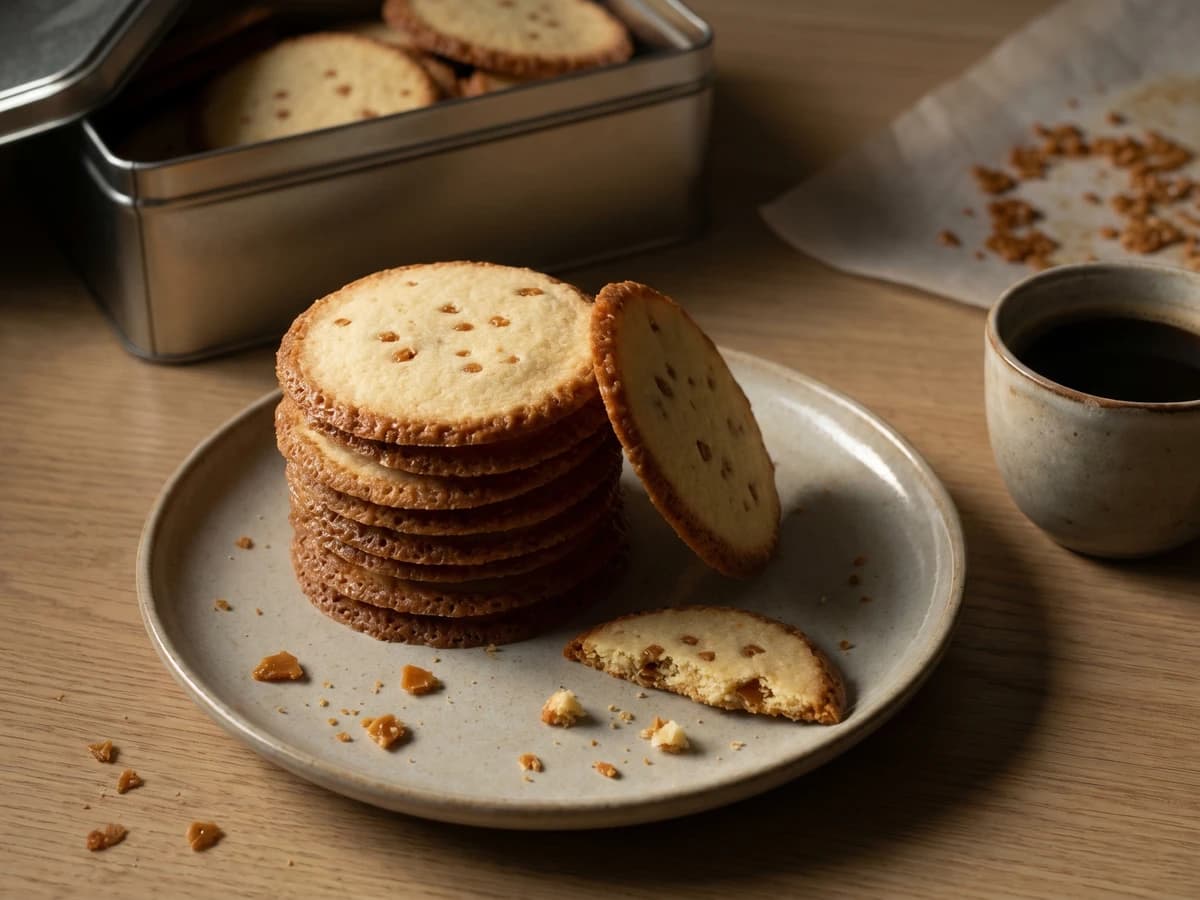
A thin Amsterdam cookie carrying a cog ship in its name: caramelized butter dough, almond nougatine, and a 1934 contest that turned municipal pride into something for coffee.