
Chef Takumi
Aichi Red-Miso Glaze (赤味噌田楽味噌, Akamiso Dengaku-miso)
Akamiso dengaku-miso is plain work: bean miso, sweetness, sake, and patient stirring until the glaze turns dark, glossy, and thick enough to cling to the grill.
A cooking platform built around craft, culture, and the stories behind what we eat.
Created by
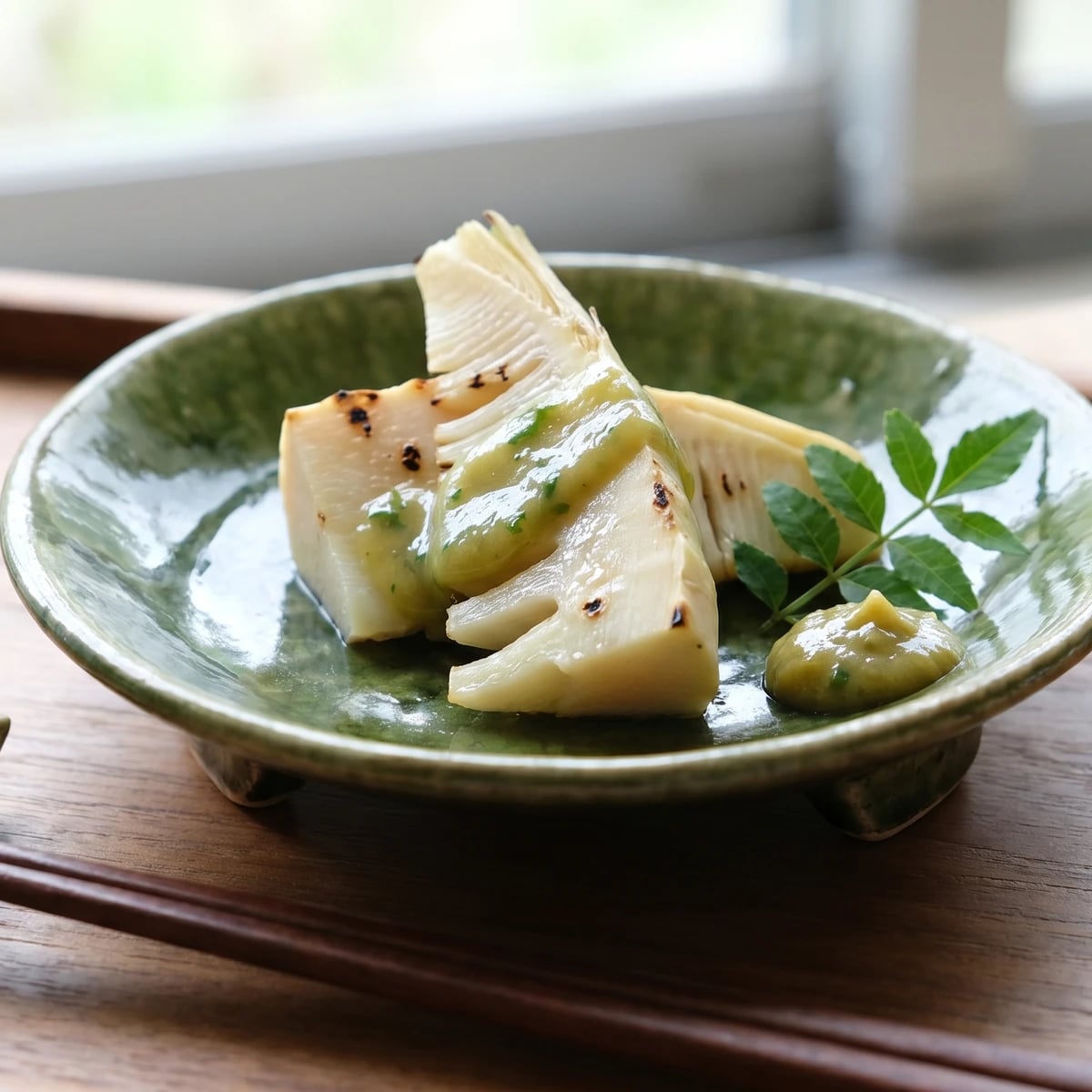
Kinome-miso is spring made useful: young sansho leaves ground fine and folded into sweet white miso, a small green paste that turns bamboo shoots, fish, or tofu into the season.
Kinome arrives in spring as a small leaf with a large opinion. Rub one between your fingers and you get green citrus, pepper, and a quick clean tingle, gone almost before anyone can become tiresome about it. That briefness is the point. This paste belongs to the week when the leaves are tender and bright, and if you miss it, you don't fake it with powder. You make the base and wait for 旬 (shun) to come around again.
Kinome-miso looks like a specialist's sauce because it is green, glossy, and usually appears beside bamboo shoots or sea bream on a very careful plate. The work is calmer than that. You make tamamiso, an egg-yolk-enriched sweet white miso, cook it gently until glossy, cool it, then grind in the leaves. The one detail that decides it is temperature: add kinome while the miso is hot and the perfume fades, the color dulls, and spring leaves the bowl.
Use it thinly. Brush it on grilled takenoko (bamboo shoots), sea bream, or tofu, enough to scent the surface and no more. This is not a sauce for burying food; it is the season speaking from a small place. Leave it room, and it will do more than a heavy hand ever could.
Kinome are the newly opened leaves of sansho (Zanthoxylum piperitum), the Japanese pepper tree; the same plant later gives flower buds and green berries used in early summer cooking. In Kyoto cooking the paste is especially linked with takenoko, because the old Yamashiro area south of the city was famous for tender bamboo shoots and for the sweet white miso used to dress them. Saikyō miso, a common base for tamamiso, takes its name from Kyoto as Saikyō, meaning western capital, a name that came into use after the imperial court moved to Tokyo in 1868.
Quantity
200g
Quantity
2
Quantity
2 tablespoons
Quantity
2 tablespoons
Quantity
1 tablespoon
add 1 teaspoon more if using a saltier white miso
Quantity
35 to 45 leaves (about 8g)
tough stems pinched off
Quantity
small pinch
Quantity
1 to 2 teaspoons
for loosening only if needed
Quantity
for serving
| Ingredient | Quantity |
|---|---|
| Saikyō miso or another sweet white miso | 200g |
| large egg yolks | 2 |
| sake | 2 tablespoons |
| mirin | 2 tablespoons |
| sugaradd 1 teaspoon more if using a saltier white miso | 1 tablespoon |
| fresh kinome leaves (young sansho leaves)tough stems pinched off | 35 to 45 leaves (about 8g) |
| fine sea salt | small pinch |
| dashi or cooled sake (optional)for loosening only if needed | 1 to 2 teaspoons |
| grilled bamboo shoots, sea bream, or firm tofu (optional) | for serving |
Choose leaves that are small, soft, bright green, and fragrant the moment you touch them. Pinch off only the tough stems and keep the leaves cool under a barely damp towel. Kinome loses scent as soon as it wilts, so do this just before grinding, not hours earlier.
Set a heatproof bowl over a saucepan of barely bubbling water. Add the miso, egg yolks, sake, mirin, and sugar, then stir steadily with a spatula for 15 to 20 minutes. The paste should turn glossy and thick enough that a spatula leaves a slow-closing track; if you use a thermometer, it should reach 160°F/71°C. Gentle heat cooks the yolks and drives off the alcohol without scorching the white miso.
Scrape the tamamiso into a shallow bowl and let it cool until it is no warmer than your finger. Press parchment directly on the surface if it sits longer than a few minutes, so a skin doesn't form. Kinome is a leaf, not a spice to cook; heat dulls its green scent.
Put the kinome leaves and the pinch of salt in a suribachi, the ridged Japanese mortar. Grind in circles with a surikogi until the leaves break down into a vivid green paste, then work in 1 tablespoon of the cooled tamamiso to gather it. The ridges crush the leaf evenly and release the oils; chopping leaves you with green flecks and less fragrance.
Fold the ground kinome into the cooled tamamiso until the color is even. Taste it. It should be sweet-salty first, then citrus-green, with a faint sansho tingle. If it is too stiff for brushing, loosen it with 1 teaspoon dashi or cooled sake at a time. Add liquid sparingly, because a loose paste slides off the food and hides the leaf.
Use the kinome-miso at once, or refrigerate it in a covered container. For bamboo shoots, sea bream, or tofu, cook the food first, then brush on a thin layer of paste at the end and warm it briefly until glossy. Don't blacken it. Miso and sugar scorch quickly, and long heat steals the fragrance you saved so carefully.
1 serving (about 60g)
Culinary guides, cultural storytelling, and the editorial depth that makes cooking meaningful.
Discover Culinary Explorer
Chef Takumi
Akamiso dengaku-miso is plain work: bean miso, sweetness, sake, and patient stirring until the glaze turns dark, glossy, and thick enough to cling to the grill.

Chef Takumi
Tamamiso is the quiet mother paste behind many miso sauces: white miso, yolk, sake, sugar, and dashi warmed slowly until glossy, ready for vinegar, yuzu, or spring kinome.

Chef Takumi
Sake lees look stubborn at first, then soften into one of the most generous beds in the Japanese kitchen: fragrant, pale, gently sweet, and patient enough to season while you do nothing.

Chef Takumi
Half miso for body, half sake lees for fragrance. This quiet Hokuriku bed seasons fish, vegetables, and chicken while asking only that you keep time and salt in balance.