
Chef Graziella
Cannellini con Salvia
Tuscan white beans warmed gently with fried sage leaves and a whisper of garlic. This is the contorno that proves restraint is a virtue, not a limitation.
A cooking platform built around craft, culture, and the stories behind what we eat.
Created by
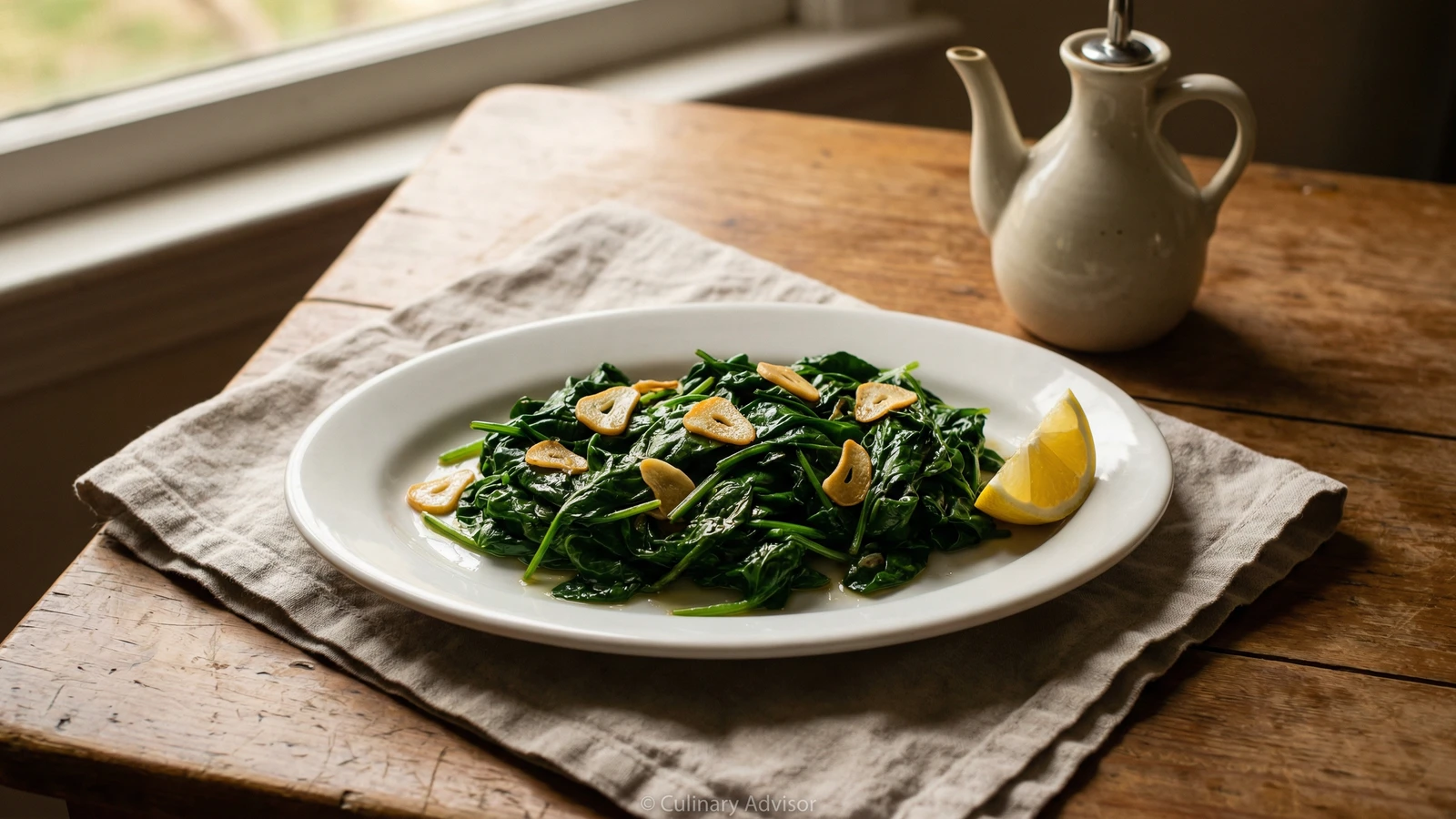
Fresh spinach, sliced garlic, good olive oil. Three minutes in a hot pan. This is the Italian vegetable course at its most honest: no technique hidden behind sauce, no inferior ingredient masked by seasoning.
There is nothing to this dish. That is the point. Spinach cooked this way appears on Italian tables several times a week, eaten alongside roasted meat or grilled fish. It is not fancy. It requires no skill beyond knowing when to stop cooking. And yet most people get it wrong.
They add too much garlic, or they burn it. They cook the spinach until it turns drab and sulphurous. They drown it in oil or forget the salt. Simple does not mean careless.
The garlic here must be sliced, not minced, not pressed. Sliced garlic mellows in the oil. It becomes sweet and nutty. Pressed garlic turns bitter and acrid, overwhelming everything it touches. This is the single greatest cause of failure in would-be Italian cooking: the misuse of garlic. Learn to slice it thin, toast it gently, and know when to add the greens before it burns.
Sautéed greens with garlic predate any written recipe, appearing wherever olive oil, garlic, and leafy vegetables grow. In Rome, this preparation is called spinaci ripassati; in Naples, the same technique applies to friarielli and other bitter greens. The method itself is as old as the Mediterranean kitchen.
Quantity
2 pounds
stems trimmed
Quantity
1/4 cup
Quantity
3
sliced thin
Quantity
1/4 teaspoon
Quantity
to taste
Quantity
for serving
| Ingredient | Quantity |
|---|---|
| fresh spinachstems trimmed | 2 pounds |
| extra virgin olive oil | 1/4 cup |
| garlic clovessliced thin | 3 |
| red pepper flakes (optional) | 1/4 teaspoon |
| kosher salt | to taste |
| lemon wedges | for serving |
Fill your sink or a large basin with cold water. Submerge the spinach and swirl it vigorously. Lift the spinach out, let the water drain, and repeat until no grit settles at the bottom. This takes three or four changes of water for most spinach. Do not skip this step. Nothing ruins sautéed greens faster than sand between your teeth.
Slice the garlic cloves as thin as you can manage. Translucent is what you want. The garlic will cook quickly this way and distribute its flavor throughout the oil. Do not mince. Do not use a press. A garlic press crushes the cells and releases harsh, acrid compounds. Sliced garlic is gentle. Pressed garlic is aggressive.
Place the olive oil and sliced garlic in a large skillet over medium heat. Let them warm together. Watch the garlic carefully. When it begins to sizzle and turn pale gold at the edges, you have perhaps 30 seconds before it burns. The moment it turns golden, you proceed. If it browns, start over with fresh garlic. Burnt garlic is bitter and will poison the entire dish.
Add the spinach to the pan all at once. It will seem impossible that it will fit. It will fit. The leaves are mostly water and air. Toss the spinach with tongs or two wooden spoons, coating the leaves with the garlicky oil. The spinach wilts in two to three minutes, collapsing to a fraction of its original volume. Season with salt as you toss.
The spinach is done when fully wilted but still bright green. Overcooked spinach turns army green and tastes of iron. Remove from heat the moment it yields. Transfer to a warm serving dish, letting excess liquid stay behind in the pan. Serve immediately with lemon wedges at the table. The squeeze of lemon is not mandatory, but it is welcome.
1 serving (about 80g)
Culinary guides, cultural storytelling, and the editorial depth that makes cooking meaningful.
Discover Culinary ExplorerChef Graziella
Tuscan white beans warmed gently with fried sage leaves and a whisper of garlic. This is the contorno that proves restraint is a virtue, not a limitation.

Chef Graziella
Chickpeas cooked with restraint: garlic infused and removed, rosemary perfuming the oil, nothing more. A contorno that proves legumes need only respect, not complication.

Chef Graziella
The vegetable stew of Southern Italy, where summer's abundance cooks slowly until eggplant, peppers, zucchini, and tomatoes become one soft, melded thing. This is the honest food of Campania and Calabria.

Chef Graziella
Green beans cooked the Italian way, tender and flavorful, with garlic that whispers and tomato that barely speaks. A contorno that proves the side dish can be the quiet star of the meal.