
Chef Dimitra
Aegean Island Kakavia (Κακαβιά)
Aegean kakavia is the fisherman’s soup named for the pot itself: small rockfish, potato, onion, lemon, and enough olive oil to turn a poor catch rich.
A cooking platform built around craft, culture, and the stories behind what we eat.
Created by
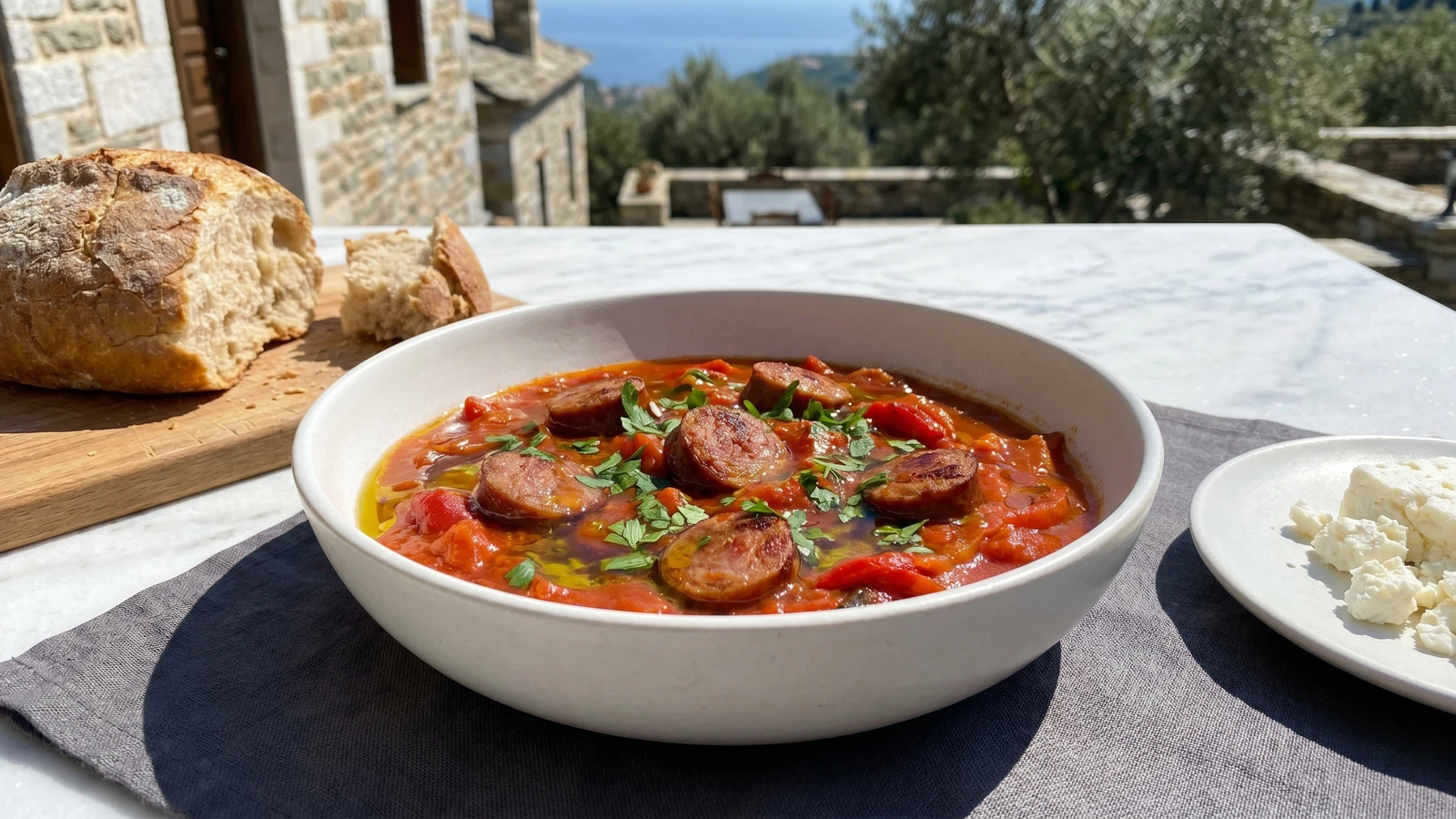
Pelion's spetsofai is coarse loukaniko, sweet peppers, and tomato cooked until the sauce turns red and glossy, the kind of pot that asks for bread, feta, and no cleverness.
Spetsofai Pilioy is Pelion's sausage and pepper stew, a red, oily, lively pot from the mountain villages above Volos. It is not named for Spetses. It is built on coarse country loukaniko, long sweet peppers, tomato, and a little heat, with bread waiting for the sauce. The region is the dish's surname.
The method that decides it is the order: brown the sausage first, let the peppers blister in its fat, and only then add the tomato. If tomato goes in too soon, the peppers boil and the sauce stays thin. Give them color first and the whole pot tastes deeper, with the sausage speaking through every spoonful.
Use real Greek loukaniko, spiced and coarse, not a mild sausage that tastes shy. A Pelion cook may make this in autumn when peppers are still good and the first chill asks for something sharp and warm. I write it down plainly because this is how these small regional pots survive: not as museum food, but as Tuesday dinner.
Spetsofai, also called spentzofai in Thessaly, is tied to Pelion in Magnesia, the mountain peninsula above Volos where pork sausages were kept for the cold months and cooked with the last garden peppers. The name is often mistaken for a link to Spetses, but local usage connects it to spetza or spentza, a word for pepper, plus fai, food. The tomato sauce reflects the nineteenth-century spread of tomatoes into Greek domestic cooking, binding older pig-slaughter sausage with a newer garden staple.
Quantity
600g
preferably Pelion-style, cut diagonally into 2.5cm pieces
Quantity
60ml
divided
Quantity
700g
green and red, seeded and cut into wide strips
Quantity
1 large, about 180g
thinly sliced
Quantity
1 small or 1/4 tsp
sliced if fresh
Quantity
3
thinly sliced
Quantity
20g
Quantity
120ml
Quantity
500g
grated, or use 400g good crushed canned tomatoes
Quantity
1
Quantity
1 tsp
Quantity
1/2 tsp
plus more only after tasting
Quantity
1/2 tsp
Quantity
1/4 tsp
only if the tomatoes are sharp
Quantity
10g
chopped
Quantity
as needed
to serve
| Ingredient | Quantity |
|---|---|
| coarse Greek loukanikopreferably Pelion-style, cut diagonally into 2.5cm pieces | 600g |
| extra virgin Greek olive oildivided | 60ml |
| long sweet peppers (piperies kerato)green and red, seeded and cut into wide strips | 700g |
| yellow onionthinly sliced | 1 large, about 180g |
| hot pepper (kafteri piperia) or boukovosliced if fresh | 1 small or 1/4 tsp |
| garlic clovesthinly sliced | 3 |
| tomato paste | 20g |
| dry red wine | 120ml |
| ripe tomatoesgrated, or use 400g good crushed canned tomatoes | 500g |
| dried bay leaf | 1 |
| dried Greek oregano | 1 tsp |
| fine sea saltplus more only after tasting | 1/2 tsp |
| freshly ground black pepper | 1/2 tsp |
| sugar (optional)only if the tomatoes are sharp | 1/4 tsp |
| flat-leaf parsley (optional)chopped | 10g |
| country bread and feta (optional)to serve | as needed |
Slice the loukaniko into thick diagonal pieces, 2 to 2.5cm. Seed the sweet peppers and cut them into wide strips, so they keep some body in the sauce. Grate fresh tomatoes on the large holes of a box grater and discard the skins, or crush the canned tomatoes by hand.
Set a wide heavy pot over medium-high heat with 1 tablespoon of the olive oil. Add half the sausage in a single layer and brown until the cut faces are dark gold, about 2 minutes per side; lift it to a plate and repeat with the rest. Don't crowd the pot. This browning is what gives the tomato sauce its spine, and the sausage will finish cooking later.
Add the remaining olive oil, the onion, sweet peppers, hot pepper, and salt. Cook 10 to 12 minutes, stirring often, until the peppers blister at the edges and soften without collapsing. The tomato waits for this. If it goes in too soon, the peppers taste raw and the sauce turns thin.
Stir in the garlic, tomato paste, oregano, bay leaf, and black pepper. Cook for 1 minute, until the tomato paste darkens from bright red to brick and the garlic smells sweet, not sharp.
Pour in the red wine and scrape the bottom of the pot with a wooden spoon. Let it bubble for 2 to 3 minutes, until the wine has reduced and the sharp smell has softened.
Add the grated or crushed tomatoes and the sugar only if the tomatoes are too sharp. Simmer uncovered for 10 minutes, until the sauce begins to thicken and the oil starts to show at the edges.
Return the sausage and any juices to the pot. Lower the heat and simmer gently for 15 to 18 minutes, partly covered, until the sausage is cooked through and the sauce is glossy, red, and spoonable. If it tightens too much, add 2 or 3 tablespoons of water. This is a stew, not a soup.
Take the pot off the heat and let the spetsofai rest for 10 minutes. Taste before adding more salt, because loukaniko speaks loudly. Finish with parsley if you like, then serve warm with country bread, feta, and the good oil shining on top.
1 serving (about 450g)
Culinary guides, cultural storytelling, and the editorial depth that makes cooking meaningful.
Discover Culinary ExplorerChef Dimitra
Aegean kakavia is the fisherman’s soup named for the pot itself: small rockfish, potato, onion, lemon, and enough olive oil to turn a poor catch rich.

Chef Dimitra
Corfu's bourdeto is a red, pepper-hot fish braise, traditionally made with scorpionfish, potatoes, tomato, and enough heat to announce the Ionian table.

Chef Dimitra
Central Macedonia's spring lamb fricassee braises shoulder with romaine, dill, and spring onion, then finishes the pot with avgolemono, the egg-lemon sauce that makes it silk.

Chef Dimitra
In Chania, tsigariasto is goat or lamb browned in olive oil, softened with wine, and left to braise without water until the pot gives back only glossy meat juices.