
Chef Joost
Aardappelschotel met Gehakt
A plain name for a quietly clever dish: fresh mince, sweet fried onion, nutmeg, and mashed potato baked until the top goes golden and the table goes silent.
A cooking platform built around craft, culture, and the stories behind what we eat.
Created by
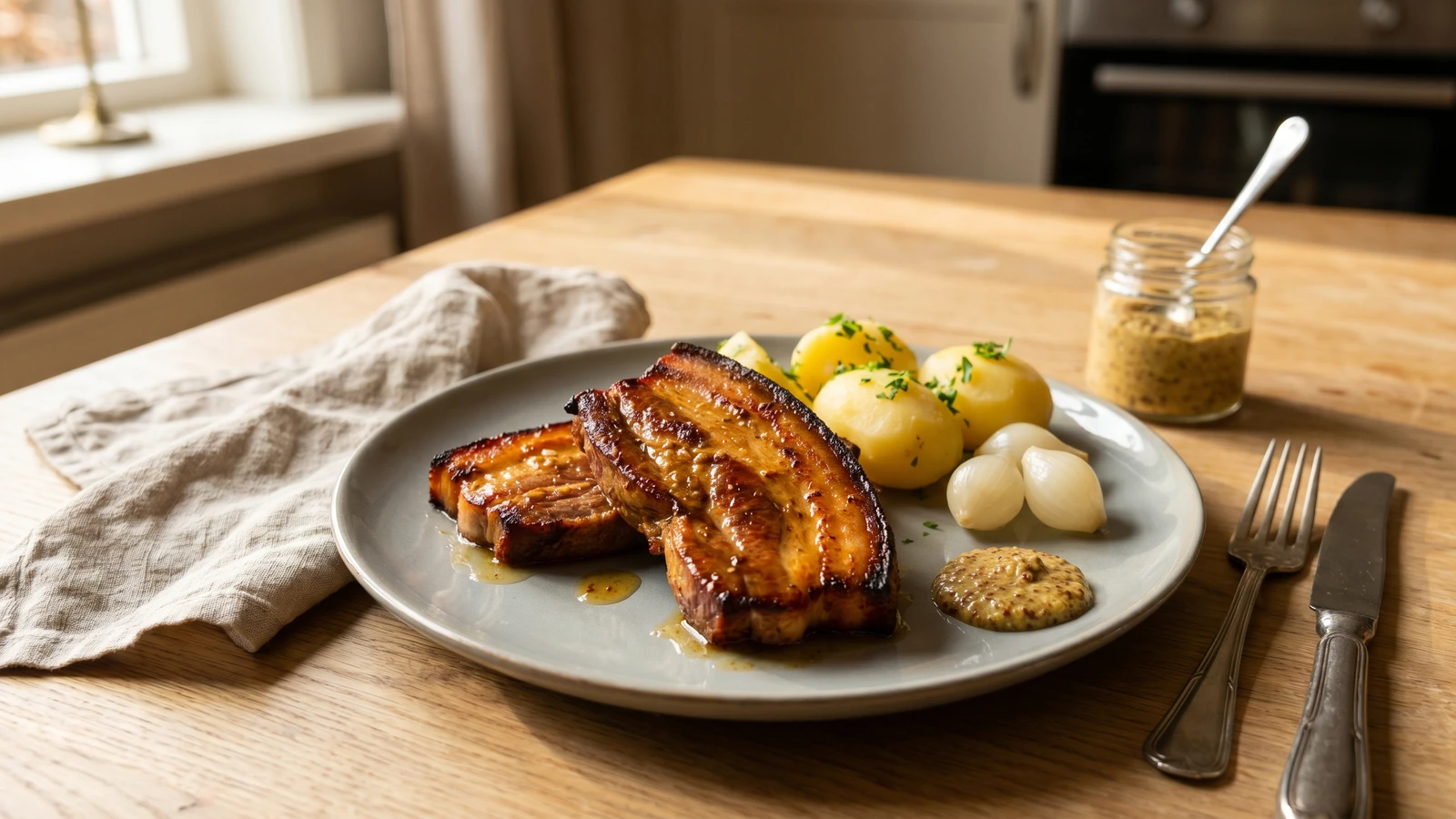
The name says almost everything: spek, fat pork, and lap, a slice, the Dutch butcher's plain little word for a cut that rewards patience more than money.
In my grandmother's second notebook, speklap never received a grand title. It sat there between potatoes and cabbage, written in the same practical hand she used for the weekly wash and the butcher's bill. That tells you something. Some dishes enter the house through ceremony. Speklap comes in wrapped in paper, affordable, marbled, and ready to prove that a frugal kitchen is not a poor kitchen.
The name already tells you most of the story. Spek is the old Dutch word for fat pork or bacon, and lap is a slice, a piece, a patch of something cut from the whole. No poetry was spent where the pan could do the talking. But let me tell you a secret: the cheap cut is often the honest teacher. Lean meat lets you get away with hurry. Pork belly does not. It asks for low heat, time, and the discipline to let its fat render slowly before you ask the rind to crisp.
Speklappen belong equally to the weeknight frying pan and the summer barbecue, which is very Dutch of them, for obvious reasons. We like a food that can stand beside boiled potatoes in February and beer in the garden in July without changing its nature. Hou het altijd simpel, always keep it simple: salt early, dry the meat well, start gently, finish with heat. The fat becomes sweet, the edges go crisp under your teeth, and the kitchen smells like somebody remembered how good ordinary food can be.
Speklap is not a court dish or a festival relic but a butcher's-counter staple, tied to the Dutch habit of buying useful cuts that fed a household without ceremony. The word combines spek, fat pork or bacon, with lap, a slice or piece, a plain description that matches the cut: a slab of pork belly sold fresh rather than cured. Its popularity grew with ordinary Dutch home cooking and later with backyard grilling, where the same frugal slice moved from frying pan to barbecue without losing its character.
Quantity
4, about 150g each
Quantity
1 teaspoon
Quantity
1 teaspoon
Quantity
1 teaspoon
Quantity
1/2 teaspoon
Quantity
1/4 teaspoon
Quantity
1 tablespoon
Quantity
1 tablespoon
Quantity
1 tablespoon
Quantity
1 tablespoon
| Ingredient | Quantity |
|---|---|
| speklappen, thick pork belly slices | 4, about 150g each |
| fine sea salt | 1 teaspoon |
| freshly ground black pepper | 1 teaspoon |
| sweet paprika | 1 teaspoon |
| ground coriander | 1/2 teaspoon |
| ground nutmeg | 1/4 teaspoon |
| sunflower oil | 1 tablespoon |
| Dutch mustard | 1 tablespoon |
| apple syrup or dark brown sugar | 1 tablespoon |
| apple cider vinegar | 1 tablespoon |
Pat the speklappen very dry with kitchen paper. Mix the salt, pepper, paprika, coriander, and nutmeg, then rub the mixture over both sides of the meat. Let it stand for ten minutes while the salt begins its quiet work. Wet pork belly splutters and sulks; dry pork belly browns.
Set a heavy frying pan over medium-low heat and add the sunflower oil. Lay in the speklappen without crowding them. Cook for 10 to 12 minutes, turning every few minutes, while the fat slowly renders into the pan. This is the part people rush, and this is where the dish is won.
Raise the heat to medium-high and cook for another 6 to 8 minutes, turning often, until the meat is deep golden-brown and the fatty edges have crisped. If the pan spits too fiercely, lower the heat a little. You want crispness, not punishment.
Stir the mustard, apple syrup, and vinegar together. Brush or spoon this over the speklappen in the last two minutes only, turning once so the glaze catches and darkens without burning. Sugar is helpful, but it has no patience.
Move the speklappen to a warm plate and rest them for five minutes. Spoon over a little of the glossy pan juices if you like. Serve with boiled potatoes and sharp pickles, or with bread and mustard if the table is in barbecue weather.
1 serving (about 120g)
Culinary guides, cultural storytelling, and the editorial depth that makes cooking meaningful.
Discover Culinary ExplorerChef Joost
A plain name for a quietly clever dish: fresh mince, sweet fried onion, nutmeg, and mashed potato baked until the top goes golden and the table goes silent.

Chef Joost
Ajam Besengek is the golden chicken stew of the Indo-Dutch table: coconut milk, turmeric, and candlenut cooked down until the sauce clings to the meat like memory.

Chef Joost
The old Dutch spelling says ajam, the city says Batavia, and the pot says exactly what the rijsttafel always was: memory, trade, and dinner in one dish.

Chef Joost
The name means simply fried chicken, but the Dutch spelling carries a whole Indies kitchen: turmeric, coriander, garlic, and a golden crust that remembers the boemboe.