Chef Juliana
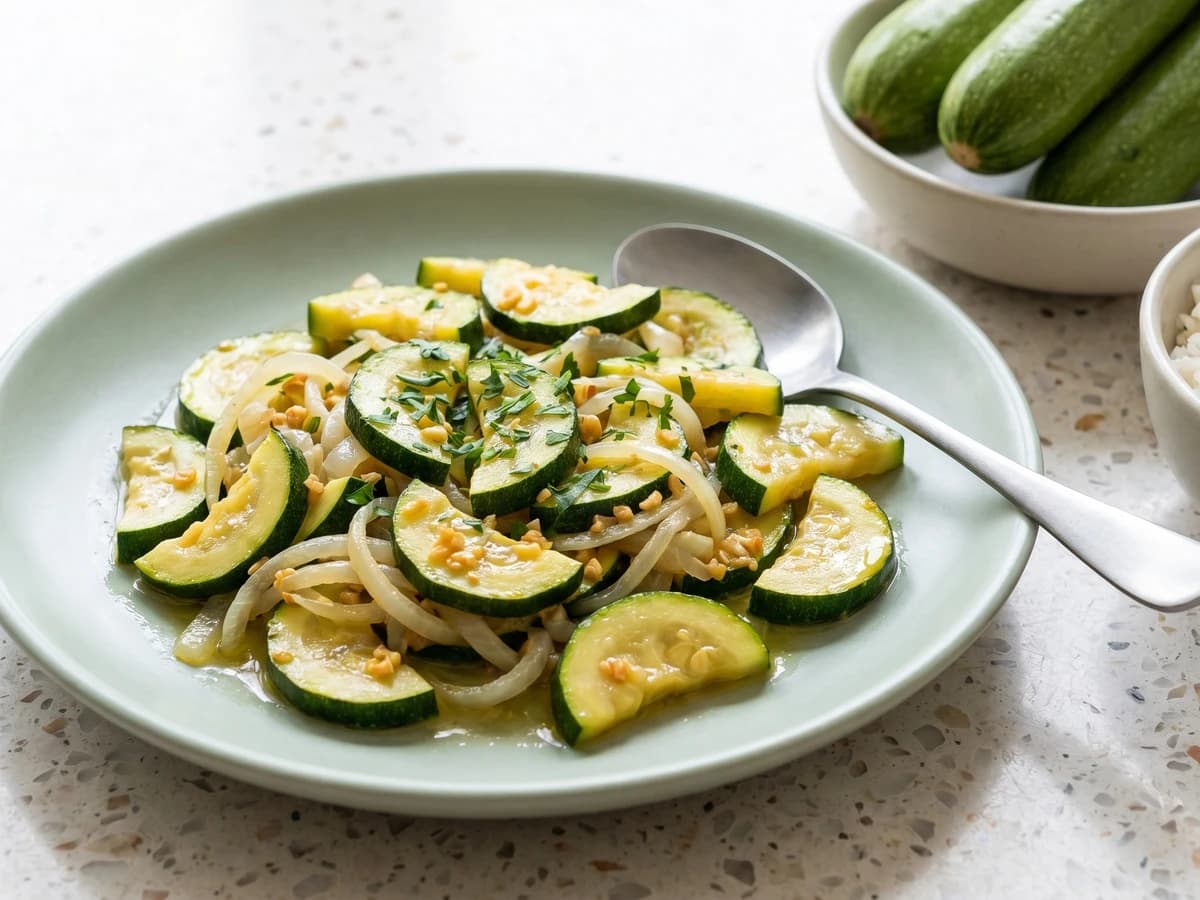
Abobrinha Refogada
You think you'll turn zucchini into mush. Fine. Anota aí: high heat, wide pan, salt at the end, and suddenly this little green side starts solving dinner.
A cooking platform built around craft, culture, and the stories behind what we eat.
Created by
You don't need a pasta machine or courage. A soft egg batter, a colander, and boiling water make tender little noodles that can resolver o jantar tonight.
You look at little homemade noodles and hear that quiet voice: isso não é pra mim. I know that voice. Mine once told me an onion was too much responsibility, so imagine the nonsense it said about dough. Anota aí: cozinhar não é dom, é um aprendizado.
This isn't the everyday rice of the pê-efe, and I'm not going to pretend a German noodle is from my grandmother's São Paulo counter. But Brazil is made of many home tables, including the southern ones shaped by German immigration, and a gente can learn from them without turning dinner into a costume. Here, the spätzle sits where rice might sit: beside feijão, a browned piece of chicken or egg, and something green.
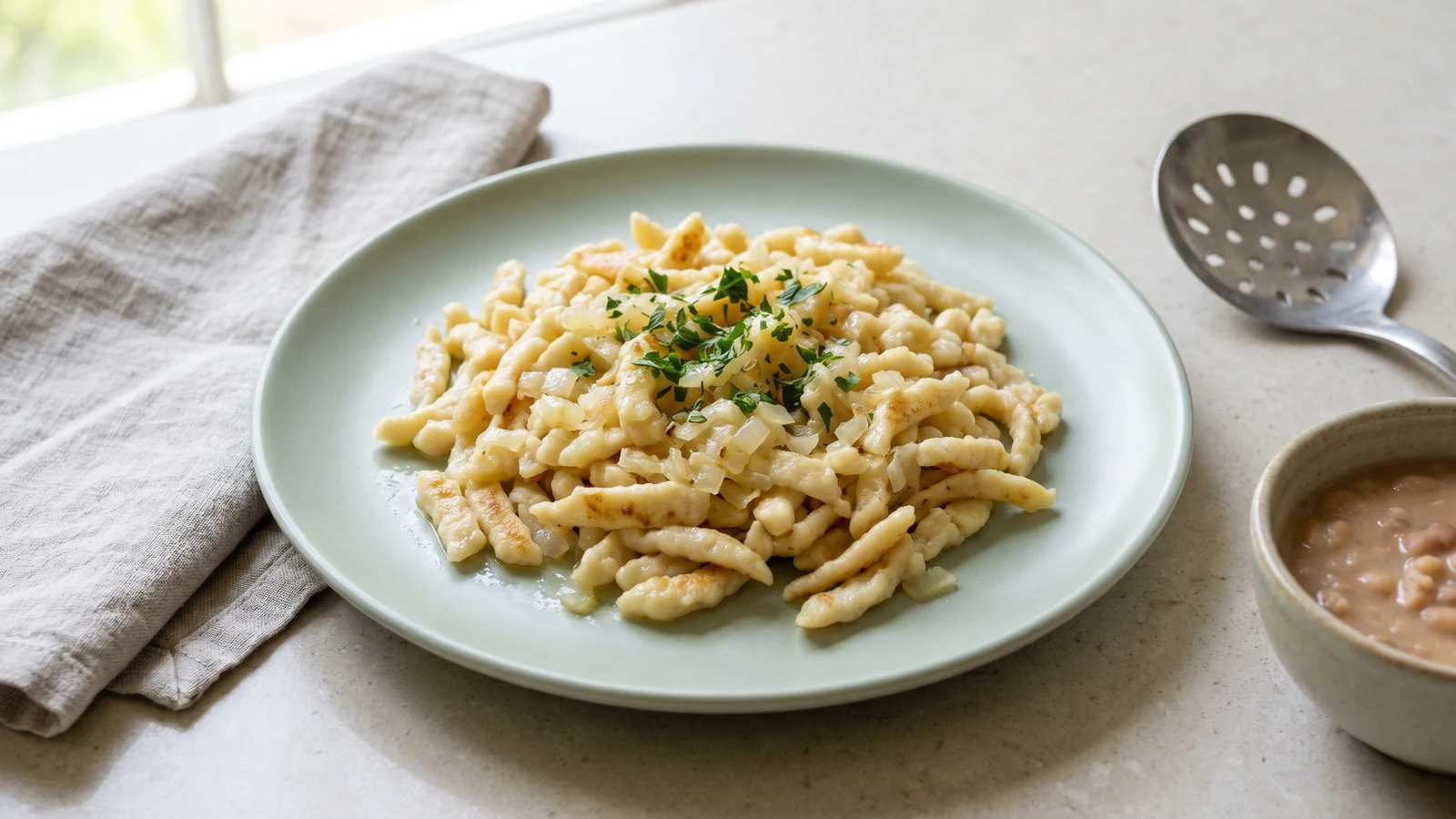
The method is kinder than it looks. You mix flour, eggs, milk, salt, and a little nutmeg until the batter falls slowly from the spoon. You push it through a colander into boiling salted water, and the little noodles float when they're cooked. Then you dourar them in butter with onion because pale boiled noodles are honest, but browned noodles are dinner.
No packet. No powdered shortcut pretending to be flavor. Just flour, egg, water, heat, and a method you can repeat.
Spätzle comes from the German-speaking region of Swabia, with written references to the noodle appearing by the eighteenth century, though the technique is older home cooking. In Brazil, it is most associated with communities in the South, especially places shaped by German immigration from the nineteenth century onward. The tool changes from kitchen to kitchen, board and knife, press, grater, or colander, but the idea stays plain: soft egg batter dropped into boiling water.
Quantity
2 cups
Quantity
1 teaspoon, plus 1 tablespoon for the cooking water
Quantity
1/8 teaspoon
Quantity
3 large
Quantity
3/4 cup, plus 2 tablespoons more if needed
Quantity
2 tablespoons
Quantity
1/2 medium
finely chopped
Quantity
1 tablespoon
chopped
| Ingredient | Quantity |
|---|---|
| all-purpose flour | 2 cups |
| salt | 1 teaspoon, plus 1 tablespoon for the cooking water |
| freshly grated nutmeg (optional) | 1/8 teaspoon |
| eggs | 3 large |
| milk | 3/4 cup, plus 2 tablespoons more if needed |
| butter | 2 tablespoons |
| onionfinely chopped | 1/2 medium |
| parsley (optional)chopped | 1 tablespoon |
Put the flour, 1 teaspoon salt, and nutmeg in a bowl. Beat the eggs with the milk, pour them in, and stir with a spoon until you have a thick, sticky batter that falls slowly in ribbons. If it sits like cement, add milk 1 tablespoon at a time. The batter has to be soft enough to pass through the colander, but thick enough to hold little shapes in the water.
Let the batter rest for 10 minutes while the water heats. It will relax and look a little smoother. This pause lets the flour hydrate, which means the noodles cook tender instead of tasting floury in the middle.
Bring a wide pot of water to a lively boil and add 1 tablespoon salt. Set a colander with large holes over the pot, or hold it just above the water. Salted water seasons the noodles from inside as they cook; if you save all the salt for the end, the center stays bland.
Spoon one third of the batter into the colander and push it through with the back of a spoon. Let the little drops fall into the boiling water and cook until they float, about 1 minute. Floating tells you the batter has set and cooked through. Work in batches so the pot stays lively and the noodles don't glue themselves into one sad lump.
Lift the cooked noodles out with a slotted spoon and put them in a sieve. Shake off the water. Wet noodles don't dourar properly in the pan; they bring water with them, drop the heat, and you end up warming them instead of browning them.
Melt the butter in a wide skillet over medium heat. Add the onion and cook until soft and golden at the edges, about 5 minutes, then add the drained spätzle in a loose layer. Let them sit for a minute before stirring, then turn them until some edges are lightly browned. Color means flavor. Crowd the pan and they'll just soften in their own moisture.
Taste for salt, scatter parsley if using, and serve right away. The noodles should be tender, a little chewy, and glossy with butter, with browned edges here and there. Put them beside feijão, couve refogada, and a simple egg or chicken, and you've got a pê-efe that learned a new accent.
1 serving (about 200g)
Culinary guides, cultural storytelling, and the editorial depth that makes cooking meaningful.
Discover Culinary ExplorerChef Juliana
You think you'll turn zucchini into mush. Fine. Anota aí: high heat, wide pan, salt at the end, and suddenly this little green side starts solving dinner.

Chef Juliana
You think this is sacred enough to be impossible. It isn't. Acaçá is patience, stirring, and ponto, taught plainly, with respect for the terreiros that carry it.
Chef Juliana
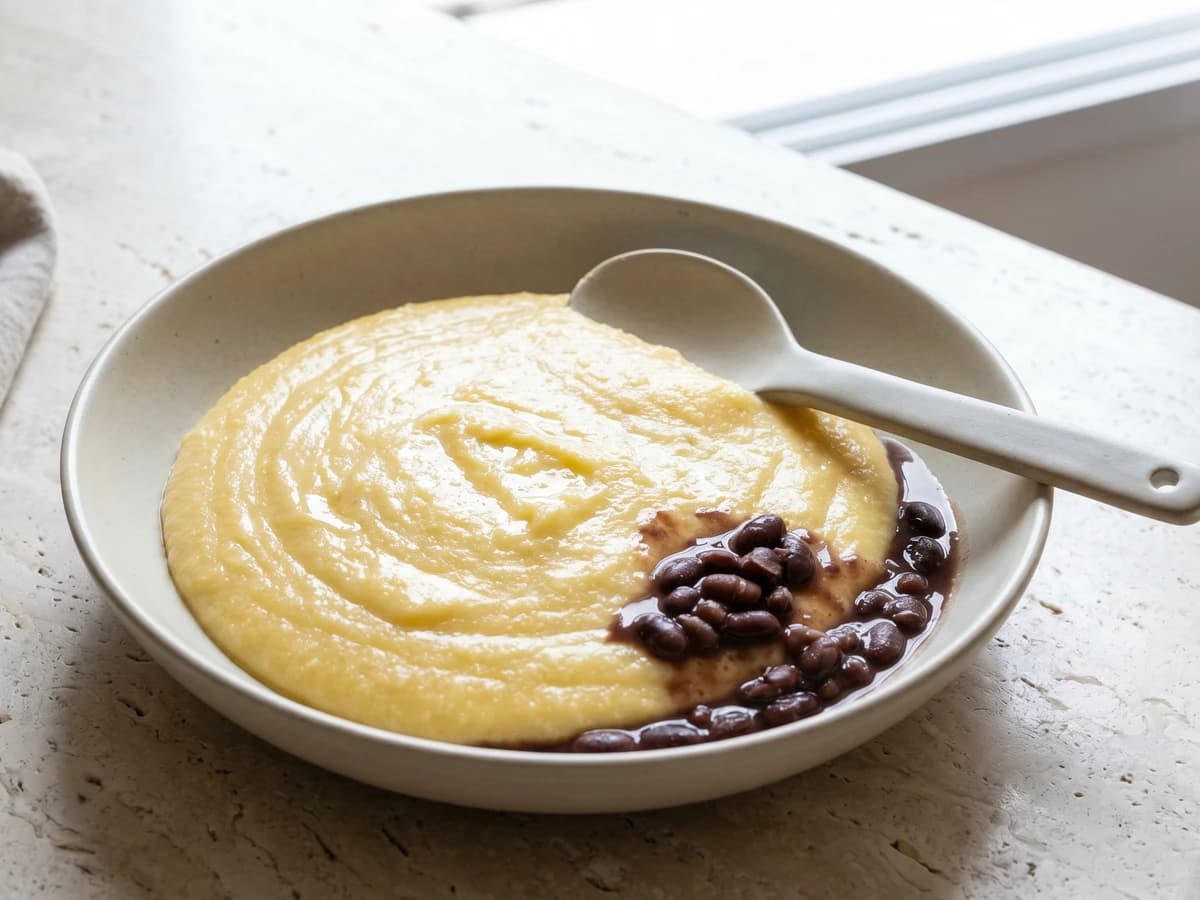
You think cornmeal will turn into lumps and shame. It won't. Cold water first, patient stirring, and a real garlic base give you angu that solves dinner.
Chef Juliana
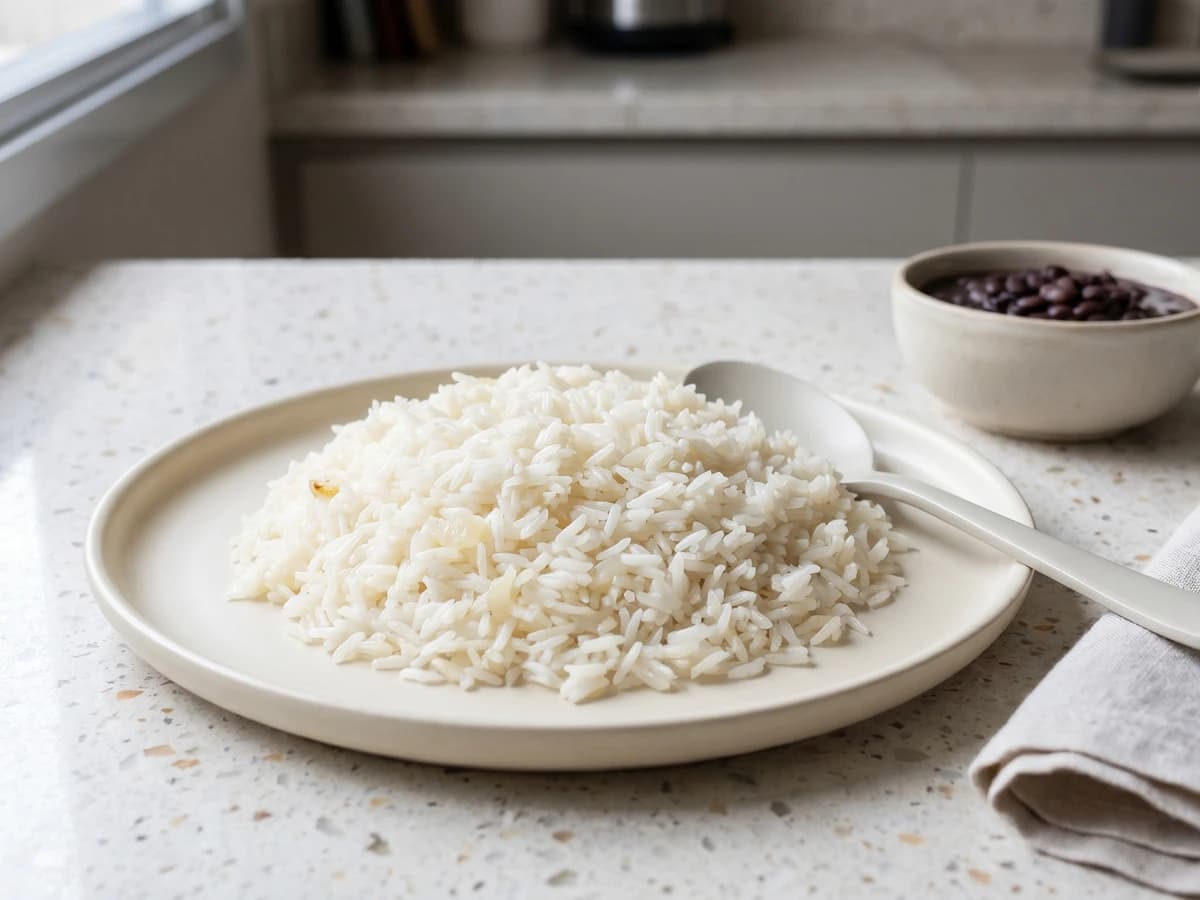
Everyone swears they can't make good rice. They're wrong. Refogue onion and garlic, use two parts water to one rice, then close the lid and leave the poor thing alone.