
Chef Elsa
Eiersalat (Austrian Egg Salad)
Cool, creamy Austrian egg salad with sour gherkins and tart apple in a mustard-yogurt dressing, the kind of honest Jause food that tastes like an Austrian Easter table and works beautifully all year round.
A cooking platform built around craft, culture, and the stories behind what we eat.
Created by
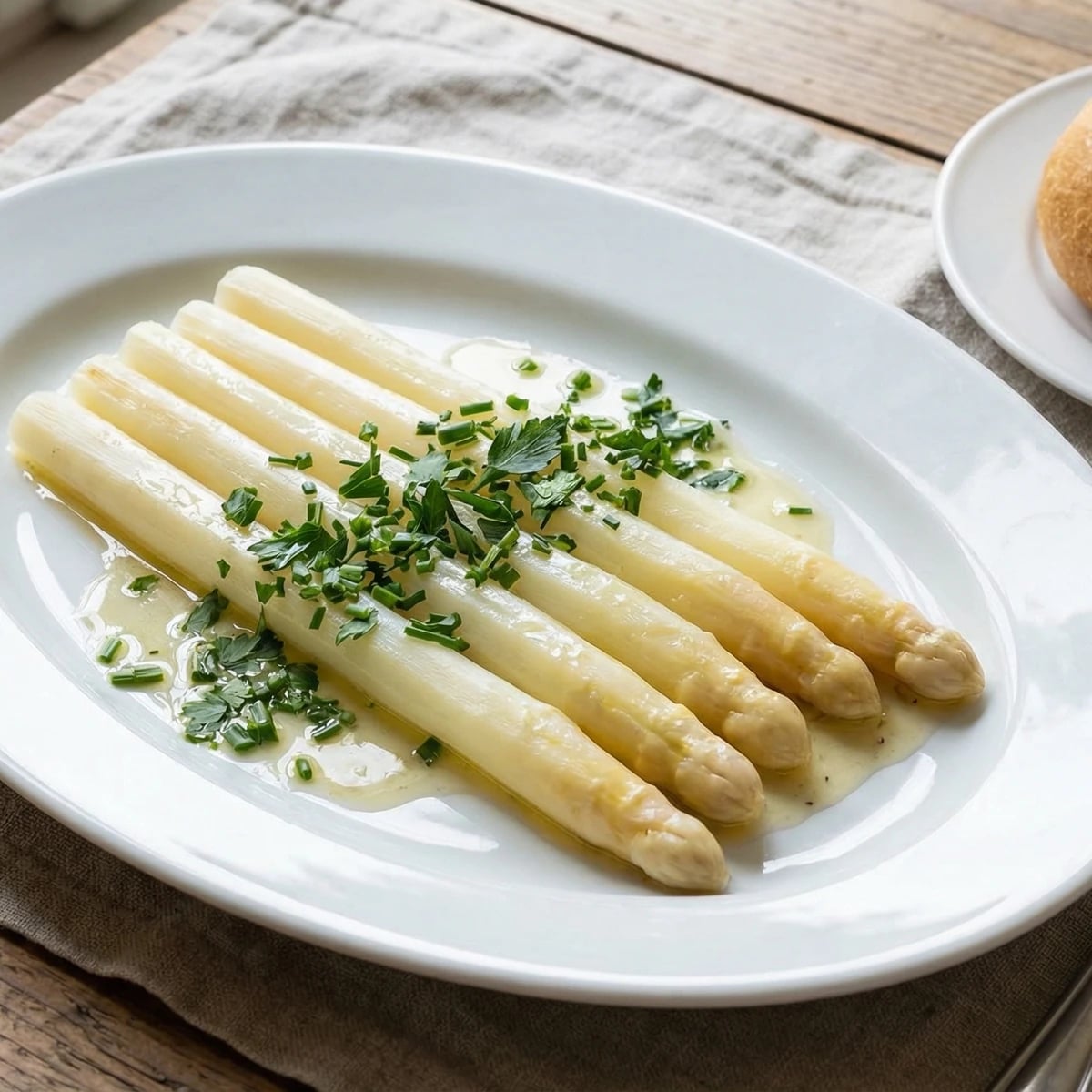
Thick white asparagus spears poached just tender, dressed warm in their own cooking liquid with good vinegar and a touch of mustard. The salad that tells you spring has arrived in Austria.
Every year around mid-April, the market stalls at the Grünmarkt in Salzburg start piling up with white asparagus. Fat, pale spears with tight purple tips, wrapped in damp cloths to keep the light out. That's when you know Spargelzeit has arrived, and for the next ten weeks, Austrians eat asparagus the way other countries eat bread. In soup. With hollandaise. As a main course with new potatoes and brown butter. But the way I love it best is as a salad, dressed warm and simple, where you can actually taste the asparagus itself.
Gretel always said the Viennese judged a cook by two things: her broth and her Spargel. The asparagus had to be peeled properly, cooked to the exact moment between crisp and soft, and served in a way that honored the ingredient instead of burying it. This salad does that. You poach the spears whole in lightly sweetened water with a squeeze of lemon, then dress them while they're still warm with a vinaigrette built on their own cooking liquid. The asparagus absorbs the dressing and the flavor deepens as it sits. Nothing complicated. Nothing clever. Just a beautiful ingredient treated with the respect it deserves.
In my grandmother Eva's kitchen in Kent, we made this with whatever asparagus the greengrocer had, usually green, because white asparagus was hard to find in England in the 1990s. But on our trips to Austria, Gretel would order Spargelsalat at every Gasthaus we visited, and she'd taste each one like a judge at a competition. Too much oil. Not enough vinegar. Overcooked. Undercooked. I learned more about this dish from watching her eat it than from any recipe. Now I serve it at my restaurant every spring, and I think she'd approve.
White asparagus cultivation in Austria dates to the 17th century, when it was grown in the sandy soils along the Danube, particularly in the Marchfeld region east of Vienna. Spargelzeit, asparagus season, runs from mid-April to June 24, the feast of St. John (Johannistag), when harvesting traditionally stops to let the plants recover for the following year. The warm vinaigrette dressing, built on the asparagus cooking liquid rather than plain oil and vinegar, is a distinctly Austrian approach that developed in Viennese Bürgerlich kitchens where nothing from the pot was wasted.
Quantity
1 kg
Quantity
1 liter
Quantity
1 teaspoon
Quantity
1 teaspoon
Quantity
1 tablespoon
Quantity
half
juiced
Quantity
3 tablespoons
Quantity
2 tablespoons
Quantity
1 teaspoon
Quantity
5 tablespoons
Quantity
1 pinch
Quantity
to taste
Quantity
1 tablespoon
finely cut
Quantity
1 tablespoon
finely chopped
| Ingredient | Quantity |
|---|---|
| fresh white asparagus, thick spears | 1 kg |
| water | 1 liter |
| salt (for poaching) | 1 teaspoon |
| granulated sugar (for poaching) | 1 teaspoon |
| unsalted butter | 1 tablespoon |
| lemonjuiced | half |
| asparagus cooking liquid | 3 tablespoons |
| Hesperidenessig or white wine vinegar | 2 tablespoons |
| smooth Dijon-style mustard | 1 teaspoon |
| neutral oil (sunflower or rapeseed) | 5 tablespoons |
| sugar (for dressing) | 1 pinch |
| salt and white pepper | to taste |
| fresh chivesfinely cut | 1 tablespoon |
| fresh flat-leaf parsleyfinely chopped | 1 tablespoon |
Hold each spear just below the tip and peel downward with a sharp vegetable peeler, working from about two centimeters below the tip all the way to the base. Turn the spear and peel every side. White asparagus has a thick, fibrous skin that will not soften no matter how long you cook it, so peel generously. Better to lose a little flesh than to serve someone a mouthful of strings. Snap or cut off the woody bottom centimeter of each spear. Save the peelings and ends.
Bring the water to a simmer in a wide, shallow pan or a tall asparagus pot if you have one. Add the salt, sugar, butter, and lemon juice. The sugar is not there to make the asparagus sweet. White asparagus develops a slight bitterness, and the sugar balances that without you ever tasting it as sweetness. The lemon keeps the spears pale. The butter adds a gentle richness to the cooking liquid, which matters because you're going to use that liquid again in the dressing.
Lower the peeled asparagus into the simmering liquid. Arrange them in a single layer if your pan allows it. Reduce the heat so the water barely trembles. Poach, not boil. Boiling batters them around and the tips fall apart before the stems cook through. Depending on the thickness of your spears, this takes twelve to eighteen minutes. Test by lifting a spear with a fork at the thickest point. It should bend gently under its own weight and the fork should meet slight resistance, not nothing. You want tender with a whisper of bite. Overcooked asparagus is a sadness I wouldn't wish on anyone.
While the asparagus poaches, whisk together three tablespoons of the hot cooking liquid with the vinegar and mustard. The mustard helps the dressing emulsify and hold together instead of separating on the plate. Add the oil in a slow stream, whisking constantly, until the dressing looks creamy and slightly thickened. Season with a pinch of sugar, salt, and white pepper. Taste it. The dressing should be vinegar-forward, with the cooking liquid giving it a gentle asparagus flavor underneath. If it tastes flat, add more vinegar. Austrian Marinade leans tart, not oily. That's what makes it refreshing.
Lift the asparagus from the poaching liquid with a slotted spoon or tongs and drain briefly on a clean kitchen towel. Arrange the spears on a serving platter or divide among individual plates while they are still warm. Spoon the vinaigrette over the asparagus immediately. This is the step that matters most. Warm asparagus absorbs the dressing the way cold asparagus never will. The vinaigrette seeps into the surface and seasons the spears from outside in. If you let them cool first and then dress them, you'll have dressed asparagus. If you dress them warm, you'll have Spargelsalat. There's a difference.
Let the dressed asparagus sit at room temperature for at least ten minutes before serving. This resting time lets the flavors marry and the dressing settle into the spears. Scatter the chives and parsley over the top just before bringing it to the table. Serve at room temperature, never cold from the fridge. A cold Spargelsalat tastes muted and dull. At room temperature, every flavor opens up. A good piece of bread on the side, a Semmel or a slice of dark Bauernbrot, and you have one of the most satisfying things spring can put on your plate. Mahlzeit!
1 serving (about 200g)
Culinary guides, cultural storytelling, and the editorial depth that makes cooking meaningful.
Discover Culinary Explorer
Chef Elsa
Cool, creamy Austrian egg salad with sour gherkins and tart apple in a mustard-yogurt dressing, the kind of honest Jause food that tastes like an Austrian Easter table and works beautifully all year round.

Chef Elsa
Bitter curly endive wilted just so by a warm dressing of rendered Speck, sharp vinegar, and a touch of mustard, the kind of salad that makes a roast pork dinner feel complete.

Chef Elsa
Warm broth-soaked potatoes and crispy Speck over tender Vogerlsalat, finished with a drizzle of dark Steirisches Kürbiskernöl and a soft-boiled egg that ties the whole bowl together.

Chef Elsa
Tender Austrian green beans dressed in warm Marinade the moment they leave the pot, absorbing every drop of vinegar and oil while they cool into something far greater than the sum of their parts.