Culinary Explorer
A cooking platform built around craft, culture, and the stories behind what we eat.
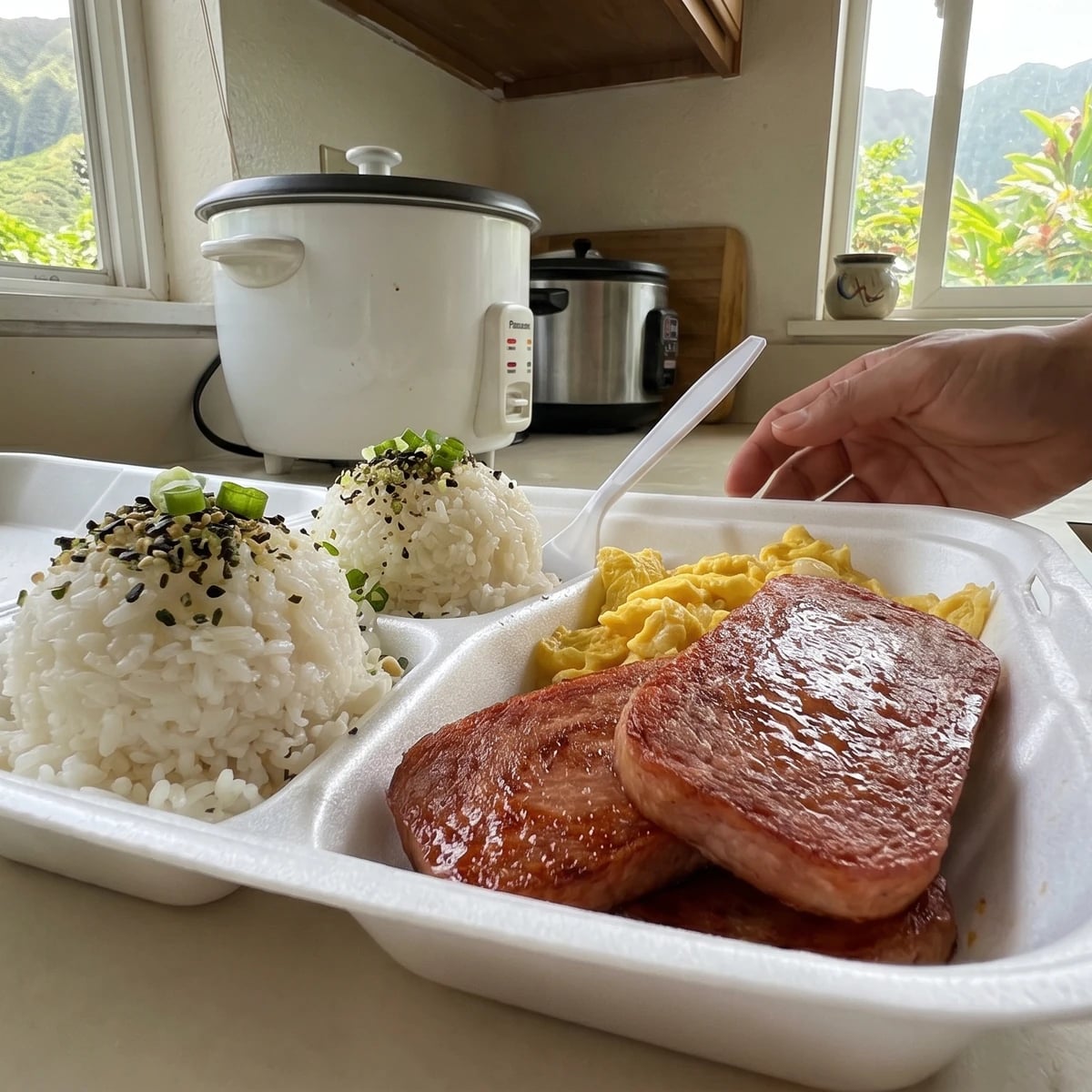
Spam, Eggs & Rice (Hawaiʻi Local Breakfast Plate)
Created by Chef Makoa
Crisp-edged Spam, soft eggs, and two scoops rice, Hawaiʻi's Local breakfast plate from the plantation stove to the home kitchen, humble, fast, and still feeding everybody.
My kumu used to say, Eat what you have, and some mornings what you have is rice in the cooker, eggs in the fridge, and one can of Spam looking back at you from the shelf. No shame in that. This is Hawaiʻi's Local breakfast plate, born on our island table after contact, after the sugar camps, after the military came heavy, when Hawaiian, Japanese, Chinese, Portuguese, Korean, Filipino, Puerto Rican, and other hands all cooked close together and made one stove talk plenty languages.
This is not kalo from the loʻi, not paʻiʻai pounded on the board, not the imu opened for ceremony. Deep food is one side of the table. Local grindz is the other. The rice, the canned meat, the eggs, the skillet, the plastic fork, all of that tells the truth of how people in Hawaiʻi actually eat when work starts early and money is tight.
Across the Triangle the cousins have their own everyday plates too: Sāmoan sapasui, Tongan corned beef with rice, Cook Islands chow mein at a family spread, Māori kai built from what the pantry and the land give that day. Same law, different kitchen. No blame the plate for being humble. Fry the Spam until the edges crisp, keep the eggs soft, scoop the rice proper, and feed whoever walked in.
Ingredients
Spam
Quantity
1 can
cut into 6 thick slices
large eggs
Quantity
4
milk or water (optional)
Quantity
2 tablespoons
| Ingredient | Quantity |
|---|---|
| Spamcut into 6 thick slices | 1 can |
| large eggs | 4 |
| milk or water (optional) | 2 tablespoons |
Where cooking meets culture.
Culinary guides, cultural storytelling, and the editorial depth that makes cooking meaningful.
Discover Culinary Explorer