Culinary Explorer

A cooking platform built around craft, culture, and the stories behind what we eat.
Discover Culinary Explorer
Spaghetti Bolognese

Spaghetti Bolognese

Created by Chef Thomas

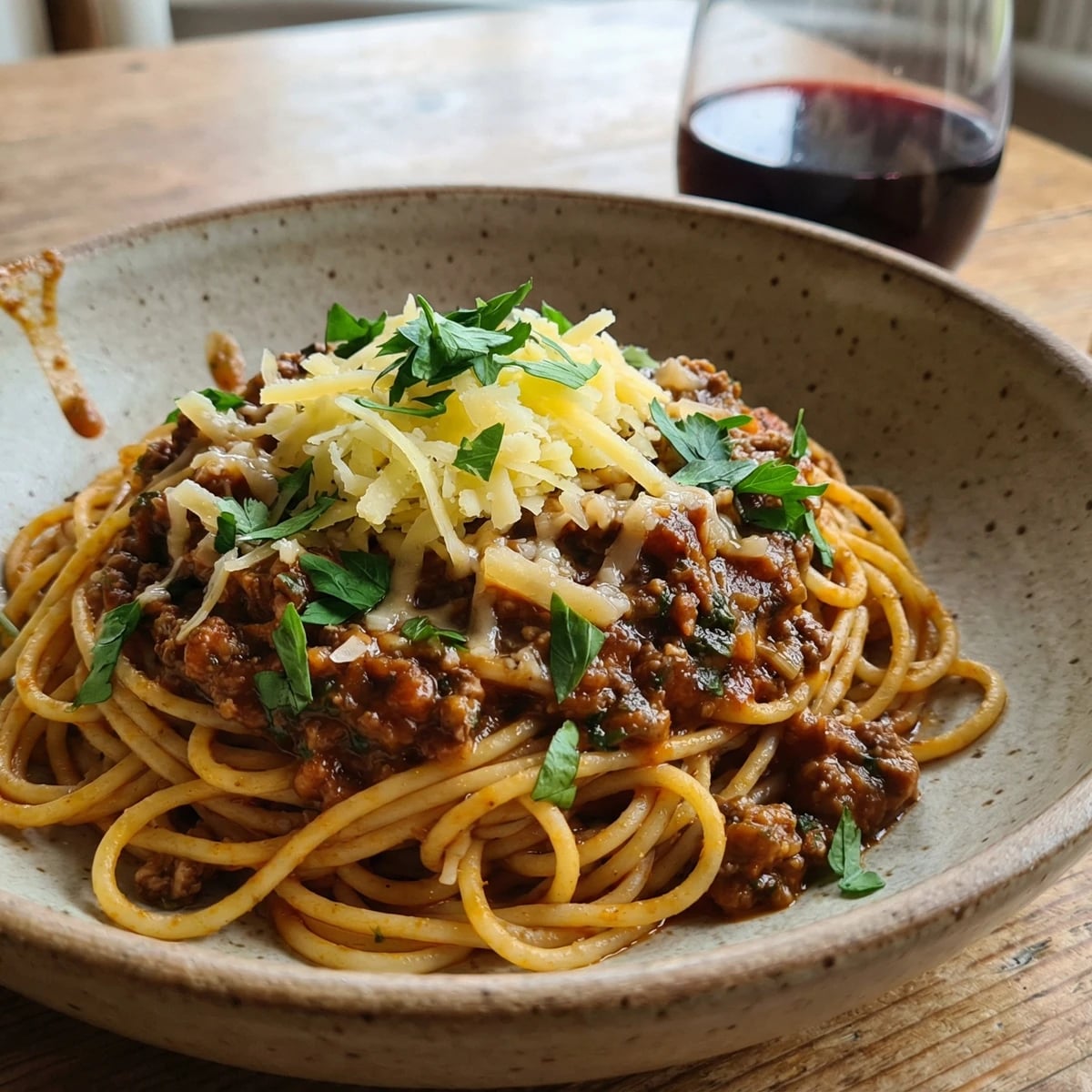
The British spaghetti bolognese, built on Worcestershire sauce and patience, simmered until the kitchen smells like a weeknight worth remembering, and finished with a hill of grated cheddar because that's how it's done here.

Main Dishes
British
Weeknight
Comfort Food
Freezer Friendly
15 min
Active Time
1 hr 15 min cook1 hr 30 min total
Yield4 servings

The kitchen smells of onions and wine and something savoury that's been on the hob long enough to stop being ingredients and start being dinner. It's a Tuesday. It's raining. This is the right food for the right evening.

I should say, before anyone writes in, that this isn't a ragù. It isn't pretending to be. The Italians have their version and it's beautiful, but this is the other one: the one your mum made, the one with a bottle of Worcestershire sauce within reach and cheddar grated over the top in a pile so generous it half-melts into the hot pasta before you pick up your fork. It's a British weeknight institution and I won't apologise for it.

The trick, if there is one, is time. Not technique, not rare ingredients, just the patience to let it simmer until everything softens and deepens and the sauce clings to the spaghetti like it was always meant to be there. You can rush it in thirty minutes and it will be fine. Give it an hour and it will be something you'd write down in a notebook.

I've made this more times than I can count. The recipe hasn't changed in years because it doesn't need to. A recipe is a conversation, not a contract. Adjust it. Add more wine than I've suggested. Go easy on the garlic or double it. Your kitchen, your rules. We're only making dinner.

The technique, the tradition, and the story behind every dish.

Discover Culinary Explorer

Ingredients

olive oil

Quantity

2 tablespoons

onion

Quantity

1 large

finely diced

celery

Quantity

2 sticks

finely diced

carrot

Quantity

1 large

finely diced

garlic

Quantity

3 cloves

sliced

beef mince

Quantity

500g

tomato purée

Quantity

1 tablespoon

Worcestershire sauce

Quantity

1 generous splash

red wine

Quantity

150ml

tinned chopped tomatoes

Quantity

1 x 400g tin

beef stock

Quantity

250ml

bay leaf

Quantity

1

dried oregano

Quantity

1 teaspoon

fine sea salt

Quantity

to taste

black pepper

Quantity

to taste

dried spaghetti

Quantity

400g

mature cheddar

Quantity

to serve

grated

flat-leaf parsley (optional)

Quantity

a handful

roughly chopped

Equipment Needed

  • Large heavy-bottomed saucepan or casserole
  • Large pan for boiling pasta
  • Wooden spoon
  • Box grater for the cheddar

Instructions

  1. 1

    Build the base

    Warm the olive oil in a large, heavy pan over a medium heat. Add the onion, celery, and carrot with a good pinch of salt. Stir them through the oil and let them cook gently for ten to twelve minutes, stirring now and then, until everything has softened and the onion has gone translucent and sweet. No colour. You're building a foundation here, not frying. Add the garlic for the last minute or two, just long enough for it to lose its rawness and start to smell like something you'd want to eat.

    Dice the vegetables small and roughly equal. They're going to dissolve into the sauce over the next hour. The finer you cut them now, the more they disappear later, which is what you want. A bolognese shouldn't be chunky.
  2. 2

    Brown the mince

    Push the vegetables to the edges of the pan and turn the heat up. Add the mince in one layer and leave it alone. Let it sit against the hot pan until the underside is properly browned, two or three minutes. Then break it up with a wooden spoon and stir it through, letting all the pieces catch some colour. You want deep brown, not grey. Grey mince is mince that was steamed in a crowded pan, and it will taste of nothing. If your pan is small, do this in two batches. It matters.

    If the mince releases a lot of liquid, don't panic. Let it bubble away before you start browning. The water needs to go before the colour comes.
  3. 3

    Add depth and liquid

    Stir the tomato purée into the mince and let it cook for a minute until it darkens and starts to catch on the bottom of the pan. That's flavour. Add a generous splash of Worcestershire sauce, the kind of splash you'd give if nobody was watching, and pour in the red wine. Let it bubble fiercely for a minute or so until the sharp alcohol smell cooks off and you're left with something richer. Add the tinned tomatoes, the stock, the bay leaf, and the oregano. Stir it all together, bring it to a gentle simmer, and turn the heat down low.

    The Worcestershire sauce is what makes this British. It adds a dark, savoury depth that no amount of Italian seasoning will replicate. Don't measure it. Trust your hand.
  4. 4

    Simmer slowly

    Let the sauce tick away on the lowest heat for at least forty-five minutes, an hour if you have it. A lid slightly ajar. Stir every now and then to make sure nothing catches on the bottom. The sauce will reduce and thicken, the vegetables will have all but melted, and the kitchen will start to smell like the kind of evening where nobody is in a hurry. If it gets too thick, add a splash of water. If it's too thin, take the lid off entirely and let it reduce. You're looking for a sauce that clings to a spoon without running off.

    This is the part that separates a good bolognese from a rushed one. Time is the ingredient you can't substitute. The longer it simmers, the more everything melds and the deeper the flavour becomes.
  5. 5

    Cook the spaghetti

    When the sauce is nearly ready, bring a large pan of well-salted water to a rolling boil. It should taste like the sea. Add the spaghetti and cook it according to the packet, tasting a strand a minute before it says it's done. You want it with a bit of resistance still, not soft, not chalky, just right. Save a mugful of the starchy cooking water before you drain it. You'll want it.

  6. 6

    Bring it together

    Fish out the bay leaf and taste the sauce. Season with salt and pepper. It will probably need more than you think. Tip the drained spaghetti into the sauce and toss it through, adding a splash of the pasta water to loosen everything and help the sauce coat every strand. It should look glossy and generous, not dry, not swimming. Pile it into warm bowls, grate a good heap of mature cheddar over the top, and scatter some parsley if you've got it. Put the bowl in front of someone. That's the whole point.

Chef Tips

  • Buy the best mince you can. It doesn't need to be fillet steak ground to order, but a mince with some fat in it, around 15-20%, makes a far better sauce than the lean stuff. Fat is flavour, and a bolognese without it tastes hollow.
  • Cheddar, not Parmesan. I know. But this is a British bolognese and mature cheddar melts into the hot pasta in a way that's entirely its own pleasure. Strong, sharp, grated in a heap. Don't hold back.
  • This freezes beautifully. Make a double batch of the sauce without the pasta and freeze half in portions. A future weeknight self will thank you. Defrost overnight and reheat gently while the pasta boils.
  • If you don't drink or don't have wine open, skip it. Add a tablespoon of red wine vinegar instead for a bit of acidity, and a splash more stock. The sauce will still be good. Don't buy a bottle of wine you won't drink just for a recipe.

Advance Preparation

  • The sauce improves overnight. Make it a day ahead if you can, refrigerate it, and reheat gently while you boil the pasta. The flavours settle and deepen in a way that same-day cooking can't quite match.
  • The sauce freezes well for up to three months. Cool it completely, portion into containers, and freeze. Defrost overnight in the fridge and reheat on the hob with a splash of water to loosen.
  • Do not cook the spaghetti ahead. It takes ten minutes. Fresh pasta in reheated sauce is always better than reheated pasta in anything.

Frequently Asked Questions

Nutrition Information

1 serving (about 520g)

Calories
860 calories
Total Fat
36 g
Saturated Fat
14 g
Trans Fat
1 g
Unsaturated Fat
21 g
Cholesterol
120 mg
Sodium
780 mg
Total Carbohydrates
92 g
Dietary Fiber
6 g
Sugars
9 g
Protein
44 g

Note: Chef personas and recipes are created with AI assistance. Cook with care: follow safe food-handling practices, check doneness with a thermometer when needed, and adapt for allergies and your kitchen.

Where cooking meets culture.

Culinary guides, cultural storytelling, and the editorial depth that makes cooking meaningful.

Discover Culinary Explorer

More from Weeknight Suppers & Simple Fish

Browse the full collection