Chef Graziella
Arrosto di Maiale alle Erbe Aromatiche
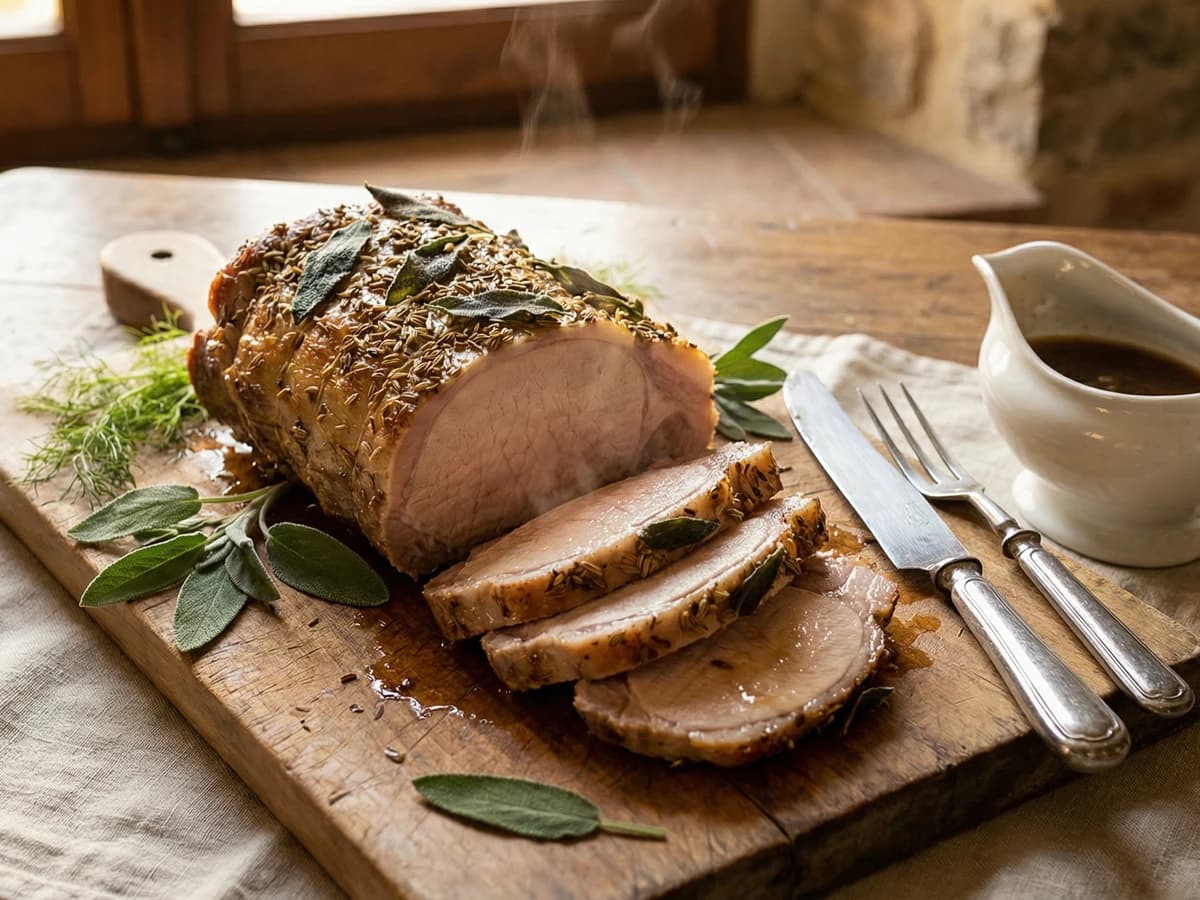
Bone-in pork loin rubbed with fennel, rosemary, and sage, roasted until the herbs form a crackling crust and the meat stays pink and succulent. This is the roast that brings Sunday to life.
A cooking platform built around craft, culture, and the stories behind what we eat.

Created by
The Sunday pasta of Teramo, where square-cut noodles pressed through guitar strings meet marble-sized meatballs that fry golden before surrendering to a simple tomato sauce. This is Abruzzo at the table.
Abruzzo sits in the middle of Italy, neither truly north nor south, and its cooking reflects this stubborn independence. The pasta is fresh, made with eggs as in Emilia-Romagna, but it is cut through a wooden frame strung with fine wires, like a musical instrument. La chitarra, the guitar. The wires produce square-shaped spaghetti with edges that catch sauce better than any round strand ever could.
The pallottine are the point of this dish. They must be small, genuinely small, no bigger than a marble or a cherry. Americans make meatballs the size of tennis balls. Italians in Teramo make them tiny so that every forkful of pasta includes one or two, perfectly proportioned. You fry them first in olive oil until golden and crisp on all sides, then you let them finish in the tomato sauce. The sauce absorbs their flavor while they absorb the sauce.
Every grandmother in Teramo has her own recipe. Some add a scrape of nutmeg. Some use only beef. Some insist on pecorino rather than Parmigiano. All of them agree that the meatballs must be small enough to eat in one bite. This is not negotiable.
The chitarra, the pasta guitar, has been documented in Abruzzo since the 18th century, though families claim the tradition is far older. The instrument likely originated in Chieti province, but Teramo claims the pairing with pallottine as its own. Sunday lunch in Teramo without chitarra and tiny meatballs is scarcely Sunday lunch at all.
Quantity
500g, plus more for dusting
Quantity
5
Quantity
1/2 teaspoon
Quantity
300g
Quantity
150g
Quantity
2 slices
crusts removed
Quantity
1/2 cup
Quantity
1
Quantity
50g, plus more for serving
finely grated
Quantity
3 tablespoons
minced
Quantity
to taste
Quantity
to taste
freshly ground
Quantity
1/4 cup for frying, plus more for sauce
Quantity
1 medium
diced fine
Quantity
1 small
peeled and diced fine
Quantity
1
diced fine
Quantity
2
peeled and lightly crushed
Quantity
1 can (28 ounces)
passed through food mill
Quantity
1/2 cup
Quantity
6
| Ingredient | Quantity |
|---|---|
| tipo 00 flour | 500g, plus more for dusting |
| large eggs (for pasta) | 5 |
| fine sea salt (for pasta) | 1/2 teaspoon |
| ground beef | 300g |
| ground pork | 150g |
| day-old white breadcrusts removed | 2 slices |
| whole milk | 1/2 cup |
| large egg (for meatballs) | 1 |
| Parmigiano-Reggianofinely grated | 50g, plus more for serving |
| flat-leaf parsleyminced | 3 tablespoons |
| fine sea salt | to taste |
| black pepperfreshly ground | to taste |
| extra virgin olive oil | 1/4 cup for frying, plus more for sauce |
| yellow oniondiced fine | 1 medium |
| carrotpeeled and diced fine | 1 small |
| celery stalkdiced fine | 1 |
| garlic clovespeeled and lightly crushed | 2 |
| San Marzano tomatoespassed through food mill | 1 can (28 ounces) |
| dry white wine | 1/2 cup |
| fresh basil leaves | 6 |
Mound the flour on a wooden board or clean work surface. Make a well in the center deep enough to hold the eggs. Crack the eggs into the well with the salt. With a fork, beat the eggs gently while gradually drawing flour from the inner walls of the well. When the dough becomes too stiff for the fork, use your hands. Knead the dough for 8 to 10 minutes until smooth and elastic. It should feel like your earlobe when pressed. Wrap in plastic and rest at room temperature for 30 minutes.
While the dough rests, tear the bread into small pieces and place in a bowl. Pour the milk over and let soak for 10 minutes. The bread should be completely saturated. Squeeze out the excess milk firmly with your hands. The bread should be damp, not dripping.
In a large bowl, combine the ground beef, ground pork, squeezed bread, egg, Parmigiano, and parsley. Season with salt and pepper. Mix with your hands until just combined. Do not overwork the mixture or the meatballs will be tough. The texture should be uniform but still loose.
Pinch off small amounts of the mixture and roll between your palms to form balls no larger than a cherry, about 3/4 inch in diameter. You should get approximately 50 to 60 pallottine. Set them on a tray lined with parchment. Do not crowd them.
Heat the olive oil in a large skillet over medium-high heat. When the oil shimmers, add the meatballs in batches, leaving space between them. Fry, turning frequently, until golden brown on all sides, about 4 minutes per batch. Transfer to a plate lined with paper towels. The meatballs will not be cooked through. This is correct. They finish in the sauce.
Pour off all but 2 tablespoons of oil from the skillet. Add the onion, carrot, and celery over medium heat. Cook, stirring occasionally, until soft and the onion turns golden, about 12 minutes. Add the crushed garlic and cook one minute more, stirring. The garlic must not brown. Remove and discard the garlic cloves.
Pour in the white wine and let it bubble until nearly evaporated, scraping up any browned bits from the pan. Add the passed tomatoes and the basil leaves. Season with salt and pepper. Bring to a simmer, then reduce heat to low. Gently nestle the fried meatballs into the sauce. Simmer uncovered for 25 to 30 minutes, stirring occasionally with care so as not to break the pallottine.
Divide the rested dough into four portions. Working with one portion at a time, roll the dough into a sheet about 1/8 inch thick, slightly thicker than for other fresh pastas. The chitarra requires dough with some body. Dust the sheet lightly with flour and lay it over the strings of the chitarra. Using a rolling pin, press firmly and roll back and forth until the strands fall through to the tray below. Toss the cut pasta with flour to prevent sticking.
Bring a large pot of water to a vigorous boil. Salt it generously. Add the chitarra pasta and cook until tender with pleasant resistance, 2 to 3 minutes. Fresh pasta cooks quickly. Taste it. Reserve one cup of pasta water, then drain.
Add the drained pasta directly to the skillet with the sauce and meatballs. Toss gently over low heat for one minute, allowing the pasta to absorb some sauce. Add a splash of pasta water if the sauce seems tight. The pasta should be dressed, not swimming. Once the pasta is sauced, serve it promptly, inviting your guests and family to put off talking and start eating. Pass Parmigiano-Reggiano at the table.
1 serving (about 420g)
Culinary guides, cultural storytelling, and the editorial depth that makes cooking meaningful.
Discover Culinary ExplorerChef Graziella
Bone-in pork loin rubbed with fennel, rosemary, and sage, roasted until the herbs form a crackling crust and the meat stays pink and succulent. This is the roast that brings Sunday to life.

Chef Graziella
The ancient technique of salt-baking creates a sealed chamber where the fish steams in its own moisture. What emerges is flesh of remarkable purity, seasoned perfectly, ready for nothing but your best olive oil.

Chef Graziella
The ugly fish that cooks like veal, braised in tomatoes until the firm white flesh absorbs the briny sweetness of olives and capers. Fishermen's wives along the Adriatic knew its worth before restaurants discovered it.

Chef Graziella
A fifteen-minute lesson in restraint: pork chops, butter, sage, and the understanding that what you leave out matters as much as what you put in.